Faith
Call for Reform in Women’s Prisons Amid Threats
Faith Facts
- A recent report has revealed disturbing allegations of harassment and sexual assault at MCI-Framingham, a Massachusetts women’s prison.
- Concerns were raised about self-identified transgender inmates with violent histories being housed alongside women, impacting safety and dignity.
- Advocates are pushing for reforms rooted in truth, justice, and the protection of women within the correctional system.
Women in correctional facilities deserve dignity, safety, and policies that honor their inherent value as God’s creation. Harrowing testimonies spotlight a need for change to uphold biblical principles of justice and accountability.
“It feels like I’m being punished for speaking up. … They are treating me as if I should have kept my mouth shut — as if it’s my fault, or as though I should have defended myself.”
Christian advocates urge lawmakers to reform the federal Prison Rape Elimination Act, emphasizing that true compassion means prioritizing women’s well-being and upholding objective truth over fleeting ideologies.
Faith calls us to protect the vulnerable, demand accountability, and promote a system rooted in righteousness. Stay prayerful and informed as we work to restore justice and support all affected women.
Faith
Christian Influencer Defends Platform Choice After Backlash
Faith Facts
- Christian influencer Bryce Crawford interviewed Vice President JD Vance on his podcast, sparking controversy among critics
- Crawford defended his decision by stating critics who oppose platforming people based on political views ‘lack the love of God’
- The interview represents a broader debate within Christian circles about engagement with political figures
Christian influencer Bryce Crawford has found himself at the center of a heated debate after hosting Vice President JD Vance on his podcast. The decision drew criticism from some quarters, but Crawford is standing firm in his choice to engage with the nation’s second-highest elected official.
In response to the backlash, Crawford issued a pointed rebuke to his critics. He suggested that Christians who believe certain individuals should be denied a platform solely because of their political affiliations are missing a fundamental aspect of their faith.
“You lack the love of God,” Crawford told those who opposed his interview with Vance.
The controversy highlights an ongoing tension within the Christian community about how believers should engage with political figures and controversial topics. Some argue that providing a platform to certain voices represents an endorsement of their positions, while others maintain that dialogue and conversation are essential to understanding and reaching people across ideological divides.
Crawford’s decision to interview the Vice President reflects a commitment to open conversation that many traditional Christians value. Rather than shutting down dialogue with those who hold different views, this approach prioritizes engagement and the free exchange of ideas.
The podcast interview with Vance comes at a time when many Americans are seeking meaningful conversations about faith, politics, and the future direction of the nation. By hosting such discussions, Christian influencers like Crawford are creating spaces where important topics can be explored from a values-based perspective.
For Crawford’s supporters, his willingness to engage with high-profile political figures demonstrates courage and a commitment to reaching people where they are, rather than remaining in isolated echo chambers. This approach aligns with the Christian call to engage the culture and share truth in love.
The backlash against the interview also reveals broader divisions within the Christian community about the proper role of faith in public life and political discourse. These tensions are unlikely to disappear anytime soon, as believers continue to wrestle with how best to maintain their values while engaging a pluralistic society.
Let us know what you think, please share your thoughts in the comments below.
Faith
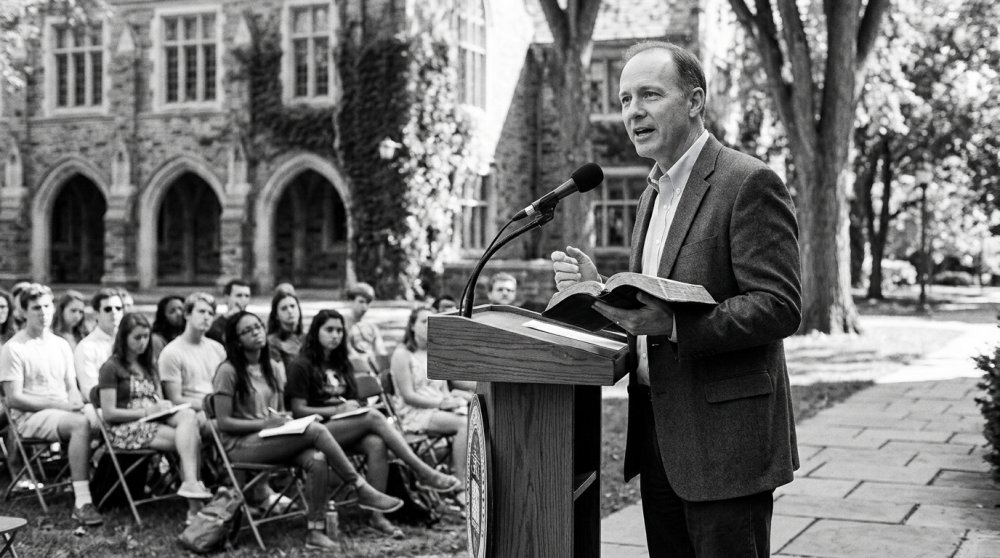
Why Western Missionaries Must Surrender Control to Reach the Lost
Faith Facts
- Missions leaders are calling for a fundamental shift in how Western churches approach global evangelism, prioritizing indigenous leadership over traditional expatriate control.
- Experts warn that cultural imperialism in missions work has hindered the gospel’s effectiveness, as Western funding and decision-making power often overshadow local believers who understand their own cultures best.
- The Biblical mandate for global evangelism remains unchanged, but modern missionaries must embrace humility and servant leadership, working under rather than over local Christian leaders in foreign fields.
The Great Commission given by Jesus Christ remains as urgent today as it was 2,000 years ago—to go into all nations and preach the gospel. But according to missions experts, the way American Christians have been carrying out that command may need a radical transformation.
The mission itself isn’t ours to direct—it belongs to God. Yet those wielding influence in the missions community, typically through financial control and strategic planning, have too often lost sight of that fundamental truth.
Reaching unreached people groups with the saving message of Jesus Christ demands a posture change from Western believers. The old model of doing missions through, with, or by partnering with indigenous leaders is no longer sufficient. Expatriate missionaries must now be willing to serve under the leadership of local believers who know their own cultures, languages, and contexts far better than outsiders ever could.
This shift challenges decades of missionary practice where American and European Christians controlled the purse strings and set the priorities. While Western churches have invested billions of dollars and sent thousands of missionaries over the past century, cultural blind spots and an unwillingness to truly empower local leadership have sometimes impeded the gospel’s advance.
Indigenous Christian leaders are already on the ground in their own nations. They speak the language fluently, understand cultural nuances that take expatriates years to grasp, and don’t carry the baggage of being foreign outsiders. When Western missionaries insist on maintaining control—even with good intentions—they can inadvertently communicate that local believers aren’t capable or trusted to lead their own churches and evangelistic efforts.
The call isn’t to abandon cross-cultural missions or stop supporting the global spread of Christianity. American churches have unique resources, training capabilities, and experiences that can bless believers worldwide. But the question is one of posture: Are we coming as humble servants willing to follow local leadership, or as benefactors who expect gratitude and control in return for our support?
Scripture provides clear models of servant leadership. Jesus Himself, though He was God, took on the form of a servant. Paul adapted his approach to different cultural contexts, becoming “all things to all people” for the sake of the gospel. The early church sent missionaries, but also recognized and empowered local leaders like Timothy, Titus, and the elders in every city.
For missions work to be truly effective in today’s world, Western Christians must embrace the uncomfortable work of surrendering control. That means allowing indigenous leaders to set priorities, make decisions, and determine strategies—even when they differ from what American donors might prefer. It means trusting that the Holy Spirit works just as powerfully through believers in Africa, Asia, and Latin America as He does through those in the United States.
This isn’t about political correctness or accommodation to cultural relativism. It’s about recognizing that the gospel transcends Western culture and that God has raised up faithful leaders in every nation who are best equipped to reach their own people. When expatriate missionaries come alongside these leaders with genuine humility and a willingness to serve rather than lead, the kingdom of God advances far more effectively.
The harvest remains plentiful, and the laborers are still few. But perhaps what’s needed most isn’t more American missionaries going to tell others how to do ministry—it’s more American Christians willing to support, serve, and learn from indigenous leaders who are already faithfully advancing God’s mission in their own nations.
Let us know what you think, please share your thoughts in the comments below.
Faith
What This Boxing Champion Credits for Her Historic Career
Faith Facts
- Irish boxing champion Katie Taylor openly credits her Christian faith as the foundation of her historic career and unprecedented success in women’s boxing
- Taylor has consistently spoken about prayer, Scripture reading, and reliance on God throughout her journey from Olympic gold to undisputed world champion
- As she prepares for her farewell fight at Croke Park, the athlete says her faith gives her peace about leaving the sport at the pinnacle of success
In a world where professional athletes often credit their talent, training regimens, or coaches for their success, Irish boxing legend Katie Taylor stands apart. The undisputed lightweight champion has never shied away from identifying the true source of her strength: her unwavering Christian faith.
As Taylor prepares for what many expect to be her final bout at Dublin’s iconic Croke Park stadium, her story serves as a powerful testament to how faith can sustain an athlete through impossible odds. From her early days dreaming of Olympic glory when women’s boxing wasn’t even an Olympic sport, to becoming a two-weight world champion, Taylor has consistently pointed upward in gratitude.
“My faith has been the anchor throughout everything,”
Taylor has said repeatedly throughout her career, emphasizing that her relationship with Jesus Christ provided stability during both triumph and adversity.
Taylor’s journey reads like a modern-day biblical narrative of patience and perseverance. She began boxing at a time when the sport offered no Olympic pathway for women, no professional opportunities, and little public recognition. Yet she persisted, training with the same discipline and dedication as if the world stage already awaited her.
When women’s boxing was finally added to the 2012 London Olympics, Taylor seized her moment, capturing gold and becoming an instant national hero in Ireland. But even in that pinnacle moment of achievement, she deflected praise from herself.
Throughout her professional career, which has seen her become undisputed champion across multiple weight classes, Taylor has maintained daily spiritual disciplines. She begins each day with prayer and Scripture reading, finding guidance and strength in God’s Word before facing the physical demands of elite athletic competition.
Her faith has also shaped how she conducts herself in a sport not always known for grace and humility. Taylor has earned respect not just for her lightning-fast hands and technical brilliance, but for her sportsmanship, dignity, and refusal to engage in the trash-talking that often dominates pre-fight promotion.
This approach stems directly from her Christian convictions about how to treat others, even opponents. She has spoken about praying for her competitors and viewing each person in the ring as someone created in God’s image, worthy of respect regardless of the battle they’re about to wage.
As Taylor faces the emotional challenge of stepping away from the sport that has defined much of her adult life, she demonstrates the peace that comes from a faith-centered perspective. Rather than clinging desperately to fame or fearing an identity crisis, she approaches retirement with the confidence that her worth isn’t tied to championship belts or crowd applause.
Her farewell fight at Croke Park will mark the end of a remarkable boxing career, but Taylor sees it as simply one chapter in a larger story written by a faithful God. She has expressed gratitude for every opportunity, every victory, and even every setback that refined her character and deepened her dependence on Christ.
For young Christian athletes watching Taylor’s career, she provides a blueprint for maintaining faith under the intense pressures of elite competition. Her example shows that acknowledging God’s role in success doesn’t diminish an athlete’s achievements—it properly frames them within eternal perspective.
Taylor’s influence extends far beyond the boxing ring. In Ireland and around the world, she has demonstrated that a woman can be both fiercely competitive and deeply devout, both a champion fighter and a humble servant of Christ. These identities don’t conflict; they complement and strengthen each other.
As the final bell approaches on her storied career, Katie Taylor leaves a legacy that transcends sports statistics. She showed the world what it looks like to pursue excellence while keeping faith first, to compete with killer instinct while maintaining Christian character, and to achieve impossible dreams while giving all glory to God.
Let us know what you think, please share your thoughts in the comments below.
-
Self-Reliance1 year agoTrump’s Bold Move Uncovers Massive Social Security Fraud
-

Faith1 year agoNew Clues Emerge in Noah’s Ark Mystery
-

News1 year agoGovernor Walz’s Rhetoric Sparks National Controversy
-

News1 year agoMel Gibson’s ‘The Passion of the Christ’ Sequel Title Announced
-

Family1 year agoTexas Lawmaker Targets Furries in Schools
-

Freedom1 year agoMaine Lawmaker Challenges Sports Fairness Controversy
-

Family1 year agoCanada’s Controversial Policy Sparks Ethical Debate
-
Faith10 months ago
Congress Hears Pleas for Nigerian Christians