
Faith
California Church Finds New Home in Restored Campus After Leadership Crisis


Faith Facts
- SLO City Church will hold its grand opening September 13 at the former Arise Vineyard Church campus in San Luis Obispo, California
- Lead Pastor Brent Bramer describes the move as a ‘redemptive story’ following the previous church’s closure after pastoral resignations
- The transition represents an opportunity for spiritual renewal and community restoration at 1775 Calle Joaquin
A California congregation is breathing new life into a worship space left vacant after pastoral turmoil. SLO City Church is preparing to launch its ministry at 1775 Calle Joaquin in San Luis Obispo, taking over the campus previously occupied by Arise Vineyard Church.
The former facility became available after Arise Vineyard Church closed its doors following the resignation of two pastors. Now, Lead Pastor Brent Bramer sees the opportunity as something far greater than a real estate transaction.
“This is a redemptive story,” Bramer said of the transition.
The grand opening is scheduled for September 13, marking a fresh chapter for both the building and the community it will serve. The move represents the kind of spiritual restoration that many Christian communities have witnessed when faithful leaders step forward to fill a void left by leadership challenges.
For congregations navigating transitions, the SLO City Church story offers encouragement that God can redeem difficult circumstances. The reopening of the Calle Joaquin campus demonstrates how one ministry’s ending can become another’s beginning, serving the same community with renewed purpose and vision.
The transition also highlights the importance of steadfast pastoral leadership during times of uncertainty. As churches across America face various challenges, stories like this remind believers that faithful stewardship can restore what was lost and bring hope to communities in need of spiritual guidance.
Let us know what you think, please share your thoughts in the comments below.

Faith Facts
- The Moulton Church of Christ in Alabama recently celebrated its 200th anniversary of gospel preaching and worship.
- Church records trace the congregation’s roots to the early 19th century Restoration Movement led by Barton W. Stone and evangelist Benjamin F. Hall.
- Five generations of the Hardin family continue to worship and serve together, preserving a legacy of faith and community leadership.
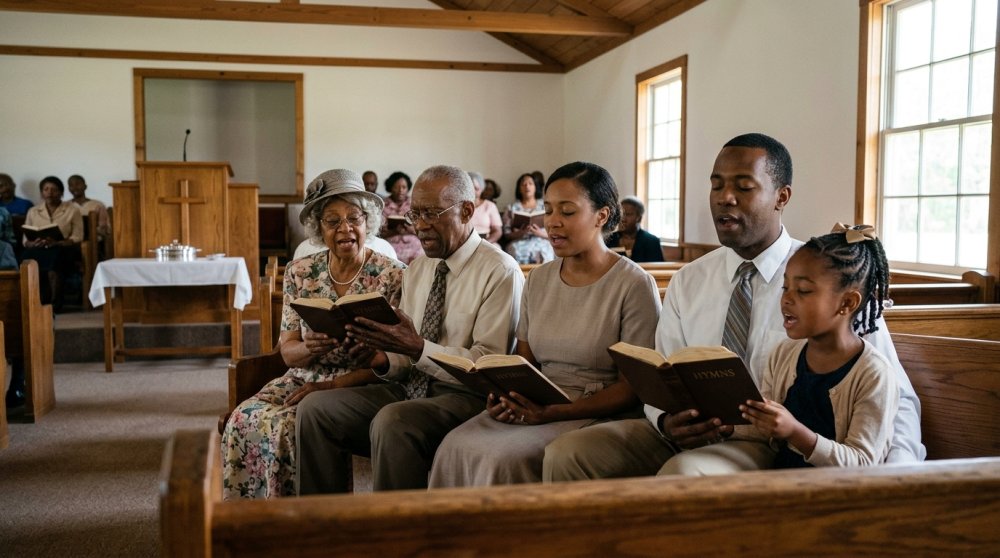
Two hundred years ago, evangelist Benjamin F. Hall planted a congregation of the Lord’s church in rural Moulton, Alabama. The congregation recently gathered to thank God for His faithfulness and to look forward with hope.
Church records credit Hall, influenced by Restoration Movement leader Barton W. Stone, with establishing the Moulton Church of Christ in 1826. Other historical sources mention Tolbert Fanning’s involvement in 1830 or a 1843 debate that brought twenty-two baptisms.
“I rejoice in such triumphs no little myself; but oh Lord, to Thee, and thy precious word, I am indebted for all that I have witnessed in Moulton,” the evangelist wrote of the church. “The brethren are strong in numbers, talent and influence, and I pray God they may be kept humble.”
Local deacon and historian Michael Strickland returned to his childhood congregation to teach its chronology and preach on the importance of remembrance. Two hundred ten members and guests attended the bicentennial worship service.
“Our mission, brothers and sisters, is to show the love of God to everyone,” Strickland told the congregation. “I want to suggest that God has been showing his love in this congregation for 200 years. And I pray he gives us 200 years more.”
Third-generation member Cindy Henry traveled from Hope Hull, Alabama, to celebrate with her family. Her grandfather and father served as elders, and her son Mitchell now serves as a deacon.
“This is still home in a lot of ways,” Henry said. “There’s new faces, but there’s still people that helped raise me.”
Her father, 88-year-old Clint Hardin, has worshiped at Moulton for most of his life. He recalls godly Sunday school teachers and parents who passed on their dedication to the word of God.
“We’ve had good preachers, and we’ve had good leadership,” Hardin said. “Really good leadership carried us through the problems I guess that all churches have.”
Young mother Ashley Nelson joined the church ten years ago through her husband Ross, whose grandfather once preached at Moulton. She now helps lead the children’s ministry known as the Sun Shiners.
“We have so many young kids now,” Nelson said. “We have a big, strong little kids group. And so, anytime we have an event, we usually have about 20 to 30 kids at those events.”
Through every season of growth and challenge, the Moulton Church of Christ has remained rooted in Scripture and committed to passing the faith to the next generation.
Let us know what you think, please share your thoughts in the comments below.
Faith Facts
- Christians in Essex are taking legal action to defend their right to share the Gospel in public spaces.
- A local council has banned the use of loudspeakers and prohibited street preaching about Hell.
- The church maintains that sharing the Gospel belongs on the streets and is a core expression of faith.
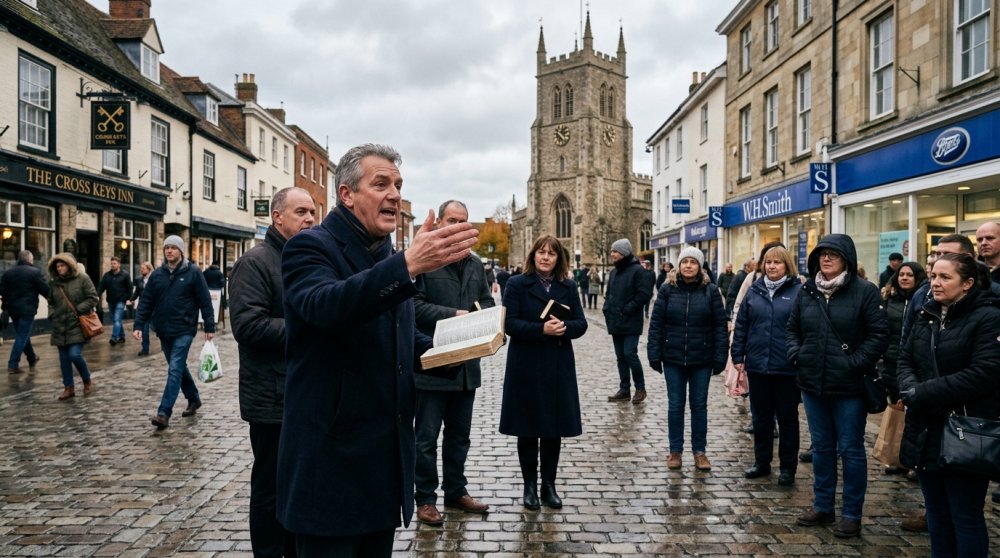
Christians at a church in Essex are fighting in court for the right to share the Gospel on British streets after a city council banned their use of loudspeakers and ordered them to stop warning people about Hell.
The case highlights growing tensions between traditional Christian witness and local government restrictions on public preaching.
“The Gospel belongs on the streets,” church leaders declared in their legal challenge.
Faithful believers see this as part of a broader pattern of restrictions aimed at silencing biblical truth in the public square.
“We will not be silenced from proclaiming the truth that saves,” a church spokesperson stated.
Let us know what you think, please share your thoughts in the comments below.
Faith Facts
- A Colombian pastor was murdered in Cartagena for refusing to allow gang members he had evangelized to use his motorcycle.
- The pastor’s death highlights the dangers faced by Christians boldly sharing the Gospel in violent urban areas.
- His sacrifice serves as a sobering reminder of the cost of faithfulness to Christ in regions controlled by criminal gangs.
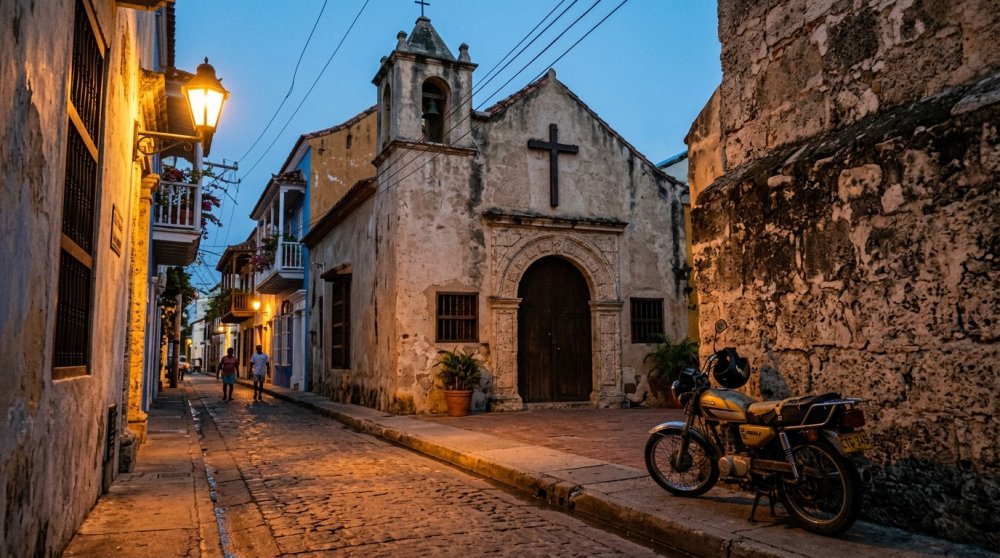
A Colombian pastor was beaten to death by members of a criminal gang he had been evangelizing in the city of Cartagena.
The gang members attacked the pastor after he refused to allow them to use his motorcycle, according to a report.
Let us know what you think, please share your thoughts in the comments below.


-

 Self-Reliance2 years ago
Trump’s Bold Move Uncovers Massive Social Security Fraud
-

 Faith2 years ago
New Clues Emerge in Noah’s Ark Mystery
-

 News2 years ago
Governor Walz’s Rhetoric Sparks National Controversy
-

 News2 years ago
Mel Gibson’s ‘The Passion of the Christ’ Sequel Title Announced
-

 Family2 years ago
Texas Lawmaker Targets Furries in Schools
-

 Freedom2 years ago
Maine Lawmaker Challenges Sports Fairness Controversy
-

 Family1 year ago
Canada’s Controversial Policy Sparks Ethical Debate
-
Faith11 months ago
Congress Hears Pleas for Nigerian Christians