
Faith
British Council Restores Christian Prayer After Years of Secular Pressure

Faith Facts
- Reform UK has successfully reintroduced the Lord’s Prayer before council meetings in Thurrock, Essex, reversing years of secular policy
- The decision restores a centuries-old British tradition of opening government proceedings with Christian prayer
- This marks a significant victory for Christian values in public life as believers push back against the marginalization of faith in government
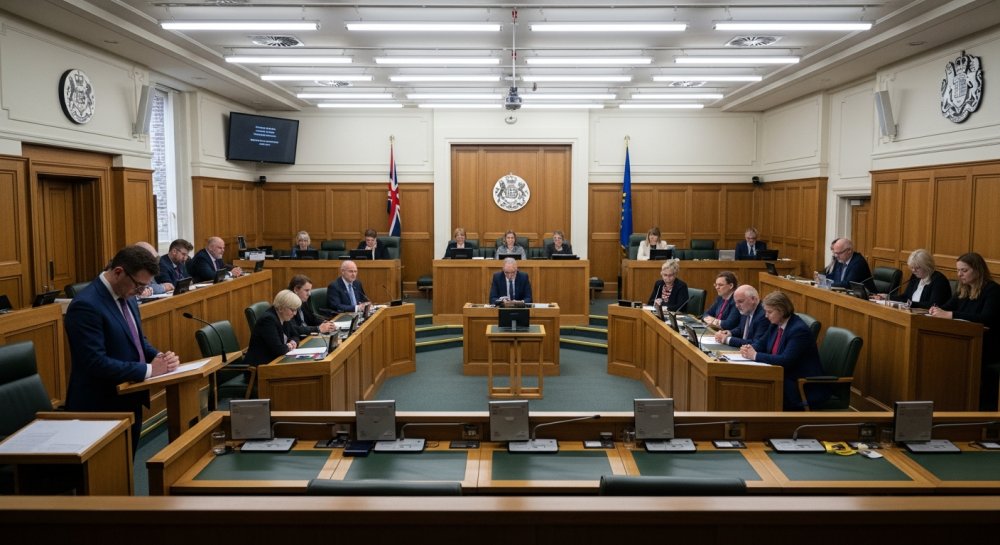
A British local council has taken a bold stand for Christian heritage by restoring the Lord’s Prayer to its official proceedings. The move in Thurrock, Essex, led by Reform UK councillors, reverses years of secular pressure that had pushed faith out of the public square.
The head of Reform UK’s Christian Fellowship is celebrating the decision as a crucial step in reclaiming Britain’s Christian identity. For generations, opening prayers were standard practice in British government at all levels, reflecting the nation’s deep Christian roots.
“This is about more than just a prayer,” explained supporters of the measure. “It’s about acknowledging the Christian foundation upon which British law, governance, and society were built.”
The restoration comes as Christians across the Western world increasingly recognize the importance of maintaining faith traditions in public life. Decades of aggressive secularization have attempted to erase Christianity from government buildings, schools, and civic institutions.
Britain’s Parliament itself opens each day with prayers led by chaplains, a practice dating back centuries. Local councils followed this tradition until recent decades when secular activists began campaigning for its removal.
The Thurrock decision demonstrates what can happen when Christians engage politically and refuse to accept the marginalization of their faith. Reform UK, a conservative political party, has made defending Christian values a central part of its platform.
Critics of the restoration claim that opening prayers exclude non-Christians. However, supporters point out that Britain remains a majority Christian nation with an established church, and that acknowledging this heritage harms no one.
“Religious freedom doesn’t mean erasing Christianity from public life,” one Reform UK official noted. “It means protecting everyone’s right to practice their faith, including in the public square.”
The Lord’s Prayer itself is deeply embedded in British culture and history. For centuries, schoolchildren learned it, and it was recited in countless settings both religious and civic. Its removal from public life represented a dramatic break with tradition.
American Christians watching from across the Atlantic see parallels in their own struggles to maintain faith traditions in government. Prayer before legislative sessions, invocations at public events, and religious displays on public property have all faced legal challenges from secular groups.
Yet the Thurrock example shows that these battles can be won when people of faith stand firm. By electing representatives who share their values and won’t be intimidated by secular pressure groups, communities can preserve their heritage.
The decision also highlights the importance of political engagement for Christians. When believers disengage from politics, claiming it’s too worldly or divisive, they cede ground to those who actively oppose Christian values.
Reform UK’s success in this matter demonstrates the impact that even local political action can have. While national politics often seems intractable, city and county governments remain responsive to organized, principled citizens.
For British Christians, the restoration of prayer in Thurrock may signal a turning point. After decades of retreat, they’re beginning to reclaim space for faith in public life rather than accepting its banishment to private worship alone.
The broader cultural implications extend beyond one council meeting. Each victory for maintaining Christian tradition in the public square pushes back against the narrative that faith has no place in modern governance.
As Western societies grapple with questions of identity and values, the Thurrock decision reminds us that our Judeo-Christian heritage need not be abandoned in the name of progress. Traditional values and modern governance can coexist.
Let us know what you think, please share your thoughts in the comments below.


Faith Facts
- Berlin pride festival attacker Abdul Ballout had documented ties to the Islamic State terror organization and was known to authorities before the attack
- Despite being court-ordered to attend a deradicalization program, Ballout remained a threat and carried out violence against civilians
- The incident raises critical questions about European immigration policies and the effectiveness of rehabilitation programs for radicalized individuals
The suspect accused of targeting innocent people at Berlin’s pride festival had documented connections to the Islamic State terror organization, according to reports. What makes this attack even more troubling is that authorities were already aware of Abdul Ballout’s dangerous ideology.
Court records reveal that Ballout had been ordered to attend a deradicalization program specifically designed for individuals at risk from Islamism and right-wing extremism. Yet despite this intervention, he allegedly carried out a violent attack on civilians celebrating in Berlin.
The failure of Europe’s deradicalization efforts is once again on full display. Programs meant to rehabilitate individuals with extremist ideologies have repeatedly proven ineffective, leaving innocent people vulnerable to attacks that could have been prevented.
This incident highlights a pattern seen across Europe where known threats slip through bureaucratic systems designed more to appear compassionate than to actually protect citizens. American Christians should take note of these failures as our own nation debates immigration and security policies.
The attack comes at a time when European nations are grappling with the consequences of immigration policies that have allowed radical ideologies to take root in their communities. Traditional values of national security and citizen protection have too often been subordinated to political correctness.
Ballout’s case demonstrates the real-world consequences when governments prioritize rehabilitation programs over the safety of their own people. The victims of his attack deserved better protection from their government.
As Americans, we must remain vigilant about similar threats in our own communities. Faith-based organizations and law enforcement must work together to identify and address radicalization before it leads to violence, while maintaining our constitutional protections and Christian values of redemption balanced with justice.
The Berlin incident serves as a sobering reminder that evil exists in our world and that wishful thinking cannot replace sound security policies. Our prayers go out to the victims and their families as they recover from this senseless act of violence.
Let us know what you think, please share your thoughts in the comments below.

Faith Facts
- Father Chad Ripperger, exorcist for the Archdiocese of Denver, warns Americans about intensifying spiritual warfare in modern society
- Former Navy SEAL Shawn Ryan’s three-hour interview with the exorcist reveals critical insights about demonic activity and protection
- The priest emphasizes suffering, prayer, and sacramental life as essential weapons against evil forces targeting families and faith
A gripping three-hour conversation between former Navy SEAL Shawn Ryan and Father Chad Ripperger, an exorcist with the Archdiocese of Denver, has captured the attention of millions of Americans seeking to understand the spiritual battles facing our nation. The interview, released last week, marks Ryan’s second sit-down with the experienced priest who has spent decades confronting demonic forces on the front lines of spiritual warfare.
Father Ripperger’s insights come at a time when many Christians feel increasingly besieged by forces hostile to traditional values and religious freedom. His message carries particular weight given his extensive experience performing exorcisms and counseling those afflicted by demonic oppression.
The exorcist’s central message to believers is both sobering and empowering.
“Be willing to suffer,” Father Ripperger emphasized, explaining that spiritual growth and victory over evil often require enduring hardship for the sake of Christ and His truth.
This call to embrace suffering stands in stark contrast to the comfort-seeking culture that dominates modern America. Father Ripperger explained that demons specifically target those unwilling to bear discomfort for their faith, exploiting weakness and complacency to gain footholds in lives, families, and communities.
The priest outlined how spiritual warfare has intensified in recent years, with demonic activity becoming more brazen and widespread. He attributed this escalation partly to the breakdown of traditional family structures, the rejection of Christian moral teaching, and the proliferation of occult practices disguised as entertainment or self-help.
Father Ripperger provided practical guidance for Christians seeking to protect themselves and their families from spiritual attack. He emphasized the critical importance of regular prayer, especially the Rosary, and frequent reception of the sacraments. These spiritual disciplines, he explained, create protective barriers that demons cannot easily penetrate.
The exorcist also warned about the dangers of seemingly innocent activities that can open doors to demonic influence. He specifically mentioned certain forms of media, New Age practices, and the casual treatment of sacred things as potential entry points for evil spirits.
Throughout the conversation, Father Ripperger stressed that Christians must understand the reality of the spiritual realm. Demons are not metaphors or psychological constructs but actual fallen angels with intelligence and malicious intent. Recognizing this reality is the first step toward effective spiritual defense.
He encouraged believers to live lives of radical faithfulness, maintaining close relationships with God through prayer and sacramental participation. This spiritual foundation, combined with moral uprightness and trust in divine providence, provides the strongest defense against demonic attack.
The interview also addressed the importance of community and accountability among believers. Father Ripperger noted that isolated Christians are more vulnerable to spiritual assault than those firmly connected to a faithful church community and strong Christian friendships.
Ryan’s platform has given Father Ripperger’s message unprecedented reach beyond traditional Catholic circles. The former Navy SEAL’s audience includes many veterans, patriots, and Americans concerned about the moral and spiritual direction of the nation. This crossover appeal has sparked renewed interest in ancient Christian teachings about spiritual warfare among people who might not otherwise encounter such content.
The exorcist’s call to embrace suffering resonates particularly with those who have served in military or law enforcement roles, where sacrifice and hardship are understood as necessary for protecting others. Father Ripperger drew parallels between physical courage and spiritual fortitude, encouraging Christians to show the same bravery in defending their faith that warriors display in defending their country.
As cultural hostility toward Christianity increases and traditional values face relentless attack, Father Ripperger’s message provides both warning and hope. He reminded viewers that despite the reality and intensity of spiritual warfare, Christ has already won the ultimate victory. Believers who remain faithful, even through suffering, share in that triumph.
The interview serves as a wake-up call for American Christians who may have grown complacent about the spiritual dimensions of the challenges facing our nation. It reminds us that the battles over life, family, and freedom are not merely political or cultural but fundamentally spiritual in nature.
Let us know what you think, please share your thoughts in the comments below.

Faith Facts
- Young adults in the United Kingdom are leading evangelism efforts, according to new survey data
- Survey results show a significant shift in who is actively sharing their Christian faith across Britain
- The findings challenge common assumptions about declining faith engagement among younger generations
A powerful movement is taking shape across the United Kingdom, and it’s being led by those many assumed had abandoned the faith. New survey data reveals that young adults are not merely observers of God’s work—they are becoming the primary drivers of evangelism efforts throughout Britain.
The striking numbers paint a picture that defies the narrative of religious decline among younger generations. Instead of walking away from their faith, these young believers are stepping forward with conviction and purpose.
This development represents a significant departure from recent trends that suggested Christianity was losing its hold on the next generation. The survey results indicate that young adults in the UK are actively participating in sharing the Gospel, engaging their communities, and living out their faith in tangible ways.
The findings offer hope to Christian communities that have watched with concern as church attendance numbers declined in recent decades. Rather than accepting defeat, these young evangelists are demonstrating that faith can still flourish when believers commit to action.
What makes this movement particularly noteworthy is its grassroots nature. These aren’t celebrity preachers or ordained ministers—they’re ordinary young people who have decided to make their faith a central part of their daily lives and interactions.
The data suggests that this generation understands something crucial: evangelism isn’t just the responsibility of church leadership. It’s the calling of every believer who has experienced the transforming power of Christ.
This trend in the United Kingdom may serve as an encouraging sign for Christians worldwide. When young believers take ownership of the Great Commission, the impact can extend far beyond what established institutions alone could achieve.
The survey results remind us that God often works in unexpected ways, raising up witnesses from places and generations that secular culture had written off. These young British Christians are proving that faith, when genuinely embraced, naturally leads to sharing the Good News with others.
Let us know what you think, please share your thoughts in the comments below.


-

 Self-Reliance1 year ago
Trump’s Bold Move Uncovers Massive Social Security Fraud
-

 Faith1 year ago
New Clues Emerge in Noah’s Ark Mystery
-

 News1 year ago
Governor Walz’s Rhetoric Sparks National Controversy
-

 News1 year ago
Mel Gibson’s ‘The Passion of the Christ’ Sequel Title Announced
-

 Family1 year ago
Texas Lawmaker Targets Furries in Schools
-

 Freedom1 year ago
Maine Lawmaker Challenges Sports Fairness Controversy
-

 Family1 year ago
Canada’s Controversial Policy Sparks Ethical Debate
-
Faith8 months ago
Congress Hears Pleas for Nigerian Christians