
News
British Conservative Leader Takes Bold Stand Against Transgender Ideology Punishing Nurses


Faith Facts
- UK Conservative Leader Kemi Badenoch is demanding an end to investigations against nurses who have been targeted for refusing to comply with transgender ideology policies in the National Health Service
- The Nursing and Midwifery Council has been conducting punitive actions against healthcare workers who maintain traditional views on biological sex and refuse to use preferred pronouns
- Badenoch’s intervention marks a significant pushback against the enforcement of gender ideology in professional healthcare settings
Conservative Party Leader Kemi Badenoch is standing up for healthcare professionals who are being persecuted for upholding biological reality and traditional values. In a decisive move, she has written directly to the Nursing and Midwifery Council (NMC), calling for an immediate end to investigations and punitive measures against nurses who have refused to comply with transgender ideology mandates.
The controversy centers on healthcare workers who have faced professional sanctions for declining to use so-called “preferred pronouns” or for maintaining that biological sex is an immutable scientific fact. These nurses have found themselves caught between their professional duties, personal convictions, and increasingly aggressive transgender policies that demand compliance regardless of conscience or scientific truth.
Badenoch’s intervention represents a major development in the ongoing cultural battle over free speech, religious freedom, and the imposition of gender ideology in public institutions. The Conservative leader is using her platform to defend those who have suffered career consequences simply for refusing to deny biological reality or violate their deeply held beliefs.
The National Health Service has become a battleground for transgender activism, with medical professionals increasingly pressured to adopt language and practices that contradict both science and traditional values. Many Christian and conservative healthcare workers have found themselves targeted for maintaining that there are only two biological sexes and that changing pronouns cannot change biological reality.
This situation reflects a broader pattern across Western nations where professionals in education, healthcare, and other fields face investigation, suspension, or termination for refusing to embrace transgender ideology. The cases in the UK mirror similar controversies in the United States, where teachers, doctors, and other workers have lost their jobs for standing firm on biological truth and parental rights.
Badenoch’s willingness to confront the NMC directly signals a potential shift in how conservative politicians are approaching the transgender debate. Rather than avoiding controversy, she is directly challenging institutional policies that punish dissent and enforce ideological conformity.
The nurses at the center of these investigations represent countless professionals who feel pressured to choose between their careers and their convictions. For many Christians, using pronouns that contradict biological sex amounts to bearing false witness, a violation of biblical teaching. For others, it represents a surrender to an ideology that denies fundamental truths about human nature and God’s design.
The outcome of Badenoch’s intervention could have significant implications not only for the affected nurses but for the broader question of whether professionals will be free to maintain traditional beliefs in their workplaces. If the NMC backs down, it could embolden others to resist similar mandates. If they proceed with punitive actions despite her objections, it will demonstrate just how entrenched gender ideology has become in British institutions.
This fight is about more than pronouns or workplace policies. It represents a fundamental clash between worldviews—one that acknowledges objective truth and God-given reality, and another that insists subjective feelings can override biology and that everyone must participate in that fiction or face consequences.
The situation also highlights the importance of having principled leaders willing to stand against the tide of cultural pressure. Badenoch’s action demonstrates that it is possible for political figures to defend those being persecuted for their beliefs, even when doing so invites criticism from activists and media outlets committed to advancing transgender ideology.
As this story develops, Christians and conservatives across the Western world will be watching closely. The treatment of these nurses will send a clear message about whether there remains space in modern Britain for those who refuse to compromise their convictions, or whether ideological conformity will be ruthlessly enforced regardless of the cost to freedom, truth, and conscience.
Let us know what you think, please share your thoughts in the comments below.


Faith Facts
- At least 47 people were killed and 22 others injured when gang members attacked a church sheltering displaced families near Port-au-Prince, Haiti
- The violent gang rampage included burning animals alive and targeting Christians seeking refuge in a house of worship
- Haiti continues to face unprecedented lawlessness as armed gangs control large portions of the nation, threatening innocent civilians and religious communities
A horrific act of violence has shocked the Caribbean nation of Haiti as gang members stormed a church providing shelter to displaced families, killing at least 47 innocent people and injuring 22 others. The attack occurred just outside the capital city of Port-au-Prince, according to the United Nations.
The church had been serving as a sanctuary for Haitians forced from their homes by the escalating gang violence that has plagued the impoverished nation. These families sought safety within the walls of a Christian house of worship, only to face unspeakable brutality from the very lawlessness they were fleeing.
Reports indicate the gang members not only massacred those taking refuge but also engaged in acts of cruelty including burning animals alive. The attack represents another devastating blow to Haiti’s Christian community and the nation’s ongoing humanitarian crisis.
Haiti has descended into chaos as armed gangs have seized control of large swaths of territory, including significant portions of Port-au-Prince. These criminal organizations operate with virtual impunity, terrorizing civilians, disrupting essential services, and creating a humanitarian emergency that has displaced hundreds of thousands of people.
The targeting of a church specifically highlights the complete breakdown of moral order and respect for sacred spaces in Haiti. Churches have traditionally served as sanctuaries and centers of hope in Haitian communities, making this attack particularly devastating for a deeply Christian population.
The international community has struggled to respond effectively to Haiti’s deteriorating security situation. Despite various intervention proposals and limited security assistance, the gang violence continues to escalate, claiming innocent lives and destroying the social fabric of what was once known as the first Black republic.
For American Christians, this tragedy serves as a sobering reminder of the persecution and violence believers face in lawless regions around the world. It also underscores the urgent need for prayer, humanitarian assistance, and thoughtful engagement to help restore order and protect vulnerable populations in Haiti.
The attack on this church sanctuary demonstrates what happens when societies lose the rule of law and moral foundations that protect human dignity. Haiti’s crisis should move people of faith to intercede for the nation and support efforts to bring peace, justice, and the Gospel’s hope to a suffering people.
Let us know what you think, please share your thoughts in the comments below.
Faith Facts
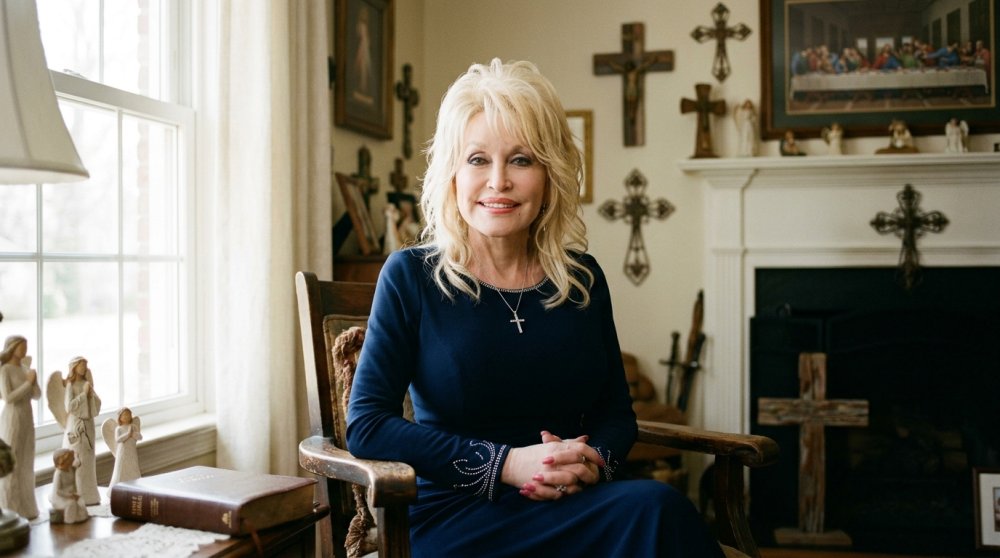
- Dolly Parton, legendary country singer and devoted Christian, passed away at age 80 in Nashville, Tennessee
- The beloved entertainer carried hymns from her small Tennessee mountain church throughout her decades-long career
- Parton achieved No. 1 hits on Christian radio, using her platform to share her faith with millions
The nation is in mourning following the passing of Dolly Parton, a treasured American icon whose faith in Jesus Christ remained at the heart of everything she did. The country music legend died Tuesday in Nashville, Tennessee, at the age of 80.
Parton’s journey began in the humble setting of a small mountain church in Tennessee, where the hymns and spiritual songs she learned as a child would shape not only her musical style but her entire life’s mission. She never forgot those roots, and her commitment to sharing the Gospel through her music touched countless lives across generations.
Throughout her remarkable career, Parton used her God-given talents to bring hope and inspiration to millions. Her success on Christian radio charts demonstrated that her faith was not just a private matter, but a public testimony she was eager to share with the world.
The singer-songwriter’s life exemplified what it means to be a faithful steward of the blessings God provides. From her humble beginnings in the Smoky Mountains to becoming one of America’s most beloved entertainers, Parton never wavered in her devotion to Christ or her love for traditional American values.
Her passing marks the end of an era, but her legacy of faith, family values, and service to others will continue to inspire Christians and Americans for generations to come. Dolly Parton now rests in the arms of Jesus, the Savior she served so faithfully throughout her life.
Let us know what you think, please share your thoughts in the comments below.

Faith Facts
- Dolly Parton, who attended the Radnor Church of Christ in Nashville with her husband Carl Dean, passed away at age 80
- A 1966 church directory photograph documented the newlywed couple as active members of the congregation
- Parton’s family announced her passing on Tuesday, August 25, 2026, following her husband’s death in March 2025
The black-and-white photograph labeled “Mr. & Mrs. Carl Dean” appeared in a 1966 directory of the Radnor Church of Christ in Nashville. It captured a moment when one of America’s most beloved entertainers was simply known as Mrs. Dean, a young bride attending worship alongside her husband.
Mrs. Dean, who met her future husband on the day she moved to Music City after her 1964 high school graduation, became known to the world as country music superstar Dolly Parton. Her family announced her passing Tuesday, August 25, 2026, at age 80.
A message from the family of Dolly Parton. pic.twitter.com/9DNRgRx0uH
— Dolly Parton (@DollyParton) August 25, 2026
The legendary singer’s connection to Churches of Christ represented an important chapter in her life story, one that reflected the faith values she carried throughout her remarkable career. Carl Dean, her husband of nearly 60 years, died March 3, 2025, at age 82.
Parton’s ties to the Church of Christ community remained a testament to her roots and the values that shaped her character. Her marriage to Carl Dean, documented in that simple church directory photograph, endured through decades of fame and fortune—a rarity in the entertainment industry.
The country music icon’s life reflected traditional American values of faith, family, and hard work. From her humble beginnings in rural Tennessee to international stardom, Parton maintained connections to the church community that welcomed her as a young bride in Nashville.
Her legacy extends far beyond her musical achievements, encompassing her charitable work, her commitment to literacy through the Imagination Library, and her steadfast devotion to her husband and family values. These principles aligned with the Christian foundation evident in her early years attending the Radnor Church of Christ.
Let us know what you think, please share your thoughts in the comments below.


-

 Self-Reliance1 year ago
Trump’s Bold Move Uncovers Massive Social Security Fraud
-

 Faith1 year ago
New Clues Emerge in Noah’s Ark Mystery
-

 News1 year ago
Governor Walz’s Rhetoric Sparks National Controversy
-

 News1 year ago
Mel Gibson’s ‘The Passion of the Christ’ Sequel Title Announced
-

 Family1 year ago
Texas Lawmaker Targets Furries in Schools
-

 Freedom1 year ago
Maine Lawmaker Challenges Sports Fairness Controversy
-

 Family1 year ago
Canada’s Controversial Policy Sparks Ethical Debate
-
Faith9 months ago
Congress Hears Pleas for Nigerian Christians