
Faith
BBC’s Religious Illiteracy Problem Exposed by Former Insider


Faith Facts
- Roger Bolton, longtime BBC Radio 4 ‘Feedback’ host, criticized the network’s widespread illiteracy about religion and religious practice
- Bolton made his remarks to the Religion Media Centre after more than two decades presenting at the BBC
- The criticism adds to growing concerns about mainstream media’s inability to accurately cover faith communities and religious issues
A veteran BBC broadcaster has joined the chorus of voices raising alarm over the network’s troubling lack of understanding when it comes to matters of faith. Roger Bolton, who presented Radio 4’s “Feedback” programme for over two decades, delivered pointed criticism of his former employer’s deficiencies in religious coverage.
Speaking to the Religion Media Centre, Bolton didn’t mince words about what he sees as a fundamental problem within the British Broadcasting Corporation.
“The BBC has a relative illiteracy about religion, both what it is and the way it’s practised,” Bolton stated.
Bolton’s comments carry particular weight given his extensive tenure at the BBC. As a long-serving presenter on one of Radio 4’s flagship programmes, he witnessed firsthand the internal culture and decision-making processes that shape the network’s editorial approach to religious topics.
The criticism reflects a broader concern among Christians and people of faith about how mainstream media outlets handle religious subject matter. Too often, reporters and editors lack basic knowledge of theology, church history, or the practices that define different faith traditions.
This religious illiteracy doesn’t just lead to factual errors. It shapes how stories are framed, which voices are considered credible, and which aspects of faith life are deemed newsworthy. When journalists don’t understand the significance of religious observances, doctrinal distinctions, or the role of faith in believers’ lives, their reporting inevitably suffers.
For Christian audiences in America, the situation at the BBC serves as a warning about similar trends in domestic media. Many U.S. newsrooms display comparable blind spots when covering religious communities, particularly traditional Christians whose values often clash with progressive editorial perspectives.
Bolton’s willingness to speak candidly about these shortcomings, even after a long career at the institution, suggests the problem runs deep. When even longtime insiders acknowledge the issue, it becomes harder for network leadership to dismiss such concerns as partisan criticism.
The path forward requires news organizations to take religious literacy seriously—not as a nice-to-have skill, but as essential professional competence for journalists covering a world where billions of people are motivated by faith.
Let us know what you think, please share your thoughts in the comments below.


Faith Facts
- Texas Democratic state Rep. James Talarico stated in a 2021 interview that he “hates Christianity” despite identifying as a Christian
- The interview was conducted with a transgender-identifying theologian and has recently resurfaced
- Talarico’s statement raises serious questions about his understanding of Christian faith and values
A troubling interview from 2021 featuring Democratic Texas state Representative James Talarico has resurfaced, revealing statements that have shocked many Christians across the nation. In the interview, Talarico made the startling claim that he “hates Christianity” while simultaneously identifying himself as a Christian.
The interview was conducted with a transgender-identifying theologian, adding another layer of concern for traditional Christian conservatives. Such statements from an elected official raise significant questions about the authenticity of his faith claims and his understanding of core Christian teachings.
???? UNEARTHED
In an interview with a self-described “TransQueer” activist theologian, Texas Democrat James Talarico says he “hates” Christianity:
“I always think of myself as a Christian who hates Christianity.” pic.twitter.com/wFEONx03CW
— RNC Research (@RNCResearch) June 23, 2026
“THIS GUY IS JUST SO WEIRD”
A pair of resurfaced clips show James Talarico calling himself a “Christian who hates Christianity” and praising a “TransQueer Latinx” theologian… you read that right.
WATCH: Senator Josh Hawley responds?? pic.twitter.com/9k7P6GrvBE
— The Will Cain Show (@WillCainShow) June 24, 2026
For many believers, Christianity is not merely a cultural identity or political label, but a deeply held faith rooted in Scripture, tradition, and a personal relationship with Jesus Christ. The idea of simultaneously claiming to be Christian while professing hatred for Christianity appears contradictory to fundamental Christian principles of love for the Church, the body of Christ.
This resurfaced interview comes at a time when religious freedom and traditional values face increasing challenges in public life. Christians are called to speak truth in love and stand firm in their convictions, making such statements from public officials particularly concerning to voters who prioritize faith-based leadership.
The emergence of this video serves as a reminder for Christian voters to carefully examine the stated beliefs and past statements of elected officials who claim to share their values. Authentic Christian faith should be reflected in both word and deed, upholding the teachings of Scripture rather than opposing them.
Let us know what you think, please share your thoughts in the comments below.
Faith Facts
- AI is fundamentally transforming ministry capacity beyond simple search tools, creating an existential challenge for unprepared churches and Christian organizations
- Donor engagement is already shifting toward ministries that leverage AI technology, potentially leaving traditional organizations behind
- Christian leaders who fail to adapt to AI-driven ministry may face organizational collapse as donor dollars flow to more technologically equipped ministries
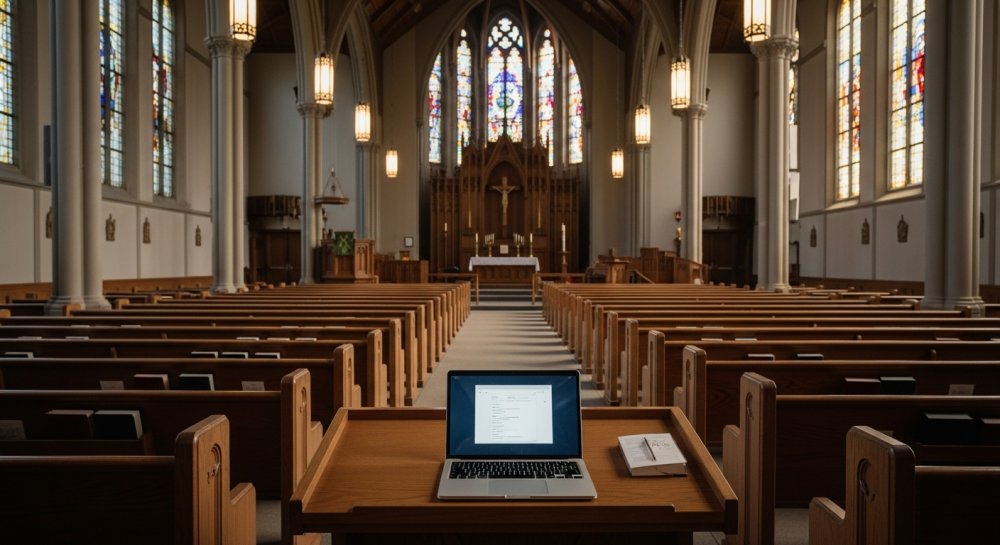
American churches and Christian ministries stand at a crossroads that many leaders have yet to recognize. The rise of artificial intelligence represents far more than a technological upgrade—it’s a fundamental shift in how ministries can reach souls, steward resources, and fulfill the Great Commission. Yet countless organizations remain unprepared for what’s already here.
AI is not simply a better search engine or a novelty tool for writing emails. It functions as a force multiplier for organizational capacity, enabling even small ministries to accomplish work that previously required large staffs and substantial budgets. The technology amplifies human effort in ways that transform what’s possible for kingdom work.
The real crisis facing unprepared ministries isn’t about keeping up with trends—it’s about survival. Christian donors, particularly younger generations raised in a digital world, increasingly expect the organizations they support to demonstrate wise stewardship through technological competence. They want to see their dollars maximized for gospel impact, not spent on inefficient processes that AI could streamline.
Ministries already leveraging AI are reaching new types of donors in ways traditional organizations cannot match. These forward-thinking groups can personalize outreach, respond instantly to inquiries, analyze giving patterns to improve stewardship, and communicate their mission with unprecedented clarity and reach. The donor dollar is indeed at stake, and it’s flowing toward organizations that demonstrate both spiritual faithfulness and practical wisdom.
The stakes extend beyond fundraising. Churches and ministries that fail to adapt face something more serious than falling behind—they risk erasure. As AI-equipped organizations expand their capacity to serve, disciple, and evangelize, those clinging to outdated methods may find themselves increasingly irrelevant in a rapidly changing landscape.
This isn’t a call to abandon biblical principles or chase every technological fad. Rather, it’s a recognition that faithfulness requires wisdom—and wisdom means using the tools God has allowed humanity to develop for maximum kingdom impact. The printing press revolutionized Bible distribution; radio and television expanded evangelistic reach; the internet created global connections. AI represents the next frontier.
Christian leaders must understand that embracing AI doesn’t mean replacing human ministry or diminishing the power of personal relationships. It means equipping God’s people to do more with the resources entrusted to them. It means reaching people who might never walk through a church door but will engage through digital channels. It means stewarding donor contributions with excellence that honors both the giver and the God we serve.
The window for preparation is closing. Ministries that wait too long may find the gap unbridgeable, their capacity permanently diminished compared to organizations that moved decisively. The question facing every Christian leader is simple: Will you steward the opportunities of this moment, or will you watch from the sidelines as others advance the gospel with tools you refused to embrace?
This is not fear-mongering—it’s a sober assessment of the reality facing American Christianity. The Great Commission remains unchanged, but the tools available to fulfill it have expanded dramatically. Wise stewards will recognize this moment for what it is: an opportunity to multiply ministry impact in ways previous generations could only imagine.
Let us know what you think, please share your thoughts in the comments below.

Faith Facts
- Creation Fest, a major Christian music festival, is concluding its current format after 25 years of ministry
- Festival leader Niall Dunne says letting go of the old vision is necessary for God to bring new growth
- The final event will celebrate the festival’s legacy while ushering in a new chapter of ministry
After a quarter-century of bringing Christian music and ministry to thousands of believers, Creation Fest is embarking on a significant transformation. The decision reflects a profound trust in God’s leading and a willingness to embrace change for the sake of Kingdom advancement.
Niall Dunne, the leader of Creation Fest, shared the spiritual reasoning behind this pivotal moment. He emphasized that sometimes faithful stewardship means recognizing when God is calling us to a new season.
“It’s hard to let a vision die,” Dunne acknowledged. “But until it does, nothing can grow up in its place.”
His words reflect a biblical principle found throughout Scripture—that death often precedes resurrection, and endings can be the necessary prelude to new beginnings. This understanding has guided the festival’s leadership as they discern God’s direction for the future.
The upcoming event will serve a dual purpose: honoring the 25-year legacy of Creation Fest while opening the door to whatever God has planned next. For the thousands who have attended over the years, the festival has been more than entertainment—it’s been a place of worship, fellowship, and spiritual renewal.
Dunne described his approach to this transition as “trusting God’s still small voice,” echoing the experience of the prophet Elijah who encountered God not in dramatic displays but in a gentle whisper. This posture of humble listening has characterized the decision-making process.
Creation Fest has been instrumental in strengthening the faith of countless young people and families throughout its history. The festival has provided a Christ-centered alternative to secular entertainment while fostering community among believers and introducing many to saving faith in Jesus Christ.
As the current format concludes, supporters are encouraged to pray for wisdom and discernment for the festival’s leadership. The willingness to release what has been fruitful in order to pursue God’s new direction demonstrates the kind of radical obedience that honors the Lord.
The final Creation Fest event in its current form represents both an ending and a beginning—a testimony to the faithfulness of God over 25 years and an act of faith for whatever comes next. It’s a reminder that Christian ministry must remain flexible and responsive to the Holy Spirit’s leading, even when that means letting go of beloved traditions.
Let us know what you think, please share your thoughts in the comments below.


-

 Self-Reliance1 year ago
Trump’s Bold Move Uncovers Massive Social Security Fraud
-

 Faith1 year ago
New Clues Emerge in Noah’s Ark Mystery
-

 News1 year ago
Governor Walz’s Rhetoric Sparks National Controversy
-

 News1 year ago
Mel Gibson’s ‘The Passion of the Christ’ Sequel Title Announced
-

 Family1 year ago
Texas Lawmaker Targets Furries in Schools
-

 Freedom1 year ago
Maine Lawmaker Challenges Sports Fairness Controversy
-

 Family1 year ago
Canada’s Controversial Policy Sparks Ethical Debate
-
Faith7 months ago
Congress Hears Pleas for Nigerian Christians