
Faith
Baby Ruth: Faith Triumphs Over Tragedy

Faith Facts
- Ruth survived a brutal attack as an infant when heavily armed militants targeted her Christian village in Plateau state, Nigeria.
- Her adoptive family credits God’s grace for rescuing Ruth and sustaining them through ongoing hardship and persecution.
- Despite continued threats, Ruth’s family and community remain steadfast in faith, praying for peace and forgiveness.
Five years ago, Ruth became a living emblem of hope for Nigerian Christians suffering persecution. Her story of miraculous survival and the steadfast faith of those who raised her inspires believers across her homeland.
In 2021, Ruth’s home village, Maiyanga, faced a violent dawn attack by Islamic militants. Amid the chaos, her mother begged for mercy but was killed, and Ruth was left behind in the mud, orphaned and alone.
God’s hand of providence was evident as survivors found the infant Ruth at daybreak and placed her in the loving care of Danjuma and Talatu Danjuma, her aunt and uncle, who already had their own children.
“We know the importance of children,” Talatu said softly. “That’s why we adopted her to stay with us. We thank God for providing for us to take good care of them. It hasn’t been easy, but we believe God will continue to guide us.”
The Danjuma family’s faith became their anchor as they endured continuing loss, including the death of a loved one during a more recent village attack.
“Fulani militias killed five members of our family,” Talatu recalled tearfully. “Only Ruth and our grandmother survived. Now, it’s just our grandparents who remain in the village. We’ve faced so many attacks, but we keep our faith in God because everything that has a beginning will surely have an end.”
Through unshakable faith, their prayers focus on forgiveness rather than retaliation, asking God to reach even their persecutors.
“It has made us stronger,” Danjuma said. “It has drawn us closer to God. We pray not for revenge but for forgiveness—for the attackers to find Christ. Only God can change the heart of a man.”
Ruth now attends school in Jos, celebrated for her gentle spirit and resilience, even as she recovers from trauma.
“Ruth is calm and kind,” shared her teacher, Regina Adu. “She has a bit of difficulty with her studies, probably because of what she’s been through, but I believe she’ll improve. She’s learning to write neatly, and we’re working on her English. She’s a good girl with a bright future.”
In Sunday school, Ruth is often found singing hymns about Christ’s love, learning from her caregivers the Christian path of grace and forgiveness.
“She may not remember what happened,” Talatu said, “but we make sure she grows up knowing that God loves her deeply.”
The region remains threatened by religious violence, with villages destroyed and families displaced, yet the light of faith endures in homes like the Danjumas’.
“This is the reality for many Christian children in Nigeria,” explained advocate Gata Moses. “They’ve seen their parents murdered and their homes destroyed. The violence is systematic—it’s a form of genocide. Yet the government remains silent. We are crying for the world to see our pain and help us.”
The Danjumas pray daily for peace, trusting that Ruth’s education and future are in God’s hands despite their ongoing needs.
“We plead for help with Ruth’s schooling,” Talatu said. “We want her to learn and become someone who can help others one day. We couldn’t complete our own education due to hardship. But we believe Ruth can go further if given the opportunity.”
Their home is a haven for prayer and thanksgiving, even as memories of loss and the need to rely on God remain ever present.
“We’ve lost so much,” Danjuma said, “but we also know that Christ is with us. Persecution reminds us that this world is not our home. It teaches us to depend completely on God.”
Ruth’s healing brings hope to her extended family, with visits from her grandmother providing comfort and a reminder of God’s purposes.
“She calls me ‘Mama’ and hugs me every time I come,” her grandmother shared. “When I see her smile, I know that God still has a purpose for us.”
Let us lift up persecuted Christians in prayer and stand for faith, family, and freedom wherever it is threatened.


Faith Facts
- Bible sales reached a 21-year high while overall spiritual formation declined, revealing a disconnect between interest and commitment
- Church attendance stabilized and young men returned, but deeper discipleship metrics showed continued weakness
- A 20-year faith researcher identifies the gap between spiritual curiosity and authentic transformation as the defining challenge facing American Christianity
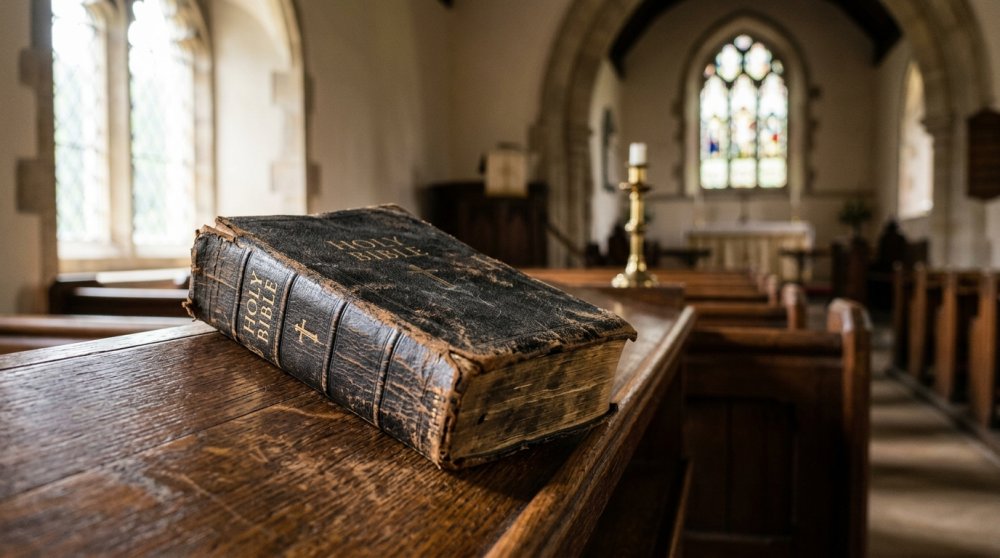
American Christianity has witnessed an intriguing paradox in recent years—one that reveals both hope and concern for the future of faith in our nation. While certain indicators suggest renewed interest in Scripture and stabilization in church attendance, the deeper measures of spiritual maturity paint a more sobering picture.
The data presents a mixed blessing for those who care about the spiritual health of America. Bible sales have surged to their highest point in more than two decades, suggesting Americans are seeking answers in God’s Word during uncertain times.
Church attendance patterns have also shown signs of stabilization after years of decline. Even more encouraging, young men—a demographic that has been particularly difficult to reach—have begun returning to houses of worship in measurable numbers.
Yet beneath these positive surface trends lies a troubling reality. According to a researcher who has spent two decades studying American faith patterns, the critical element of spiritual formation—the deep, transformative work of becoming more like Christ—has not followed the uptick in interest.
This gap represents the central challenge facing the American church today. It’s one thing to purchase a Bible or attend a service; it’s quite another to submit one’s life to the transforming power of the Gospel and grow in genuine discipleship.
The researcher’s findings suggest that cultural Christianity—a superficial engagement with faith that lacks genuine conversion and commitment—may be what’s driving some of the positive statistics. People are interested in spirituality, perhaps even in Christianity specifically, but they’re not necessarily surrendering their lives to Jesus Christ as Lord and Savior.
For conservative Christians who understand that authentic faith requires more than cultural affiliation, these findings should sound an alarm. The Great Commission calls believers not simply to make converts but to make disciples—followers of Christ who are taught to obey everything He commanded.
The American church has faced similar moments throughout its history. Periods of apparent religious interest that lacked spiritual depth have often preceded either genuine revival or further decline, depending on how church leaders responded.
This moment calls for a return to the fundamentals of Christian discipleship: Bible study that transforms rather than merely informs, prayer that seeks God’s face rather than just His hand, and fellowship that holds believers accountable to holy living rather than comfortable religiosity.
The encouraging news about Bible sales and returning young men provides an opportunity—a window in which those who are spiritually curious might be reached with the full Gospel. But that window won’t remain open indefinitely if the church fails to offer the substance these seekers need.
America’s spiritual future depends not on how many Bibles we buy or how many services we attend, but on how many believers are willing to take up their cross daily and follow Christ with genuine commitment. Cultural Christianity has never been enough to sustain a nation’s moral and spiritual foundation.
The data shows what many faithful pastors and church leaders already knew: interest in Christianity is not the same as commitment to Christ. The work ahead requires moving people from curiosity to conversion, from attendance to discipleship, from religious activity to spiritual transformation.
Let us know what you think, please share your thoughts in the comments below.
Faith Facts
- More than 100 Christian women attended the “I Am a Woman” conference in Lima, Peru, organized by the National Evangelical Council of Peru (CONEP)
- The gathering focused on biblical identity and God-given purpose for women in today’s culture
- The event represents a growing movement across Latin America to affirm traditional Christian values amid cultural pressures
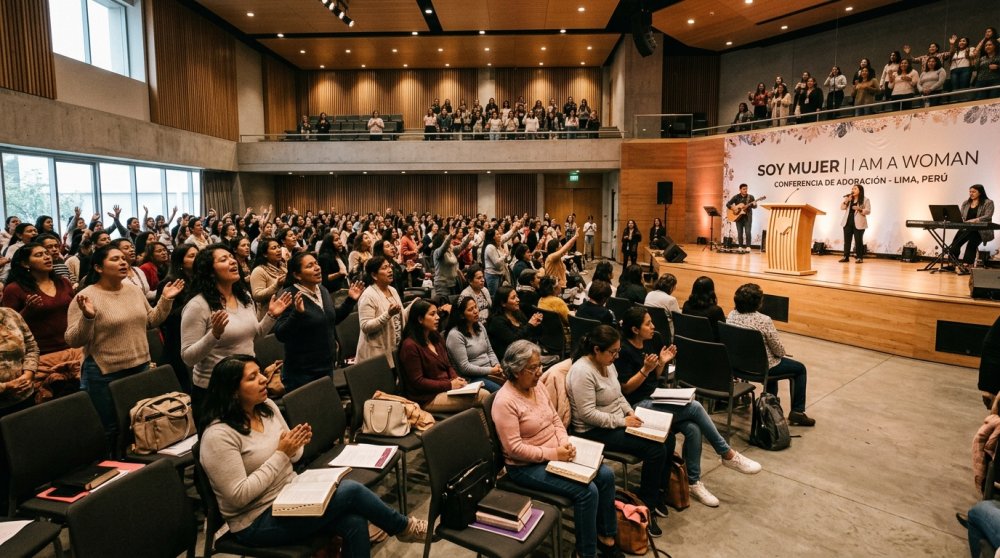
Christian women across Peru are standing firm in their faith and identity. More than 100 women gathered Thursday at the National Evangelical Council of Peru (CONEP) auditorium in Lima for the “I Am a Woman” conference, an event dedicated to affirming biblical womanhood in an increasingly secular world.
The conference, organized by CONEP’s Women’s Commission, brought together women from diverse backgrounds united by a common purpose: to discover and embrace their identity as defined by Scripture rather than by modern culture. In a time when traditional values face mounting challenges, these women chose to gather in fellowship and worship, seeking God’s design for their lives.
The event underscores a powerful truth often overlooked in mainstream discussions about women’s roles and identity: that the Bible offers a complete and fulfilling vision of womanhood. Rather than seeking validation from a culture that constantly shifts its definitions, these Christian women are anchoring their sense of self in the unchanging Word of God.
As churches worldwide grapple with cultural pressures to conform to secular ideologies about gender and identity, gatherings like this demonstrate that Christian women are hungry for truth grounded in Scripture. The conference represents more than just a single event—it signals a broader awakening among believers who refuse to compromise biblical principles for cultural acceptance.
The location in Lima also highlights the strength of evangelical Christianity throughout Latin America, where traditional Christian values remain deeply rooted despite global cultural shifts. The work of CONEP and its Women’s Commission reflects the vital role that organized Christian communities play in preserving and teaching biblical truth to new generations.
Events like “I Am a Woman” provide essential encouragement and biblical teaching that equip women to live out their faith with confidence and conviction. In a world that often dismisses or distorts the beauty of God’s design for men and women, these gatherings offer a life-giving alternative rooted in eternal truth.
Let us know what you think, please share your thoughts in the comments below.

Faith Facts
- Christian apologist William Lane Craig questioned the Nicene Creed’s doctrine of eternal generation in a recent video clip
- The Nicene Creed affirms Jesus Christ is “eternally begotten of the Father,” a foundational doctrine established in AD 325
- The controversy has sparked debate among Christian scholars and defenders of historic orthodoxy
A recent video clip featuring renowned Christian apologist William Lane Craig has ignited controversy within the Christian community after he appeared to question fundamental language in the Nicene Creed. The clip shows Craig raising concerns about the ancient creed’s assertion that Jesus Christ is “eternally begotten of the Father” in His divine nature.
The Nicene Creed, established at the Council of Nicaea in AD 325 and expanded at the Council of Constantinople in AD 381, has served as a cornerstone of Christian orthodoxy for nearly seventeen centuries. Its formulation was crucial in defending the Church against Arianism and other heresies that denied the full divinity of Christ.
William Lane Craig disavows the Nicene Creed:
“I do not believe or confess that the Son is eternally begotten from the Father in his divine nature.” pic.twitter.com/3Yz3UcQ8VE
— Protestia (@Protestia) August 21, 2026
Craig’s comments have drawn sharp criticism from theologians and apologists who view the creed as essential to maintaining biblical Christianity. The doctrine of eternal generation teaches that the Son has always existed in relation to the Father, neither created nor made, but eternally begotten—sharing fully in the divine nature while remaining distinct as the Second Person of the Trinity.
Critics argue that questioning this foundational doctrine undermines the careful theological work of the early Church Fathers who formulated these truths under the guidance of the Holy Spirit. The Nicene Creed has united Christians across denominational lines—Catholic, Orthodox, and Protestant—for generations.
The controversy highlights ongoing tensions in contemporary Christian theology between traditional formulations and modern philosophical frameworks. Many defenders of orthodox Christianity maintain that the ancient creeds provide essential guardrails that protect the faith from theological drift and preserve the gospel message.
Church history demonstrates that departures from creedal orthodoxy have often led to significant doctrinal error. The early councils carefully crafted their language to express biblical truth about Christ’s nature—fully God and fully man—in ways that excluded false teaching while remaining faithful to Scripture.
As this debate unfolds, it serves as a reminder of the importance of holding fast to the faith once delivered to the saints. The Nicene Creed remains a vital confession for Christians seeking to maintain theological fidelity in an age of increasing doctrinal confusion.
Let us know what you think, please share your thoughts in the comments below.


-

 Self-Reliance1 year ago
Trump’s Bold Move Uncovers Massive Social Security Fraud
-

 Faith1 year ago
New Clues Emerge in Noah’s Ark Mystery
-

 News1 year ago
Governor Walz’s Rhetoric Sparks National Controversy
-

 News1 year ago
Mel Gibson’s ‘The Passion of the Christ’ Sequel Title Announced
-

 Family1 year ago
Texas Lawmaker Targets Furries in Schools
-

 Freedom1 year ago
Maine Lawmaker Challenges Sports Fairness Controversy
-

 Family1 year ago
Canada’s Controversial Policy Sparks Ethical Debate
-
Faith9 months ago
Congress Hears Pleas for Nigerian Christians