
Faith
Austin Removes Cross From City Logo

Faith Facts
- Austin unveiled a new city logo, replacing the historic seal that featured a gold Latin cross and Texas State Capitol silhouette.
- The prior seal, designed in 1916, was based on Stephen F. Austin’s family crest, a foundational figure in Texas history.
- Officials claim the new branding better represents modern Austin and its values, officially launching October 1 across all city communications.
Austin’s decision to remove the cross from its seal marks a shift away from acknowledging the Christian heritage that helped shape Texas.
This change follows years of pressure from some who argue symbols of faith have no place in public emblems, but many see the removal as a dismissal of traditions anchored in Biblical morality.
City Manager T.C. Broadnax presented the new logo, emphasizing unity and modern identity, while noting the cross did not align with what he called the city’s current values.
“For the first time in Austin’s history, we will have a logo to represent the city services and unify us as one organization, one Austin,” Broadnax explained.
The city partnered with design agencies, choosing a logo shaped like an “A” representing hills and rivers rather than faith or heritage.
Some see this move as an attempt to distance public life from Christian principles that have historically guided communities like Austin.
The city seal’s cross once faced court scrutiny, but a judge confirmed it honored the founding family rather than promoting a religion.
Faith-minded Texans recognize that strong communities are built on foundations of faith and freedom, not just modern trends or branding efforts.
Now more than ever, Christians must stand firm in praying for their cities and for leaders to uphold values rooted in Biblical truth.


Faith Facts
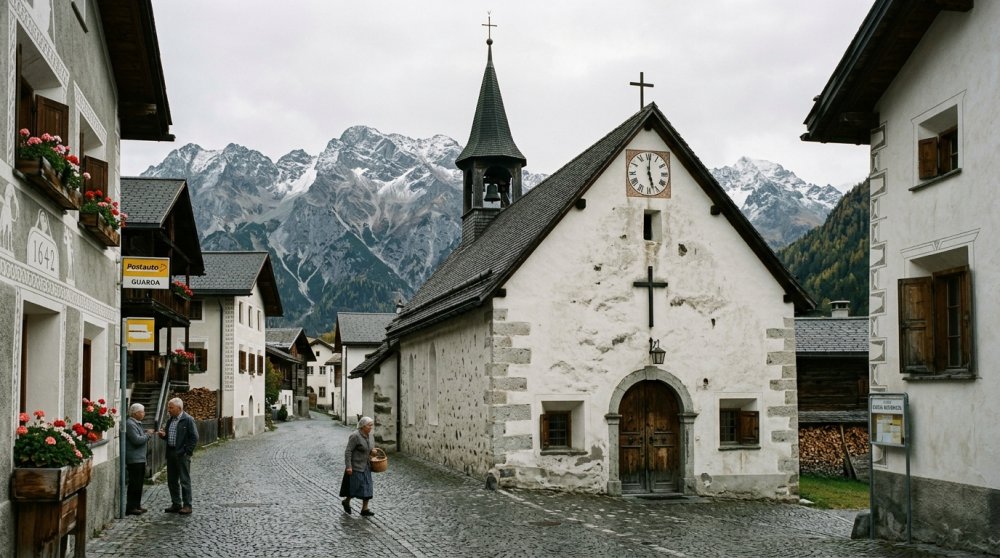
- Two major Swiss evangelical organizations have issued new guidance for congregations considering renting their buildings to international migrant churches
- The guide addresses growing tensions and disputes that have emerged from some rental arrangements between established Swiss churches and international congregations
- The document reflects broader challenges facing European churches as they balance hospitality with preserving traditional worship practices and church governance
Swiss evangelical leaders are confronting a delicate balancing act as migrant congregations increasingly seek worship spaces in a rapidly changing religious landscape. Two prominent evangelical bodies in Switzerland have jointly released guidance for established churches weighing whether to open their doors to international congregations.
The move comes amid rising demand for worship facilities and follows a series of conflicts that have emerged from rental arrangements between Swiss churches and migrant communities. The guidance document represents an attempt to help congregations navigate the intersection of Christian hospitality and practical concerns about building stewardship, theological alignment, and cultural differences.
For churches rooted in traditional Christian values, the question presents both opportunity and challenge. On one hand, sharing facilities can demonstrate Christ-like generosity and support for fellow believers. On the other, church leaders must weigh their responsibility to maintain doctrinal integrity and ensure that rental arrangements don’t compromise their mission or create division within their own congregations.
The guidance reflects a broader reality facing churches across Europe, where demographic shifts have created unprecedented demand for worship space among immigrant communities. Many established congregations occupy historic buildings that sit largely empty during weekdays, while growing international churches struggle to find affordable meeting places.
Swiss evangelical organizations have recognized that without clear guidelines, well-intentioned rental arrangements can lead to misunderstandings about building use, financial expectations, and theological boundaries. The new document aims to equip church leaders with a framework for making informed decisions that honor both biblical hospitality and wise stewardship.
The situation in Switzerland mirrors challenges facing churches throughout the West, where changing demographics are reshaping religious life. For Christian conservatives, these developments underscore the importance of maintaining doctrinal clarity while extending compassion to believers from different backgrounds.
Church rental arrangements raise fundamental questions about religious freedom, property rights, and the preservation of traditional Christian practice. The Swiss guidance suggests that successful arrangements require clear communication, shared values, and mutual respect for each congregation’s distinct identity and governance.
As Western churches continue grappling with declining attendance and aging facilities, rental income can provide financial relief. However, the Swiss example reminds church leaders that financial considerations must be balanced against spiritual and practical concerns that affect the entire church community.
Let us know what you think, please share your thoughts in the comments below.

Faith Facts
- Christian relief teams are using mountain bikes to reach remote Himalayan valleys in northern Nepal cut off by catastrophic flooding that killed hundreds on August 26
- More than 1,400 people remain missing across Nepal and Tibet after torrents of water, mud, rock and ice devastated river settlements throughout the region
- Nepali churches are mobilizing to bring emergency aid to isolated communities where traditional transportation has been destroyed by the floods
In the aftermath of one of the deadliest natural disasters to strike the Himalayan region in recent years, Christian relief workers are demonstrating extraordinary courage and compassion. Nepali churches have deployed teams on mountain bikes to navigate treacherous terrain and reach valleys completely isolated by the August 26 catastrophe.
The devastating floods swept through northern Nepal with the force of a biblical judgment, carrying water, mud, rock and ice down from the high Himalayas. River settlements that had stood for generations were obliterated in moments. The human toll has been staggering, with hundreds confirmed dead and more than 1,400 people still unaccounted for across Nepal and the Tibet region of China.
Traditional roads and bridges have been washed away, leaving many communities entirely cut off from the outside world. In response, Christian relief organizations have adapted their approach, using mountain bikes to traverse damaged trails and collapsed roadways that motorized vehicles cannot navigate. This innovative solution allows aid workers to carry critical supplies while maintaining mobility in the most challenging conditions.
The Christian response reflects the biblical command to serve those in desperate need, particularly in their darkest hours. These relief teams are bringing not only physical aid but also spiritual comfort to communities facing unimaginable loss and uncertainty about missing loved ones.
The scale of the disaster has overwhelmed local resources in one of the world’s poorest nations. Nepal’s rugged geography and limited infrastructure make disaster response particularly challenging even under normal circumstances. The August floods have compounded these difficulties, with entire stretches of transportation networks destroyed.
For the Nepali churches leading this relief effort, the mission represents both practical compassion and spiritual calling. In a predominantly Hindu and Buddhist nation, Christian communities often face significant challenges, yet they have stepped forward to serve their neighbors without hesitation or distinction.
The international Christian community should take note of this remarkable example of faith in action. As these brave believers navigate dangerous mountain paths on bicycles loaded with supplies, they embody the selfless service Christ calls all His followers to demonstrate.
The death toll continues to rise as rescue workers reach previously inaccessible areas. The number of missing persons raises grave concerns that the final casualty count may climb substantially higher. Many of the missing are feared to have been swept away by the violent floodwaters, their bodies potentially carried miles downstream or buried under debris.
This natural disaster serves as a sobering reminder of both human vulnerability and the critical importance of Christian charity. In moments of crisis, faith-driven organizations often prove most effective at mobilizing rapid response, drawing on networks of committed volunteers willing to risk personal safety to help others.
American Christians can support these relief efforts through prayer and financial contributions to reputable organizations working in the region. The need is urgent and will likely persist for months as communities attempt to rebuild shattered lives and infrastructure.
The heroic efforts of Nepali church members on mountain bikes illustrate a timeless truth: genuine Christian faith produces tangible works of mercy. These believers are literally going the extra mile, pedaling through dangerous terrain to bring hope to the hopeless and aid to the desperate.
Let us know what you think, please share your thoughts in the comments below.

Faith Facts
- The controlled use of fire catalyzed the development of human civilization and spiritual gathering
- Fire enabled humans to extend productive and spiritual activities into nighttime hours, transforming culture and learning
- The gathering of families and communities around fire became a foundational metaphor for inspiration, knowledge, and the human spirit
From the earliest days of human history, fire has held a sacred place in the story of mankind. It is more than a chemical reaction—it is a gift that shaped our families, our faith, and our very humanity.
The controlled use of fire marked a turning point in human development. Our ancestors gathered around its warmth not merely for survival, but for communion.
Around those flames, stories were told, songs were sung, wisdom was passed from generation to generation, and spiritual rituals brought families and communities closer to their Creator. Fire became a living symbol of inspiration, spirit, and divine knowledge—a light in the darkness that pointed beyond itself.
As fire extended human activity into the night, it transformed civilization in profound ways. With light came learning.
With warmth came the freedom to teach, to create, and to worship without the constraints of daylight. Productivity grew, but so did culture and tradition—the things that bind a people together and give life meaning.
In a world that often seems cold and chaotic, fire reminds us of what truly matters: family gathered together, faith passed down through the generations, and the eternal flame of hope that burns in the human heart. It is, indeed, worthy of awe—a testament to God’s provision and the ingenious spirit He placed within us.
Let us know what you think, please share your thoughts in the comments below.


-

 Self-Reliance1 year ago
Trump’s Bold Move Uncovers Massive Social Security Fraud
-

 Faith1 year ago
New Clues Emerge in Noah’s Ark Mystery
-

 News1 year ago
Governor Walz’s Rhetoric Sparks National Controversy
-

 News1 year ago
Mel Gibson’s ‘The Passion of the Christ’ Sequel Title Announced
-

 Family1 year ago
Texas Lawmaker Targets Furries in Schools
-

 Freedom1 year ago
Maine Lawmaker Challenges Sports Fairness Controversy
-

 Family1 year ago
Canada’s Controversial Policy Sparks Ethical Debate
-
Faith9 months ago
Congress Hears Pleas for Nigerian Christians