
News
Astronaut’s faith shines brighter than moon mission itself


Faith Facts
- Victor Glover, member of Southeast Church of Christ in Friendswood, Texas, became the first African American astronaut to fly to the moon on the Artemis II mission
- Throughout the historic 252,756-mile journey, Glover consistently glorified God and shared messages of faith and love with the world
- The Artemis II crew brought unity and inspiration to millions while demonstrating faith, humility, and teamwork in NASA’s first moon mission in 53 years
Welcome home, Victor Glover! We know you must be tired, but you energized us.
You and your Artemis II crewmates traveled 252,756 miles from Earth — a record for humanity. We won’t take a lot of your time, but as your brothers and sisters in Christ, we must thank you.
Not for becoming the first African American astronaut to fly to the moon, although that’s remarkable. Not for the fame piloting NASA’s first moon mission in 53 years brought you, although that’s terrific.
Not for the technical skills you demonstrated aboard “Integrity” — the name your crew gave the Orion spacecraft — although you’re brilliant. Instead, we must thank you for the faith and humility you displayed throughout the mission.
You made us proud. So, so proud.
A member of the Southeast Church of Christ in Friendswood, Texas, you never failed to glorify God. Again and again, you publicly thanked the Creator of the universe.
And again and again, you emphasized the importance of love. Specifically, you pointed to Jesus’ instruction to love our neighbors.
“To all of you down there on Earth and around Earth, we love you from the moon.”
Your message came in loud and clear. A quarter million miles from home, you made the world seem smaller and brought us all closer together.
Given the division that so often permeates our corner of the galaxy, that’s an amazing accomplishment.
Please pass along our appreciation, too, to your crewmates: Reid Wiseman, Christina Koch and Jeremy Hansen. Each of you reminded us of the value of teamwork and camaraderie.
You didn’t just work hard. You also enjoyed each other’s company.
Even when faced with not-so-otherworldly problems — namely a clogged toilet in a part of the universe lacking plumbers — you kept laughing. To our delight, you made us all feel like a part of the team.
“We wanted to go out and try to do something that would bring the world together, to unite the world.”
Congratulations! Mission accomplished.
Koch talked about how much the support from those who followed Artemis II meant to the crew of three Americans and one Canadian.
“It was every bit as important as accomplishing the technical goals and being there for our NASA teammates. (We wanted) to make this the world’s mission and for it to have a positive impact.”
Again, congratulations! Mission accomplished.
Hansen described viewing the Earth, the moon and the stars from such an amazing vantage point.
“We’re all kind of struck by these things that make us feel small. The sense I had was this sense of fragility and feeling small — infinitesimally small — but yet this powerful feeling as a human feeling, like as a group.”
Amen!
Victor, thank you and your crewmates for journeying farther into space than anyone in history. You inspired us.
You increased our awe. We can’t wait to see where the Lord leads you on your next adventure.
Godspeed, dear brother.
Let us know what you think, please share your thoughts in the comments below.

Faith Facts
- The Aberfan disaster claimed the lives of 116 children and 28 adults when a coal slag heap collapsed on October 21, 1966.
- Survivors and families found strength through prayer, Scripture, and the support of local churches during the aftermath.
- Welsh Christian communities continue to honor the dead and comfort the living through annual memorial services and charitable works.
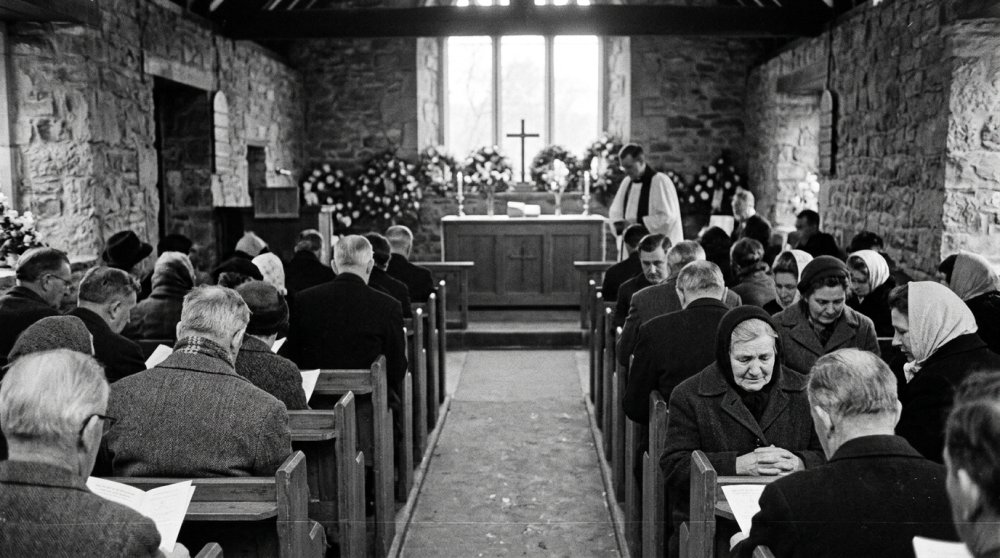
The small Welsh village of Aberfan is marking six decades since a devastating landslide that buried a school and took the lives of 144 people, most of them children. On that fateful day, a mountain of coal waste gave way and swept into Pantglas Junior School, leaving a nation in mourning.
One survivor described the overwhelming grief that followed as “the ministry of tears.” That phrase captures the deep sorrow shared by families, neighbors, and churches that rallied together in the months and years afterward.
Local congregations offered prayer meetings, counseling, and practical help as the community struggled to rebuild. Many found comfort in passages such as Psalm 34:18, which promises that the Lord is near to the brokenhearted.
Sixty years on, memorial services continue to draw believers who remember the lost and give thanks for the resilience rooted in faith. Each year, hymns and Scripture readings remind attendees that hope endures even in the face of tragedy.
Let us know what you think, please share your thoughts in the comments below.
Faith Facts
- The priest was celebrating Mass when a crucifix fell on him, killing him instantly.
- The incident occurred during a livestreamed evening service in Guayaquil, Ecuador.
- The faithful gathered in the church witnessed the tragedy in real time.
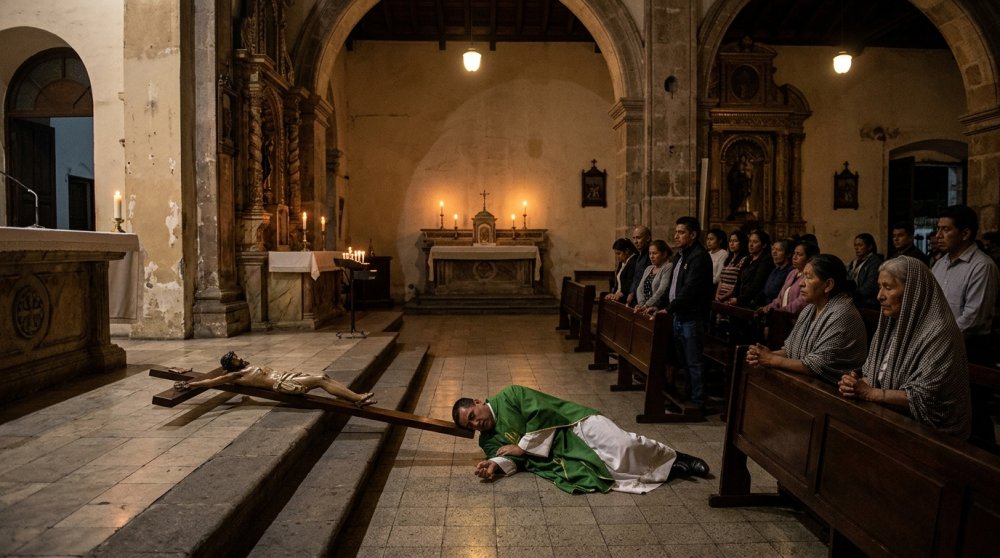
A priest in Guayaquil, Ecuador, has died after a crucifix fell on him during an evening Mass on Saturday. The incident happened while the priest was celebrating the liturgy in front of the congregation. The Mass was being livestreamed, allowing many viewers to witness the tragic event as it unfolded.
Let us know what you think, please share your thoughts in the comments below.

Faith Facts
- Malcolm Guite is a poet, priest, and Cambridge University scholar who draws on Christian literary tradition to address cultural questions.
- Guite identifies a crisis of masculinity and imagination in contemporary society and points to classic Christian-influenced literature as a remedy.
- King Arthur, as portrayed in British legend, embodies the chivalric virtues of courage, service, and self-sacrifice that align with biblical manhood.
British poet, priest and Cambridge University scholar Malcolm Guite believes society is facing a crisis of masculinity and imagination, and he’s turning to one of literature’s oldest heroes to help address it: King Arthur.
Guite argues that the legendary king provides a compelling image of ordered strength and sacrificial leadership rooted in the Christian heritage of the West.
“King Arthur offers an antidote to toxic masculinity,” Guite stated in a recent interview.
The scholar notes that Arthur’s knights were trained not merely in combat but in courtesy, justice, and the defense of the weak, virtues he believes are needed again.
Guite connects the Arthurian ideal to the broader Christian story, suggesting that recovering a sense of noble purpose can counter both cultural confusion and moral decline.
“We need stories that teach boys and men how to wield strength in service of others rather than for domination,” he explained.
Let us know what you think, please share your thoughts in the comments below.


-

 Self-Reliance2 years ago
Trump’s Bold Move Uncovers Massive Social Security Fraud
-

 Faith2 years ago
New Clues Emerge in Noah’s Ark Mystery
-

 News2 years ago
Governor Walz’s Rhetoric Sparks National Controversy
-

 News2 years ago
Mel Gibson’s ‘The Passion of the Christ’ Sequel Title Announced
-

 Family2 years ago
Texas Lawmaker Targets Furries in Schools
-

 Freedom2 years ago
Maine Lawmaker Challenges Sports Fairness Controversy
-

 Family1 year ago
Canada’s Controversial Policy Sparks Ethical Debate
-
Faith11 months ago
Congress Hears Pleas for Nigerian Christians