
Faith
Armenian Church Clashes With Government Heat Up

Faith Facts
- A bishop and 12 clergymen from Armenia’s Apostolic Church have been arrested amid mounting tensions with Prime Minister Nikol Pashinyan’s administration.
- The charges against the clergy include promoting protest participation, obstructing electoral rights, and alleged theft.
- The Armenian Apostolic Church has strongly condemned the arrests as part of a deliberate campaign to stifle its voice and influence.
The longstanding conflict between Armenia’s Apostolic Church and the government has reached a new crisis as clergy face crackdowns over public dissent. Bishop Mkrtich Proshyan and others are accused of misusing their offices and pressuring followers to join anti-government rallies.
Church officials assert these actions are politically motivated, undermining both religious freedom and Armenia’s Christian heritage. The situation escalated with the recent sentencing of Archbishop Mikael Ajapahyan, who was imprisoned after voicing his opposition to government policies.
“There is obvious malicious intent to hinder the normal activities of the church,” the Armenian Apostolic Church said on social media.
Ajapahyan’s lawyer labeled the verdict against his client as political persecution and highlighted the injustice of silencing men of faith for speaking truth.
The administration has also accused Catholicos Karekin II, head of the Apostolic Church, of impropriety, intensifying the standoff. Church leaders remain active in defending Armenia’s Christian legacy, as seen in mass demonstrations challenging the government’s recent territorial concessions to Azerbaijan.
The agreement to transfer border villages has sparked fears among Christians about national and religious identity loss, fueling widespread protest. Faith leaders stress the need for godly wisdom and unity as Armenia navigates challenges amid shifting global alliances and historical pressures.
Now more than ever, believers are called to pray for courage, justice, and truth to prevail in Armenia, defending faith, family, and freedom in the face of adversity.


Faith Facts
- Scripture calls believers to bear one another’s burdens and so fulfill the law of Christ (Galatians 6:2).
- Regular church attendance alone does not guarantee the deep fellowship God designed for His people.
- True Christian community requires honest vulnerability and genuine relationship, not merely surface-level conversation.
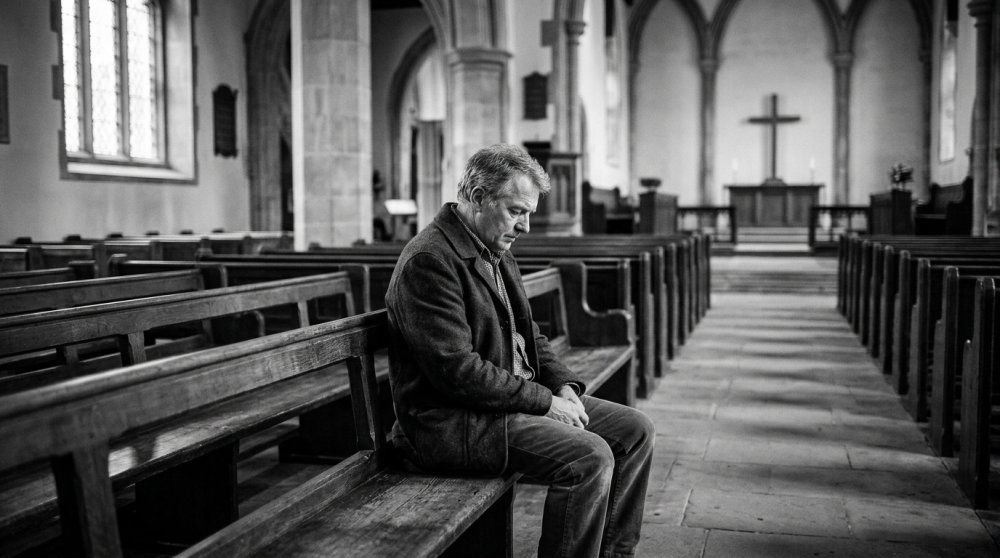
You can attend church every Sunday, know everyone by name and still feel desperately lonely. Derek Hughes knows what it’s like to hide behind small talk. Here’s why genuine Christian community requires more than simply showing up.
Many believers show up week after week, exchange polite greetings, and leave without ever being truly known. This pattern leaves hearts heavy even in crowded sanctuaries.
God never intended His church to function as a collection of isolated individuals who merely occupy the same space for an hour. He calls His people to live in deep, accountable, and loving community.
“You can attend church every Sunday, know everyone by name and still feel desperately lonely.”
Small talk serves as a convenient shield, allowing Christians to remain hidden even while surrounded by brothers and sisters in Christ. This kind of superficial interaction falls far short of the biblical vision for fellowship.
Authentic Christian community demands courage to step beyond pleasantries and share real struggles, prayer requests, and victories. When believers open their lives to one another, the body of Christ functions as God intended.
“Here’s why genuine Christian community requires more than simply showing up.”
Churches that prioritize depth over attendance numbers create spaces where lonely hearts find true belonging. Such fellowships reflect the love of Christ in practical, life-giving ways.
Believers who invest in meaningful relationships discover that church becomes more than a weekly obligation; it becomes a spiritual family where burdens are shared and hope is renewed.
Let us know what you think, please share your thoughts in the comments below.

Faith Facts
- More Americans are open to spiritual conversations than ever before according to recent surveys.
- Direct gospel presentations often meet resistance while natural dialogue keeps hearts open.
- Christians are called to speak the truth in love and make the most of every opportunity.
People across the country are showing new interest in spiritual matters after years of cultural confusion. Yet many believers still struggle when the moment arrives to speak about Jesus. Darin Stevens says the problem is not the message itself but the way many Christians shift the conversation.
Stevens encourages believers to recognize when a discussion is stalling and to change their approach quickly. Instead of pressing forward with the same line of questions or statements, he recommends listening first and then steering gently toward the hope found in Christ.
“People are increasingly open to spirituality,” Stevens notes, “but the way we talk about Jesus needs to change.”
One practical step is to ask thoughtful questions rather than delivering a prepared speech. A second step is to share a short personal story that connects the other person’s experience to Scripture. The third approach involves offering to pray right then and there for a specific need that has been mentioned. Finally, Stevens urges Christians to follow up later, showing that the relationship matters more than a single conversation.
“Here’s how to avoid stalling at the first stop and switch gears to keep the conversation moving.”
These four simple shifts help believers move past awkward silence and into genuine gospel witness. They also reflect the patience and compassion modeled by Jesus when He met people where they were.
Let us know what you think, please share your thoughts in the comments below.

Faith Facts
- Martin Luther struggled deeply with guilt over his own sin and the righteousness demanded by God.
- A passage from Augustine’s writings revealed to Luther that righteousness is received by faith, not earned.
- This discovery became the spark that ignited the Protestant Reformation.
Martin Luther carried a heavy burden. The young monk knew the standard of God’s holiness and saw clearly that he fell short.
Every sermon on divine justice only deepened his dread. He could not produce the righteousness the law required, and he feared the God who demanded it.
Then he read these words from Augustine: “The righteousness of God is that by which we are justified, not that by which God is righteous.”
The sentence struck like lightning. Luther saw that the righteousness he lacked had already been provided in Christ and was received by faith alone.
This truth set him free from the torment of guilt. It also set Europe on fire with the Reformation that followed.
Let us know what you think, please share your thoughts in the comments below.


-

 Self-Reliance2 years ago
Trump’s Bold Move Uncovers Massive Social Security Fraud
-

 Faith2 years ago
New Clues Emerge in Noah’s Ark Mystery
-

 News2 years ago
Governor Walz’s Rhetoric Sparks National Controversy
-

 News2 years ago
Mel Gibson’s ‘The Passion of the Christ’ Sequel Title Announced
-

 Family2 years ago
Texas Lawmaker Targets Furries in Schools
-

 Freedom2 years ago
Maine Lawmaker Challenges Sports Fairness Controversy
-

 Family1 year ago
Canada’s Controversial Policy Sparks Ethical Debate
-
Faith12 months ago
Congress Hears Pleas for Nigerian Christians