
Faith
Argentine Evangelicals Urge Reform with Compassion

Faith Facts
- ACIERA calls for juvenile justice reform to include prevention, reintegration, and comprehensive support alongside updated regulations.
- The organization insists that punishment alone is not a solution and highlights the importance of coordination among the state, families, and civil society.
- ACIERA urges resources for specialized institutions, family support, and a spiritual approach to adolescent recovery.
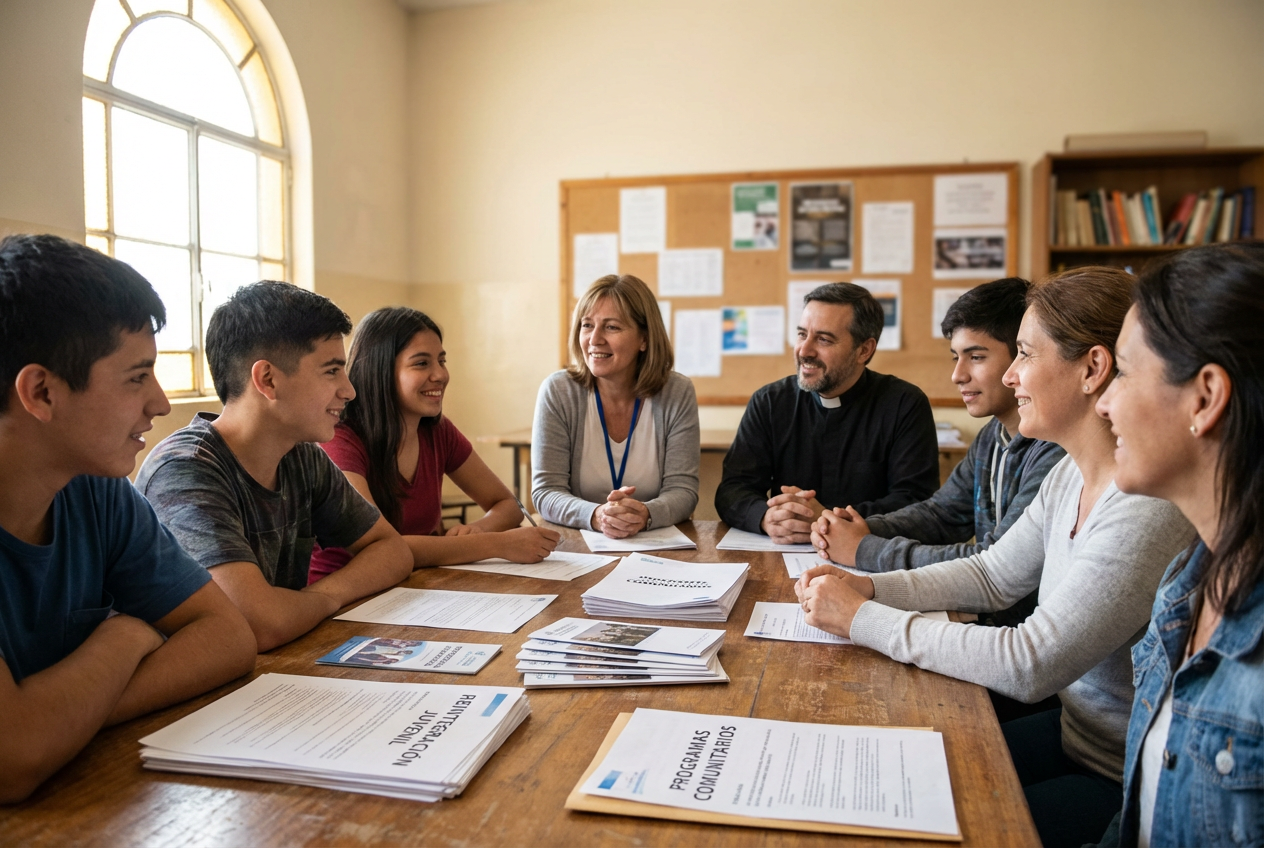
The Christian Alliance of Evangelical Churches of the Argentine Republic is advocating for juvenile criminal law reform that combines modern legislation with strong support systems rooted in faith and family values. Their approach stresses that discipline must be paired with social and pastoral care to restore young lives and strengthen communities.
“Criminal penalties by themselves will not solve the problem unless accompanied by social, educational, and family policies designed for reintegration.”
They emphasize the need for specialized care, support programs, and infrastructure to offer adolescents in legal trouble a path to redemption instead of punishment alone.
Churches, schools, and families must work together to foster prevention and recovery grounded in Christian principles, championing hope over despair for the nation’s youth.
Read the full story at Christian Daily International.


Faith Facts
- A single handful of soil contains billions of living microorganisms, making it one of the most complex ecosystems on Earth
- Gravity keeps our atmosphere, water, and soil anchored to the planet, sustaining all life as designed by the Creator
- The earth beneath our feet is far from lifeless — it teems with biological activity essential for food production and ecological balance
When we touch earth, we are touching something deeply ancient and deeply alive. It may appear solid and unchanging, but the truth is far more remarkable.
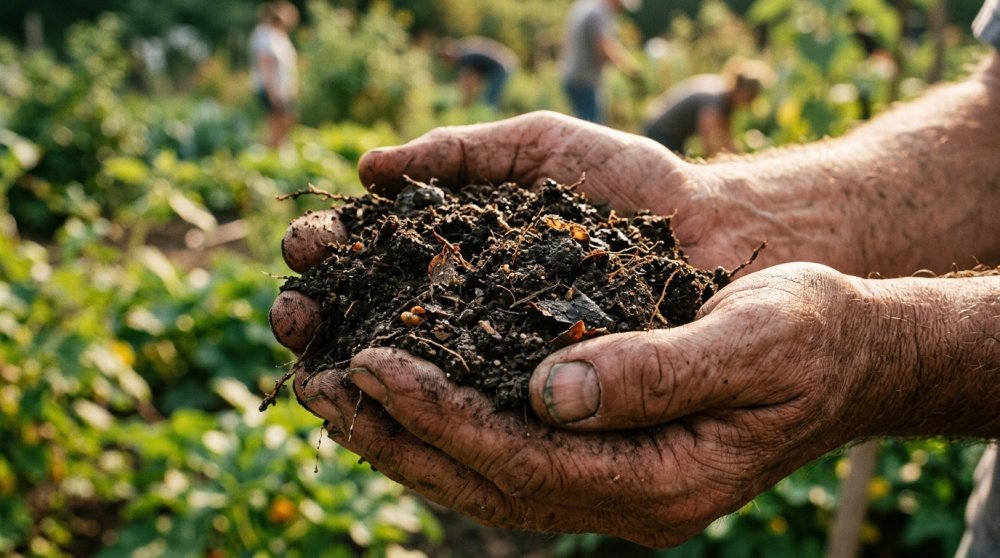
Scoop up a handful of dirt and you hold in your palm a living, breathing substance. That seemingly simple soil contains billions of microorganisms — bacteria, fungi, protozoa, and countless other forms of microscopic life working together in intricate harmony.
Without gravity, this remarkable system could not exist. Nothing would stay in place — not the atmosphere we breathe, not the water we drink, not the fertile ground that produces our food. Everything would drift away into the void of space.
These are not random accidents of nature, but carefully orchestrated systems that point to divine design. The complexity found in even the smallest sample of soil reveals an intelligence and purposefulness that defies evolutionary explanations.
In our modern world of concrete, asphalt, and technology, we have become disconnected from the earth God created. We walk over it daily without considering the miraculous processes happening beneath our feet. We take for granted the invisible force that holds us securely to the ground.
Scripture reminds us that man was formed from the dust of the earth, and to dust we shall return. This connection to the soil is not merely poetic — it is literal and profound. The same elements that make up our bodies are found in the earth, a testament to our Creator’s unified design.
As Christians, we are called to be stewards of God’s creation. That stewardship begins with recognizing the gifts we have been freely given — gifts like fertile soil and the gravitational force that sustains all life on this planet. These are provisions from a loving Father who designed a world perfectly suited for human flourishing.
Let us not lose our sense of wonder at the ordinary miracles surrounding us. The next time you step outside, take a moment to consider what lies beneath your feet. Remember that even the ground itself is evidence of God’s provision and creative power.
Let us know what you think, please share your thoughts in the comments below.
Faith Facts
- A Colorado Church of Christ congregation has developed a women’s yoga program that focuses on Biblical meditation, worship music, and Scripture-based teaching.
- The weekly classes draw up to 20 women ranging from their 20s to 70s, providing spiritual fellowship and physical exercise grounded in Christian principles.
- Participants report the sessions help them release anxiety, deepen their faith, and build meaningful Christian community outside Sunday services.
Many Christians know the routine. Church service ends, and it’s time to visit, but really there’s not much time to visit.
They might have children to round up. They might need to hurry home to prepare lunch, watch a football game or mow the lawn.
Casey Hymore, a member of the Castle Rock Church of Christ on Colorado’s Front Range, understands the challenge. “There’s a lot going on,” she said.
Blessedly for Hymore and other church members, there’s another place to meet during the week. A place to release burdens and talk about disappointments and victories. And a place to deeply consider the Word of God.
“Here,” Hymore said, “you just have time with your Christian friends. It’s a ‘what’s going on in your life’ kind of thing.”
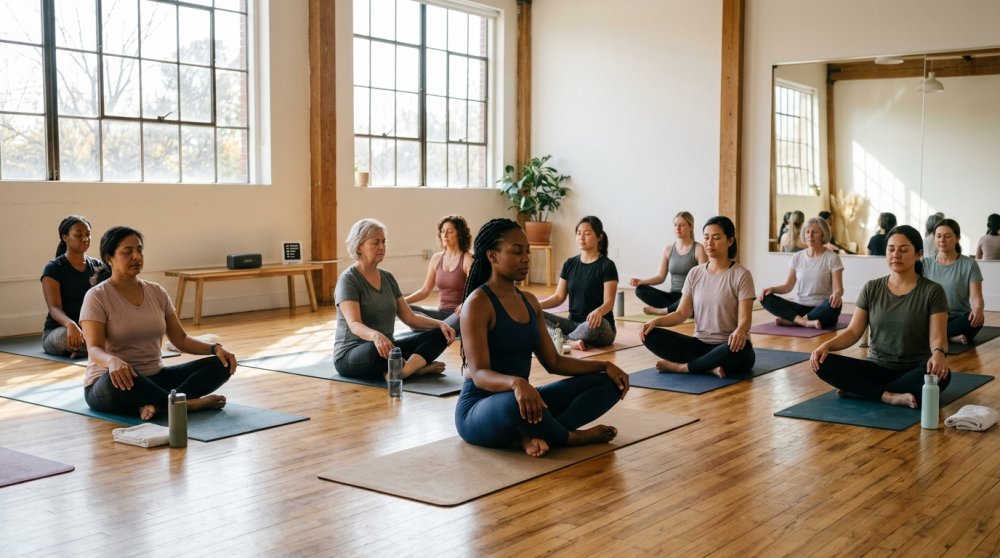
“Here” is weekly Christian yoga classes for women led by Charity Morine. During the school year, Morine leads a group of up to 20 women in weekly sessions at a dance studio in Castle Rock. The ages range from 20s to 70s. The fitness range is just as varied.
The sessions begin with the women listening to soft worship music. Morine asks her students to notice their bodies and the state of their emotions. Are you at peace? Are you feeling fragile?
She tells them to unclench their jaws, relax their shoulders.
“Release what is clouding your mind,” she said, “and come into the presence of God. Breath in his goodness.”
In one recent session, she led her students in consideration of their blind spots. King David failed to comprehend his vicious role in the death of Uriah the Hittite, his friend and, alas, romantic rival.
It required a story from the prophet Nathan to confront the king’s intentional blindness and inexplicable cluelessness. David, with Nathan’s aid, finally saw the truth about himself.
Spend time listening to God as he reveals his wisdom, Morine encouraged participants. Shine light on those blind spots.
Jenn Anderson has been attending the yoga sessions for six years. She always leaves uplifted and inspired, she said.
“You remove yourself from whatever mood you’re in and focus on the biblical message for that day,” Anderson said.
“Whatever burden you brought into the class isn’t as important as you thought when you’re thinking about it from a godly and biblical perspective.”
To end a session, students close their eyes while considering the lesson of the day. Morine rubs their foreheads with a cool lavender-soaked washcloth and offers a brief head massage.
They are weary from the exercise, which can be demanding — but even more energized, said Lynn Lauterbach.
“I always go away feeling filled versus feeling exhausted from exercising,” Lauterbach said.
“Our bodies are the temple, you know, like the verses say, and we need to be using them. The process of doing that, it’s spiritually filling.”
Morine’s path to teaching Christian yoga began nearly seven years ago. She faced, in her words, “a pretty dark spot” in her life. She knew God held the answers, and she prayed each day, inspired by Philippians 4:6-7: “Do not be anxious about anything.”
Still, she felt anxious and unseen and unfavored by God. Then she watched Christian yoga on YouTube. At the end of a video session, she reclined on her back. Her palms were up. She was alone.
“I remember, in that quiet, hearing from God and allowing my body to release my anxiousness and the tightness in my gut and the racing in my heart,” she said.
“I began to find the peace that passes understanding. I was giving God space. I was quieting my mind and giving him room to speak.”
A few months later, during the height of the Covid pandemic, Morine began her yoga sessions, starting in her backyard in northwest Castle Rock.
Daphne Walsh has worked alongside Morine for four years. She first came to the sessions to work on her balance and core strength.
She found more. Much more.
“It has helped us when we carry a lot of stress, when we’re bogged down with worries,” she said.
“We see that we can present these things to Christ and come to him just as we are.”
Christian yoga has critics among followers of Jesus who see the practice — Christian or not — as a retreat from biblical faith and believe yoga never can be fully separated from its roots in Hinduism and Buddhism. Starting yoga sessions at a Church of Christ can lead to controversy.
During a recent visit to Morine’s home, a group of five of her students enjoyed a healthy lunch and talked of their enthusiasm for their weekly time together. Nobody in the group had heard from Christian friends who objected to Christian yoga.
“I have never received a negative reaction from my Church of Christ friends,” Morine said.
“I’ve experienced nothing but support.”
Christians who are critics and skeptics of God-based yoga are welcome at Morine’s sessions. Walsh offers a personal invitation.
“They need to come and experience it for themselves,” she said.
“To find out that it is a spiritual activity. We pray together. We meditate on the Word of God. We listen to Christian music.”
“It has nothing to do with eastern yoga. Nothing at all.”
It is, Walsh said, Christ based.
Let us know what you think, please share your thoughts in the comments below.

Faith Facts
- Religious Studies GCSE enrollment is increasing across the United Kingdom despite a critical shortage of qualified teachers
- The shortage of specialist religious education teachers continues to worsen, threatening students’ access to faith-based learning
- Experts warn the crisis could limit young people’s understanding of Christianity and other world religions at a crucial developmental stage
A troubling crisis is unfolding in British schools as demand for Religious Studies courses climbs while the number of qualified teachers to instruct them plummets. The shortage threatens to deny an entire generation of students the opportunity to explore questions of faith, morality, and spiritual heritage.
Despite rising interest in Religious Studies as a GCSE subject—a qualification typically pursued by students aged 14-16—education experts across the United Kingdom are sounding the alarm about the dwindling pool of specialist teachers equipped to lead these courses. The gap between student demand and teacher availability continues to widen, creating what some describe as an educational emergency.
For Christian parents and community leaders, the implications are profound. Religious education offers young people a structured opportunity to examine the Christian foundations of Western civilization, explore theological concepts, and develop moral reasoning rooted in biblical principles. Without qualified instructors, schools cannot adequately meet this need, leaving students with diminished access to faith-based learning during formative years.
The shortage also raises questions about educational priorities in modern Britain. While subjects like science and mathematics receive substantial investment and recruitment focus, religious education appears increasingly marginalized despite its role in character formation and cultural literacy. This imbalance reflects broader secular trends that often sideline faith perspectives in public institutions.
The consequences extend beyond individual students. A society that fails to educate its youth about religious heritage risks losing connection to the values, traditions, and wisdom that have shaped its history. For Christians, this represents not merely an academic concern but a spiritual one—a lost opportunity to plant seeds of faith and understanding in young hearts.
The crisis also highlights the importance of Christian involvement in education. As government schools struggle to staff religious studies programs, faith communities must consider how they can support religious literacy through church-based education, mentorship, and advocacy for policies that prioritize faith-friendly curricula.
The situation in the United Kingdom serves as a cautionary tale for Americans concerned about religious education. It demonstrates how quickly institutional support for faith-based learning can erode, even when student interest remains strong. Vigilance and active engagement are essential to preserve educational opportunities that honor our spiritual heritage.
Let us know what you think, please share your thoughts in the comments below.


-

 Self-Reliance1 year ago
Trump’s Bold Move Uncovers Massive Social Security Fraud
-

 Faith1 year ago
New Clues Emerge in Noah’s Ark Mystery
-

 News1 year ago
Governor Walz’s Rhetoric Sparks National Controversy
-

 News1 year ago
Mel Gibson’s ‘The Passion of the Christ’ Sequel Title Announced
-

 Family1 year ago
Texas Lawmaker Targets Furries in Schools
-

 Freedom1 year ago
Maine Lawmaker Challenges Sports Fairness Controversy
-

 Family1 year ago
Canada’s Controversial Policy Sparks Ethical Debate
-
Faith9 months ago
Congress Hears Pleas for Nigerian Christians