
Faith
Anglican Archbishop Visits Palestinians Amid Controversy Over Holy Land Pilgrimage

Faith Facts
- Archbishop Sarah Mullally of London undertook a pilgrimage to the Holy Land that included visiting Palestinian communities
- The visit sparked criticism from some who accused her of taking sides in the Israeli-Palestinian conflict
- Supporters argue that Christian leaders must show compassion to all people suffering in the region while maintaining balanced perspectives
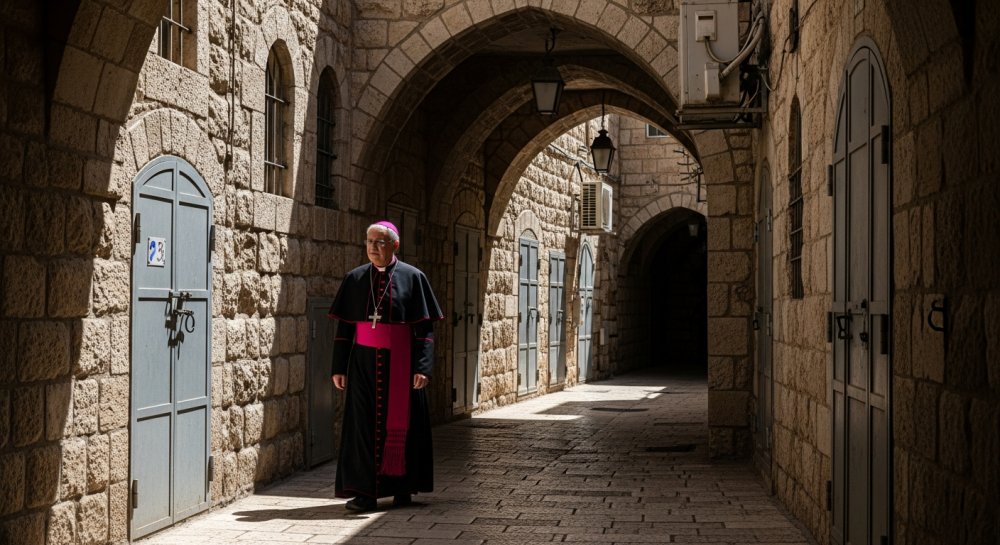
A senior Anglican Church leader is facing intense scrutiny following her recent journey to the Holy Land, where she met with Palestinian communities experiencing hardship. Archbishop Sarah Mullally’s pilgrimage has ignited debate about the proper role of Christian leaders in addressing one of the world’s most complex conflicts.
The controversy centers on whether church officials should engage with communities on both sides of the Israeli-Palestinian divide. Critics have accused the Archbishop of showing favoritism, while defenders maintain that Christian ministry requires acknowledging suffering wherever it exists.
Those supporting the Archbishop’s decision point to the Biblical mandate for believers to care for the oppressed and vulnerable. They argue that visiting Palestinian communities does not diminish concern for Israeli security or Jewish historical trauma, but rather reflects Christ’s call to minister to all people.
The debate highlights the challenging position Christian leaders face when addressing geopolitical conflicts with deep religious, historical, and humanitarian dimensions. Many American Christians maintain strong support for Israel based on Biblical prophecy and shared democratic values, while also recognizing the humanitarian concerns affecting civilian populations throughout the region.
Church officials who engage with Middle Eastern communities often emphasize the importance of bearing witness to Christian minorities and suffering populations while maintaining relationships with all parties. This approach seeks to follow Christ’s example of ministering across social and political boundaries.
The controversy underscores ongoing tensions within Christianity about how to respond faithfully to complex international conflicts where people of different faiths and backgrounds face genuine security threats and humanitarian challenges.
For American Christians who value both Israel’s security and humanitarian compassion, such situations present difficult questions about how to apply Biblical principles to contemporary geopolitics. Many believe that supporting Israel’s right to exist and defend itself can coexist with concern for innocent civilians affected by regional conflicts.
The Archbishop’s supporters maintain that Christian witness requires presence among suffering communities, regardless of political sensitivities. They argue that showing compassion to Palestinians does not constitute taking sides against Israel, but rather fulfills the Gospel’s call to love neighbors and care for the vulnerable.
Critics counter that church leaders must be sensitive to how their actions may be perceived and potentially weaponized for political purposes. They emphasize Israel’s unique position as a democratic ally facing existential threats from hostile neighbors and terrorist organizations.
This tension reflects broader challenges facing Christian leaders who seek to apply faith principles to politically charged situations. The question of how to minister with both truth and grace in conflict zones remains a defining challenge for contemporary Christianity.
Let us know what you think, please share your thoughts in the comments below.

Faith Facts
- Eric Metaxas, bestselling author of “Bonhoeffer,” warns that the restoration of Western civilization depends on a return to faith and freedom
- Metaxas argues that the decline of Christian values in the West has created a spiritual and cultural crisis threatening the foundations of liberty
- The author emphasizes that authentic Christianity, not cultural or political Christianity alone, is essential for preserving freedom and human dignity
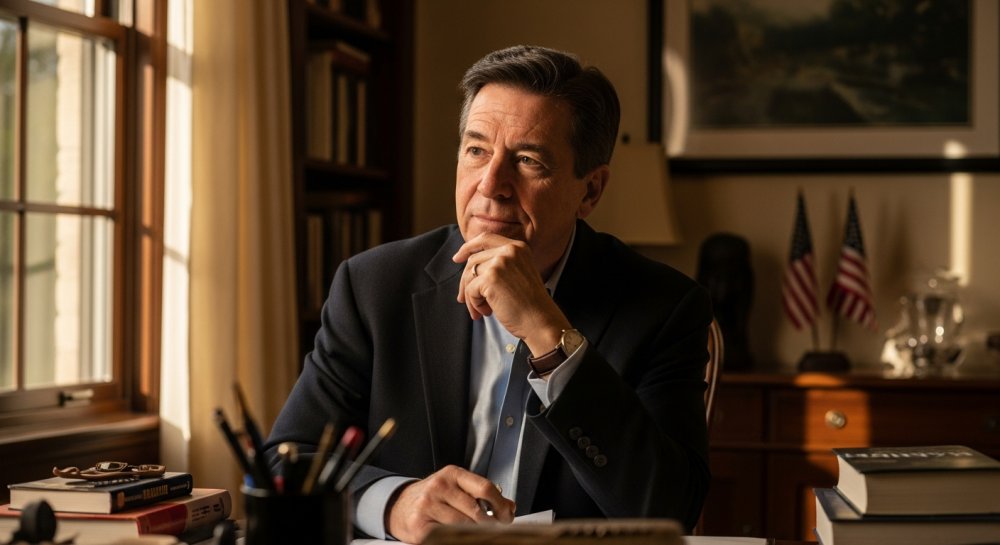
Eric Metaxas, the renowned Christian conservative commentator and bestselling author, has emerged as one of the most compelling voices calling for a spiritual awakening in America and throughout the Western world. Known for his deeply researched biographies including “Bonhoeffer: Pastor, Martyr, Prophet, Spy,” Metaxas has dedicated his career to exploring the intersection of faith, freedom, and culture.
In his work, Metaxas consistently returns to a central theme: the West’s current crisis is fundamentally a crisis of faith. He argues that the abandonment of Judeo-Christian values has left Western civilization vulnerable to ideological movements that reject the biblical foundations of human dignity and liberty.
Drawing from his extensive study of Dietrich Bonhoeffer, the German pastor who resisted Nazi tyranny, Metaxas illustrates how genuine Christian faith compels believers to stand for truth even when facing overwhelming opposition. Bonhoeffer’s example demonstrates that faithful Christianity cannot remain silent in the face of injustice or totalitarian ideology.
Metaxas believes that the restoration of the West requires more than political engagement or cultural reform. It demands a revival of authentic Christian faith that transforms individuals and, through them, transforms society. Without this spiritual foundation, he warns, freedom itself cannot be sustained.
The author has consistently emphasized that America’s founding principles are inseparable from biblical Christianity. The concepts of unalienable rights, limited government, and the dignity of every human being flow directly from a Christian worldview that recognizes God as the source of rights and moral order.
In recent years, Metaxas has become increasingly vocal about the threats facing religious liberty in America. He warns that the erosion of First Amendment protections and the growing hostility toward Christian expression represent existential dangers to freedom itself.
Through his books, radio program, and public speaking, Metaxas calls believers to recognize their moment in history. Like Bonhoeffer in Nazi Germany, Christians today face a choice: remain silent and comfortable, or speak truth with courage and conviction, trusting God with the consequences.
His message resonates with millions of Christians who sense that Western civilization stands at a crossroads. The restoration Metaxas envisions begins not with political power but with spiritual renewal—individuals returning to God, families strengthening their faith, and churches reclaiming their prophetic voice in society.
Metaxas argues that the Christian faith is not merely one option among many in a pluralistic society. Rather, it is the foundation upon which freedom, justice, and human flourishing are built. When that foundation crumbles, everything built upon it eventually collapses.
The path forward, according to Metaxas, requires Christians to embrace both truth and love, speaking boldly while demonstrating Christ’s compassion. This balanced approach—neither compromising biblical truth nor abandoning Christian charity—offers the only viable path to cultural renewal and the preservation of liberty.
Let us know what you think, please share your thoughts in the comments below.

Faith Facts
- Riverside Church of Christ in Kerrville, Texas, led a year-long relief effort following devastating floods on July 4, 2025, that killed at least 138 people in Central Texas
- The congregation built or rebuilt 46 homes and assisted more than 1,000 flood survivors with clothing, furniture, and housing while feeding and sheltering volunteers
- A documentary honoring the 200+ Kerr County victims will premiere on the one-year anniversary, showcasing how the church answered God’s call to serve their neighbors
More than 200 residents of Kerr County — victims of the devastating July 4, 2025, floods in Central Texas that killed at least 138 people — will be honored on the anniversary of that tragedy by a local church that spent the past year serving, feeding, comforting and rebuilding the lives of their neighbors. A 36-minute documentary, “When the Waters Receded: Answering God’s Call to Serve,” produced by Jennifer Allen of the Riverside Church of Christ in Kerrville, Texas, will begin the evening.
In the wake of waters that rose as the Guadalupe River crested at 37.5 feet, members and staff of the congregation organized a relief effort that engulfed the facility and people of the church for an entire year. They were still answering requests for mattresses 363 days after the flood.
A year ago, Riverside minister Chris Carrillo called the congregation to begin a marathon. Over the next 12 months, church members partnered with several disaster relief organizations associated with Churches of Christ to salvage, serve and restore homes and lives.
Together they built or rebuilt 46 homes and assisted more than 1,000 survivors with clothing, furniture and housing. They provided area first responders with chainsaws, buckets, rakes, cleaning supplies, water, food and more. The church fed volunteers and housed them in its facilities.
“All of the pain that we go through in life can either build us up or break us down,” Riverside minister Chris Carrillo said in the documentary.
“And if we don’t use the pain and the hurt in our lives in order to help others, if we don’t take the comfort which God has given us in order to comfort others, what an unbelievably wasted opportunity.”
Elder Ron Watson said the church hopes this week’s event will provide “some closure to the devastation that happened here.”
“It’s a joyful event because we’re completing God’s work,” Watson said.
Allen, a former television journalist in San Antonio, had collected video and interviews over the course of the year, not knowing how they might be used. “The team that lived up here, the ones that dedicated their life for a full year here, were the ones that decided to do this,” she said.
“It’s a final embrace.”
The documentary captures the heart of Christian service in action — believers putting faith into practice through sacrificial love for their neighbors. When disaster strikes, churches like Riverside demonstrate what it means to be the hands and feet of Christ in a hurting world.
The year-long commitment by this Texas congregation stands as a powerful testimony to the transforming power of the Gospel. While government agencies and secular organizations often provide short-term assistance, it was the local church that remained committed for the long haul, meeting needs day after day for an entire year.
This is what Biblical community looks like in practice — Christians caring for one another and their neighbors with enduring compassion and tangible help. The 46 rebuilt homes represent more than construction projects; they symbolize lives restored and hope renewed through faithful servants answering God’s call.
Let us know what you think, please share your thoughts in the comments below.
Faith Facts
- Scientific research confirms collective worship releases natural endorphins in the brain, strengthening community bonds
- Study demonstrates worshippers experience increased pain tolerance and enhanced sense of belonging during religious services
- Findings validate what Christians have known for millennia: communal worship strengthens faith and fellowship
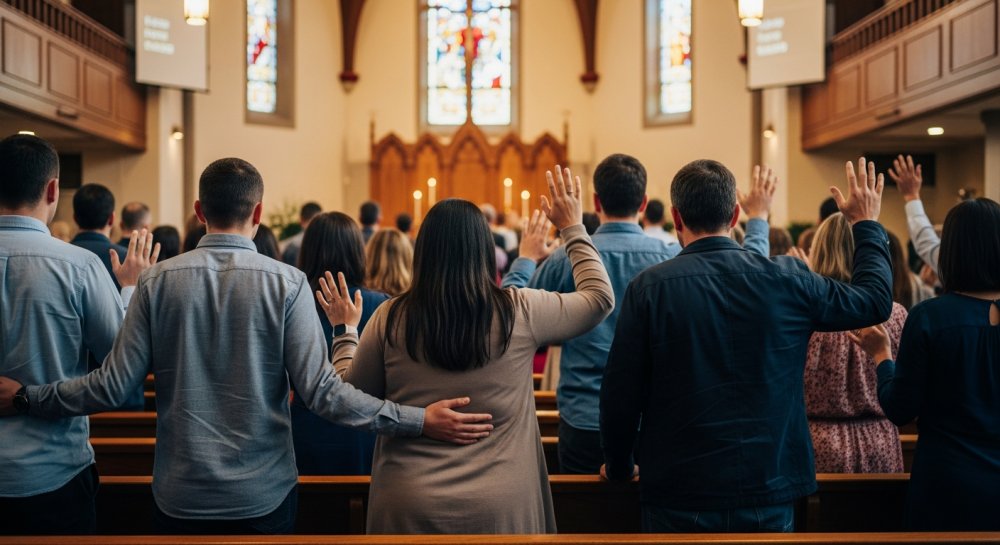
A groundbreaking new study has provided scientific evidence for what believers have experienced throughout history: worship brings people together in profound and measurable ways. Researchers have discovered that collective worship releases naturally-occurring endorphins in the brain, chemicals that strengthen our sense of belonging and increase our ability to endure hardship.
The research offers a fascinating window into how God designed the human brain to respond to communal worship. When believers gather together in praise and prayer, their bodies produce natural chemicals that reinforce the bonds of fellowship and community that Scripture commands us to maintain.
These findings stand in stark contrast to Karl Marx’s famous assertion that “religion is the opium of the people,” which he intended as a criticism. Marx viewed religious faith as a numbing agent that prevented social revolution. However, the new research reveals something far more profound: the human brain is literally wired to benefit from worship and spiritual community.
The study’s implications extend beyond mere brain chemistry. The increased pain tolerance observed among worshippers speaks to the resilience that faith communities have demonstrated throughout history, from the early church’s persecution to modern-day Christians facing trials and tribulations.
This research validates what Scripture has taught for thousands of years. The Book of Hebrews instructs believers not to forsake “the assembling of ourselves together,” recognizing that communal worship serves an essential purpose in the life of faith.
Rather than being an opiate that dulls our senses, worship appears to be a divine design feature that strengthens our ability to face life’s challenges while drawing us closer to our brothers and sisters in Christ. The sense of belonging generated through collective worship reflects the church’s biblical role as the body of Christ, where each member supports and encourages one another.
For Christian communities across America, these findings reinforce the vital importance of regular church attendance and fellowship. In an increasingly isolated and fragmented society, the church provides not only spiritual nourishment but also tangible neurological benefits that enhance our well-being and resilience.
The research also highlights why attacks on religious freedom and church gatherings strike at something fundamental to human flourishing. When governments or cultural forces attempt to prevent believers from assembling, they’re not merely restricting a social activity—they’re interfering with a practice that provides measurable benefits to mental and physical health.
Let us know what you think, please share your thoughts in the comments below.


-

 Self-Reliance1 year ago
Trump’s Bold Move Uncovers Massive Social Security Fraud
-

 Faith1 year ago
New Clues Emerge in Noah’s Ark Mystery
-

 News1 year ago
Governor Walz’s Rhetoric Sparks National Controversy
-

 News1 year ago
Mel Gibson’s ‘The Passion of the Christ’ Sequel Title Announced
-

 Family1 year ago
Texas Lawmaker Targets Furries in Schools
-

 Freedom1 year ago
Maine Lawmaker Challenges Sports Fairness Controversy
-

 Family1 year ago
Canada’s Controversial Policy Sparks Ethical Debate
-
Faith7 months ago
Congress Hears Pleas for Nigerian Christians