
Faith
Angels and Demons Documentary Highlights Real Spiritual Warfare

Faith Facts:
- Billy Hallowell’s investigative documentary recently received the Aletheia Documentary Award for its storytelling and evidence-based approach.
- The film features Christian thinkers and professionals, including Dr. Richard Gallagher, a psychiatrist who moved from skepticism to believing in the demonic.
- Polling data suggests many Americans still believe in a spiritual realm despite academic pushback.
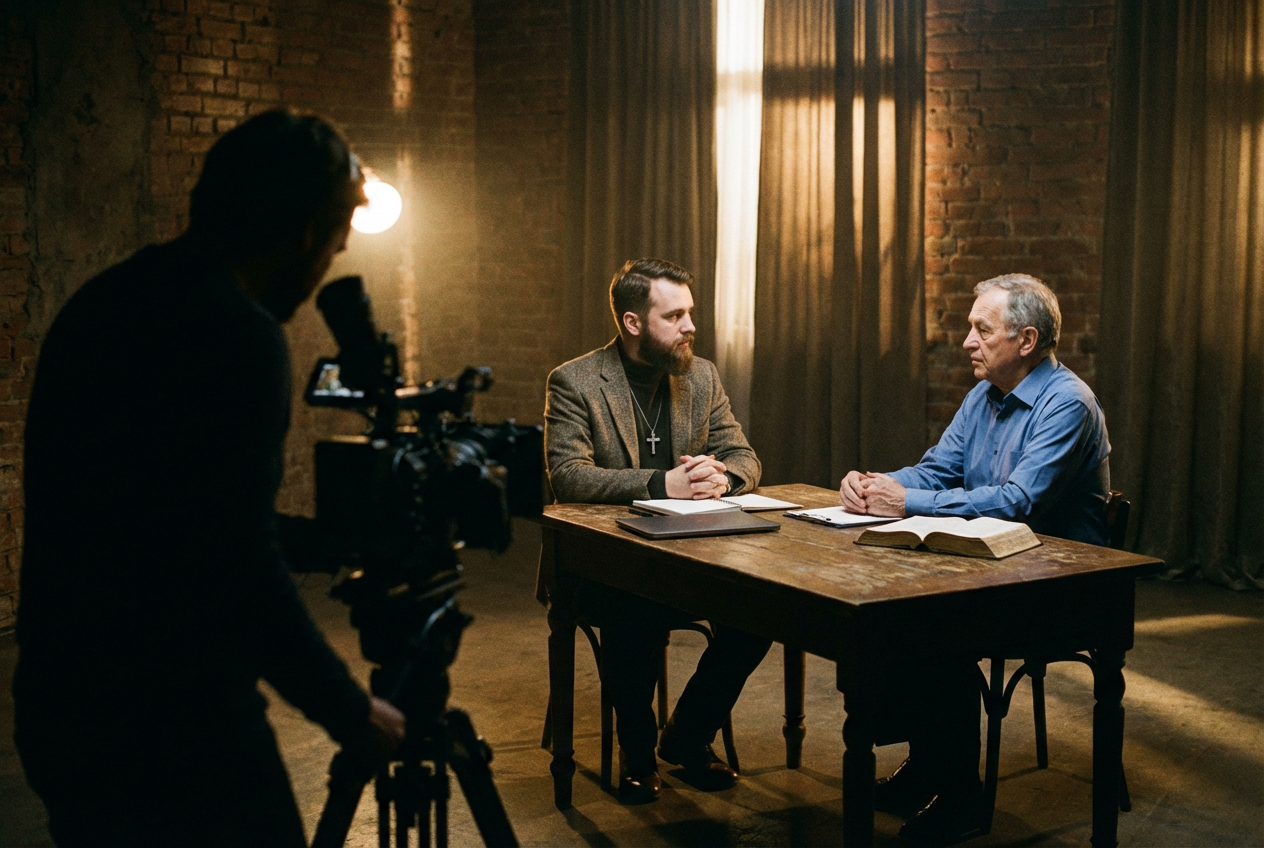
Journalist Billy Hallowell is challenging secular skepticism with his new documentary series, exploring the reality of angels and demons through expert testimony and evidence.
The project aims to move beyond sensationalism, using rigorous investigation to provide believers with robust tools for Christian apologetics.
By interviewing theologians, medical doctors, and former skeptics, the film bridges scientific inquiry and spiritual truth.
This approach emphasizes that the unseen world is not merely blind faith, but a reality shaped by the experiences of many across diverse professional fields.
The documentary serves as a reminder that Christians are engaged in spiritual struggle against principalities and powers, as described in Ephesians 6.
Recognizing this battle is essential for every believer seeking to live out their faith in a world increasingly shaped by materialist worldviews.
“You can’t win a battle you don’t know you’re in,” Hallowell stated.
“A lot of people are walking around confused and unaware that there is a spiritual battle happening.”
Ultimately, this investigation offers a way to redirect cultural fascination with the supernatural toward the truth of the Gospel.
It underscores the importance of spiritual discernment and the victory found in Christ alone.


Faith Facts
- Two Oklahoma Churches of Christ, separated for nearly 60 years, reunited in 2020 to form a single congregation now approaching 500 members
- The merger occurred during COVID-19, with seven properties selling successfully and donated land leading to construction of a new 800-seat auditorium
- Members attribute the successful reunion to unified leadership, humble attitudes, and divine providence working through practical circumstances
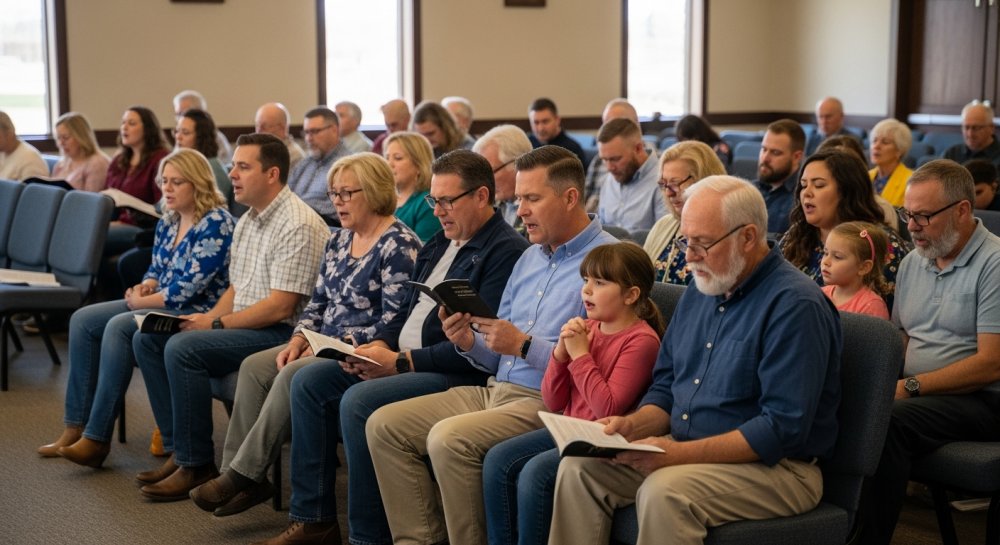
Just off U.S. 69/75 beside a Choctaw Travel Plaza billboard, nearly 500 Christians gather in a multipurpose room filled with four-legged cushioned chairs. “You are the melody. You are the harmony. Praise to your name I will bring,” the Durant Church of Christ sings as Sunday morning worship begins.
About 15 miles north of the Texas state line, this growing church in the home city of Southeastern Oklahoma State University is building a new, 800-seat auditorium. But while the construction proceeds, members will need to rearrange the chairs and set up tables for the monthly Friends & Family Day potluck meal following the assembly.
Not that they mind.
The faithful prefer to focus on the blessings of a multiyear journey that brought together two Durant congregations: the Seventh and Beech Church of Christ and the Northwest Church of Christ. “It’s been amazing,” Kim Mauck, 44, a mother of four, said of the 2020 merger just before the start of the COVID-19 pandemic.
“We love it for our family. Just the whole process has been positive for us.”
“I would say that for, like, maybe even the first year or two, you could kind of see people still sticking with their Northwest people and their Seventh and Beech people,” added Mauck. “But now it’s like, you can’t tell, and we’ve had so many new people who’ve come in, too. We’re all just one big group.”
Member Gail Hooten McKinney, 74, echoed Mauck:
“There’s never been a selfish attitude about it. It has been unified in, ‘What can we do to make this better for the community?’ And it’s been great.”
Frontier Roots
The combined church traces its roots to the Maddux and Roberts families, who passed through Indian Territory in 1894 while going from Arkansas to Texas in covered wagons. On the return trip to Arkansas, Cal Maddux, a gospel preacher, stopped and conducted a weeklong meeting.
Roughly 75 to 100 people gave their lives to Jesus in baptism, and the travelers decided to stay in Durant.
A few years before Oklahoma became the 46th state in 1907, a church split occurred over using an organ in worship. Those who objected to the instrumental music left the Christian Church and formed a Church of Christ.
After meeting in a smaller building, the Church of Christ erected a larger one at Seventh and Beech in 1917, said Jane Roberts Lewis, whose late grandmother was a niece of Cal Maddux.
“I grew up in the Seventh and Beech church,” said Lewis, 83, who interviewed her late aunt Jennie Maddux about the history in 1970.
“My dad was a deacon for 67 years, probably because he wouldn’t quit.”
By 1959, the Seventh and Beech congregation averaged Sunday attendance of 464, church records show. As the congregation outgrew its building, the elders announced plans to plant the Northwest church about a mile and a half away.
The new congregation met for the first time on July 1, 1962.
Northwest’s initial picture directory showed 88 adults and 20 children, while 379 members remained at Seventh and Beech, according to church records.
“At that point in time, with the town growing that direction, it made sense,” Layne Heitz, Durant’s pulpit minister and an elder, said of the church plant.
A Different Time
Americans’ driving habits were vastly different back then. Half-hour or hourlong commutes to eat, work — or worship — were not the norm.
“At one point in U.S. history, we saw more of the geographically specific, neighborhood churches,” said Mark Mulder, a sociology professor at Calvin University in Grand Rapids, Mich., who did a study on the subject.
“Today, with more sorting, worshipers are willing to drive past many churches to find the one that best fits their affinity.”
Some residents of Durant, a city of 22,000 that is the headquarters of the Choctaw Nation of Oklahoma, drive 95 miles south to work in Dallas. Against that backdrop, two like-minded congregations — separate and apart for nearly six decades — began to make less sense.
The Northwest church started with a sizable contingent of young professionals. But over the years, it became the older congregation in Durant — the one grandparents chose.
Seventh and Beech, meanwhile, maintained the Student Bible Center campus ministry and an active youth program. Younger families gravitated to it.
That’s how first cousins Jay Mauck and Matt Mauck ended up at different churches.
“You felt kind of torn on which church should I go to,” said Matt Mauck, 47, a fisheries biologist and father of three who moved to Durant in 2008.
“We found our place at Seventh and Beech, but we knew people at Northwest.”
Jay Mauck, 48, Kim’s husband and a former two-time All-American basketball player at Oklahoma Christian University, grew up at Northwest and stayed active in that congregation.
“When a young family would come over, we’d try really hard to keep them because we didn’t have many,” Jay Mauck said.
“And they’d go over to Seventh and Beech, and it was just covered with young kids and young families. … So there was a little bit of a divide.”
God’s Providence
When talk of a possible merger started, Seventh and Beech’s membership totaled about 300 — and Northwest’s was about 150. Heitz, who first came to Seventh and Beech as the campus minister 30 years ago and later taught math at Southeastern Oklahoma State, explained his support for the idea.
“One of the big motivating factors was the fact that there were 150 of my brothers and sisters that met across town that I did not know well,” he said.
“To be just a single, unified body of Christ here in Durant, there’s not even words that I can put on that to describe just what joy that brings to me.”
Even before the merger, the congregations would join together for Vacation Bible School and Christmas singing.
“When we were together, it just felt like family, you know?” Jay Mauck said.
Seventh and Beech’s three elders, including Heitz, approached Northwest’s three elders with a merger proposal in 2019. At first the Northwest leaders declined, but they later expressed an interest in considering the possibility.
Those discussions resulted in a joint decision to merge the elderships, the ministry staffs and the congregations in January 2020. Logan Cates, the combined church’s family minister, points to a series of providential developments — as he sees it — during that time.
“We were selling properties during the depths of COVID,” said Cates, who first joined the Seventh and Beech ministry staff in 2016.
“That’s the part that blows my mind. There were seven properties to sell, and they sold right in the middle of COVID.”
At the same time, a church member who had owned valuable property near Durant’s major four-lane highway for 30 years decided to donate much of it for the new building. Dollar General had tried to buy it but couldn’t get state approval for a median to allow vehicle access from both directions, said the owner, who asked not to be identified.
But after the member gave the land to the church, an elected official persuaded the state Transportation Department to permit the median. Why?
As Jay Mauck, the deacon overseeing the construction process, put it:
“God wanted this building to be here.”
Smoothing the Transition
In Heitz’s view, a choice by the combined church’s elders to make every decision unanimous has helped smooth the transition.
“If we don’t agree 100 percent,” he said, “then we will spend a week in prayer and come back together.”
One of those decisions: Making Sunday morning a worship-only experience. The church moved children’s and adult Bible classes to Sunday night.
“It’s difficult on families,” Heitz said of doing both in the morning. “We just said, ‘Why don’t we try this?’ We just did a trial for about three months, and the feedback we got from the congregation at large was like, ‘Our kids are doing better in worship service, and they’re paying more attention in Bible class in the evenings.'”
Sunday night attendance is up, too, compared with the previous format. Dean Marcho, 77, worships alongside generations of her family, including her mother, Bette Jo Mashburn, 100; her daughter Carrie Sullivan, 56; and her granddaughter Hannah Sullivan, 26.
Marcho’s late husband, Bob, was a minister, and they moved away from Durant for 45 years. But she still remembers attending Northwest’s first service at age 12.
Fifty-eight years later, she praised God in the newly named Durant church’s first assembly in 2020.
“It just felt like, ‘Lord, we hear you. This is what you want,'” she said.
“We were part of congregations that talked about merging, but it was never successful,” Marcho said. “Because the other congregation would come in saying, ‘Well, y’all move in here with us and leave your building and help us pay for ours,’ that kind of thing.”
“That was never a part of this discussion,” she said of the Durant merger.
“It was, ‘How can we glorify God?'”
Let us know what you think, please share your thoughts in the comments below.

Faith Facts
- Pathway to Victory YouTube channel has surpassed 1 million subscribers, earning YouTube’s Gold Creator Award
- Pastor Robert Jeffress leads the digital ministry that has reached this significant evangelism milestone
- The achievement represents a major expansion of Gospel outreach through modern media platforms
A prominent Christian ministry has achieved a remarkable digital evangelism milestone, demonstrating the growing reach of faith-based content in the modern media landscape. The achievement marks a significant moment for traditional Gospel proclamation meeting contemporary technology.
Pastor Robert Jeffress’ Pathway to Victory YouTube channel has officially crossed the one million subscriber threshold, earning recognition from the video-sharing platform with its Gold Creator Award. This milestone represents years of consistent biblical teaching and outreach through digital means.
The success of Pathway to Victory on YouTube illustrates how Christian leaders are effectively utilizing modern communication tools to spread the timeless message of Jesus Christ. In an era where digital platforms often promote secular values, this achievement shows that faithful biblical teaching continues to resonate with audiences seeking truth.
The ministry’s growth on YouTube reflects a broader trend of Christians engaging with faith content through digital channels. As traditional media outlets increasingly marginalize Christian perspectives, platforms like YouTube have become vital spaces for Gospel proclamation and discipleship.
Pastor Jeffress has consistently demonstrated a commitment to clear biblical teaching and unwavering Gospel proclamation throughout his ministry. His willingness to address contemporary cultural issues from a Christian worldview has attracted audiences seeking spiritual guidance grounded in Scripture.
The one million subscriber milestone represents more than just a social media achievement—it signifies one million individuals who have chosen to regularly receive biblical teaching and Christian content. Each subscriber represents a potential soul reached with the transformative message of salvation through Jesus Christ.
Digital ministry platforms like YouTube allow churches and Christian leaders to extend their reach far beyond physical walls. This technological advantage enables the Gospel to penetrate communities and nations that might otherwise remain unreached by traditional missionary efforts.
The Gold Creator Award from YouTube serves as recognition of the ministry’s consistent content production and audience engagement. However, for ministry leaders focused on eternal impact, the true reward lies in changed lives and souls brought into relationship with Christ.
As mainstream media continues to drift from its Christian heritage, the success of faithful ministries on digital platforms offers encouragement to believers. It demonstrates that when the Word of God is proclaimed with clarity and conviction, people will respond—regardless of the medium used.
The achievement also highlights the importance of Christians maintaining a presence on major communication platforms. Rather than retreating from the digital public square, believers must actively proclaim truth in these spaces where millions gather for information and inspiration.
Pathway to Victory’s success provides a model for other churches and ministries seeking to expand their evangelistic reach. Strategic use of digital tools, combined with unwavering biblical fidelity, can produce significant kingdom impact in the twenty-first century.
Let us know what you think, please share your thoughts in the comments below.

Faith Facts
- Dennis Hogan, a Kentucky church minister, faced stage four cancer three times with only a 1 percent chance of survival in his final diagnosis
- The biblical account of Joseph demonstrates that God’s presence remains constant even when circumstances suggest abandonment
- True faith means trusting God not for what He will do, but for who He is and what He has already done through Christ’s sacrifice
What do you do when you are on the tightrope of life and there is no net? We really have but two choices: Trust God with all you have, or blame God for allowing you to be in this position.
Dennis Hogan, a minister at the Horse Cave Church of Christ in Kentucky, knows this choice intimately. In 2014, he sat in a doctor’s office and was told he had stage four cancer, squamous-cell carcinoma — for the third time.
The words hit like a kick to the gut. This time he was given a 1 percent chance to survive.
Do the math. He was facing a 99 percent chance this would be his end on Earth.
Tightropes come in many forms: Financial ruin. Death of a loved one. Marital collapse. Every time — every circumstance — we face the same choice. Trust God, or blame him.
We see this play out throughout the Bible. One of the greatest heroes who truly lived a life of trust was Joseph. Early in Genesis 37, we see that God had chosen him for something extraordinary — giving him dreams and the boldness to share them even when it cost him.
“And Joseph dreamed a dream, and he told it his brethren: and they hated him yet the more” — Genesis 37:5.
But being called by God did not guarantee an easy life. In fact, the opposite was true. Joseph lived an extraordinarily difficult, painful and lonely life.
Somehow we develop the false idea that when we become a Christian, “God will take care of me” — meaning we won’t have to face hardship. That wasn’t the case for Joseph.
He was thrown into a pit by his own brothers, sold into slavery, wrongly accused and spent years in prison for a crime he did not commit. Where was God? On the surface, it would appear God had abandoned Joseph in that foreign land and that dingy dungeon.
That is precisely where blame is born. Not in rebellion — but in silence.
When God doesn’t answer on our schedule, when the pit gets deeper instead of shallower, blame feels like the only honest response.
But God was there 100 percent of the time.
“The Lord was with Joseph so that he prospered. His master saw that the Lord was with him and that the Lord gave him success in everything he did” — Genesis 39:2-3.
A pagan noticed the presence of God in Joseph’s life.
“But the Lord was with Joseph and showed him steadfast love and gave him favor in the sight of the keeper of the prison” — Genesis 39:21.
“The warden paid no attention to anything under Joseph’s authority, because the Lord was with him, and the Lord made everything he did successful” — Genesis 39:23.
A second pagan observed it.
Joseph could have thrown up his hands and blamed God for everything. And yet he chose to trust. God’s presence and providence were not always felt — but they were always there. That is the kind of trust we need. Always.
Trusting God is not a transactional process. It is not quid pro quo — I trust you, so you owe me something good in return.
Why then should we trust God? Because his timing is perfect. His love is unwavering. His mission is holy. And his sacrifice for us is unimaginable.
The tightrope is real. The net is gone. But the God who was with Joseph in the pit and in the prison is the same God who is with you right now.
Trust him — not because of what he will do but because of who he is and what he has already done. The cross settled that question forever.
Dennis Hogan is a three-time cancer survivor and the author of “Trusting God Without a Net.”
Let us know what you think, please share your thoughts in the comments below.


-

 Self-Reliance1 year ago
Trump’s Bold Move Uncovers Massive Social Security Fraud
-

 Faith1 year ago
New Clues Emerge in Noah’s Ark Mystery
-

 News1 year ago
Governor Walz’s Rhetoric Sparks National Controversy
-

 News1 year ago
Mel Gibson’s ‘The Passion of the Christ’ Sequel Title Announced
-

 Family1 year ago
Texas Lawmaker Targets Furries in Schools
-

 Freedom1 year ago
Maine Lawmaker Challenges Sports Fairness Controversy
-

 Family1 year ago
Canada’s Controversial Policy Sparks Ethical Debate
-
Faith8 months ago
Congress Hears Pleas for Nigerian Christians