Connect with us

Faith

Andreas Wenzel Chosen to Lead European Evangelicals

Published

on

Faith FactsAndreas Wenzel of Germany has been elected president of the European Evangelical Alliance, following Rev. Dr. Frank Hinkelmann’s twelve-year tenure.The announcement was made at the 2025 Members Meeting in Montenegro, which included both in-person and virtual participation from leaders across Europe.Wenzel’s leadership experience ranges from leading youth ministries to serving on national and European evangelical boards since 2017.This milestone marks a new chapter for the Alliance, emphasizing steadfast commitment to unity and outreach in an ever-changing Europe. Wenzel’s leadership highlights a dedication to upholding the principles of faith, mission, and the authority of Scripture.”His passion for mission will inspire us all to press forward in faith.”As the Alliance welcomes new leadership, the focus remains on defending religious liberty, strengthening Christian fellowship, and advancing the biblical mission across 35 nations.Read the full story at Christian Daily

Continue Reading
Click to comment

Leave a Reply

Your email address will not be published. Required fields are marked *

Faith

When Marriage Vows Meet Digital Betrayal

Published

on

Faith Facts

  • Christian counselors report that pornography use represents a form of sexual unfaithfulness that violates the covenant of marriage.
  • Biblical grounds for divorce traditionally include adultery and abandonment, with ongoing debate among denominations about pornography’s classification.
  • Marriage experts warn that without serious consequences, recovery from pornography addiction often fails, leaving spouses in prolonged emotional suffering.

The question of whether pornography use constitutes biblical grounds for divorce has become increasingly urgent as Christian marriages face unprecedented digital temptations. This issue strikes at the heart of marital fidelity, covenant faithfulness, and the practical realities of protecting one’s family.

Many Christian counselors and pastors now recognize that pornography use represents more than a private struggle — it constitutes a fundamental betrayal of the marriage covenant. The viewing of pornographic material involves sexual engagement with images of other people, a reality that mirrors the heart of adultery even when no physical contact occurs.

One experienced Christian counselor observed a troubling pattern: when pornography use is not treated as a serious marriage-threatening offense, husbands struggling with this sin often fail to pursue genuine recovery. Without facing real consequences for their actions, the motivation to change remains superficial at best.

The wives in these situations frequently endure years of emotional trauma, living with the ongoing pain of betrayal while their husbands continue in patterns of deception and unfaithfulness. This prolonged suffering takes a devastating toll on mental health, spiritual well-being, and the overall family environment.

Scripture speaks clearly about sexual purity within marriage and the seriousness of adultery. Jesus Himself addressed the issue of lust in Matthew 5:28, stating that looking at a woman with lustful intent constitutes adultery in the heart. This teaching establishes that sexual unfaithfulness is not limited to physical acts but encompasses the intentions and actions of the mind and will.

The Apostle Paul’s teaching in 1 Corinthians 7 provides biblical grounds for divorce in cases of abandonment and persistent unbelief. Many Christian leaders argue that a spouse who continues in pornography use despite repeated confrontation and offers of help has essentially abandoned the marriage covenant, even while remaining physically present.

The protection of the innocent spouse must be a priority in these discussions. A wife living with a husband who refuses to address his pornography addiction faces ongoing spiritual, emotional, and sometimes even physical harm. The church’s response must balance grace with justice, offering both accountability and protection.

Some Christian traditions maintain stricter interpretations of divorce permissibility, while others recognize that pornography addiction can constitute legitimate grounds for ending a marriage. What remains consistent across most Christian perspectives is the acknowledgment that pornography use is sinful, damaging, and incompatible with faithful Christian marriage.

The path forward requires honest assessment of each situation. Has the offending spouse genuinely repented and committed to accountability and recovery? Or do patterns of deception, minimization, and continued use persist? These questions help determine whether reconciliation remains possible or whether divorce may be the necessary, though painful, option.

Churches must provide robust support for both struggling spouses and wounded partners. This includes accountability groups for men battling pornography, counseling resources for traumatized wives, and pastoral leadership willing to address these issues with both compassion and moral clarity.

The rising prevalence of pornography in American culture demands that Christian communities respond with wisdom, biblical fidelity, and practical care for those whose marriages hang in the balance. Protecting the sanctity of marriage sometimes means recognizing when a covenant has been irreparably violated.

Let us know what you think, please share your thoughts in the comments below.

Continue Reading

Faith

California Church Earns National Recognition for Advancing Community Wellness

Published

on

Faith Facts

  • A California church has received official designation from the Blue Zones Project to promote healthier living in its community
  • The Blue Zones Project identifies regions where people live longer, healthier lives through lifestyle practices
  • The church joins a network of faith-based organizations integrating Biblical stewardship of the body with practical wellness initiatives

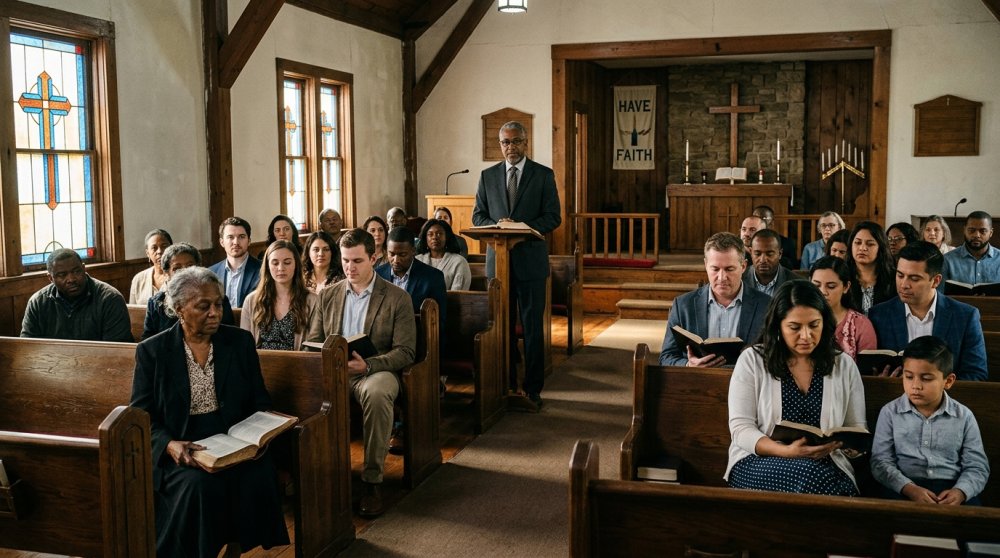
A California congregation has achieved recognition from the Blue Zones Project, earning a special designation that positions the church as a hub for promoting healthier lifestyles throughout its local community. The achievement reflects a growing movement among Christian institutions to embrace Biblical principles of bodily stewardship alongside modern wellness science.

The Blue Zones Project identifies and studies regions around the world where populations consistently live longer, healthier lives. These areas share common lifestyle characteristics including plant-based diets, regular physical activity, strong community connections, and purpose-driven living—principles that align closely with Christian teachings on caring for the body as a temple of the Holy Spirit.

By joining this community-wide network, the church commits to implementing evidence-based wellness practices while maintaining its spiritual mission. The designation enables the congregation to access resources, training, and support to help members and neighbors adopt sustainable healthy habits rooted in both faith and science.

Churches across America are increasingly recognizing that physical health and spiritual health are interconnected. Scripture repeatedly emphasizes the importance of caring for our bodies, from 1 Corinthians 6:19-20’s teaching that our bodies are temples of the Holy Spirit, to the numerous Biblical references to disciplined living and self-control.

The Blue Zones approach emphasizes natural movement, wholesome nutrition, stress reduction, and strong social bonds—all elements that complement Christian community life. Churches provide ideal settings for implementing these principles through fellowship meals, walking groups, service activities, and supportive relationships that extend beyond Sunday morning.

This recognition comes at a critical time when Americans face epidemic levels of chronic disease, obesity, and mental health challenges. Christian communities have unique opportunities to address these issues by combining eternal truth with practical wisdom about daily living.

The church’s commitment to community wellness demonstrates that faith communities can lead the way in addressing public health challenges while maintaining their primary calling to share the Gospel and make disciples. By helping people live healthier, more abundant lives, churches fulfill Christ’s mission of caring for the whole person—body, mind, and spirit.

As more congregations embrace this holistic approach to ministry, they’re discovering that investing in physical wellness strengthens spiritual vitality, deepens community bonds, and creates new opportunities for outreach and service.

Let us know what you think, please share your thoughts in the comments below.
Continue Reading

Faith

State Leading Nation in Religious Freedom Faces Unexpected New Threat

Published

on

Faith Facts

  • Arkansas ranked number one in the nation for religious liberty protections in 2025
  • Governor Sarah Huckabee Sanders identifies loss of community and American alienation as major threats to religious freedom
  • The warning comes as traditional values face increasing cultural pressure nationwide

Arkansas has achieved the top ranking in the nation for religious freedom, but Governor Sarah Huckabee Sanders is sounding an alarm about dangers that extend beyond legislative battles. The Republican governor identifies a growing crisis of community breakdown and isolation among Americans as a serious threat to the very foundations of religious liberty.

The Natural State’s achievement in securing the number one position for religious freedom protections reflects years of deliberate policy decisions prioritizing constitutional rights and traditional values. Yet even with these legal safeguards in place, Sanders recognizes that the cultural fabric supporting those freedoms faces unprecedented strain.

The governor’s concerns center on the increasing alienation Americans feel from one another and from their communities. This breakdown of social bonds represents more than just a societal inconvenience—it strikes at the heart of what makes religious freedom viable and sustainable in a democratic republic.

When communities fracture and citizens withdraw from civic life, the shared understanding of fundamental rights like religious liberty becomes harder to maintain. The common ground that once united Americans across different backgrounds grows thinner, making it more difficult to defend cherished freedoms.

Arkansas’s success in protecting religious liberty demonstrates that legislative action and strong leadership can create meaningful safeguards. The state’s policies have created an environment where people of faith can live according to their convictions without government interference or cultural coercion.

However, Sanders’s warning suggests that legal protections alone cannot preserve religious freedom indefinitely. The governor understands that religious liberty thrives best in communities where neighbors know and respect one another, where shared values create common purpose, and where citizens actively participate in civic life together.

The challenge of American alienation manifests in multiple ways—declining church attendance, reduced participation in civic organizations, increasing political polarization, and the isolating effects of technology replacing face-to-face interaction. These trends collectively undermine the social infrastructure that historically supported religious freedom.

For Christians and other people of faith, the governor’s message carries particular urgency. Maintaining religious liberty requires more than winning legislative battles—it demands rebuilding the kinds of communities where faith can flourish and where neighbors understand the importance of protecting each other’s rights.

Arkansas’s top ranking provides a model for other states seeking to strengthen religious freedom protections. The state’s approach demonstrates that determined leadership focused on traditional values can achieve concrete results even in an increasingly hostile cultural environment.

The connection between community health and religious liberty highlights why faith-based institutions play such a vital role. Churches, synagogues, and other religious communities serve as anchors of social connection, bringing people together and fostering the relationships that sustain a free society.

As cultural pressures continue mounting against traditional Christian values, the need for strong communities becomes even more critical. Isolated individuals prove far more vulnerable to coercion than those embedded in supportive networks of family, friends, and fellow believers.

Governor Sanders’s dual message—celebrating Arkansas’s achievement while warning of deeper threats—reflects the complex reality facing religious freedom in America today. Legal victories matter tremendously, but they cannot substitute for the human connections that give those freedoms meaning and staying power.

Let us know what you think, please share your thoughts in the comments below.

Continue Reading

Trending