
Faith
Ancient Christian Heritage Under Threat After Ethnic Cleansing Campaign

Faith Facts
- Over 100,000 Armenian Christians were forcibly expelled from Artsakh in 2023 in what many describe as ethnic cleansing
- Historic churches, monasteries, and Christian cemeteries are now being marketed to tourists with little acknowledgment of the displaced faithful who built and preserved them
- The region’s Christian heritage dates back over 1,600 years, representing one of the world’s oldest continuous Christian communities
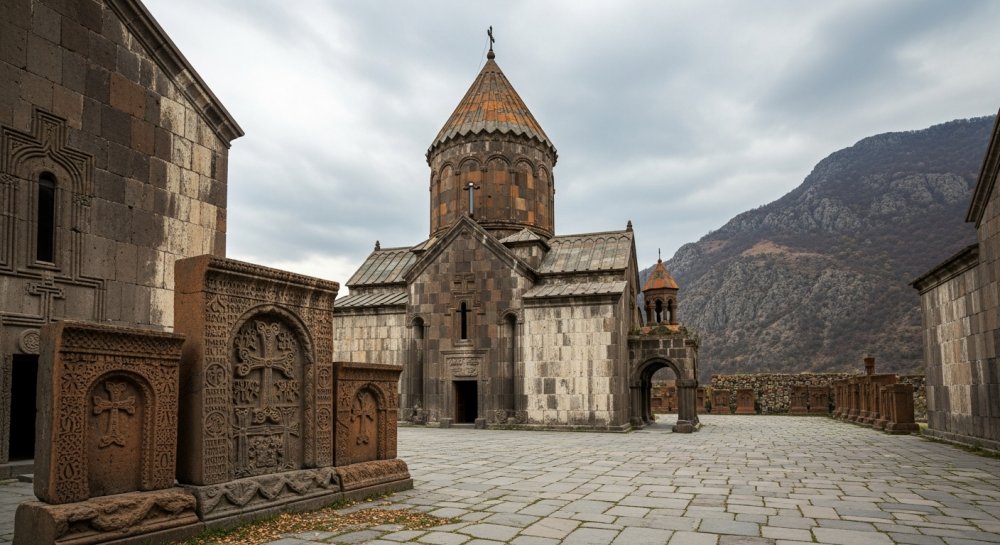
A disturbing pattern is emerging in the aftermath of one of the most significant displacements of Christians in recent history. Armenian Christians who called Artsakh home for generations were forced to flee in 2023, leaving behind sacred sites that have stood as testimonies to their faith for centuries.
Now, travel companies are capitalizing on the absence of these believers, marketing luxury tours of the very churches, monasteries, and cemeteries that Armenian families were forced to abandon. What’s particularly troubling is the near-complete erasure of the Christian communities who built, maintained, and worshipped in these sacred spaces for over a millennium.
The exodus from Artsakh represents a catastrophic loss for Christian heritage in the region. Over 100,000 Armenian Christians were driven from their ancestral homeland in what international observers have characterized as ethnic cleansing. These weren’t just residents—they were the custodians of a living faith tradition that predates Islam in the region by centuries.
The marketing materials for these tours reveal a troubling narrative: stunning architecture and picturesque landscapes are highlighted, while the human stories of faith, persecution, and forced displacement are conveniently omitted. Ancient Christian monasteries that survived centuries of challenges are now being presented as mere tourist attractions, stripped of their spiritual significance and the communities that gave them meaning.
Armenian Christianity in this region represents one of the world’s oldest continuous Christian traditions. The churches and monasteries now being commodified were not built as museums—they were living centers of worship, prayer, and community life. Each stone tells a story of faithful believers who chose to remain Christian despite tremendous pressure and persecution throughout history.
The situation raises profound questions about religious freedom and the protection of Christian minorities in the modern world. When an entire Christian population can be displaced and their heritage repackaged for tourism without acknowledgment of their suffering or even their existence, it signals a dangerous precedent for vulnerable Christian communities worldwide.
For Armenian Christians scattered across the globe, many now living as refugees, the commercialization of their abandoned sacred sites adds insult to injury. They didn’t choose to leave—they were forced out. Their churches weren’t voluntarily surrendered—they were taken.
This erasure of Christian presence from the historical narrative is particularly concerning for those who value religious freedom and the preservation of Christian heritage. The same pattern has played out in other regions where Christian minorities have been displaced, their contributions to civilization minimized or forgotten entirely.
American Christians and all people of conscience should pay attention to what’s happening in Artsakh. The displacement of Christian communities and the subsequent whitewashing of their history serves as a warning about the fragility of religious freedom and the importance of standing with persecuted believers worldwide.
The five-star tour packages being sold may offer comfortable accommodations and beautiful photography opportunities, but they cannot restore what was lost—a living, breathing Christian community that maintained its faith through countless trials. The empty churches now draw tourists where once they echoed with prayers and hymns.
Let us know what you think, please share your thoughts in the comments below.

Faith Facts
- The World Council of Churches has publicly backed the Armenian Apostolic Church amid escalating tensions with Armenia’s government
- The conflict represents a years-long standoff between one of Christianity’s oldest denominations and secular state authorities
- The Armenian Apostolic Church traces its roots to the first century and represents the faith of millions of believers
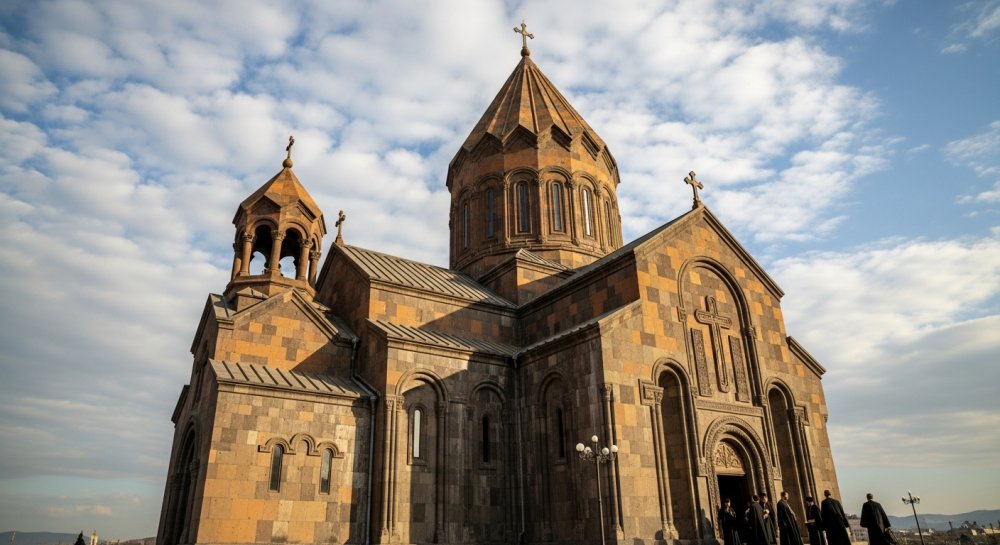
The World Council of Churches has issued a strong statement of support for the Armenian Apostolic Church, which finds itself embroiled in a prolonged dispute with the government of Armenia. This standoff has been simmering for years and represents a concerning challenge to religious freedom in the historic Christian nation.
The Armenian Apostolic Church holds a unique place in Christian history as one of the world’s oldest Christian communities. Armenia was the first nation to officially adopt Christianity as its state religion in 301 AD, centuries before most of Europe embraced the faith.
The current tensions between church and state in Armenia raise serious questions about the protection of religious liberty and the preservation of Christian heritage in a region where the faith has endured for nearly two millennia. The involvement of the World Council of Churches signals international concern about the treatment of this ancient Christian institution.
This conflict comes at a time when Christians worldwide are watching closely as religious freedom faces challenges in many nations. The Armenian situation serves as a reminder that even in historically Christian lands, the relationship between faith communities and government authorities can become strained.
For American Christians committed to religious liberty as a foundational principle, the plight of the Armenian Apostolic Church offers an important case study in defending the rights of believers against government overreach. The principle that churches should operate free from state interference resonates deeply with conservative Christian values.
The World Council of Churches’ decision to speak out demonstrates the importance of international religious solidarity when faith communities face pressure from secular authorities. Such support can provide crucial moral backing to embattled believers.
As this situation continues to unfold, Christians in America and around the world would do well to remember their Armenian brothers and sisters in prayer. The preservation of religious freedom anywhere strengthens it everywhere.
Let us know what you think, please share your thoughts in the comments below.
Faith Facts
- Gen Z discusses their Christian faith more openly than previous generations but struggles with doubt about whether God truly hears them
- New research reveals a troubling disconnect between young people’s public faith expressions and their private confidence in God’s presence
- The crisis points to a faith that flourishes on Sunday but falters when tested during the week
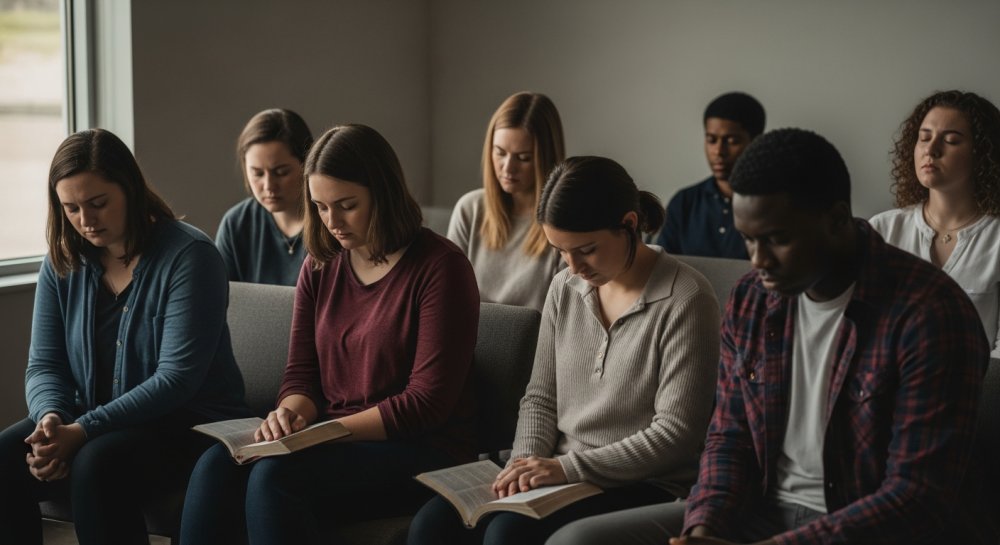
America’s youngest generation of believers faces a paradox that should concern every Christian parent, pastor, and mentor. Gen Z talks about Jesus more than their parents or grandparents ever did, yet they’re simultaneously the generation most plagued by doubts about whether God actually hears their prayers.
This isn’t about young people abandoning church buildings or rejecting Christianity outright. It’s something more subtle and perhaps more dangerous — a crisis of confidence in the very foundation of our relationship with God.
Recent research illuminates a troubling pattern: young Christians are vocal about their faith on social media and in public spaces, but privately wrestle with whether their prayers reach beyond the ceiling. They know the right words, they understand the theology, but when life gets hard during the week, that Sunday morning certainty evaporates.
Scripture speaks directly to this struggle. James 1:6-8 warns believers: “But when you ask, you must believe and not doubt, because the one who doubts is like a wave of the sea, blown and tossed by the wind. That person should not expect to receive anything from the Lord. Such a person is double-minded and unstable in all they do.”
The question facing the Church today isn’t whether Gen Z believes in God — most do. The question is whether they believe God believes in them, whether He’s actively involved in their daily lives, whether their prayers matter.
One young person’s testimony captures this tension perfectly. Raised in a Christian home, active in youth group, able to quote Scripture and defend doctrine, this individual discovered their faith crumbled the moment real trials came. What looked like solid belief on Sunday proved to be borrowed confidence that couldn’t sustain them through Monday’s challenges.
This generation has grown up in unprecedented times — connected digitally yet isolated relationally, bombarded with information yet starving for truth, affirmed constantly yet doubting their worth. They’ve seen hypocrisy in the Church and inconsistency in Christian leaders. They’ve watched believers claim God’s promises on Sunday and live in practical atheism the rest of the week.
The solution isn’t simply telling young people to pray more or have stronger faith. It’s about modeling what genuine, tested, resilient faith looks like when the world isn’t watching. It’s about honest conversations that acknowledge doubt while pointing to God’s faithfulness.
Psalm 34:17-18 offers hope: “The righteous cry out, and the Lord hears them; he delivers them from all their troubles. The Lord is close to the brokenhearted and saves those who are crushed in spirit.”
Gen Z needs to hear that doubt isn’t the opposite of faith — it’s often the pathway to deeper faith. They need mentors who’ve walked through valleys and emerged with confidence not in their own strength but in God’s unchanging character. They need to see Christianity that works on Wednesday as powerfully as it does on Sunday.
The Church has an opportunity here. We can either dismiss this generation’s struggles as weakness or recognize them as an invitation to demonstrate the reality of a God who doesn’t just exist in theory but intervenes in history, answers prayers, and transforms lives.
Our young people aren’t losing faith — they’re losing confidence that what they believe actually makes a difference. That’s a crisis the American Church cannot afford to ignore.
Let us know what you think, please share your thoughts in the comments below.
Faith Facts
- The YMCA held its first-ever world conference this week in history, uniting Christian leaders across continents to advance youth ministry globally
- V.S. Azariah was born this week in Christian history, later becoming India’s first native Anglican bishop and a pioneering voice for indigenous church leadership
- Thomas Fuller, renowned English church historian and chaplain, passed away during this week in Christian history, leaving behind influential works on ecclesiastical history
Throughout the centuries, God has raised up faithful servants who have shaped the course of Christian ministry worldwide. This week marks the anniversaries of three significant events that demonstrate how the Holy Spirit has worked through devoted believers to advance the Gospel and strengthen the Body of Christ across cultural and geographic boundaries.
These historical moments remind us that faithful obedience to God’s calling can have ripple effects that transform nations and generations.
YMCA’s First World Conference
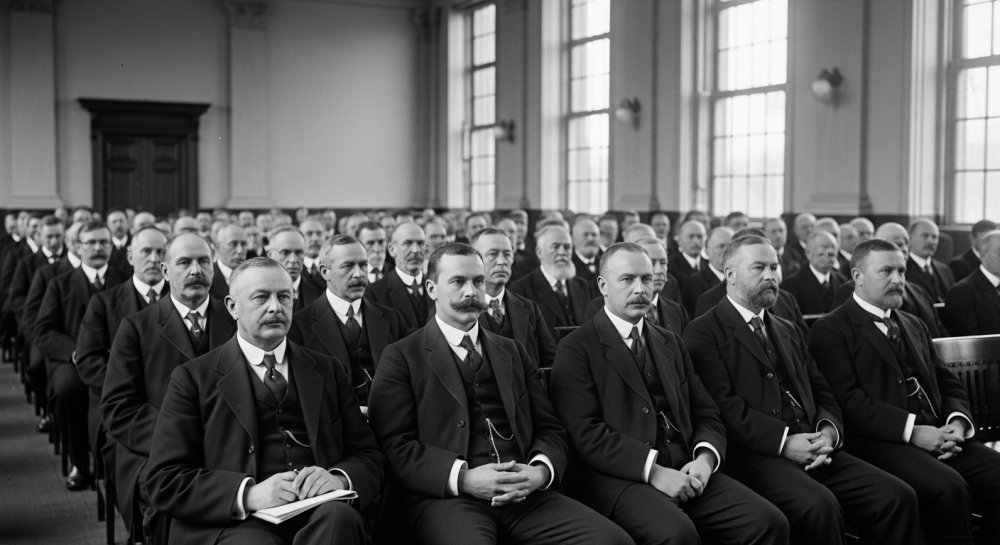
The Young Men’s Christian Association convened its inaugural world conference during this week in history, bringing together Christian leaders from multiple nations to discuss strategies for reaching young people with the Gospel. The gathering represented a pivotal moment in the organization’s evolution from local ministry to global movement.
Founded on biblical principles and committed to developing Christian character in young men, the YMCA had already established a strong presence in communities across Europe and North America. This first world conference solidified the organization’s international vision and created a framework for coordinated Christian outreach that would impact millions of young people in the decades to come.
The conference participants understood that cultivating spiritual formation in youth required intentional programming, dedicated facilities, and trained leaders who could model Christ-like character. Their commitment to these principles helped the YMCA become one of the most recognizable Christian organizations worldwide, though its mission has shifted considerably in recent decades from its evangelical foundations.
Birth of V.S. Azariah
Vedanayakam Samuel Azariah was born this week in Christian history in the South Indian state of Tamil Nadu. Raised in a Christian family, Azariah would become a transformative figure in the Anglican Church and a powerful advocate for indigenous church leadership in India.
In 1912, Azariah made history by becoming the first Indian bishop in the Anglican Communion, serving as Bishop of Dornakal. His appointment represented a significant milestone in breaking down colonial barriers within church leadership and demonstrated that the Gospel transcends cultural boundaries.
Throughout his episcopal ministry, Bishop Azariah emphasized evangelism, social reform, and the development of indigenous Christian leadership. He challenged Western missionaries to share authority with local believers and worked tirelessly to build a truly Indian expression of Anglican Christianity that honored both biblical orthodoxy and cultural context.
His legacy continues to inspire Christians in India and throughout the Global South who seek to lead churches that are both faithful to Scripture and relevant to their own cultural contexts.
Death of Thomas Fuller
Thomas Fuller, the distinguished English church historian and chaplain, passed away during this week in Christian history. Fuller served as a chaplain in the Royalist army during the English Civil War and remained faithful to the Anglican tradition throughout the tumultuous Commonwealth period.
Fuller is best remembered for his historical works, particularly “The Church History of Britain,” which chronicled the development of Christianity in England from ancient times through his own era. His writings combined meticulous research with engaging narrative style, making church history accessible to ordinary readers while maintaining scholarly rigor.
As a minister during one of England’s most divisive periods, Fuller demonstrated how Christians can maintain theological convictions while extending grace to those with different perspectives. His writings reflected both a deep love for the historic Christian faith and a charitable spirit toward those who disagreed with him on secondary matters.
Fuller’s commitment to preserving and communicating the story of God’s work in history serves as a model for Christians today who seek to understand how the Lord has guided His church through trials and triumphs across the centuries.
Let us know what you think, please share your thoughts in the comments below.


-

 Self-Reliance1 year ago
Trump’s Bold Move Uncovers Massive Social Security Fraud
-

 Faith1 year ago
New Clues Emerge in Noah’s Ark Mystery
-

 News1 year ago
Governor Walz’s Rhetoric Sparks National Controversy
-

 News1 year ago
Mel Gibson’s ‘The Passion of the Christ’ Sequel Title Announced
-

 Family1 year ago
Texas Lawmaker Targets Furries in Schools
-

 Freedom1 year ago
Maine Lawmaker Challenges Sports Fairness Controversy
-

 Family1 year ago
Canada’s Controversial Policy Sparks Ethical Debate
-
Faith9 months ago
Congress Hears Pleas for Nigerian Christians