
Family
An Unexpected Invitation That Changed Everything

Faith Facts
- An American visitor was invited to participate in a multi-day Vietnamese funeral ceremony, experiencing profound Christian fellowship across cultures
- The memorial service featured Scripture from Revelation 14:13, celebrating eternal rest for believers who die in the Lord
- Missionary Tom Tune’s compassionate outreach transformed an impoverished Vietnamese family, leading to multiple baptisms and the launch of a thriving Christian English school
Imagine preparing to host a visitor from halfway around the world when a beloved family member suddenly passes away. Most of us would scramble to find another host, worried about imposing grief on a stranger.
But that’s not how faith works in Vietnam, where the body of Christ transcends cultural boundaries in ways that put our Western sensibilities to shame.
Shortly after arriving in Ho Chi Minh City to meet contact Hai Huynh, an American visitor found himself whisked away on the back of a scooter to the funeral of Nguyen Chau Son, a man he’d never met. What could have been an awkward intrusion became a profound lesson in Christian community and the eternal hope we share in Christ.
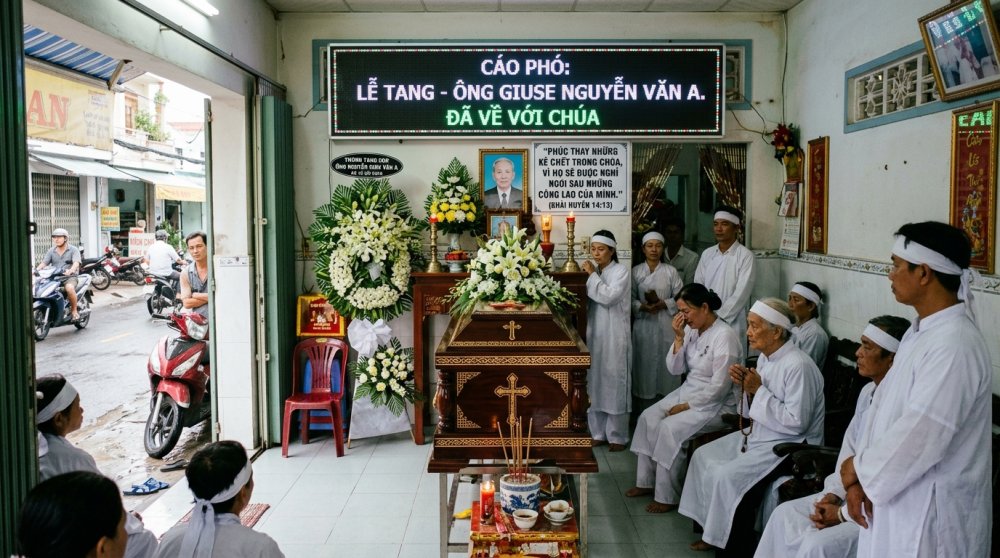
Nguyen’s casket stood in a family room opening onto a neighborhood street in Can Tho, a city of 1.5 million in Vietnam’s Mekong Delta. Above the casket hung a digital sign scrolling messages of mourning.
Elaborate floral arrangements filled the room. Next to Nguyen’s photo stood a Bible verse in Vietnamese—Revelation 14:13.
“I heard a voice from heaven saying, ‘Blessed are those who die in the Lord from now on! The Holy Spirit said, ‘Yes, for they rest from their labors, and their works follow them.'”
The visitor had met Nguyen’s stepdaughter, Ngan, more than a decade earlier in Oklahoma City. Legendary sailor and longtime South Pacific missionary Tom Tune brought her by for introductions as she started graduate school at Oklahoma Christian University.
While working in Vietnam, Tom had started a program helping poor Vietnamese families pay for education. His efforts resulted in multiple baptisms, including Nguyen and his entire family—a testament to the power of practical Christian love.
Ngan, once shy and overwhelmed, had returned to Vietnam and launched an English school with multiple campuses serving hundreds of students. Even while mourning her stepfather, she greeted her American friend warmly.
In Vietnam, funerals are multi-day affairs. The family set up two tents and tables in the street and began cooking—and cooking and cooking.
Between visits into the countryside to meet families served by the growing Church of Christ in Can Tho, someone was always preparing a meal, always pulling guests toward tables to share in feasts. Plate after plate of prawns, beef, pork and chicken appeared, along with great bowls of pho, the Vietnamese soup with rice noodles.
The food was amazing, but the fellowship proved even better. Extended family members and teachers from the English school gathered to share stories and laughter.
We often say we want funerals to feel like celebrations. This one genuinely did—a true celebration of eternal life in Christ, not morbid ritual or empty ceremony.
At least once daily, mourners gathered around the casket as Hai led hymns in Vietnamese, including “I Need Thee Every Hour” and “There’s Sunshine in My Soul.” The American visitor was asked to pray for the family—mercifully, in English.
On the final morning, men in red uniforms with yellow stripes arrived to take down the scrolling sign and load the casket onto an elaborately ornamented truck. Ngan, her mother (known as “Miss Eight”), and immediate family wore white, Vietnam’s traditional mourning color, and carried photos of Nguyen.
At the cemetery and crematorium about 20 minutes away, after more hymns and prayers, the family said final goodbyes and shed tears. The visitor found himself remembering loved ones lost over the past decade—evidence of how shared grief in Christ transcends all earthly divisions.
He also thought about countless lives lost in the decades-long Vietnam conflict. The war changed and damaged so many Americans who served there.
What a blessing it would be if Vietnam veterans able to travel could experience the wonderful hospitality of these amazing people—to see how God’s redemptive power can heal even the deepest wounds between nations.
Steve Hawley, a longtime educator and church member from Houston who spends a month annually working with the school, wasn’t surprised by the story. Over the years, he’s participated in weddings and betrothal ceremonies in Vietnam.
“When you are there, you are family!”
Maybe we should invite fellow believers—even those we don’t know well—to our memorial services. If indeed we’re to bear each other’s burdens and share each other’s lives, as Paul tells us in Galatians 6, shouldn’t we participate in each other’s mourning?
This is what the universal Church should look like—crossing oceans, cultures, and languages to demonstrate that in Christ, we truly are family.
Memories of a Transformed Life
Ngan shared reflections about her stepfather that reveal the transformative power of Christian compassion:
“He was a very kind and loving man. Even though I was not his biological child, he treated me very kindly and supported me through school.
As each year began, he would take me on an old motorcycle (borrowed from a neighbor) to buy new schoolbooks, notebooks and a schoolbag.”
“He treated me fairly, just like his own biological child. Every week, he gave me 20,000 VND (50 cents) to put into my piggy bank so that when Vietnamese Tết (New Year) came around, I could use that money to buy new clothes.”
Nguyen married Ngan’s mother and moved to the countryside where her grandmother lived, working as a farmer. They built a small thatched hut in the middle of the field and grew vegetables, papayas and oranges to sell.
But they still faced tremendous difficulties without enough money to live comfortably.
“They were very poor, and the neighbors looked down on them. There was a wedding near our home involving a family that was related to us, but they did not invite my stepfather and mother because they thought that my parents were very poor and that would affect their reputation.”
“My mother was looked down upon and treated very badly by our neighbors and relatives. When she asked to borrow money and food, they told her to leave and cursed her.
They would not let their children be friends with me because they said my mother was not a respectable woman because she had been married three times (before she came to know God). They did not let their children sit in the same class as me.”
Hoping for better opportunities, the family moved to Saigon (Ho Chi Minh City). Four families—15 people total—lived together in one house with only one bathroom.
Nguyen worked as a security guard for very little pay. A neighbor lent Ngan’s mother a sewing machine so she could mend clothes to help support the family.
“Although our family life was somewhat more stable than when we were in the countryside, we still faced great financial difficulties. My stepfather’s friends were other security guards, and my mother’s friends were lottery ticket sellers and recyclables collectors—people from the poorest classes of society.
Our family was never invited to any parties either.”
Then everything changed when they met Tom Tune in 2005. Tom came to their house and invited the family to eat at a buffet restaurant.
“It was the first time in our lives that we had eaten such delicious food and sat in such a luxurious place.”
“From that point on, our family came to know God. Tom helped my sister and me get money for our education through his ministry, Tom’s Kids, and my parents’ financial burden became much lighter.
Gradually, my family’s life improved. The people around us also treated us better.”
After moving to Can Tho, Nguyen and his wife sought out the very people who had treated them badly and helped their children get money for school through Tom’s Kids. The former neighbors welcomed them warmly.
Ngan’s mother explained their motivation:
“God has lifted my husband and me out of the mud, and I want everyone around us to see the beautiful change that comes from being in God.”
She invited many poor children and relatives to their house to learn English and become familiar with God’s Word.
“When my stepfather was alive, almost every day he drove her to visit poor families. My stepfather was happy to take my mother anywhere, even when the muddy rural roads were difficult to travel.
He always supported her in visiting poor families.”
“My mother would go to their homes and talk with the children’s parents and grandparents. She said that she wanted to seek out people who were in the most difficult circumstances because they would accept God’s Word more easily.
My mother wanted their lives to change for the better, both spiritually and materially, when they became children of God.”
“Now my stepfather is no longer with us, but every day I remember everything he did for me. If he had been a selfish and unkind man, he would not have taken me in and let me live with his family in Saigon.
And if I had not moved to Saigon, I would not have met Tom.”
“I understand that everyone will eventually die, but death in Christ is life. His kindness and compassion gave me the opportunity to meet the person who changed my life.
Tom is the one who brought me to Christ, and Christ brought glory to my family.”
“We do not need to be rich to do God’s work. As long as we have a kind heart, we also can change someone’s life.
And God gets the glory.”
This is the Gospel in action—not mere words, but transformed lives demonstrating Christ’s power to redeem, restore, and reconcile. From crushing poverty and social rejection to thriving ministry and abundant life, this family’s journey proves that God’s grace truly is sufficient and His power made perfect in weakness.
Let us know what you think, please share your thoughts in the comments below.

Faith Facts
- Clyde and Gwen Antwine celebrated 70 years of marriage rooted in Christian service and missionary work across Europe and the United States.
- The couple met at a youth camp in Texas and built their relationship on shared faith, mission trips, and a commitment to mentoring young Christians.
- They helped establish a healthy church in Zurich, Switzerland, and continued to serve faithfully at Memorial Road Church of Christ in Oklahoma.
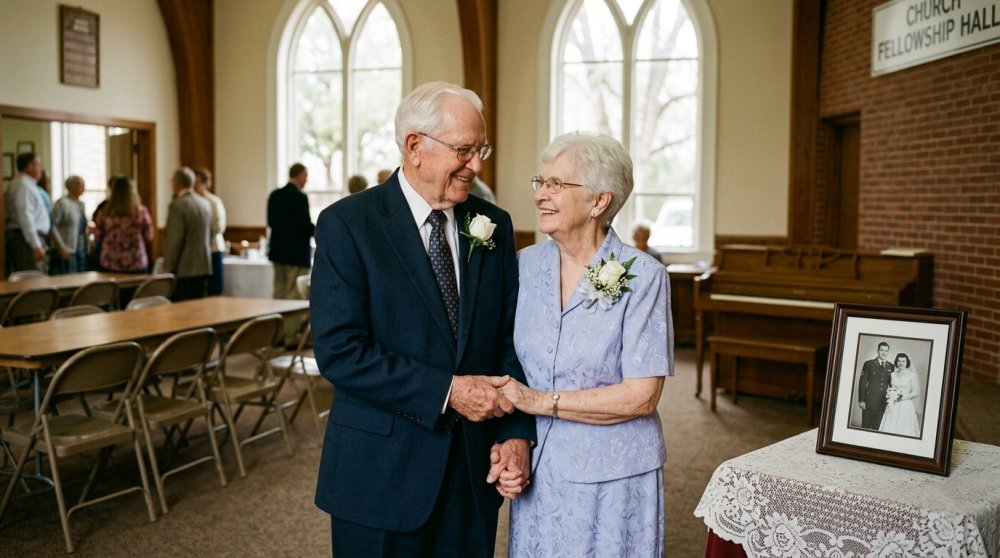
The Antwines first met as teenagers at a two-week encampment at Abilene Christian University. Clyde was 15 years old and sold his FFA prize-winning steer for $40 to attend. That is where he first saw Gwen, then 14, and asked to take her picture.
He carried that photograph in his wallet for five years before they reunited at Abilene Christian during his sophomore year. They married six months later.
“The last day of camp, I worked up the courage to ask her if I could take her picture, and she posed. And I put that picture in my wallet. I didn’t even know her name. I just knew she was pretty.”
After Clyde graduated, the couple boarded a boat for Europe in 1959. They served seven years in Zurich, helping to strengthen a young congregation of the Church of Christ. Their work laid a foundation that still bears fruit today.
Later the Antwines served in the German cities of Augsburg and Munich. After nearly two decades overseas, they returned to the United States. Clyde became missionary in residence at Oklahoma Christian University while Gwen served as office manager for The Christian Chronicle.
“Gwen would get you laughing and see the positive side when things got tough, and Clyde, in his quiet voice, would somehow say the exact words you needed to hear to keep you spiritually grounded.”
Their legacy continues through the many students they mentored for mission work. The Antwines never sought recognition. Their only goal was to prepare others for Kingdom service.
Today, Clyde still carries that original photograph of Gwen from their teenage years. Their story stands as a clear testimony of enduring love, steadfast faith, and lifelong commitment to the Lord’s work.
Let us know what you think, please share your thoughts in the comments below.
Faith Facts
- Ashley Flynn’s family states she “wanted her life to point people to Jesus.”
- She is remembered as a mother of two who “loved Jesus with her whole heart.”
- The case centers on the tragic loss of a Christian wife and mother whose testimony continues to inspire faith.
The family of the late Ashley Flynn is remembering the slain mother of two as someone who “loved Jesus with her whole heart” after her husband Caleb was found guilty of murdering her as the defendant’s family maintains his innocence.
Let us know what you think, please share your thoughts in the comments below.
Faith Facts
- Christians across Puerto Rico are gathering for six days of prayer for families, churches and the island’s future.
- The island is a U.S. territory located in the Caribbean.
- The multi-day prayer initiative reflects a commitment to faith, family and national values.
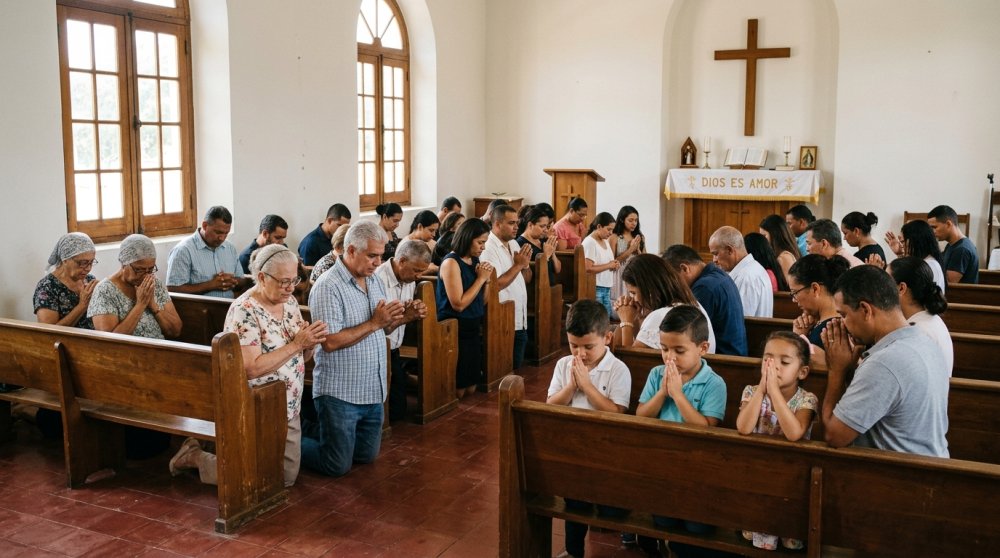
Christians across Puerto Rico are gathering this week for six days of prayer for families, churches and the future of the island, a U.S. territory in the Caribbean.
Believers are uniting in churches and communities to seek God’s guidance and blessing over their households and the territory’s future.
Participants are lifting up concerns ranging from family stability and spiritual renewal to economic growth and cultural preservation.
Let us know what you think, please share your thoughts in the comments below.


-

 Self-Reliance2 years ago
Trump’s Bold Move Uncovers Massive Social Security Fraud
-

 Faith1 year ago
New Clues Emerge in Noah’s Ark Mystery
-

 News2 years ago
Governor Walz’s Rhetoric Sparks National Controversy
-

 News2 years ago
Mel Gibson’s ‘The Passion of the Christ’ Sequel Title Announced
-

 Family2 years ago
Texas Lawmaker Targets Furries in Schools
-

 Freedom2 years ago
Maine Lawmaker Challenges Sports Fairness Controversy
-

 Family1 year ago
Canada’s Controversial Policy Sparks Ethical Debate
-
Faith11 months ago
Congress Hears Pleas for Nigerian Christians