
Faith
America’s Youth Drift from Marriage Aspirations

Faith Facts
- The desire among high school seniors, especially girls, for marriage and family has dropped dramatically over three decades.
- In 2023, just 61% of 12th-grade girls said they are likely to marry, down from 83% in 1993.
- Less than half of high school seniors now say they strongly desire to have children.
The sacred institution of marriage is facing critical challenges as fewer young Americans aspire to wed and raise children. This shift signals a broader departure from biblically grounded values that honor lifelong commitment and the blessings of family.
Recent studies reveal that both marriage expectations and the likelihood of staying married for life have declined sharply among seniors in high school. Boys remain more likely than girls to plan for marriage, but both groups have seen notable drops.
“Today’s families are navigating delayed marriage, steady divorce rates, growing acceptance of cohabitation and renewed interest in remarriage. Each of these patterns carries implications for how churches prepare couples for marriage, support those in crisis and walk alongside people rebuilding life after divorce,” Barna researchers shared.
Marriage remains highly esteemed in belief, yet cultural shifts such as increased cohabitation and changing social attitudes challenge longstanding Christian teachings. Fewer Americans than ever before are married, and younger generations are waiting much longer before making this covenant.
As modern society accepts alternatives to Christian marriage, only a minority of today’s high school seniors see family and children as central to their purpose. The Church must rise to nurture single adults, guide couples, and uphold God’s design for marriage and family, approaching every season of life with compassion and discipleship.
Let us pray for renewed commitment to God’s blueprint for family, and that our nation’s youth will rediscover the beauty of marriage as He intended. Stand for faith, family, and freedom as you speak biblical truth into your community.



Faith Facts
- Jubilee+ is releasing a fresh resource to help local congregations unite evangelism with practical help for the poor.
- The initiative emphasizes that sharing the gospel and meeting material needs belong together in faithful Christian witness.
- Churches are encouraged to see both spiritual and social ministry as essential parts of the same mission.
The Christian charity Jubilee+ has launched a new resource aimed at helping churches weave together their efforts to serve those in need and to share the good news of Jesus Christ.
The material is designed to show congregations that caring for the poor and proclaiming the gospel are not separate tasks, but two sides of the same calling rooted in Scripture.
Leaders behind the project hope the guide will equip pastors and ministry teams to move beyond simply meeting physical needs, reminding them that lasting transformation comes through the power of the gospel.
“We want churches to see that evangelism and social action are not in competition, but flow naturally from the same heart of compassion,”
“When the church serves the vulnerable while clearly pointing people to Christ, both the body and the soul are cared for,”
Supporters say the new resource will give practical steps for integrating gospel conversations into food banks, debt counseling, and other mercy ministries already operating in many congregations.
Let us know what you think, please share your thoughts in the comments below.
Faith Facts
- Scripture teaches that no sin is beyond the reach of God’s grace when true repentance is present.
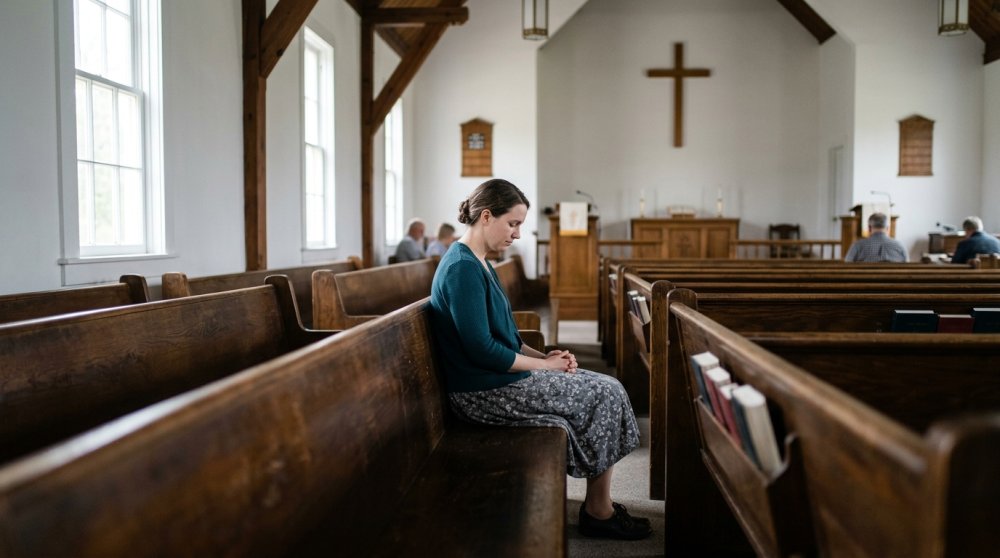
- Many women in church pews every Sunday silently carry the weight of past abortions without hearing explicit assurance of forgiveness.
- Christian teaching holds that silence from the pulpit on abortion can be misinterpreted as ongoing condemnation rather than an invitation to healing.
Every Sunday, women who have had abortions sit in church and hear that God forgives sin. But when abortion is never named, many conclude that the promise doesn’t include them, and they take the pastor’s silence as judgment.
Local congregations across the country are beginning to recognize this gap in ministry. Pastors are being urged to speak clearly about the forgiveness available through Christ for every sin, including abortion, so that women burdened by guilt may find hope rather than hidden condemnation.
“The blood of Jesus covers every sin that is confessed and forsaken,”
“Our churches must become places where women can bring their deepest regrets to the foot of the cross without fear.”
Let us know what you think, please share your thoughts in the comments below.

Faith Facts
- Numbers 33 warns that tolerated issues become persistent thorns that trouble future generations.
- Scripture teaches that small financial problems grow into major burdens when left unaddressed.
- Christian stewardship calls believers to confront money challenges with faith and discipline rather than avoidance.
Small financial problems rarely stay small when ignored. They quietly expand until they disrupt peace, relationships, and even spiritual focus.
Numbers 33 delivers a direct warning about the dangers of leaving problems in place. The passage speaks of tolerating what should be removed, describing the result as “thorns in your sides.”
“What we tolerate today may trouble us tomorrow,” the teaching reminds readers who are tempted to delay action on debt, overspending, or poor financial habits.
The principle applies directly to household budgets and personal finances. A single unpaid bill or unexamined expense can grow into long-term strain if left unchecked.
Christian teaching emphasizes honest assessment of resources as an act of faithful stewardship. Avoiding the numbers does not make the problems disappear.
Believers are encouraged to seek wisdom through prayer and practical steps rather than hoping difficulties resolve on their own. Scripture consistently links diligence with blessing and avoidance with loss.
Let us know what you think, please share your thoughts in the comments below.


-

 Self-Reliance1 year ago
Trump’s Bold Move Uncovers Massive Social Security Fraud
-

 Faith1 year ago
New Clues Emerge in Noah’s Ark Mystery
-

 News2 years ago
Governor Walz’s Rhetoric Sparks National Controversy
-

 News2 years ago
Mel Gibson’s ‘The Passion of the Christ’ Sequel Title Announced
-

 Family2 years ago
Texas Lawmaker Targets Furries in Schools
-

 Freedom2 years ago
Maine Lawmaker Challenges Sports Fairness Controversy
-

 Family1 year ago
Canada’s Controversial Policy Sparks Ethical Debate
-
Faith10 months ago
Congress Hears Pleas for Nigerian Christians