
Faith
American Idol Winner Chose Worship Over Pop Stardom

Faith Facts
- Hannah Harper won American Idol after performing Christian worship songs throughout the competition, including in the finale
- All three finalists on the show’s latest season are professing Christians who performed worship music on national television
- Five Christian contestants competed in this season, making it one of the most faith-filled lineups in the show’s history
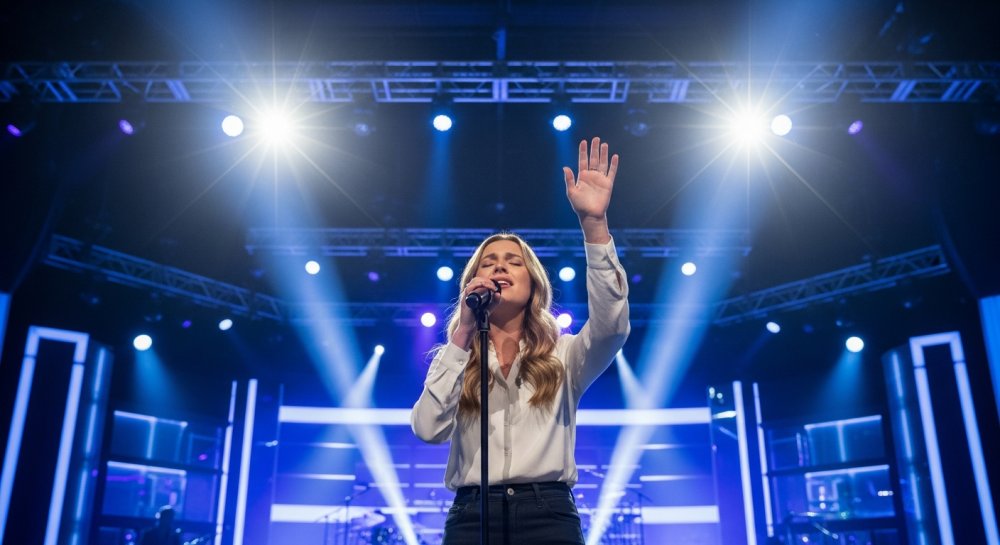
In an extraordinary display of faith on one of America’s biggest stages, Hannah Harper has won the latest season of American Idol — and she did it while openly proclaiming Jesus Christ through worship music. Her victory represents more than just a singing competition win; it’s a testament to the power of living out one’s faith unapologetically in the public square.
What makes this season particularly remarkable is that it wasn’t just Harper who stood firm in her Christian convictions. All three finalists identified as Christians and chose to perform worship songs during the competition’s most critical moments, when millions of Americans were watching.
Five Christian contestants competed overall this season, creating what many are calling one of the most faith-forward lineups in American Idol’s long history. These young believers didn’t hide their light under a bushel — they let it shine before men, glorifying their Father in heaven just as Scripture commands.
The boldness demonstrated by these contestants raises important questions for believers everywhere, particularly those in nations where public expressions of faith have become increasingly rare or culturally discouraged. While American culture certainly has its secular pressures, there remains a space for Christians to openly share their faith on mainstream platforms.
British writer Sophie Sanders reflects on this phenomenon, wondering whether such open declarations of Christian faith could ever occur on British television. The contrast is striking: while American contestants feel emboldened to sing worship songs on primetime television, many British Christians struggle to mention their faith even in casual conversation.
This cultural difference didn’t happen by accident. It reflects decades of Christians either retreating from public life or apologizing for their beliefs rather than confidently proclaiming them. The American Idol contestants demonstrate an alternative approach: speak truth with grace, but speak it nonetheless.
Harper’s choice to perform worship music wasn’t a calculated strategy to appeal to a niche audience. She sang from her heart about the One who saved her, and millions of Americans responded positively. Her authenticity resonated because people recognize genuine faith when they see it.
The success of these Christian contestants offers several lessons for believers. First, don’t underestimate how hungry people are for authentic expressions of faith. Second, excellence matters — these contestants won not just because of their message, but because they delivered it with exceptional talent and professionalism. Third, you don’t have to compromise your convictions to succeed in secular spaces.
For too long, many Christians have operated under the assumption that we must choose between cultural relevance and biblical faithfulness. These American Idol contestants prove that’s a false dichotomy. They remained unapologetically Christian while competing at the highest levels of popular entertainment.
This moment also highlights the importance of supporting Christians who step into secular spaces. These contestants didn’t just encourage fellow believers; they introduced the Gospel to countless viewers who might never darken a church door. That’s the kind of evangelism Jesus modeled — going where the people are rather than waiting for them to come to us.
The question Sanders poses about British television is worth considering: What would it take for Christian contestants on shows like The Voice UK or Britain’s Got Talent to feel comfortable openly worshiping Jesus on stage? The answer likely involves both cultural change and individual courage.
Christians in every nation can learn from Harper’s boldness. We live in an increasingly secular age where many treat religious faith as something private, meant to be kept behind closed doors. But Christianity has never been a private faith — it’s a public proclamation that Jesus Christ is Lord, and that truth demands to be shared.
The Great Commission didn’t come with geographical or cultural limitations. Jesus commanded His followers to make disciples of all nations, teaching them to observe everything He commanded. That includes sharing the Gospel in unexpected places, even on reality television shows.
Harper’s victory demonstrates that faithfulness and excellence aren’t mutually exclusive — they’re complementary. When Christians pursue excellence in their fields while maintaining their convictions, they become powerful witnesses for Christ. They show the watching world that following Jesus doesn’t diminish us; it completes us.
As believers consider how to engage their own cultures, the American Idol example provides inspiration. We don’t need to be confrontational or judgmental, but neither should we hide our faith. There’s a confidence that comes from knowing the truth, and that confidence naturally spills over into how we live and speak.
The impact of these contestants extends beyond their individual careers. They’ve created space for future Christians to compete openly on such platforms. They’ve shown producers and audiences alike that faith-filled content can succeed commercially and artistically. They’ve proven that America still has room for unashamed Christians in the public square.
For parents raising children in an increasingly secular world, these contestants model what it looks like to be in the world without being of it. They competed fiercely, showed grace to opponents, performed with excellence, and never compromised their core beliefs. That’s exactly the kind of witness this generation needs to see.
Harper’s story should inspire Christians everywhere to share their faith more openly. Whether you’re in a workplace, a classroom, a neighborhood, or yes, even on a television stage, there are opportunities every day to let people know what Jesus has done in your life. The question is whether we’ll seize those moments or let them pass in silence.
American culture may be far from perfect, but moments like this remind us why religious freedom matters. When Christians have the liberty to speak openly about their faith, beautiful things happen. Lives are changed, hope is spread, and the Kingdom of God advances in unexpected ways.
Let us know what you think, please share your thoughts in the comments below.

Faith Facts
- Vice President JD Vance credits his faith for guiding his political service and life decisions.
- Vance says he has not yet felt a divine call to pursue the presidency in 2028.
- He remains open to the possibility that God may lead him toward a future presidential campaign.
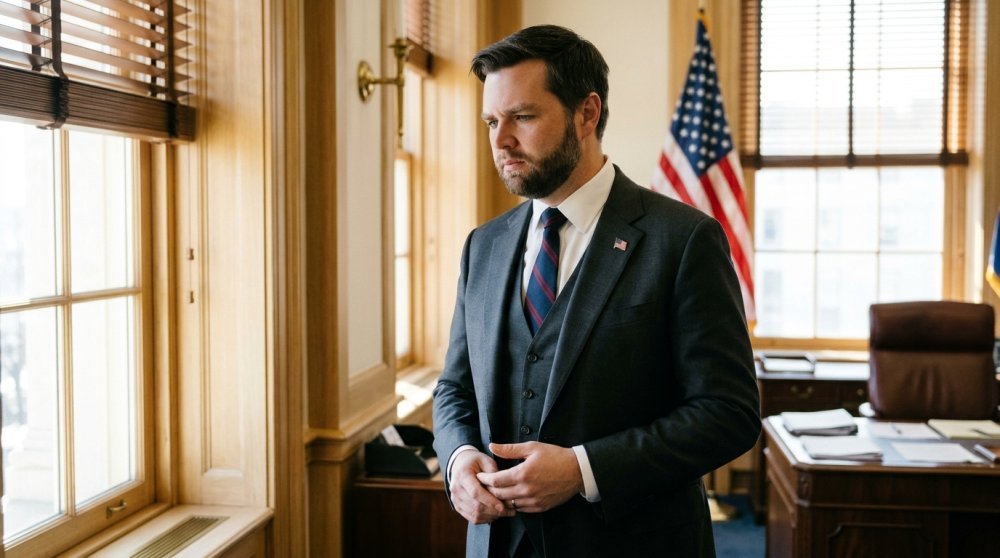
Vice President JD Vance has stated that his faith remains central to his decision-making as he weighs a potential 2028 presidential campaign. The Ohio senator-turned-vice president spoke candidly about how he continues to seek God’s direction before making major political moves.
Vance emphasized that he has not yet sensed a clear calling from God regarding a presidential run. He noted that this could change in time but stressed the importance of waiting for divine guidance.
“I haven’t yet felt God’s call for a presidential run in 2028,”
“Maybe that’ll change.”
Vance’s comments reflect a growing trend among conservative leaders who publicly acknowledge their dependence on prayer and Scripture when facing major career decisions. His approach resonates with many Americans who value leaders willing to submit their ambitions to God’s will.
The vice president also reflected on how his conversion to Christianity has shaped his worldview and public service. Vance has often spoken about the transformative power of faith in both his personal life and his political philosophy.
Let us know what you think, please share your thoughts in the comments below.
Faith Facts
- Vice President JD Vance led rally attendees in reciting the Lord’s Prayer when a woman collapsed nearby.
- The moment highlighted the continued presence of Christian faith in American public life and political gatherings.
- Vance personally left the stage to check on the woman after leading the prayer.
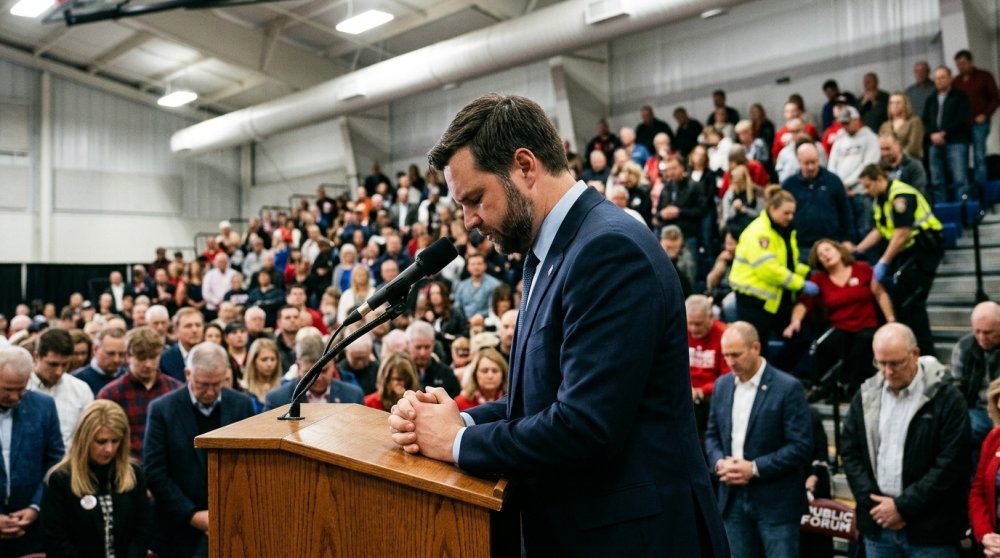
Vice President JD Vance paused a Nebraska campaign rally to lead the crowd in the Lord’s Prayer after a woman collapsed in the audience.
The incident took place during a live event where Vance addressed supporters and addressed policy issues.
“Pray as the Lord taught us to pray,” Vance said before leading the audience in the traditional prayer.
After finishing the prayer, Vance stepped down from the stage and made his way into the stands to personally check on the woman who had collapsed.
The spontaneous act of faith and compassion drew praise from attendees who witnessed the moment.
Let us know what you think, please share your thoughts in the comments below.
Faith Facts
- Oxford mathematician and Christian apologist Professor John Lennox encourages believers to share their faith with confidence.
- Lennox stresses that evangelism is not reserved only for preachers, theologians, or those with extensive biblical knowledge.
- Every Christian is called to be a witness for Christ in daily life.
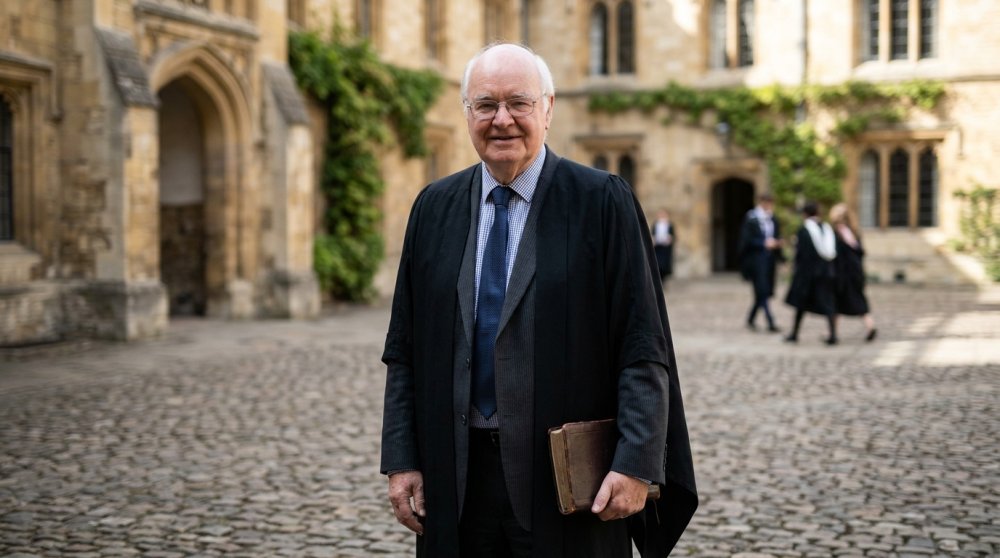
Oxford mathematician and Christian apologist Professor John Lennox is urging believers everywhere to share their faith with greater boldness and confidence. He reminds Christians that the call to witness is not limited to pastors or scholars but belongs to every follower of Christ.
“We’re all called to be witnesses,” Lennox declares. This simple truth challenges the idea that only trained experts can effectively share the gospel.
Professor Lennox emphasizes that evangelism is not about having every theological answer or delivering polished sermons. Instead, it is about living out and speaking the truth of Christ wherever God places His people.
His words come as a timely encouragement to Christians who may feel hesitant or unqualified to speak about their faith. Lennox points to the biblical calling that every believer is a witness, empowered by the Holy Spirit to share the hope within them.
Let us know what you think, please share your thoughts in the comments below.


-

 Self-Reliance2 years ago
Trump’s Bold Move Uncovers Massive Social Security Fraud
-

 Faith2 years ago
New Clues Emerge in Noah’s Ark Mystery
-

 News2 years ago
Governor Walz’s Rhetoric Sparks National Controversy
-

 News2 years ago
Mel Gibson’s ‘The Passion of the Christ’ Sequel Title Announced
-

 Family2 years ago
Texas Lawmaker Targets Furries in Schools
-

 Freedom2 years ago
Maine Lawmaker Challenges Sports Fairness Controversy
-

 Family1 year ago
Canada’s Controversial Policy Sparks Ethical Debate
-
Faith11 months ago
Congress Hears Pleas for Nigerian Christians