
Faith
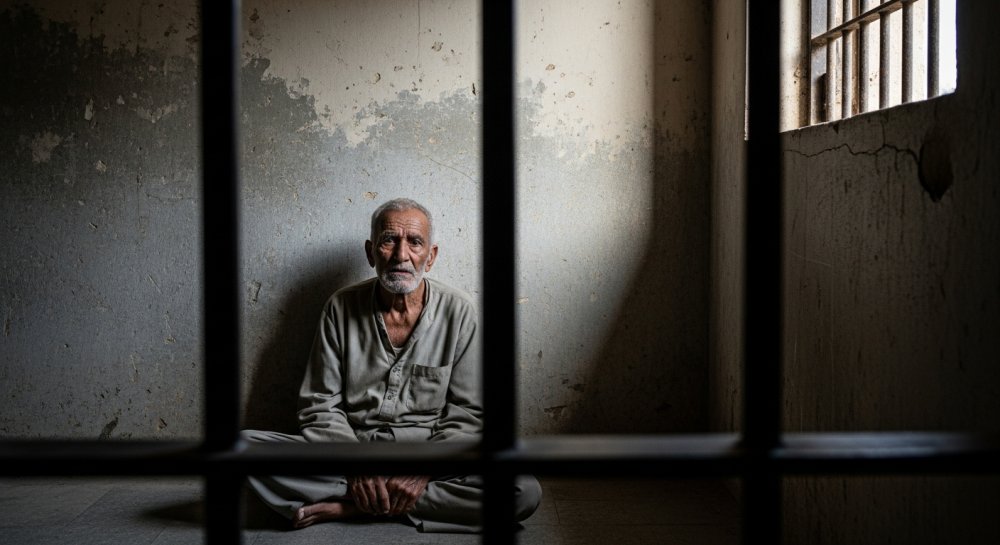
Ailing Christian Jailed For a Year Dies Behind Bars

Faith Facts
- A 61-year-old Catholic man with advanced dementia died after spending nearly a year in a Pakistani jail on blasphemy charges
- Pakistan’s controversial blasphemy laws continue to be weaponized against religious minorities, particularly Christians
- The case highlights the urgent need for international pressure on Pakistan to protect religious freedom and end the abuse of blasphemy accusations
A heartbreaking case out of Pakistan has once again exposed the brutal persecution Christians face under the nation’s notorious blasphemy laws. A 61-year-old Catholic man suffering from advanced dementia has died after spending nearly a year behind bars awaiting trial on what sources confirm was a false blasphemy charge.
The elderly man’s deteriorating mental condition was well-documented, yet he was denied basic human dignity and medical care while imprisoned. His death underscores a disturbing pattern in Pakistan, where blasphemy accusations are routinely weaponized against Christians and other religious minorities, often with devastating consequences.
Pakistan’s blasphemy laws carry severe penalties, including death, and are frequently abused to settle personal scores or target vulnerable populations. Christians, who make up a small minority in the overwhelmingly Muslim nation, are disproportionately affected by these unjust prosecutions. Even unproven accusations can lead to mob violence, extended imprisonment, and as this tragic case demonstrates, death.
The man’s family and advocates had pleaded for his release, citing his severe mental impairment and inability to understand the charges against him. These pleas fell on deaf ears as he languished in a cell, denied the compassionate care any human being — let alone someone in his fragile state — deserves.
This is not an isolated incident. Pakistan consistently ranks among the world’s worst countries for religious persecution. Christian communities live under constant threat, facing discrimination in employment, education, and the legal system. False blasphemy charges have become a tool of oppression, and the international community has been far too silent.
American Christians must stand in solidarity with our persecuted brothers and sisters overseas. We must demand that our government use diplomatic and economic pressure to hold Pakistan accountable for these human rights abuses. Religious freedom is a God-given right, and no one should be imprisoned or killed for their faith.
The death of this innocent man is a sobering reminder that while we enjoy the blessings of liberty, millions around the world suffer for simply professing the name of Jesus Christ. Our prayers are with his family and all those who continue to endure persecution for their faith.
Let us know what you think, please share your thoughts in the comments below.


Faith Facts
- The prosperity gospel doctrine emphasizes building personal wealth as a sign of divine favor, contradicting biblical teachings on eternal treasure and stewardship
- Scripture consistently warns against making earthly riches a primary pursuit, with Jesus teaching that no one can serve both God and money
- True biblical prosperity centers on spiritual richness, faithfulness, and storing up treasures in heaven rather than accumulating material wealth
A troubling trend has taken root in American churches — one that threatens to distort the very foundation of Christian faith. The prosperity gospel, with its emphasis on material wealth as a sign of God’s blessing, continues to gain followers despite standing in direct contradiction to Scripture’s clear teachings.
The biblical record presents an unmistakable pattern. Jesus Christ warned His followers plainly about the dangers of pursuing earthly riches.
“Do not store up for yourselves treasures on earth, where moths and vermin destroy, and where thieves break in and steal. But store up for yourselves treasures in heaven, where moths and vermin do not destroy, and where thieves do not break in and steal. For where your treasure is, there your heart will be also,” Jesus taught in Matthew 6:19-21.
The prosperity doctrine flips this teaching on its head, suggesting that financial abundance is the natural result of faith and that poverty indicates spiritual deficiency. This perspective ignores the countless examples throughout Scripture of faithful servants who endured hardship, persecution, and material lack while remaining steadfast in their devotion to God.
Consider the Apostle Paul, who wrote much of the New Testament. He experienced imprisonment, beatings, shipwrecks, and constant danger. Yet he declared his contentment regardless of circumstances.
“I know what it is to be in need, and I know what it is to have plenty. I have learned the secret of being content in any and every situation, whether well fed or hungry, whether living in plenty or in want,” Paul wrote in Philippians 4:12.
The heart of the issue lies in where believers place their ultimate trust and hope. Jesus made this distinction crystal clear when He stated that no one can serve two masters.
“You cannot serve both God and money,” He declared in Matthew 6:24.
The prosperity gospel’s greatest deception may be its subtle redefinition of what constitutes true blessing. Scripture repeatedly identifies spiritual blessings as supremely valuable — peace with God, forgiveness of sins, eternal life, the indwelling Holy Spirit, and transformation into Christ’s likeness. Material provisions are acknowledged as gifts from God, but they are never presented as the primary evidence of His favor or the chief goal of the Christian life.
Throughout Church history, believers have understood that following Christ may require sacrifice rather than guarantee comfort. The writer of Hebrews celebrated the faith of those who “were tortured, refusing to be released so that they might gain an even better resurrection” and who “faced jeers and flogging, and even chains and imprisonment.”
The biblical model of stewardship also contradicts the prosperity gospel’s emphasis on personal accumulation. Believers are called to be faithful managers of God’s resources, using what He provides to advance His kingdom, care for those in need, and support the work of the Gospel. The goal is generosity and kingdom investment, not personal empire-building.
True prosperity in the Christian life is measured by growth in godliness, depth of relationship with Christ, fruitfulness in ministry, and faithfulness in trials. These are the treasures that last for eternity and the blessings Scripture consistently emphasizes. When churches shift their focus from these eternal realities to the accumulation of temporary wealth, they lead their people away from the narrow path Christ called them to walk.
The American church must return to the solid ground of biblical teaching on wealth, possessions, and true prosperity. Our hope rests not in financial portfolios but in the finished work of Jesus Christ. Our security comes not from earthly investments but from being hidden with Christ in God. And our treasure is not found in bank accounts but in heaven, where Christ sits at the right hand of the Father.
Let us know what you think, please share your thoughts in the comments below.
Faith Facts
- Release International, a British Christian ministry serving persecuted believers in approximately 30 countries, has rebranded to Voice of Persecuted Christians.
- The name change reflects the organization’s mission to amplify the voices and stories of Christians suffering for their faith worldwide.
- The ministry continues its decades-long commitment to supporting the global persecuted church through prayer, advocacy, and practical assistance.
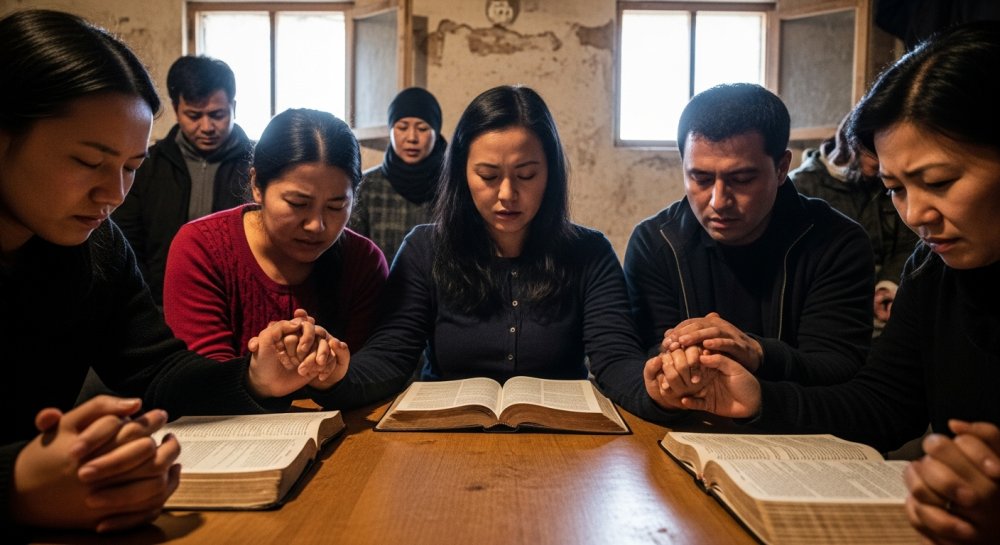
A British Christian ministry with a three-decade history of standing alongside persecuted believers has unveiled a powerful new identity. Release International, known for its work supporting Christians facing persecution in approximately 30 nations, has rebranded as Voice of Persecuted Christians.
The name change signals more than a cosmetic update—it represents a recommitment to amplifying the testimonies and struggles of brothers and sisters in Christ who face imprisonment, violence, and death for their faith. For years, Release International has quietly but effectively provided support, advocacy, and resources to believers in hostile regions where following Jesus can cost everything.
The organization’s work spans multiple continents, reaching into countries where Christianity is suppressed by authoritarian regimes, Islamic extremism, and anti-religious governments. From China to Nigeria, from North Korea to Iran, Voice of Persecuted Christians now carries forward this vital mission under a banner that directly communicates its purpose.
As Western Christians enjoy unprecedented religious freedom, the rebranded ministry serves as a crucial reminder that millions of believers worldwide worship at great personal risk. The new name cuts through cultural noise to deliver an unmistakable message: the persecuted church has a voice, and it must be heard.
The ministry’s transition comes at a critical moment when persecution of Christians has reached historic levels globally. Reports from religious freedom watchdogs indicate that Christian persecution is intensifying in numerous countries, with believers facing increased surveillance, harassment, arrest, and martyrdom.
Voice of Persecuted Christians continues to operate through established partnerships with underground church networks, pastors, and Christian leaders who risk their lives daily to advance the Gospel. The organization provides legal assistance, family support for imprisoned believers, emergency relief, and advocacy before international bodies.
For American Christians, the ministry’s work offers both a sobering reality check and a call to action. While debates over religious liberty in the United States often center on cultural tensions, believers abroad face far more severe consequences—torture, family separation, and execution—simply for owning a Bible or gathering for worship.
The rebranding reflects a strategic focus on storytelling and witness. By elevating the voices of the persecuted, the ministry aims to mobilize prayer, financial support, and political pressure on behalf of those who cannot speak freely in their own lands.
This name change also challenges Western Christianity to remember its roots. The early church was built on the blood of martyrs who refused to renounce Christ under Roman persecution. Today’s persecuted believers carry that same torch, often displaying faith that puts comfortable Western Christianity to shame.
Voice of Persecuted Christians invites supporters to join in prayer, advocacy, and giving to ensure that no Christian faces persecution alone. The ministry’s updated identity is not just about branding—it’s about bearing witness to the courage of believers who count the cost and choose Jesus anyway.
Let us know what you think, please share your thoughts in the comments below.

Faith Facts
- Members of the Lipan Native American Church are petitioning the Supreme Court to protect ceremonial grounds in San Antonio’s Brackenridge Park used for worship for centuries
- The case centers on whether government development projects can proceed on land considered sacred by religious practitioners
- The dispute involves tensions between municipal park redevelopment plans and First Amendment religious freedom protections
A significant religious freedom case has reached the nation’s highest court, as members of the Lipan Native American Church seek protection for what they describe as sacred ceremonial grounds. The petition asks the Supreme Court to intervene in a dispute over San Antonio’s plans to redevelop portions of Brackenridge Park, land where the church claims its members have conducted religious ceremonies for hundreds of years.
At the heart of this legal battle lies a fundamental question: How far do religious liberty protections extend when they conflict with government property development? For the Lipan Native American Church, the answer carries profound spiritual significance. Their members maintain that the land in question has been consecrated through generations of worship and ceremonial practice.
The case presents complex constitutional questions about the scope of religious freedom guarantees under the First Amendment. American law has long recognized the importance of protecting religious exercise, but disputes frequently arise when those practices intersect with government land use and public property management.
San Antonio officials face the challenge of balancing their responsibilities to maintain and improve public parks with the religious claims of those who view specific locations as spiritually significant. Park redevelopment projects typically involve infrastructure improvements, environmental restoration, and enhanced public access—goals that may conflict with preserving sites in their current state.
Religious freedom advocates have watched similar cases closely in recent years, as courts grapple with how to apply constitutional protections to diverse faith traditions and practices. The outcome could have implications beyond this specific dispute, potentially affecting how government entities across the nation approach development decisions involving religiously significant land.
The petition to the Supreme Court represents the latest chapter in what has been an ongoing legal struggle. Lower courts have already weighed the competing interests, but the church believes the matter warrants consideration by the nation’s highest judicial authority.
For members of the Lipan Native American Church, the stakes extend beyond legal principles to the preservation of their spiritual heritage. They argue that the ability to continue their religious practices on ancestral ceremonial grounds represents a fundamental expression of faith deserving constitutional protection.
The Supreme Court receives thousands of petitions annually and accepts only a small fraction for full consideration. If the justices agree to hear this case, it would provide them an opportunity to clarify how religious freedom protections apply when sacred sites are located on government-owned property. The decision whether to grant review will be closely watched by religious liberty organizations, indigenous rights groups, and municipal governments nationwide.
This dispute highlights the ongoing challenges of maintaining America’s commitment to religious freedom in an increasingly diverse society. As different faith communities seek to practice their beliefs according to their traditions, tensions with public land use and government administration are likely to continue arising. How the courts resolve these conflicts will shape the practical boundaries of religious liberty for years to come.
Let us know what you think, please share your thoughts in the comments below.


-

 Self-Reliance1 year ago
Trump’s Bold Move Uncovers Massive Social Security Fraud
-

 Faith1 year ago
New Clues Emerge in Noah’s Ark Mystery
-

 News1 year ago
Governor Walz’s Rhetoric Sparks National Controversy
-

 News1 year ago
Mel Gibson’s ‘The Passion of the Christ’ Sequel Title Announced
-

 Family1 year ago
Texas Lawmaker Targets Furries in Schools
-

 Freedom1 year ago
Maine Lawmaker Challenges Sports Fairness Controversy
-

 Family1 year ago
Canada’s Controversial Policy Sparks Ethical Debate
-
Faith7 months ago
Congress Hears Pleas for Nigerian Christians