
Faith
ABTS Welcomes Wissam Nasrallah as New President

Faith Facts
- Wissam Nasrallah became president of Arab Baptist Theological Seminary (ABTS) in Beirut, succeeding Dr. Elie Haddad on September 28, 2025.
- Nasrallah’s vision centers on worship, Scripture, critical thinking, and servant leadership to equip believers in the Middle East and North Africa.
- ABTS continues its mission of forming Gospel-driven leaders who reflect Christ and serve faithfully in diverse, challenging contexts.
The Arab Baptist Theological Seminary held a prayerful transition ceremony, marking a new chapter as Wissam Nasrallah was inaugurated as president. The school, founded in 1960 to serve the Arab Church, is committed to biblical authority and Christ-centered education in a time of profound cultural shifts.
“We are here not only to mark a transition in leadership but to remember that ABTS belongs to the Lord,” Nasrallah stated.
He honored Dr. Elie Haddad’s 19-year leadership through significant trials and commended his legacy of faithfulness. The Board of Trustees selected Nasrallah for his devotion to God and steadfast vision to advance ABTS’s mission by training pastors, teachers, and ministry leaders.
“Unless the Lord builds the house, those who build it labor in vain,” Nasrallah emphasized, rooting ABTS’s work in biblical truth and the Lord’s guidance.
He underscored the seminary’s dedication to forming worshippers rooted in Scripture, lifelong learners, and servant leaders who embrace humility and courage even amid uncertainty.
“Servant leaders do not build followers; they raise successors,” Nasrallah explained, pointing to Christ’s model of sacrificial service for the Church.
The seminary’s impact stretches from classrooms to refugee camps and conflict zones, bearing witness to the Gospel in both seen and unseen places. Faith and conviction remain at the heart of its calling to shape the next generation for Christ’s Kingdom.
“We do not know what the future holds, but we know the One who holds the future, and He is faithful,” concluded Nasrallah.
Stay informed and support Christian leaders standing firm on biblical truth in challenging times.



Faith Facts
- Young adults who lack employment or education face real spiritual and practical challenges.
- Scripture calls the Church to care for the vulnerable and offer meaningful purpose.
- Traditional Christian values emphasize work, responsibility, and community involvement.
The rising number of young people who are neither employed nor in education or training has become a quiet crisis in many communities. These young adults need more than government programs.
Churches are uniquely positioned to offer guidance, mentorship, and real opportunities rooted in biblical truth. When families and congregations step forward, they model the values of diligence and service that have strengthened America for generations.
Christian leaders are urging congregations to see this not as a social issue alone but as a spiritual opportunity. The Church has always been called to minister to those who are lost or without direction.
One pastor recently stated, “Let’s not view the needs of our young people as a problem to be left to government.”
By offering vocational training, discipleship groups, and life skills rooted in Scripture, churches can help restore purpose to a generation searching for meaning. This approach aligns with the American tradition of faith-based solutions over bureaucratic ones.
Local churches that invest in young adults are already seeing fruit. Mentorship programs, job fairs, and Bible studies focused on work ethic and stewardship are drawing young men and women back into community life.
Let us know what you think, please share your thoughts in the comments below.

Faith Facts
- Scripture calls believers to remember God’s gifts in every season
- Trusting God’s mercy opens the heart to genuine thanksgiving
- Grief and gratitude can coexist when faith anchors the soul
Thanksgiving is more than a holiday on the calendar. It is a spiritual discipline that calls Christians to remember the goodness of God even when circumstances feel heavy.
Many believers struggle to give thanks when loss or hardship lingers. The temptation is to push grief aside or pretend everything is fine, but Scripture shows a different path.
“Remember the wondrous works that he has done, his miracles, and the judgments he uttered.”
That command from 1 Chronicles 16:12 reminds Christians that gratitude begins with remembrance. Recalling God’s past faithfulness strengthens trust for the present and future.
Trusting God’s mercy also means accepting that His ways are higher than ours. When families gather around tables this week, some chairs will be empty and some hearts will ache. Yet the mercy of God remains steady.
“The steadfast love of the Lord never ceases; his mercies never come to an end.”
Those words from Lamentations 3:22-23 offer comfort that grief does not cancel gratitude. Both can dwell together when the heart is anchored in Christ.
Making room for grief does not mean abandoning thankfulness. It means bringing honest sorrow before the Lord while still declaring His goodness. This honest faith reflects the example of King David and the prophets who poured out their laments yet ended in praise.
As families celebrate Thanksgiving, the secret to a thankful heart is simple yet profound. Remember God’s gifts, trust His mercy, and allow grief its rightful place under the covering of faith.
Let us know what you think, please share your thoughts in the comments below.
Faith Facts
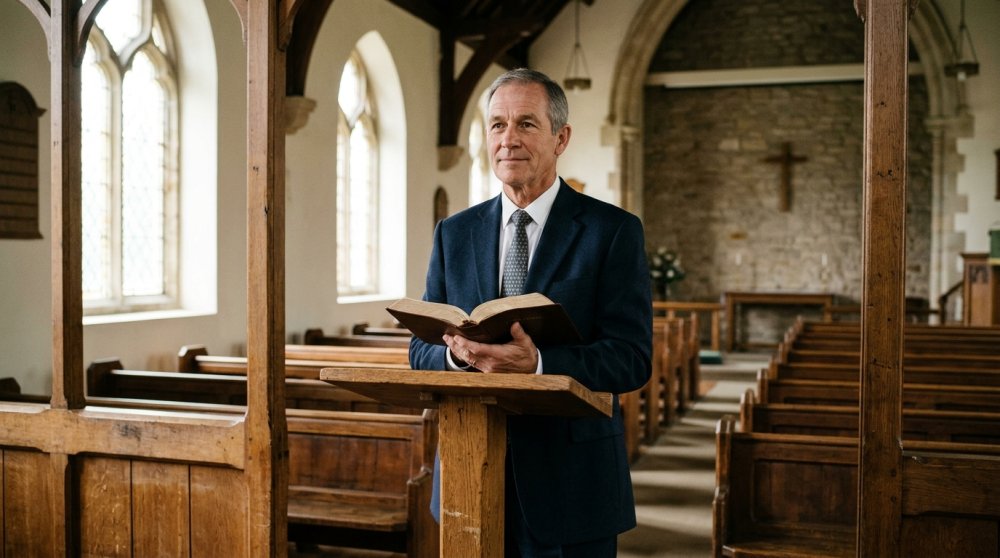
- Nearly 40% of American adults have considered serving in a faith-based leadership role such as ministry, seminary, or chaplaincy.
- Most individuals who expressed interest have not taken any steps toward pursuing these callings.
- The findings come as churches across the nation continue to face a growing shortage of pastors.
A new survey shows that a significant portion of Americans are open to answering the call to ministry, even as congregations struggle to find enough pastors to lead them.
The data highlights a gap between interest and action that could affect the future of local church leadership across the country.
“Nearly 40% of adults in a recent survey said they have considered a faith-based leadership role such as ministry, seminary or chaplaincy, but most have never taken a step toward pursuing it.”
Churches have been sounding the alarm for years about the shrinking number of pastors available to shepherd congregations, particularly in rural and smaller communities.
Many denominations report rising numbers of vacant pulpits and fewer young people entering seminary training.
The survey results suggest that while the desire to serve may exist in the hearts of many believers, practical barriers or lack of clear pathways could be preventing them from moving forward.
Christian leaders have long taught that the harvest is plentiful but the laborers are few, underscoring the need for more faithful men and women to step into these vital roles.
Let us know what you think, please share your thoughts in the comments below.


-

 Self-Reliance2 years ago
Trump’s Bold Move Uncovers Massive Social Security Fraud
-

 Faith2 years ago
New Clues Emerge in Noah’s Ark Mystery
-

 News2 years ago
Governor Walz’s Rhetoric Sparks National Controversy
-

 News2 years ago
Mel Gibson’s ‘The Passion of the Christ’ Sequel Title Announced
-

 Family2 years ago
Texas Lawmaker Targets Furries in Schools
-

 Freedom2 years ago
Maine Lawmaker Challenges Sports Fairness Controversy
-

 Family2 years ago
Canada’s Controversial Policy Sparks Ethical Debate
-
Faith1 year ago
Congress Hears Pleas for Nigerian Christians