
Faith
A Legacy Worth Defending: What Bob Woodson’s Life Teaches About Faith and Service


Faith Facts
- Bob Woodson was known for his incorruptible Christian character and deep personal faith that guided his decades of service
- He demonstrated indomitable courage and deep compassion throughout his career working with underserved communities
- His legacy offers a model of Christian leadership grounded in integrity, courage, and unwavering commitment to traditional values
The passing of Bob Woodson marks the end of an era for Christian conservative leadership in America. Those who knew him personally witnessed a man whose life embodied the principles that built this nation—faith, character, and service.
He was a man of incorruptible character, indomitable courage, deep compassion, personal faith and towering intellect. These weren’t just admirable qualities—they were the foundation of everything he accomplished.
In an age when so many leaders compromise their values for political expediency or personal gain, Woodson stood as a reminder that true leadership flows from moral conviction. His Christian faith wasn’t a Sunday addition to his life—it was the wellspring from which his courage and compassion flowed.
Woodson’s work in America’s most challenging communities demonstrated what genuine Christian service looks like. He didn’t offer empty promises or government dependency. He brought hope, accountability, and the transformative power of faith-based solutions.
His towering intellect was matched only by his humility. He understood that real change comes not from Washington bureaucrats but from men and women of faith working at the grassroots level, one life at a time.
The legacy Bob Woodson leaves behind challenges every Christian conservative to ask: Are we leading with the same incorruptible character? Are we demonstrating the same indomitable courage in the face of cultural opposition? Are we allowing our faith to guide our actions with the same authenticity?
America needs more leaders like Bob Woodson—men and women whose Christian faith isn’t performative but transformative, whose character cannot be bought or compromised, whose courage inspires others to stand firm on biblical principles.
As we remember this remarkable servant leader, we must commit ourselves to carrying forward the example he set. Our nation’s future depends on Christians who will lead with integrity, serve with compassion, and stand with courage—exactly as Bob Woodson did throughout his life.
Let us know what you think, please share your thoughts in the comments below.

Faith Facts
- Between 200 and 300 young Christian leaders committed to long-term cross-cultural mission work at the Arise Asia 2026 Congress in Manila.
- Organizers described the altar call as one of the most significant in the movement’s history, marking a new wave of missionary commitment.
- The congress represents a growing commitment among Asia’s young believers to spread the Gospel across cultural and national boundaries.
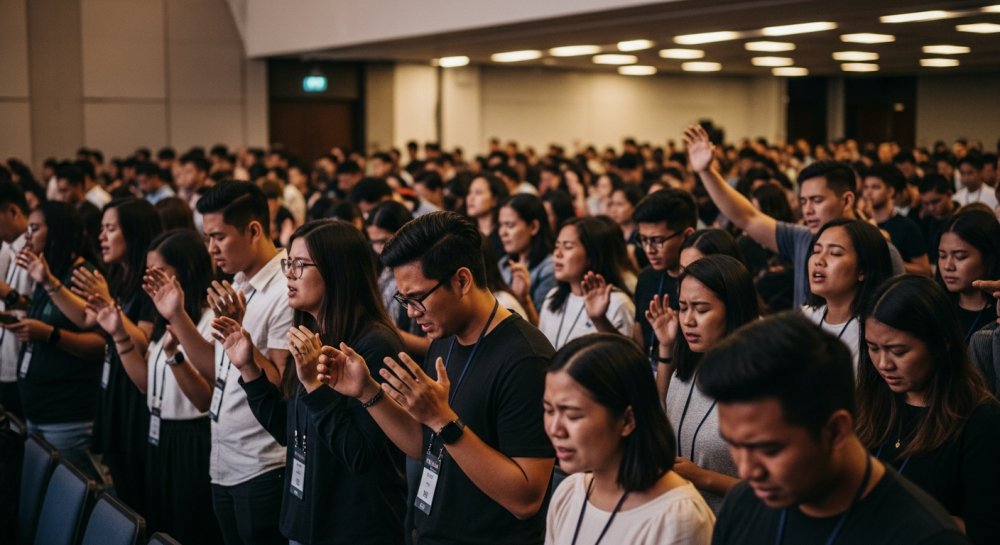
A powerful wave of commitment to global missions swept through Manila as hundreds of young Christian leaders publicly dedicated their lives to spreading the Gospel across cultures. The Arise Asia 2026 Congress witnessed what organizers are calling a historic moment for Christian missions in the region.
An estimated 200 to 300 young leaders stepped forward during what has been described as one of the most significant altar calls in the movement’s history. These young believers committed themselves to long-term cross-cultural mission work, answering a call that has historically required tremendous sacrifice and unwavering faith.
The gathering in Manila highlights a crucial reality often overlooked in Western discussions about the future of Christianity: the global Church is alive, growing, and increasingly missionary-minded. While many Western nations struggle with declining church attendance and cultural hostility to Christian values, believers in Asia are stepping forward in remarkable numbers to carry the Gospel to unreached peoples.
This outpouring of missionary commitment stands as a testament to the enduring power of the Great Commission. In an age when American churches sometimes struggle to inspire long-term ministry commitments, these young Asian believers are pledging years of their lives to serve in challenging cross-cultural contexts.
The significance of this moment cannot be overstated. Long-term cross-cultural missions require extraordinary dedication—leaving home, family, and cultural comfort to share Christ with people who may speak different languages, hold different worldviews, and live in regions hostile to Christianity.
These young leaders are following in the footsteps of countless missionaries who have gone before them, answering the same call that has driven Christian expansion since the first century. Their commitment reflects a deep understanding that the Gospel is not meant to remain confined within any single culture or nation but is intended for all peoples.
For American Christians watching from afar, this gathering offers both inspiration and challenge. It demonstrates that God continues to raise up laborers for His harvest field, even as it poses an uncomfortable question: are we in America as willing to sacrifice for the advancement of the Gospel?
The Arise Asia 2026 Congress represents more than just a conference or gathering. It signals a generational shift in global missions, with young believers from nations once considered mission fields now becoming the missionaries themselves.
This development should encourage every believer who prays for the advancement of God’s kingdom. As cultural Christianity fades in the West, authentic, sacrificial faith is flourishing in other parts of the world. The Church universal remains vibrant and mission-focused.
The commitment of these young leaders also serves as a reminder of what truly matters in the Christian life. In a culture increasingly obsessed with comfort, security, and personal fulfillment, these believers are choosing the harder path of obedience to Christ’s command to make disciples of all nations.
As these hundreds of young missionaries prepare for their calling, they deserve the prayers and support of believers everywhere. Their work will not be easy, and the spiritual battles they face will be real and intense. Yet they go with the same promise that has sustained missionaries throughout history: Christ’s presence and the Holy Spirit’s power.
Let us know what you think, please share your thoughts in the comments below.
Faith Facts
- Mississippi pastor completed 96-hour continuous Bible preaching marathon
- Texas woman practicing witchcraft attempted to curse pastor during livestream
- Woman converted to Christianity after spiritual attack backfired
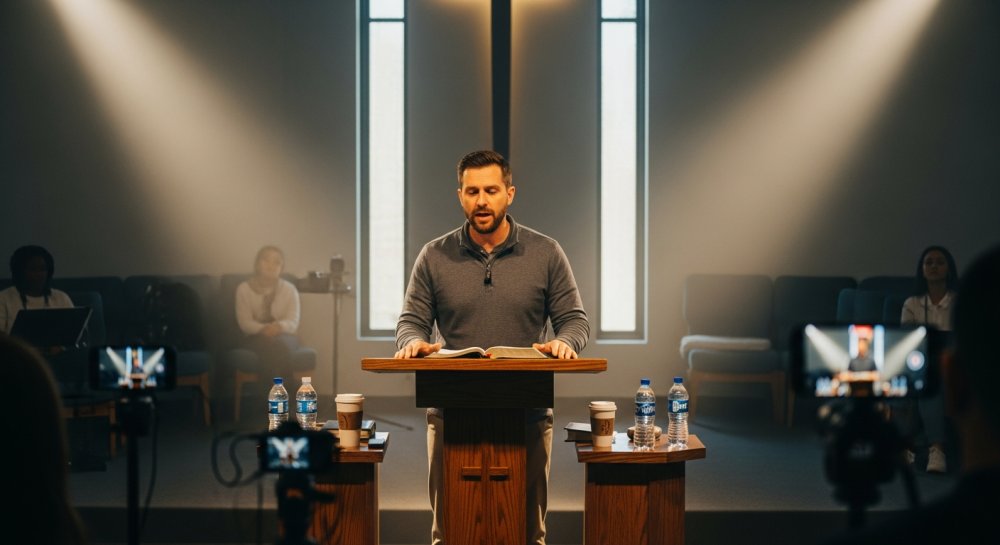
A Mississippi pastor who recently completed an extraordinary 96-hour marathon of preaching through the entire Bible has shared a remarkable testimony of spiritual warfare and redemption. His epic undertaking became the catalyst for an unexpected conversion when a practitioner of witchcraft attempted to curse him during the livestream.
The pastor revealed that a young woman from Texas, who identified as a witch, deliberately tried to place a curse on him while he was preaching. Her intent was clear and malicious — she wanted to cause him harm and even death through dark spiritual forces.
“We wanted you to die,” the woman later confessed to the pastor, acknowledging the evil intentions behind her attempted curse.
However, what was meant for evil became a testimony of God’s protecting power and redemptive grace. Instead of the curse achieving its intended purpose, the spiritual attack backfired in a profound way. The young woman experienced the conviction of the Holy Spirit during the pastor’s continuous Bible preaching.
The power of God’s Word, proclaimed faithfully for four days straight, penetrated the darkness surrounding this woman’s life. Rather than harming the pastor, her encounter with the living Word of God led to her own transformation.
The woman renounced witchcraft and surrendered her life to Jesus Christ, becoming a powerful testimony to the supremacy of God’s Word over the forces of darkness. This conversion stands as evidence that no weapon formed against God’s servants will prosper, and that the Gospel remains the power of God unto salvation.
The 96-hour Bible preaching marathon itself represents an extraordinary feat of endurance and dedication. Preaching through all 66 books of Scripture continuously requires not only physical stamina but deep spiritual preparation and commitment to God’s Word.
This testimony serves as a reminder to believers that spiritual warfare is real, but God’s power is infinitely greater than any force of darkness. It also demonstrates that even those deeply entrenched in occult practices can be reached by the transforming message of the Gospel.
The story echoes biblical accounts where those who opposed God’s messengers encountered the living God instead. Like the sorcerer Simon in Acts or the magicians in Pharaoh’s court, those who practice dark arts ultimately find that God’s power cannot be matched or manipulated.
For Christians engaged in evangelism and spiritual battle, this account offers encouragement that persistent proclamation of Scripture can break through even the strongest spiritual opposition. The Word of God remains living and active, sharper than any two-edged sword.
Let us know what you think, please share your thoughts in the comments below.
Faith Facts
- A Tennessee church known for giving away free gas to hundreds of commuters earlier this year has suffered a devastating fire on their property.
- Despite the significant damage, church leaders maintain their ministry will continue, declaring the fire ‘didn’t stop the word.’
- The congregation demonstrated Christ’s love through practical generosity by providing free gasoline to struggling families during difficult economic times.
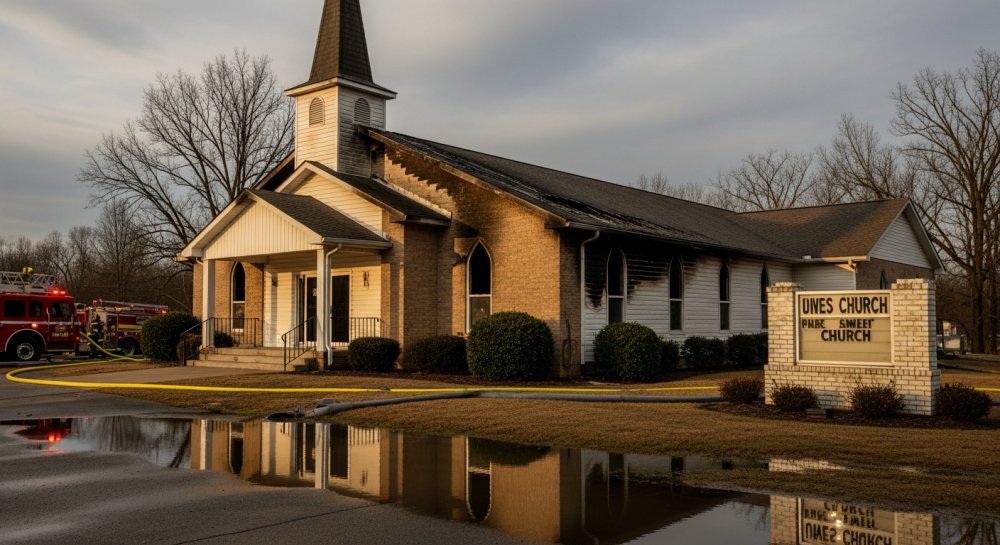
A Tennessee congregation that made headlines for their generous outreach to the community is now facing a significant trial of their own. The church, which blessed hundreds of families with free gasoline during a time of economic hardship, has suffered severe fire damage to their property.
Earlier this year, the church captured hearts across the nation when they opened their doors and their wallets to help commuters struggling with high gas prices. The ministry initiative provided tangible relief to families dealing with the burden of inflation and rising fuel costs, embodying the Biblical principle of loving your neighbor in action.
Now, the church that gave so freely finds itself in need. The fire caused substantial damage to the church property, though details about the extent of the destruction and the cause of the blaze are still emerging. What remains unshaken, however, is the faith and determination of the congregation.
Church leaders responded to the devastating loss with remarkable resolve, stating that the fire “didn’t stop the word.” This declaration reflects a deep commitment to their mission and ministry that transcends physical buildings and material loss.
The church’s response exemplifies the resilience that comes from faith rooted in Christ rather than circumstances. Their witness reminds believers that the Church is not a building but a body of believers united in purpose and calling.
This trial comes as a test for a congregation that has already demonstrated extraordinary generosity. Their earlier gas giveaway wasn’t just charity—it was an expression of Christian love that met people at their point of need, building bridges between the church and community.
The incident serves as a reminder that even those who minister to others face their own valleys. Yet it also presents an opportunity for the broader Christian community to rally around these faithful servants, returning the blessing they so freely gave to others.
As this Tennessee church rebuilds, their testimony stands as an encouragement to believers everywhere: faith perseveres through fire, ministry continues through trials, and God’s Word cannot be stopped by any earthly circumstance.
Let us know what you think, please share your thoughts in the comments below.


-

 Self-Reliance1 year ago
Trump’s Bold Move Uncovers Massive Social Security Fraud
-

 Faith1 year ago
New Clues Emerge in Noah’s Ark Mystery
-

 News1 year ago
Governor Walz’s Rhetoric Sparks National Controversy
-

 News1 year ago
Mel Gibson’s ‘The Passion of the Christ’ Sequel Title Announced
-

 Family1 year ago
Texas Lawmaker Targets Furries in Schools
-

 Freedom1 year ago
Maine Lawmaker Challenges Sports Fairness Controversy
-

 Family1 year ago
Canada’s Controversial Policy Sparks Ethical Debate
-
Faith8 months ago
Congress Hears Pleas for Nigerian Christians