
Faith
A Former Green Activist Shares What She Discovered After Converting to Christianity


Faith Facts
- Kate Orson, raised as an environmental activist from childhood, has reconsidered many green movement policies after becoming a Christian
- She now believes some mainstream environmental policies prioritize ideology over human flourishing and genuine stewardship
- Her faith-based perspective emphasizes responsible stewardship that values both creation care and human dignity
Kate Orson’s childhood was steeped in environmental activism. From an early age, she was taught to recycle, embrace vegetarianism, and join protests for environmental causes. The green movement wasn’t just a hobby—it was a way of life, a secular faith that shaped her worldview and daily decisions.
But something changed when she became a Christian.
Now, looking back on her years as a teenage activist, Orson has begun to question whether the policies and priorities of the modern environmental movement truly serve the people and planet they claim to protect. Her journey from secular environmentalism to faith-based stewardship has revealed uncomfortable truths about an agenda that often puts ideology ahead of human needs.
For Orson, the shift wasn’t about abandoning care for God’s creation. Christians are called to be faithful stewards of the earth—Genesis 1:28 establishes humanity’s responsibility to “tend and keep” the garden. But stewardship, she discovered, looks different from the activist agenda she once championed.
Many mainstream environmental policies, she now argues, prioritize abstract goals over the concrete needs of families and communities. Policies that restrict energy access, limit agricultural productivity, or impose heavy regulatory burdens often hurt the very people they’re meant to help—especially the poor and vulnerable.
Take energy policy, for example. The push to rapidly eliminate fossil fuels, while framed as essential to saving the planet, can have devastating consequences for working families who rely on affordable energy to heat their homes, fuel their vehicles, and run their businesses. When energy costs skyrocket, it’s not the wealthy who suffer—it’s the single mother choosing between groceries and her electric bill.
Or consider the emphasis on reducing human impact at all costs. Some environmental rhetoric treats humanity as a cancer on the earth rather than its crowning creation. This anti-human philosophy can lead to policies that restrict development, limit family size, or hinder technological progress—all in service of an earth-first ideology that forgets we are made in the image of God.
Orson’s Christian perspective offers a different framework: one that values both creation care and human flourishing. It recognizes that true environmental stewardship means finding sustainable solutions that don’t sacrifice people on the altar of ideology.
This doesn’t mean ignoring pollution or dismissing conservation. It means approaching environmental challenges with wisdom, balancing our call to steward creation with our responsibility to love our neighbors—especially the least among us.
It means supporting innovation and technology that can provide clean, abundant energy without impoverishing families. It means encouraging agricultural practices that feed the hungry while respecting the land. It means rejecting the false choice between caring for people and caring for the planet.
For Christians, environmental stewardship isn’t about virtue signaling or political posturing. It’s about faithfully managing the resources God has entrusted to us—resources meant to sustain and bless all of humanity, not just the privileged few.
Orson’s story is a reminder that the loudest voices on environmental issues aren’t always the wisest. Sometimes the most faithful path forward requires us to question the narratives we’ve inherited and examine whether they truly align with biblical values of human dignity, family flourishing, and responsible stewardship.
As Christians, we’re called to think critically about the movements and causes we support. We’re called to test everything against Scripture and hold fast to what is good. When it comes to caring for God’s creation, that means rejecting policies that harm people in the name of saving the planet—and embracing solutions that honor both.
Let us know what you think, please share your thoughts in the comments below.

Faith Facts
- Actor Jim Caviezel says Jesus physically appeared to him more than twenty years ago while he was deciding whether to portray Christ in Mel Gibson’s 2004 film.
- Caviezel credits the encounter with giving him the courage to accept the role in The Passion of the Christ despite the physical risks involved.
- The actor’s testimony highlights how divine guidance can strengthen believers facing difficult decisions in their calling.
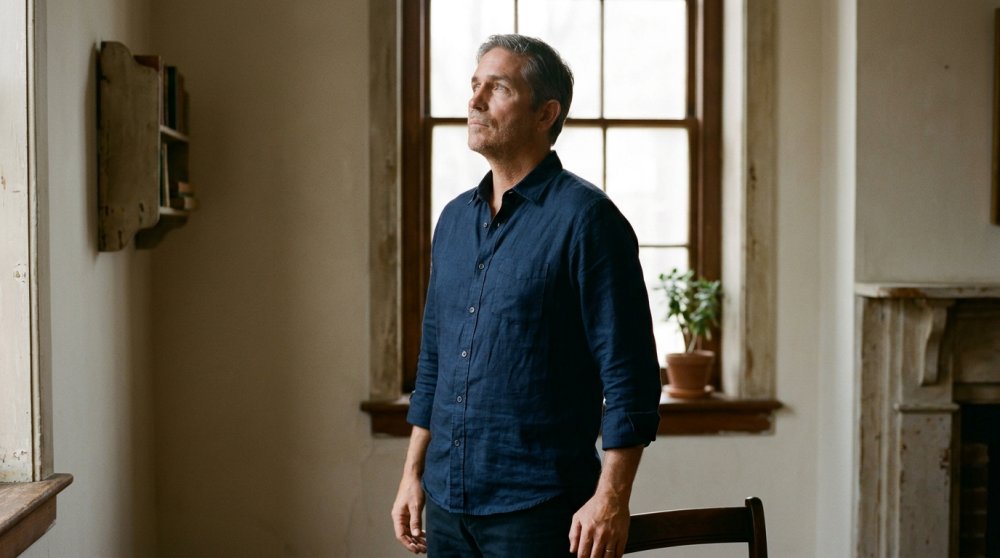
Jim Caviezel says Jesus Christ physically appeared to him while he was still weighing the offer to play the Savior in Mel Gibson’s upcoming movie. The actor made the claim during a recent interview, recalling the moment that changed his mind about the role.
The encounter came more than twenty years ago, just before Caviezel signed on to star in The Passion of the Christ. He described feeling a clear divine presence that gave him the peace and conviction he needed to move forward.
“I don’t have anybody else.” Jim Caviezel recalls the moment he says Jesus appeared at the foot of his bed before taking on his role in The Passion of the Christ. Full episode out Tuesday on YouTube, Spotify, and Apple Podcasts. https://t.co/cY1Vtek4mv
— Sean Hannity ???????? (@seanhannity) November 8, 2026
“I was asked to play Jesus Christ,” Caviezel said. “And I said, ‘I can’t do it.’ And then Jesus appeared to me.”
That supernatural moment settled the question for the actor. Caviezel went on to portray Christ in the film, which went on to become one of the most watched and discussed Christian movies of its time.
“He appeared to me,” Caviezel repeated, underscoring the personal nature of the visitation. The actor has often spoken about the spiritual preparation required for such a role and the physical toll it took on his body.
His testimony serves as an encouragement to believers that God still speaks and leads His people in clear ways when they seek His will. Caviezel’s account reminds Christians that obedience to a divine calling may require stepping out in faith even when the path looks difficult.
Let us know what you think, please share your thoughts in the comments below.

Faith Facts
- Christian artists like Amy Grant, Michael W. Smith, and Rich Mullins have shaped generations through their music.
- Scripture set to melody can strengthen biblical literacy in children during daily routines like car rides.
- Parents have a biblical responsibility to pass faith to the next generation through everyday moments.
Parents searching for ways to anchor their children in Scripture may find an unexpected classroom in the family vehicle. Familiar Christian songs from decades past continue to plant God’s Word in young hearts through simple repetition and melody.
Producer Brown Bannister, who worked with Amy Grant, Michael W. Smith, and Rich Mullins, notes that the same songs that once ministered to adults can now serve as effective tools for teaching children biblical truth.
“The songs that have Scripture in them, they just stick,” Bannister stated.
Many families already use car time for conversation or entertainment, but incorporating worship music offers a practical way to redeem those minutes for spiritual growth. Parents who remember the lyrics of classic Christian songs often discover their children are learning Scripture without realizing it.
With biblical values under increasing pressure in schools and media, faithful parents are looking for every opportunity to reinforce truth at home and on the go.
“If you grew up on Amy Grant, Michael W. Smith or Rich Mullins, you can probably still sing every word,” Bannister said.
Let us know what you think, please share your thoughts in the comments below.
Faith Facts
- Tony Rucinski urges Christian men to embrace courage, self-control, and sacrificial service as the foundation of biblical masculinity.
- The call emphasizes a return to traditional manhood grounded in Scripture and family responsibility.
- Churches are challenged to raise men willing to speak truth in a culture that often rejects these values.
Tony Rucinski is calling on Christian men to recover a biblical vision of masculinity centered on courage, self-control, and sacrificial service. He believes the church needs men who are unafraid to speak up for truth in a time when such convictions are increasingly under attack.
According to Rucinski, modern culture has distorted the role of men, leaving many confused about their God-given responsibilities. He argues that true masculinity is not defined by cultural trends but by the clear teachings of Scripture.
“The church needs men willing to speak up,” Rucinski stated, stressing that silence is no longer an option for faithful believers.
His message challenges husbands and fathers to lead their families with conviction, modeling self-control and sacrificial love as Christ did for the church. Rucinski sees this as essential for restoring strong homes and communities.
The campaigner also warns that when men abandon their biblical roles, society suffers. He points to rising fatherlessness and moral confusion as evidence of what happens when traditional manhood is dismissed.
Rucinski calls on pastors and church leaders to boldly teach these truths rather than soften them to fit cultural preferences. He believes that a renewed commitment to biblical masculinity will strengthen both families and the wider body of Christ.
Let us know what you think, please share your thoughts in the comments below.


-

 Self-Reliance2 years ago
Trump’s Bold Move Uncovers Massive Social Security Fraud
-
 Faith2 years ago
New Clues Emerge in Noah’s Ark Mystery
-

 News2 years ago
Governor Walz’s Rhetoric Sparks National Controversy
-
 News2 years ago
Mel Gibson’s ‘The Passion of the Christ’ Sequel Title Announced
-

 Family2 years ago
Texas Lawmaker Targets Furries in Schools
-

 Freedom2 years ago
Maine Lawmaker Challenges Sports Fairness Controversy
-

 Family1 year ago
Canada’s Controversial Policy Sparks Ethical Debate
-
Faith12 months ago
Congress Hears Pleas for Nigerian Christians