
Faith
A Father Asks: Is Sports Betting Really Harmless?

Faith Facts
- College students increasingly engage in sports betting through mobile apps, raising concerns among Christian families about gambling’s spiritual and financial dangers
- Scripture warns against the love of money and the pursuit of quick riches, principles that directly apply to gambling behaviors
- Biblical stewardship calls Christians to manage resources wisely, not risk them on games of chance that can lead to addiction and financial ruin
A concerned father recently reached out with a question many Christian parents are now facing in our digital age. His college freshman son has begun gambling on sports games, dismissing parental concerns by claiming it’s harmless fun and insisting he knows when to quit.
This scenario has become increasingly common as sports betting has exploded across America, particularly among young adults who can access gambling platforms from their smartphones. What was once confined to Las Vegas casinos now sits in every college dorm room and apartment.
From a biblical perspective, several principles speak directly to this issue. First, Scripture consistently warns against the pursuit of quick wealth and the love of money that often accompanies gambling.
Proverbs 13:11 states clearly: “Wealth gained hastily will dwindle, but whoever gathers little by little will increase it.” This wisdom stands in direct opposition to the gambling mindset, which seeks instant financial gain without honest labor.
The Apostle Paul reinforces this principle in 1 Timothy 6:10, warning that “the love of money is a root of all kinds of evils. It is through this craving that some have wandered away from the faith and pierced themselves with many pangs.”
Gambling fundamentally operates on covetousness—desiring what belongs to others and hoping to gain it through chance rather than through productive work. This violates the tenth commandment and undermines the biblical work ethic that has built strong Christian families and communities for generations.
Beyond the spiritual concerns, the practical dangers are substantial. What begins as “harmless fun” has destroyed countless lives through addiction.
The gambling industry specifically designs its products to be addictive, using psychological techniques that exploit human vulnerabilities. Young men, particularly those in competitive environments like college campuses, are especially susceptible to these manipulations.
Your son’s claim that he “knows when to quit” is precisely what every gambling addict believed before their habit spiraled out of control. The nature of gambling creates a false sense of control while the mathematical odds ensure the house always wins in the long run.
Christian stewardship requires us to manage the resources God has entrusted to us wisely. Every dollar we possess is ultimately God’s provision, given for His purposes and our needs—not to be wagered on sporting events.
Parents have both the right and the responsibility to guide their adult children toward wisdom, even when those children resist. This conversation isn’t about control—it’s about love and the desire to see our children avoid destructive paths.
The temporary thrill of a winning bet cannot compare to the lasting peace that comes from living according to biblical principles. The financial losses, broken relationships, and spiritual compromise that often follow gambling habits leave scars that last far longer than any momentary excitement.
As Christian families, we must stand firm on these principles even when the culture tells us to relax our standards. Sports betting may be legal and widely accepted, but legality doesn’t determine morality—God’s Word does.
This is an opportunity for a father to lovingly but firmly guide his son toward biblical wisdom, helping him understand that true freedom comes not from indulging every desire but from living within God’s boundaries for our protection and flourishing.
Let us know what you think, please share your thoughts in the comments below.


Faith Facts
- Nearly 100 students at a Christian high school in Colorado have been baptized following athletic events this year.
- Five separate worship gatherings were organized after games, drawing students seeking faith commitments.
- The baptisms reflect a growing movement of young people responding to the Gospel in school settings.
High school athletic events have long been community gatherings, but one Colorado Christian school is seeing those moments turn into something far more eternal.
After five post-game worship services, nearly 100 students stepped forward for baptism, marking a powerful season of spiritual renewal.
School leaders say the response has been both unexpected and deeply encouraging, as students publicly declare their faith in Christ.
“It has been incredible to watch these young people take this step,” one administrator shared.
The gatherings combine prayer, worship, and testimony, creating a space where students feel welcomed to respond to the message of salvation.
Parents and faculty have noted a renewed sense of purpose and unity among the student body as a result.
“We are seeing the Holy Spirit move in powerful ways,” a staff member added.
Christian education advocates view the events as evidence that faith-based environments can shape hearts as well as minds.
The school plans to continue the post-game worship gatherings in the coming seasons, hoping to build on the momentum of spiritual awakening.
Let us know what you think, please share your thoughts in the comments below.
Faith Facts
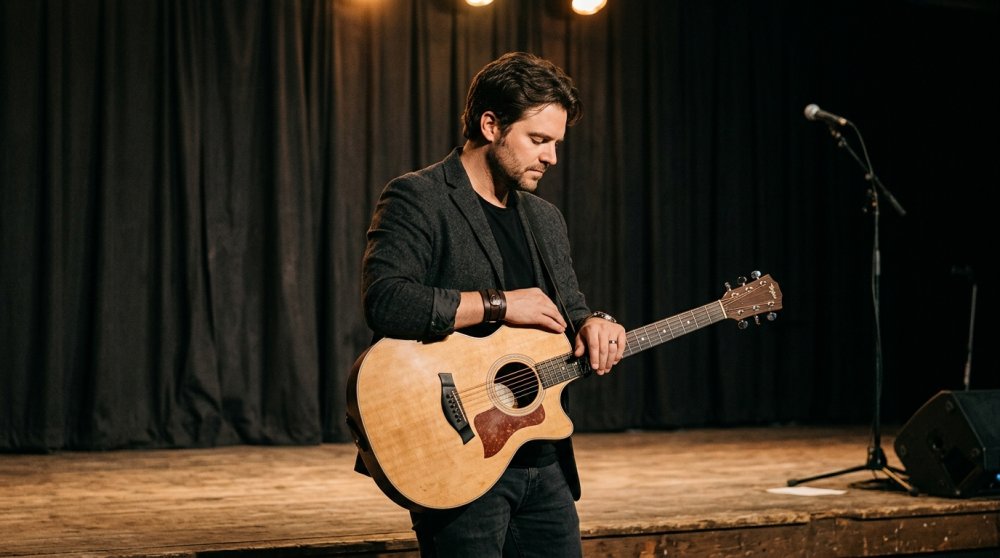
- Matthew West releases new album titled ‘Jesus Is King’
- Album emphasizes surrender, vulnerability, and Scripture after nearly 30 years in Christian music
- West challenges the culture of self-empowerment with a message of Christ-centered living
Christian music artist Matthew West is calling believers to place Jesus above self in his latest album, ‘Jesus Is King.’ The project comes after nearly three decades of ministry and reflects a deeper commitment to Scripture and surrender.
West says the album confronts a culture obsessed with self-empowerment by lifting up the lordship of Christ instead. He believes true strength comes from laying down personal control and trusting God’s Word.
"The message of this album is that Jesus is King, and that changes everything."
Through honest lyrics and personal testimony, West hopes listeners will rediscover the power of vulnerability before God. He points to Scripture as the foundation for every song and every season of life.
"After nearly 30 years in Christian music, I am more convinced than ever that surrender is the doorway to real freedom."
Let us know what you think, please share your thoughts in the comments below.

Faith Facts
- Jordan Shipley called on the Lord during a life-threatening accident that left over 20% of his body with third-degree burns.
- More than eight months later, the former NFL wide receiver described his recovery as a miracle.
- Shipley publicly credits his faith in God for sustaining him through the ordeal.
Former NFL wide receiver Jordan Shipley is sharing a powerful testimony of survival and faith. More than eight months ago, Shipley endured a devastating accident on his Texas ranch that left him with third-degree burns across more than 20 percent of his body.
In the midst of the crisis, Shipley says he turned to God with desperate prayers for help. He now describes his recovery as nothing short of miraculous.
“I desperately called on the Lord for help during the life-threatening ordeal and experienced a ‘miracle.'”
Let us know what you think, please share your thoughts in the comments below.


-

 Self-Reliance1 year ago
Trump’s Bold Move Uncovers Massive Social Security Fraud
-

 Faith1 year ago
New Clues Emerge in Noah’s Ark Mystery
-

 News2 years ago
Governor Walz’s Rhetoric Sparks National Controversy
-

 News1 year ago
Mel Gibson’s ‘The Passion of the Christ’ Sequel Title Announced
-

 Family2 years ago
Texas Lawmaker Targets Furries in Schools
-

 Freedom2 years ago
Maine Lawmaker Challenges Sports Fairness Controversy
-

 Family1 year ago
Canada’s Controversial Policy Sparks Ethical Debate
-
Faith10 months ago
Congress Hears Pleas for Nigerian Christians