
Faith
The Hidden Cost of Digital Convenience Your Pastor Warned About

Faith Facts
- Modern conveniences like AI chatbots and same-day delivery are quietly eroding traditional community bonds that once anchored American society.
- The decline in neighborly interactions—from borrowing tools to face-to-face conversations—mirrors declining church attendance and community engagement.
- Christian fellowship and local church involvement offer the biblical antidote to isolation that technology companies cannot replicate.
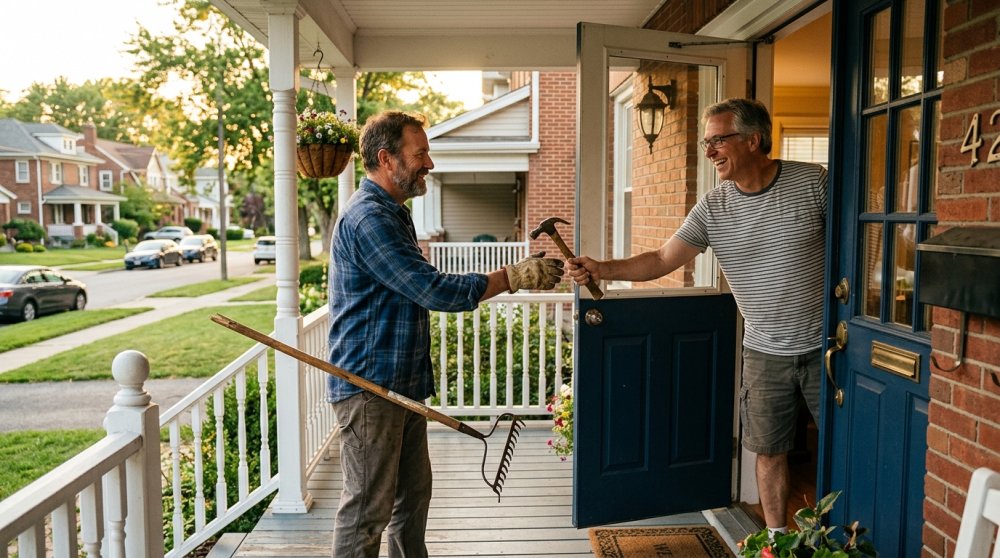
When did we stop knocking on our neighbor’s door to borrow a hammer? The answer might explain why Americans feel more isolated than ever before, despite being more “connected” through screens than any generation in history.
The convenience economy has delivered unprecedented ease to our daily lives. Need a hammer? Amazon delivers it tomorrow. Need an answer? ChatGPT responds instantly. Need a ride? An app summons one in minutes.
But this frictionless existence comes at a profound cost—one that Christians and conservatives have long understood. Each convenience that removes human interaction strips away another thread from the fabric of community that once held neighborhoods, towns, and ultimately our nation together.
The rise of artificial intelligence chatbots represents the latest evolution in this troubling trend. Millions now turn to AI for conversation, advice, and even emotional support—interactions that once happened naturally in church fellowship halls, over backyard fences, and in community gatherings.
Traditional American communities thrived on interdependence. Neighbors needed neighbors. This wasn’t merely practical; it was formative. When you borrowed your neighbor’s tools, you built relationship capital. When you gathered at church on Sunday, you strengthened bonds that carried through the week.
Scripture consistently emphasizes the importance of fellowship and community. Hebrews 10:24-25 instructs believers not to forsake “assembling together,” recognizing that physical presence and genuine human connection are irreplaceable elements of the Christian life.
The digital convenience culture runs counter to this biblical model. Every Amazon order that replaces a trip to a local shop, every AI chat that substitutes for calling a friend, every streaming service that keeps families isolated in separate rooms—these conveniences accumulate into a crisis of loneliness.
Statistics confirm what many sense intuitively. Church attendance has declined steadily even as technology has exploded. Loneliness rates have soared. Mental health challenges among young people have reached crisis levels. These trends are not coincidental.
The solution isn’t to reject technology entirely—that’s neither realistic nor necessary. Rather, Christians must intentionally prioritize genuine community over convenient isolation. This means choosing the local hardware store over the app, choosing Sunday morning worship over sleeping in, choosing face-to-face conversation over digital chat.
Churches stand uniquely positioned to counter this cultural drift. Where ChatGPT offers algorithms, the church offers authentic relationship. Where Amazon offers convenience, the church offers communion—the breaking of bread together in fellowship that technology cannot replicate.
American communities need neighbors who know each other’s names, who check on each other during storms, who gather for more than just transactions. We need churches filled with people, not livestream viewers—though digital options serve those genuinely unable to attend.
The path forward requires intentionality. It means inconveniencing ourselves for the sake of community. It means borrowing that hammer instead of buying another one. It means attending that church potluck instead of ordering takeout. It means having coffee with a friend instead of chatting with an AI.
This isn’t nostalgia for a bygone era—it’s wisdom rooted in both Scripture and social science. Human beings were created for relationship, first with God and then with one another. No algorithm can substitute for the image of God reflected in another person’s face.
The convenience economy promised to make life easier. In many ways it has. But we’re discovering the hidden costs—costs measured in weakened communities, increased isolation, and the erosion of the social capital that makes freedom and self-governance possible.
Christians have always understood that the narrow road is rarely the convenient one. Building genuine community requires effort, time, and yes, inconvenience. But the reward—strong families, thriving churches, and resilient communities—far exceeds what any app can deliver.
As artificial intelligence becomes more sophisticated and conveniences multiply, the choice before us grows starker. Will we embrace the easy isolation of digital existence, or will we choose the harder but richer path of authentic Christian community?
The answer will determine not just our personal well-being, but the future character of American society itself. Churches, families, and neighbors who choose relationship over convenience are choosing to preserve something precious that, once lost, cannot be ordered online or generated by AI.
Let us know what you think, please share your thoughts in the comments below.

Faith Facts
- Kori Pennypacker of Bible2School is helping Christian families understand that public school attendance does not require compromising faith in Jesus Christ.
- Pennypacker addresses widespread confusion among parents and educators about students’ constitutional religious freedom rights.
- The ministry equips children to live out their faith with confidence while attending public schools across America.
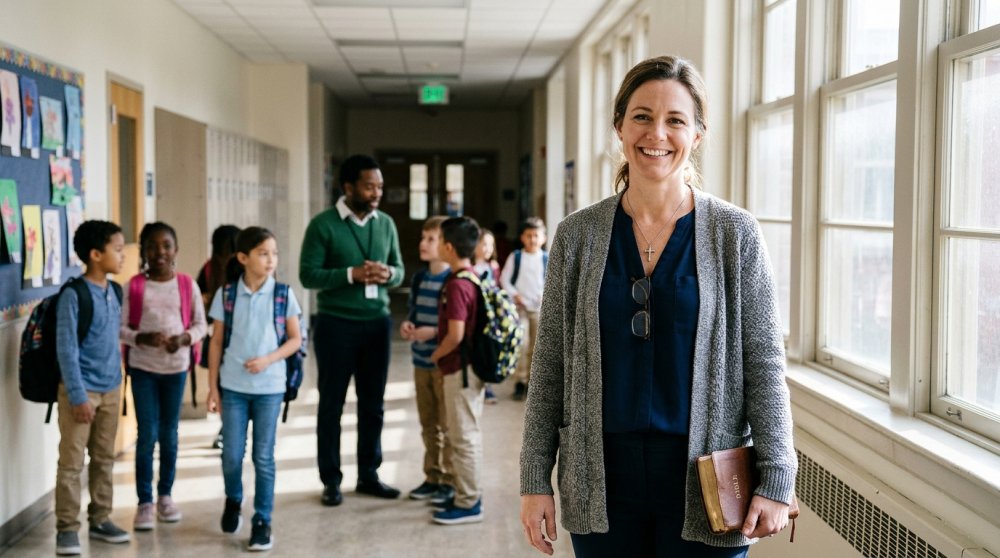
Christian parents across the nation face an increasingly difficult decision when it comes to their children’s education. Many wonder whether sending their sons and daughters to public schools will inevitably lead to the erosion of their faith. Kori Pennypacker, CEO of Bible2School, believes this false choice is robbing families of both educational opportunity and spiritual growth.
Pennypacker’s message centers on what she calls “God confidence” – the assurance that children can stand firm in their Christian beliefs even in secular environments. She argues that public schools remain one of the largest mission fields in America, filled with children who need to hear the Gospel.
“Christian parents don’t have to choose between sending their children to public school and teaching them to live openly for Jesus Christ,” Pennypacker states. She emphasizes that many families have been unnecessarily frightened away from public education due to misinformation about religious liberty protections.
The Bible2School ministry works to correct these misconceptions by training both parents and educators on students’ constitutional rights. Pennypacker notes that religious expression remains protected in public schools, including the right to pray, read Scripture, and share one’s faith with peers during appropriate times.
Through Bible2School’s programs, children learn how to articulate their beliefs with both courage and respect. The ministry provides practical tools that help young believers navigate classroom discussions, peer relationships, and school policies while maintaining their Christian witness.
Pennypacker believes that rather than retreating from public education, Christian families should prepare their children to engage the culture with truth and grace. This approach, she argues, produces stronger believers who understand how to live out their faith in any environment.
Let us know what you think, please share your thoughts in the comments below.
Faith Facts
- Vice President JD Vance credits his faith for guiding his political service and life decisions.
- Vance says he has not yet felt a divine call to pursue the presidency in 2028.
- He remains open to the possibility that God may lead him toward a future presidential campaign.
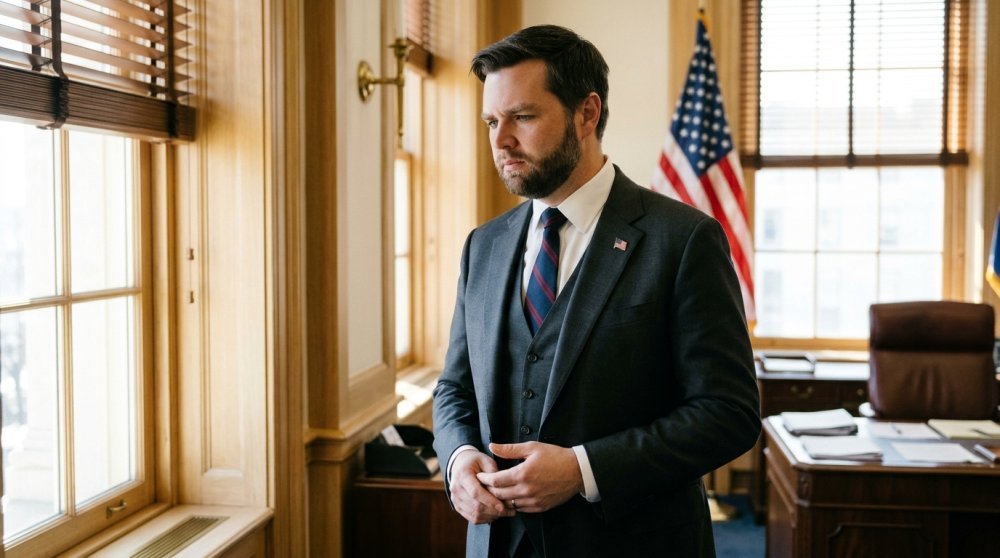
Vice President JD Vance has stated that his faith remains central to his decision-making as he weighs a potential 2028 presidential campaign. The Ohio senator-turned-vice president spoke candidly about how he continues to seek God’s direction before making major political moves.
Vance emphasized that he has not yet sensed a clear calling from God regarding a presidential run. He noted that this could change in time but stressed the importance of waiting for divine guidance.
“I haven’t yet felt God’s call for a presidential run in 2028,”
“Maybe that’ll change.”
Vance’s comments reflect a growing trend among conservative leaders who publicly acknowledge their dependence on prayer and Scripture when facing major career decisions. His approach resonates with many Americans who value leaders willing to submit their ambitions to God’s will.
The vice president also reflected on how his conversion to Christianity has shaped his worldview and public service. Vance has often spoken about the transformative power of faith in both his personal life and his political philosophy.
Let us know what you think, please share your thoughts in the comments below.
Faith Facts
- Vice President JD Vance led rally attendees in reciting the Lord’s Prayer when a woman collapsed nearby.
- The moment highlighted the continued presence of Christian faith in American public life and political gatherings.
- Vance personally left the stage to check on the woman after leading the prayer.
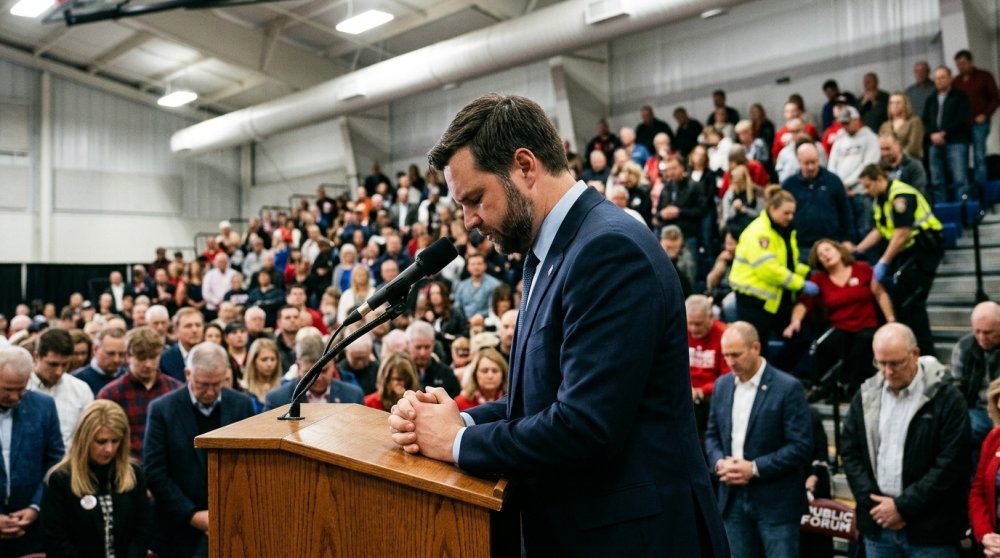
Vice President JD Vance paused a Nebraska campaign rally to lead the crowd in the Lord’s Prayer after a woman collapsed in the audience.
The incident took place during a live event where Vance addressed supporters and addressed policy issues.
“Pray as the Lord taught us to pray,” Vance said before leading the audience in the traditional prayer.
After finishing the prayer, Vance stepped down from the stage and made his way into the stands to personally check on the woman who had collapsed.
The spontaneous act of faith and compassion drew praise from attendees who witnessed the moment.
Let us know what you think, please share your thoughts in the comments below.


-

 Self-Reliance2 years ago
Trump’s Bold Move Uncovers Massive Social Security Fraud
-

 Faith2 years ago
New Clues Emerge in Noah’s Ark Mystery
-

 News2 years ago
Governor Walz’s Rhetoric Sparks National Controversy
-

 News2 years ago
Mel Gibson’s ‘The Passion of the Christ’ Sequel Title Announced
-

 Family2 years ago
Texas Lawmaker Targets Furries in Schools
-

 Freedom2 years ago
Maine Lawmaker Challenges Sports Fairness Controversy
-

 Family1 year ago
Canada’s Controversial Policy Sparks Ethical Debate
-
Faith11 months ago
Congress Hears Pleas for Nigerian Christians