
Faith
America’s Faith May Be Stronger Than Pollsters Admit

Faith Facts
- Polling data on religious decline may be significantly skewed by methodological issues and uncounted believers
- A massive group labeled “Others” in surveys represents millions of faithful Americans whose beliefs aren’t properly measured
- Religious “switching” often reflects denominational changes rather than abandonment of Christian faith
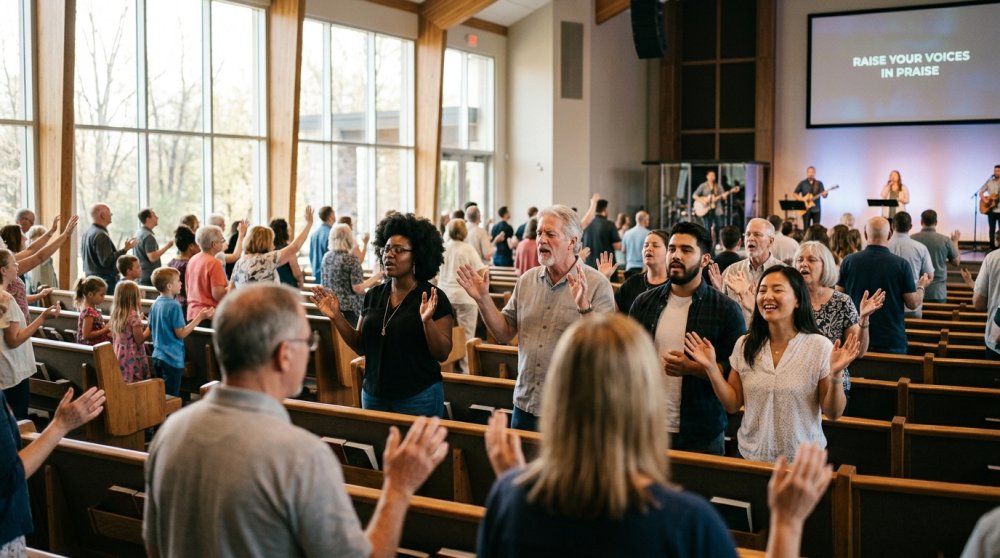
For years, headlines have proclaimed the death of American Christianity, pointing to rising numbers of “Nones” — those who claim no religious affiliation — as proof that faith is fading from our nation. But what if the story we’ve been told is incomplete, or even misleading?
A closer examination of the data reveals that America’s religious landscape is far more nuanced than the narrative of inevitable decline suggests. The truth is that polling methods may be obscuring the real picture of faith in America.
The so-called “Nones” category has indeed grown in recent decades, but this classification masks important distinctions. Many who check “no religious affiliation” on surveys still hold spiritual beliefs, pray regularly, and identify with Christian values. They may have left institutional churches without abandoning their faith in God.
Even more significant is a massive group that researchers label “Others” — Americans whose religious beliefs don’t fit neatly into pollsters’ predetermined categories. This group includes millions of believers whose faith is very real but simply isn’t captured by conventional survey questions designed for traditional denominational affiliations.
Religious “switching” presents another misunderstood phenomenon. While pollsters count every denominational change as evidence of instability, the reality is often quite different. A Baptist who becomes Presbyterian, or a Methodist who joins a nondenominational church, hasn’t abandoned Christianity — they’ve simply found a different expression of the same faith.
The data also fails to account for the vitality of faith communities that exist outside traditional structures. Home churches, online congregations, and informal fellowship groups have exploded in recent years, particularly among younger believers who value authentic community over institutional affiliation. These believers are deeply committed to their faith, but they’re often invisible to pollsters who equate religious commitment with membership in established denominations.
Furthermore, survey methodology itself introduces bias. Phone surveys increasingly miss younger Americans who rely solely on cell phones and are less likely to participate in lengthy interviews. Online surveys skew toward those with particular demographic characteristics. In-person surveys face their own challenges in an era of declining response rates.
The questions themselves can be problematic. When surveys offer limited options for religious identification, many faithful Americans are forced into categories that don’t accurately represent their beliefs. A charismatic Christian who attends a nondenominational church might not know how to answer questions designed for Lutheran, Catholic, or Baptist respondents.
Immigration patterns also complicate the picture. America continues to welcome immigrants from Latin America, Africa, and Asia — regions where Christian faith remains vibrant and central to daily life. These new Americans bring a strong religious commitment that enriches the nation’s spiritual landscape, yet their contributions are often underrepresented in surveys that focus on traditional American denominational categories.
The evidence suggests that reports of American Christianity’s demise have been greatly exaggerated. While the religious landscape has certainly changed, change doesn’t necessarily mean decline. The faith that has sustained this nation since its founding remains alive and active, even if it looks different than it did in previous generations.
Americans of faith should take heart that the narrative of religious collapse may be built on shaky statistical ground. The polling industry’s methods, designed for a different era, struggle to capture the full complexity of modern American spirituality. The reality is that millions of Americans continue to trust in God, seek His guidance, and live according to biblical principles — even if they don’t fit neatly into pollsters’ boxes.
As we move forward, it’s crucial to look beyond simplistic headlines and examine the deeper realities of American faith. The story is not one of inevitable decline, but of transformation and adaptation as believers find new ways to live out timeless truths in a changing world.
Let us know what you think, please share your thoughts in the comments below.

Faith Facts
- James Talarico is a member of the Presbyterian Church (U.S.A.)
- Rev. Jim Rigby serves as Talarico’s longtime pastor
- Talarico describes his Senate campaign as a form of ministry
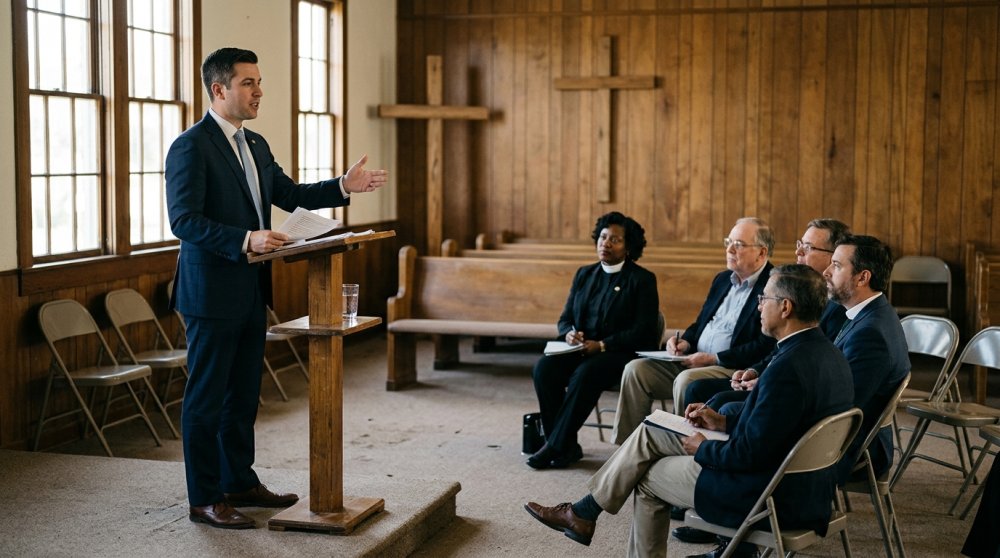
Democratic Texas state Rep. James Talarico addressed a gathering of faith leaders on Monday evening. The lawmaker shared how his pastor encouraged him to seek higher office.
Talarico credited the Rev. Jim Rigby with shaping his decision to run for the U.S. Senate. He presented the campaign as an extension of his Christian calling.
“A form of ministry.”
The PCUSA pastor reportedly framed political service as a faithful response to God’s calling. Talarico embraced this view in his remarks to the audience.
The Presbyterian Church (U.S.A.) has long maintained a progressive stance on social and political issues. Talarico’s comments align with that denominational direction.
Texas voters will soon weigh whether this interpretation of ministry resonates with their understanding of Christian citizenship. The race promises to test competing visions of faith and public service.
Let us know what you think, please share your thoughts in the comments below.
Faith Facts
- The Moulton Church of Christ in Alabama recently celebrated its 200th anniversary of gospel preaching and worship.
- Church records trace the congregation’s roots to the early 19th century Restoration Movement led by Barton W. Stone and evangelist Benjamin F. Hall.
- Five generations of the Hardin family continue to worship and serve together, preserving a legacy of faith and community leadership.
Two hundred years ago, evangelist Benjamin F. Hall planted a congregation of the Lord’s church in rural Moulton, Alabama. The congregation recently gathered to thank God for His faithfulness and to look forward with hope.
Church records credit Hall, influenced by Restoration Movement leader Barton W. Stone, with establishing the Moulton Church of Christ in 1826. Other historical sources mention Tolbert Fanning’s involvement in 1830 or a 1843 debate that brought twenty-two baptisms.
“I rejoice in such triumphs no little myself; but oh Lord, to Thee, and thy precious word, I am indebted for all that I have witnessed in Moulton,” the evangelist wrote of the church. “The brethren are strong in numbers, talent and influence, and I pray God they may be kept humble.”
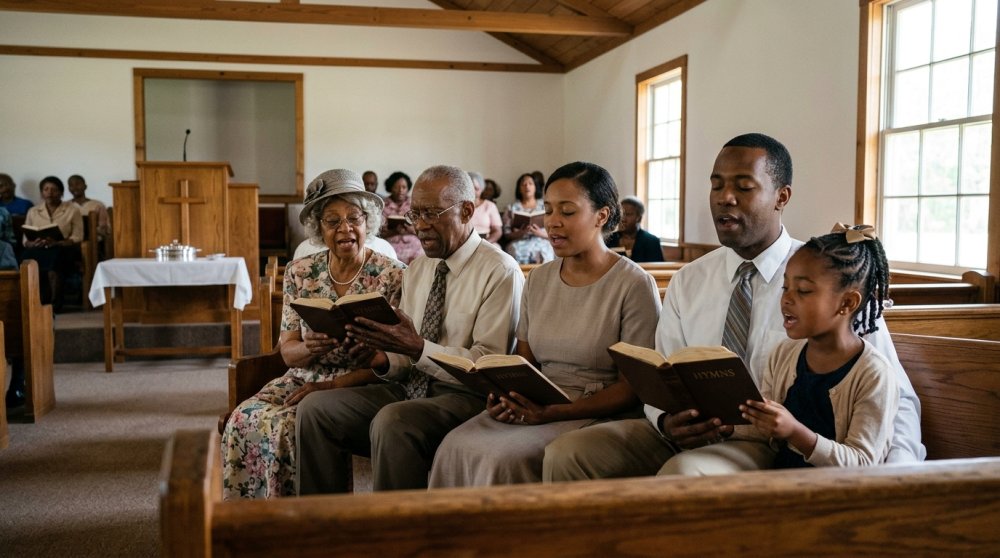
Local deacon and historian Michael Strickland returned to his childhood congregation to teach its chronology and preach on the importance of remembrance. Two hundred ten members and guests attended the bicentennial worship service.
“Our mission, brothers and sisters, is to show the love of God to everyone,” Strickland told the congregation. “I want to suggest that God has been showing his love in this congregation for 200 years. And I pray he gives us 200 years more.”
Third-generation member Cindy Henry traveled from Hope Hull, Alabama, to celebrate with her family. Her grandfather and father served as elders, and her son Mitchell now serves as a deacon.
“This is still home in a lot of ways,” Henry said. “There’s new faces, but there’s still people that helped raise me.”
Her father, 88-year-old Clint Hardin, has worshiped at Moulton for most of his life. He recalls godly Sunday school teachers and parents who passed on their dedication to the word of God.
“We’ve had good preachers, and we’ve had good leadership,” Hardin said. “Really good leadership carried us through the problems I guess that all churches have.”
Young mother Ashley Nelson joined the church ten years ago through her husband Ross, whose grandfather once preached at Moulton. She now helps lead the children’s ministry known as the Sun Shiners.
“We have so many young kids now,” Nelson said. “We have a big, strong little kids group. And so, anytime we have an event, we usually have about 20 to 30 kids at those events.”
Through every season of growth and challenge, the Moulton Church of Christ has remained rooted in Scripture and committed to passing the faith to the next generation.
Let us know what you think, please share your thoughts in the comments below.
Faith Facts
- Christians in Essex are taking legal action to defend their right to share the Gospel in public spaces.
- A local council has banned the use of loudspeakers and prohibited street preaching about Hell.
- The church maintains that sharing the Gospel belongs on the streets and is a core expression of faith.
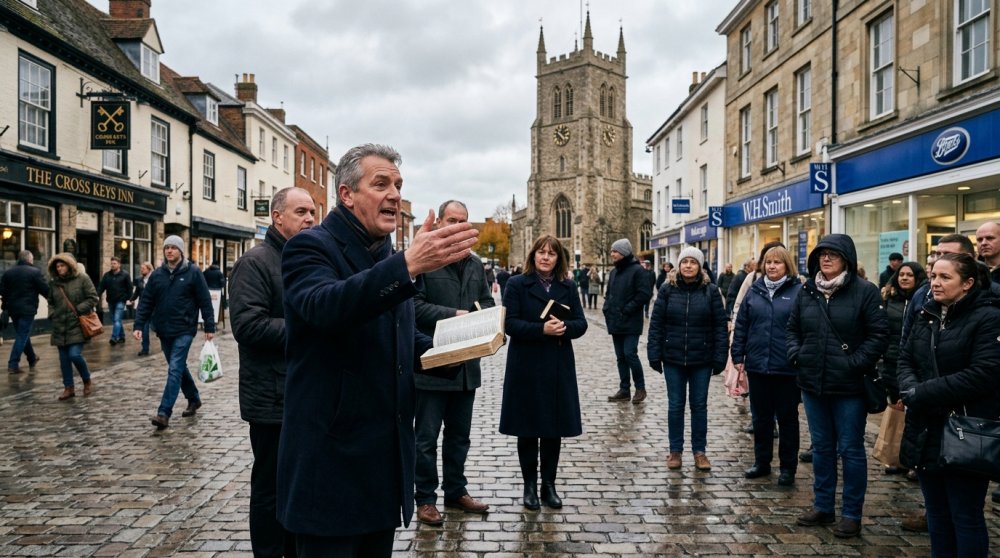
Christians at a church in Essex are fighting in court for the right to share the Gospel on British streets after a city council banned their use of loudspeakers and ordered them to stop warning people about Hell.
The case highlights growing tensions between traditional Christian witness and local government restrictions on public preaching.
“The Gospel belongs on the streets,” church leaders declared in their legal challenge.
Faithful believers see this as part of a broader pattern of restrictions aimed at silencing biblical truth in the public square.
“We will not be silenced from proclaiming the truth that saves,” a church spokesperson stated.
Let us know what you think, please share your thoughts in the comments below.


-

 Self-Reliance2 years ago
Trump’s Bold Move Uncovers Massive Social Security Fraud
-

 Faith2 years ago
New Clues Emerge in Noah’s Ark Mystery
-

 News2 years ago
Governor Walz’s Rhetoric Sparks National Controversy
-

 News2 years ago
Mel Gibson’s ‘The Passion of the Christ’ Sequel Title Announced
-

 Family2 years ago
Texas Lawmaker Targets Furries in Schools
-

 Freedom2 years ago
Maine Lawmaker Challenges Sports Fairness Controversy
-

 Family1 year ago
Canada’s Controversial Policy Sparks Ethical Debate
-
Faith11 months ago
Congress Hears Pleas for Nigerian Christians