
Faith
Beloved Icon Remembered by Faith Community

Faith Facts
- Legendary singer-songwriter Dolly Parton has passed away at age 80, prompting an outpouring of grief from Christian artists and fans nationwide
- Parton’s career spanned decades, touching millions through her music, philanthropy, and unmistakable voice that became synonymous with American values
- Christian musicians and ministry leaders have taken to social media to honor her memory and celebrate her impact on faith and culture
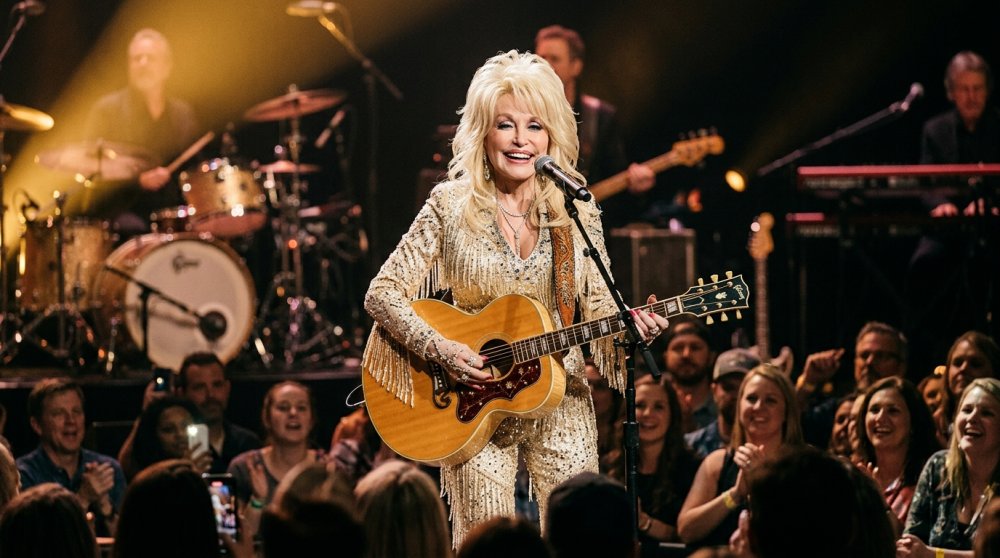
The nation mourns the loss of a true American treasure. Dolly Parton, whose voice echoed through generations and whose heart touched countless lives, has passed away at 80. Her death marks the end of an era in American music and culture.
Christian artists across the country have responded with heartfelt tributes. Their messages reflect not only professional admiration but deep personal connection to a woman who embodied traditional values while reaching the highest pinnacles of success.
“We will miss you down here,” expressed one sentiment that captured the collective grief sweeping through the faith community.
Parton’s influence extended far beyond the stage. Her philanthropic work, particularly in literacy and education, demonstrated the kind of servant leadership that resonates deeply with Christian values. She gave generously, spoke kindly, and lived authentically—qualities that made her a role model for millions.
Her music bridged divides in ways few artists ever achieve. From country to gospel, pop to bluegrass, Parton’s versatility never compromised her authenticity. She remained true to her roots, her faith, and her values throughout a career that spanned more than six decades.
The outpouring of love on social media reveals the profound impact one life can have when lived with purpose and grace. Christian musicians, many of whom grew up listening to her songs or were inspired by her example, shared memories and expressed gratitude for her legacy.
Parton’s passing reminds us that even the brightest stars eventually return home. Yet her influence—through music, charity, and unwavering commitment to lifting others—will continue to inspire future generations. She lived a life that mattered, touching hearts and changing lives through talent given by God and used for good.
In an entertainment industry often marked by fleeting fame and compromised values, Parton stood as a beacon of consistency. She proved that success and integrity need not be mutually exclusive, that fame could be wielded for good, and that staying true to one’s roots was not a limitation but a strength.
Let us know what you think, please share your thoughts in the comments below.

Faith
Cathedral Desecrated: Archbishop Forced to Apologize After Reality Show Films Baptism of OnlyFans Performer
Faith Facts
- An Australian reality TV show filmed the baptism of an OnlyFans performer inside an Anglican cathedral without proper disclosure of the show’s content.
- The Archbishop of Perth issued an apology after discovering the baptism was used in a streaming series that promotes sex work.
- The Anglican Church is demanding the removal of the cathedral footage and has called for stricter controls on what is filmed in sacred spaces.
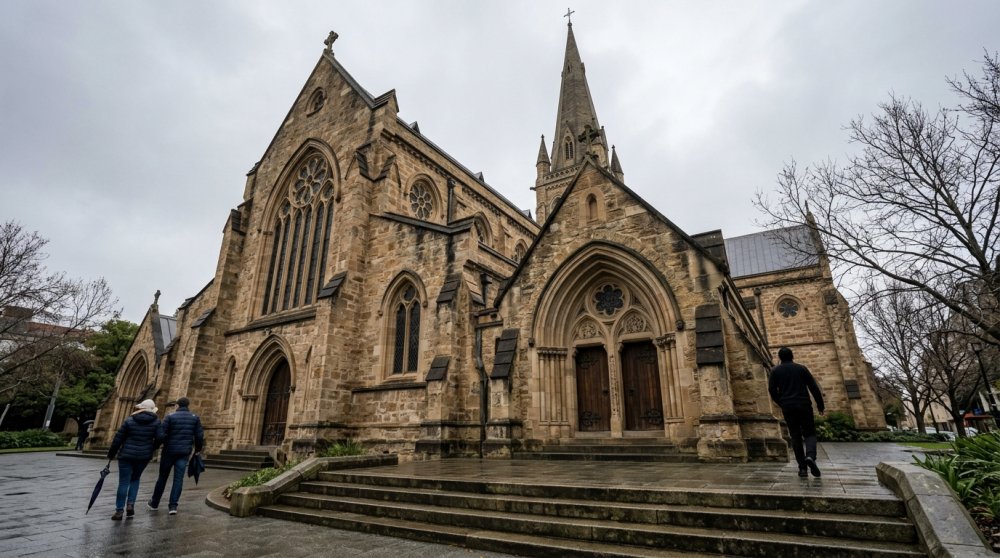
The sacred space of an Anglican cathedral in Australia has become the center of a disturbing controversy after a reality television program exploited a baptism ceremony for content that glorifies the sex industry. The incident has prompted an official apology from church leadership and renewed calls for protecting the sanctity of Christian worship spaces.
The Archbishop of Perth, Kay Goldsworthy, issued a formal apology after discovering that a baptism performed at St. George’s Cathedral had been filmed and incorporated into a reality show on the Australian streaming platform Binge. The program, which features performers from the adult content website OnlyFans, presented the sacred Christian sacrament as part of entertainment content that normalizes and celebrates sex work.
According to church officials, those involved in arranging the baptism failed to disclose the true nature of the television production. The deception allowed cameras to capture one of Christianity’s most sacred sacraments under false pretenses, turning a moment of spiritual significance into fodder for a show that directly contradicts Christian teaching on human dignity and sexuality.
“I apologize unreservedly to the community for the deep offense and hurt caused,” Archbishop Goldsworthy stated in her public apology.
The Anglican Church has formally requested that Binge remove all footage filmed inside the cathedral. Church leadership emphasized that the cathedral was used without full knowledge of how the content would be framed and presented to audiences, calling the situation a violation of the sacred trust placed in those who seek to use church facilities.
This incident highlights a growing tension between secular media culture and traditional Christian values. The willingness of entertainment companies to exploit religious spaces and ceremonies for content that undermines biblical teaching reveals a troubling disregard for the faith commitments of millions of Christians.
The cathedral baptism controversy comes at a time when many Christian denominations are grappling with how to maintain the integrity of their sacred spaces in an increasingly secular society. While churches have historically opened their doors to seekers and those exploring faith, incidents like this demonstrate the need for greater discernment and stricter protocols.
For traditional Christians, baptism represents a public declaration of faith in Jesus Christ and a commitment to turn away from sin and follow biblical standards of holiness. The appropriation of this sacrament for a show celebrating lifestyles contrary to Christian sexual ethics represents a profound mockery of the faith.
The Australian church has indicated it will implement new measures to prevent similar incidents in the future. These changes will likely include more thorough vetting of requests to film religious ceremonies and clearer guidelines about how such footage may be used.
Critics of the streaming service argue that the deliberate misrepresentation of the baptism’s purpose demonstrates contempt for Christian beliefs and practices. By presenting the sacrament within the context of a show that normalizes sex work, the producers undermined the spiritual significance of the ceremony and used sacred Christian imagery to legitimize behavior that Scripture clearly condemns.
This controversy serves as a reminder of the importance of protecting the sanctity of Christian worship and the need for church leaders to exercise wisdom and discernment when opening their facilities to outside parties. As secular culture becomes increasingly hostile to traditional Christian values, believers must remain vigilant in safeguarding the spaces and practices that form the foundation of their faith.
Let us know what you think, please share your thoughts in the comments below.
Faith Facts
- Israel denied entry to 13 American citizens, including United Methodist clergy, who planned to visit Palestinian Christian communities in the West Bank
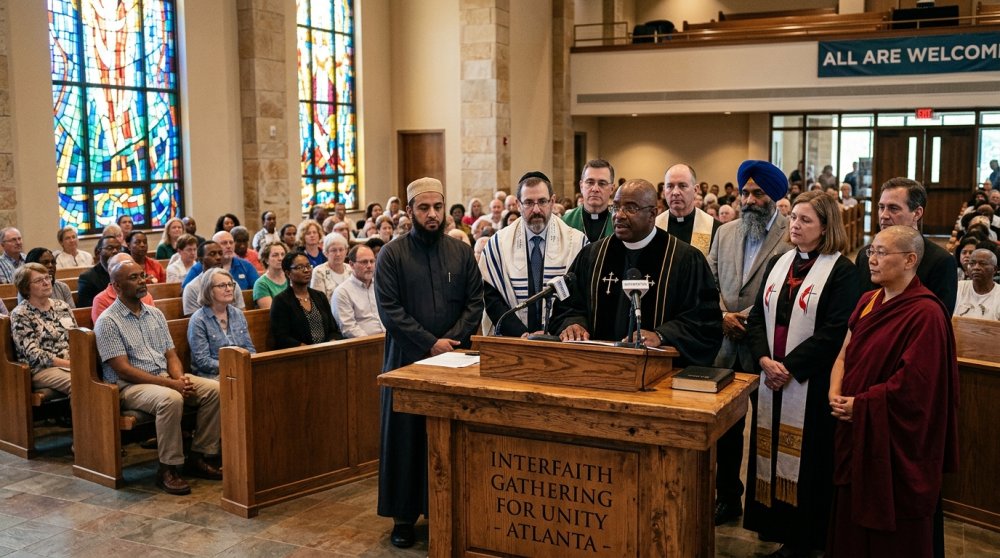
- The group gathered at a progressive Atlanta church to protest the denial and express concern about access to Christian sites
- The incident raises questions about freedom of movement and religious liberty in the Holy Land
A group of American citizens, including United Methodist clergy members, found themselves barred from entering Israel as they sought to visit Palestinian Christian communities. The denied entry has sparked conversations among faith leaders about access to religious sites and freedom of movement in the contested region.
On Monday, interfaith leaders and advocates assembled at a progressive church in Atlanta to address the situation. The gathering brought together voices concerned about restrictions on Americans attempting to visit Christian communities in the West Bank and East Jerusalem.
The 13 Americans had planned to travel to Palestinian Christian villages, a journey that would have allowed them to connect with fellow believers living in the region. Their denied entry highlights ongoing tensions surrounding access to religious sites and communities in areas under dispute.
The incident touches on broader concerns about religious freedom and the ability of Christians to maintain connections with their brothers and sisters in faith living in the Holy Land. For many American Christians, visiting the birthplace of Christianity and meeting with fellow believers in the region holds deep spiritual significance.
Questions remain about the specific reasons for the denial of entry and what criteria Israeli authorities used in making their determination. The situation underscores the complex political and security considerations that affect travel to the region.
The gathering in Atlanta reflects growing concern among some American faith communities about access to Christian populations in Palestinian territories. These communities trace their roots to the earliest days of Christianity and maintain a continuous presence in the land where Jesus walked.
American Christians from various denominations have long maintained relationships with Palestinian Christian communities through visits, partnerships, and solidarity efforts. These connections help sustain minority Christian populations in a region where they face mounting pressures.
The denied entry also raises questions about the treatment of American citizens seeking to exercise their religious freedom to visit holy sites and fellowship with believers abroad. Such restrictions can strain diplomatic relationships and test commitments to religious liberty principles.
For the 13 Americans turned away, the experience represents not just a missed opportunity for travel, but a barrier to fulfilling what many consider a spiritual calling to visit and support Christians in the Holy Land. Their inability to complete their planned visit has resonated with faith communities across the United States.
Let us know what you think, please share your thoughts in the comments below.

Faith Facts
- Christian public theology emphasizes serving all people as image-bearers of God, not merely as potential converts
- Authentic incarnational faith requires believers to actively engage in society, bringing Christian values to everyday life
- Biblical compassion extends to every person based on their inherent dignity as God’s creation, not contingent on their spiritual status
For Christians committed to living out their faith authentically, a crucial question emerges: Are we called to serve others only as a means to evangelism, or does our faith demand something deeper? The answer reveals the heart of what it means to bring incarnational Christianity into the public square.
Public theology rooted in biblical truth makes a compelling case for the latter approach. Every person we encounter bears the imago Dei—the image of God.
This foundational truth transforms how believers engage with their communities, workplaces, and civic institutions. Our calling extends beyond the church building into every sphere of influence where God has placed us.
When Christians embrace this incarnational approach, they don’t compartmentalize their faith into “spiritual” and “secular” categories. Instead, they recognize that Christ’s lordship extends over all creation, and that our service to others reflects God’s own character of love and justice.
This perspective doesn’t diminish the Great Commission or the urgency of sharing the Gospel. Rather, it enriches our witness by demonstrating that Christian compassion isn’t transactional.
We serve the poor, defend the vulnerable, and work for justice not merely as evangelistic strategy, but because God’s image in every person demands our respect and care. Our actions become a testimony to the transforming power of Christ working through His people.
The implications for American Christians are profound. In our polarized culture, incarnational faith calls us to engage political, economic, and social issues with both conviction and compassion—holding firmly to biblical truth while extending Christ’s love to all.
This approach challenges both the retreat into private spirituality and the reduction of faith to political activism. Instead, it calls believers to be salt and light, bringing kingdom values into every corner of society while maintaining the primacy of the Gospel message.
Let us know what you think, please share your thoughts in the comments below.

Duck Dynasty Stars Reveal the Marriage Secret That Saved Their Family

Cathedral Desecrated: Archbishop Forced to Apologize After Reality Show Films Baptism of OnlyFans Performer

Israel Denies Entry to 13 Americans Planning Visit to Palestinian Territory
-

 Self-Reliance1 year ago
Trump’s Bold Move Uncovers Massive Social Security Fraud
-

 Faith1 year ago
New Clues Emerge in Noah’s Ark Mystery
-

 News1 year ago
Governor Walz’s Rhetoric Sparks National Controversy
-

 News1 year ago
Mel Gibson’s ‘The Passion of the Christ’ Sequel Title Announced
-

 Family1 year ago
Texas Lawmaker Targets Furries in Schools
-

 Freedom1 year ago
Maine Lawmaker Challenges Sports Fairness Controversy
-

 Family1 year ago
Canada’s Controversial Policy Sparks Ethical Debate
-
Faith9 months ago
Congress Hears Pleas for Nigerian Christians