
Faith
New Study Reveals Critical Discipleship Crisis in American Churches

Faith Facts
- More than half of self-identifying Christians in America attend church services less than once a month
- Regular church attendees rate their congregations highly despite widespread discipleship challenges
- Research reveals a significant gap between Christian identification and active faith practice
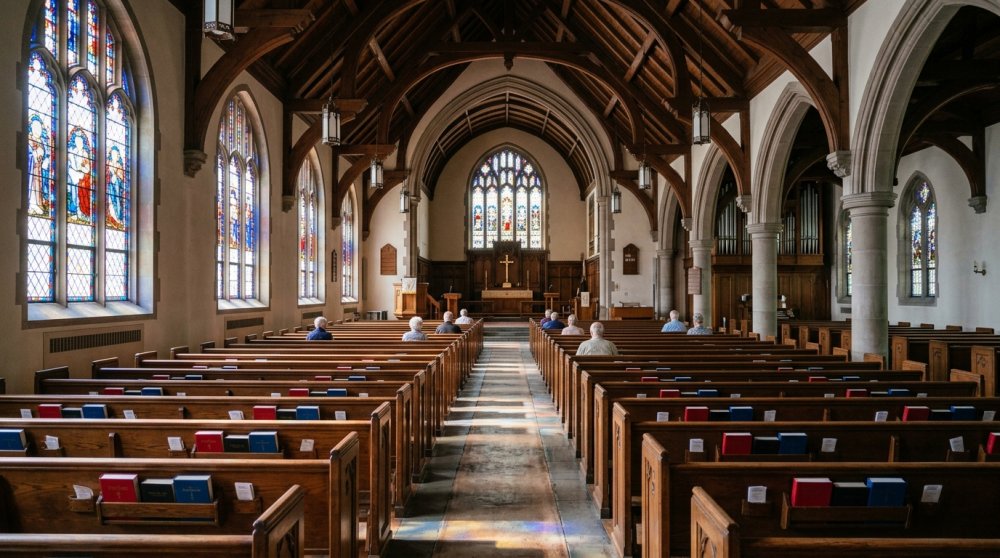
A new comprehensive study has revealed a troubling reality facing the American church: while regular attendees express satisfaction with their congregations, there exists what researchers are calling a “massive discipleship gap” among those who identify as Christian.
The findings paint a complex picture of faith in America. On one hand, churches are performing well in the eyes of their committed members. On the other hand, the research exposes a critical disconnect between those who claim Christianity and those who actively participate in church life.
According to the study, more than half of Americans who identify themselves as Christians attend worship services less than once per month. This stark reality raises serious questions about the depth of faith formation and biblical literacy among those who claim allegiance to Christ.
The term “discipleship gap” refers to the significant divide between nominal Christianity and genuine, active faith practice. Discipleship — the process of becoming more like Christ through biblical teaching, spiritual formation, and active participation in the body of believers — appears to be lacking among a majority of self-professed Christians.
For those who do attend regularly, the news is more encouraging. These committed believers report positive experiences within their church communities, suggesting that congregations are effectively ministering to their core membership. This indicates that when churches have the opportunity to engage believers consistently, they are doing meaningful work.
However, the broader implications cannot be ignored. The discipleship gap represents a fundamental challenge to the Great Commission — Christ’s command to make disciples of all nations. When more than half of those who identify with Christianity rarely or never participate in corporate worship, biblical teaching, or fellowship, the church’s ability to fulfill its mission is severely hampered.
This research arrives at a critical moment for American Christianity. Cultural pressures, secular influences, and changing attitudes toward institutional religion have created an environment where casual Christianity has become increasingly common. Many identify with the Christian label for cultural or familial reasons without embracing the transformative commitment that authentic faith requires.
The findings also raise important questions about evangelism and church growth strategies. Are churches focusing too heavily on initial conversions without adequate emphasis on long-term spiritual formation? Are believers being equipped to live out their faith beyond Sunday morning?
Church leaders across the nation must grapple with these realities. The satisfaction of regular attendees, while positive, cannot mask the urgent need to reach and disciple the millions who claim Christ but remain disconnected from His body, the church. Effective discipleship requires consistent biblical teaching, meaningful relationships within the faith community, and accountability in spiritual growth.
The path forward demands renewed commitment to the biblical model of discipleship — not merely attracting crowds, but making devoted followers of Jesus Christ who are grounded in Scripture, active in worship, and engaged in mission.
Let us know what you think, please share your thoughts in the comments below.

Faith Facts
- Christian apologist William Lane Craig questioned the Nicene Creed’s doctrine of eternal generation in a recent video clip
- The Nicene Creed affirms Jesus Christ is “eternally begotten of the Father,” a foundational doctrine established in AD 325
- The controversy has sparked debate among Christian scholars and defenders of historic orthodoxy
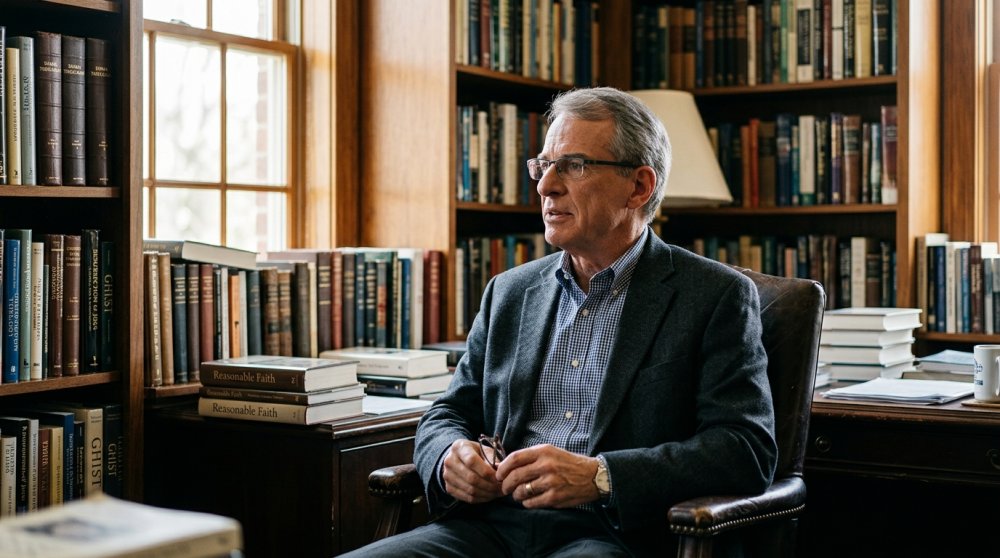
A recent video clip featuring renowned Christian apologist William Lane Craig has ignited controversy within the Christian community after he appeared to question fundamental language in the Nicene Creed. The clip shows Craig raising concerns about the ancient creed’s assertion that Jesus Christ is “eternally begotten of the Father” in His divine nature.
The Nicene Creed, established at the Council of Nicaea in AD 325 and expanded at the Council of Constantinople in AD 381, has served as a cornerstone of Christian orthodoxy for nearly seventeen centuries. Its formulation was crucial in defending the Church against Arianism and other heresies that denied the full divinity of Christ.
William Lane Craig disavows the Nicene Creed:
“I do not believe or confess that the Son is eternally begotten from the Father in his divine nature.” pic.twitter.com/3Yz3UcQ8VE
— Protestia (@Protestia) August 21, 2026
Craig’s comments have drawn sharp criticism from theologians and apologists who view the creed as essential to maintaining biblical Christianity. The doctrine of eternal generation teaches that the Son has always existed in relation to the Father, neither created nor made, but eternally begotten—sharing fully in the divine nature while remaining distinct as the Second Person of the Trinity.
Critics argue that questioning this foundational doctrine undermines the careful theological work of the early Church Fathers who formulated these truths under the guidance of the Holy Spirit. The Nicene Creed has united Christians across denominational lines—Catholic, Orthodox, and Protestant—for generations.
The controversy highlights ongoing tensions in contemporary Christian theology between traditional formulations and modern philosophical frameworks. Many defenders of orthodox Christianity maintain that the ancient creeds provide essential guardrails that protect the faith from theological drift and preserve the gospel message.
Church history demonstrates that departures from creedal orthodoxy have often led to significant doctrinal error. The early councils carefully crafted their language to express biblical truth about Christ’s nature—fully God and fully man—in ways that excluded false teaching while remaining faithful to Scripture.
As this debate unfolds, it serves as a reminder of the importance of holding fast to the faith once delivered to the saints. The Nicene Creed remains a vital confession for Christians seeking to maintain theological fidelity in an age of increasing doctrinal confusion.
Let us know what you think, please share your thoughts in the comments below.

Faith Facts
- A single handful of soil contains billions of living microorganisms, making it one of the most complex ecosystems on Earth
- Gravity keeps our atmosphere, water, and soil anchored to the planet, sustaining all life as designed by the Creator
- The earth beneath our feet is far from lifeless — it teems with biological activity essential for food production and ecological balance
When we touch earth, we are touching something deeply ancient and deeply alive. It may appear solid and unchanging, but the truth is far more remarkable.
Scoop up a handful of dirt and you hold in your palm a living, breathing substance. That seemingly simple soil contains billions of microorganisms — bacteria, fungi, protozoa, and countless other forms of microscopic life working together in intricate harmony.
Without gravity, this remarkable system could not exist. Nothing would stay in place — not the atmosphere we breathe, not the water we drink, not the fertile ground that produces our food. Everything would drift away into the void of space.
These are not random accidents of nature, but carefully orchestrated systems that point to divine design. The complexity found in even the smallest sample of soil reveals an intelligence and purposefulness that defies evolutionary explanations.
In our modern world of concrete, asphalt, and technology, we have become disconnected from the earth God created. We walk over it daily without considering the miraculous processes happening beneath our feet. We take for granted the invisible force that holds us securely to the ground.
Scripture reminds us that man was formed from the dust of the earth, and to dust we shall return. This connection to the soil is not merely poetic — it is literal and profound. The same elements that make up our bodies are found in the earth, a testament to our Creator’s unified design.
As Christians, we are called to be stewards of God’s creation. That stewardship begins with recognizing the gifts we have been freely given — gifts like fertile soil and the gravitational force that sustains all life on this planet. These are provisions from a loving Father who designed a world perfectly suited for human flourishing.
Let us not lose our sense of wonder at the ordinary miracles surrounding us. The next time you step outside, take a moment to consider what lies beneath your feet. Remember that even the ground itself is evidence of God’s provision and creative power.
Let us know what you think, please share your thoughts in the comments below.
Faith Facts
- A Colorado Church of Christ congregation has developed a women’s yoga program that focuses on Biblical meditation, worship music, and Scripture-based teaching.
- The weekly classes draw up to 20 women ranging from their 20s to 70s, providing spiritual fellowship and physical exercise grounded in Christian principles.
- Participants report the sessions help them release anxiety, deepen their faith, and build meaningful Christian community outside Sunday services.
Many Christians know the routine. Church service ends, and it’s time to visit, but really there’s not much time to visit.
They might have children to round up. They might need to hurry home to prepare lunch, watch a football game or mow the lawn.
Casey Hymore, a member of the Castle Rock Church of Christ on Colorado’s Front Range, understands the challenge. “There’s a lot going on,” she said.
Blessedly for Hymore and other church members, there’s another place to meet during the week. A place to release burdens and talk about disappointments and victories. And a place to deeply consider the Word of God.
“Here,” Hymore said, “you just have time with your Christian friends. It’s a ‘what’s going on in your life’ kind of thing.”
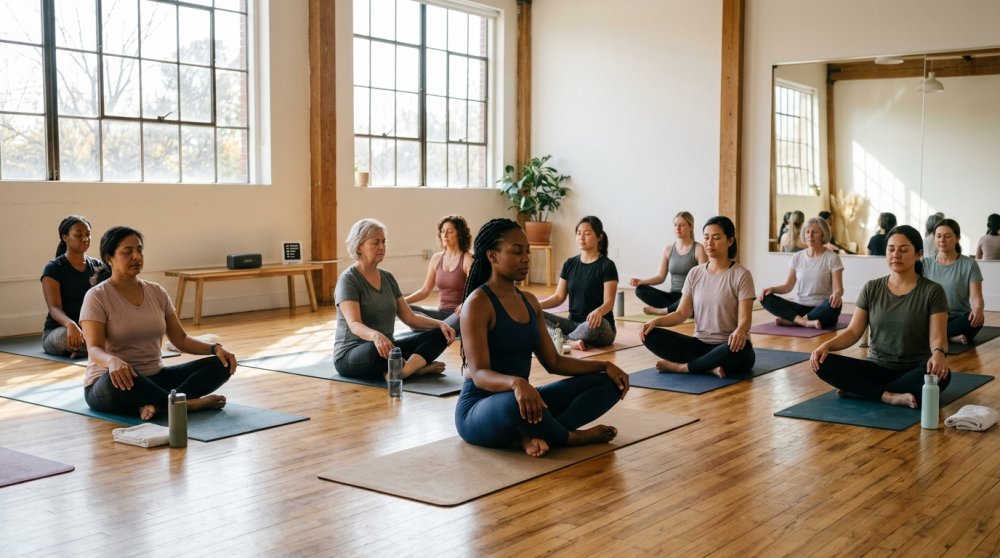
“Here” is weekly Christian yoga classes for women led by Charity Morine. During the school year, Morine leads a group of up to 20 women in weekly sessions at a dance studio in Castle Rock. The ages range from 20s to 70s. The fitness range is just as varied.
The sessions begin with the women listening to soft worship music. Morine asks her students to notice their bodies and the state of their emotions. Are you at peace? Are you feeling fragile?
She tells them to unclench their jaws, relax their shoulders.
“Release what is clouding your mind,” she said, “and come into the presence of God. Breath in his goodness.”
In one recent session, she led her students in consideration of their blind spots. King David failed to comprehend his vicious role in the death of Uriah the Hittite, his friend and, alas, romantic rival.
It required a story from the prophet Nathan to confront the king’s intentional blindness and inexplicable cluelessness. David, with Nathan’s aid, finally saw the truth about himself.
Spend time listening to God as he reveals his wisdom, Morine encouraged participants. Shine light on those blind spots.
Jenn Anderson has been attending the yoga sessions for six years. She always leaves uplifted and inspired, she said.
“You remove yourself from whatever mood you’re in and focus on the biblical message for that day,” Anderson said.
“Whatever burden you brought into the class isn’t as important as you thought when you’re thinking about it from a godly and biblical perspective.”
To end a session, students close their eyes while considering the lesson of the day. Morine rubs their foreheads with a cool lavender-soaked washcloth and offers a brief head massage.
They are weary from the exercise, which can be demanding — but even more energized, said Lynn Lauterbach.
“I always go away feeling filled versus feeling exhausted from exercising,” Lauterbach said.
“Our bodies are the temple, you know, like the verses say, and we need to be using them. The process of doing that, it’s spiritually filling.”
Morine’s path to teaching Christian yoga began nearly seven years ago. She faced, in her words, “a pretty dark spot” in her life. She knew God held the answers, and she prayed each day, inspired by Philippians 4:6-7: “Do not be anxious about anything.”
Still, she felt anxious and unseen and unfavored by God. Then she watched Christian yoga on YouTube. At the end of a video session, she reclined on her back. Her palms were up. She was alone.
“I remember, in that quiet, hearing from God and allowing my body to release my anxiousness and the tightness in my gut and the racing in my heart,” she said.
“I began to find the peace that passes understanding. I was giving God space. I was quieting my mind and giving him room to speak.”
A few months later, during the height of the Covid pandemic, Morine began her yoga sessions, starting in her backyard in northwest Castle Rock.
Daphne Walsh has worked alongside Morine for four years. She first came to the sessions to work on her balance and core strength.
She found more. Much more.
“It has helped us when we carry a lot of stress, when we’re bogged down with worries,” she said.
“We see that we can present these things to Christ and come to him just as we are.”
Christian yoga has critics among followers of Jesus who see the practice — Christian or not — as a retreat from biblical faith and believe yoga never can be fully separated from its roots in Hinduism and Buddhism. Starting yoga sessions at a Church of Christ can lead to controversy.
During a recent visit to Morine’s home, a group of five of her students enjoyed a healthy lunch and talked of their enthusiasm for their weekly time together. Nobody in the group had heard from Christian friends who objected to Christian yoga.
“I have never received a negative reaction from my Church of Christ friends,” Morine said.
“I’ve experienced nothing but support.”
Christians who are critics and skeptics of God-based yoga are welcome at Morine’s sessions. Walsh offers a personal invitation.
“They need to come and experience it for themselves,” she said.
“To find out that it is a spiritual activity. We pray together. We meditate on the Word of God. We listen to Christian music.”
“It has nothing to do with eastern yoga. Nothing at all.”
It is, Walsh said, Christ based.
Let us know what you think, please share your thoughts in the comments below.


-

 Self-Reliance1 year ago
Trump’s Bold Move Uncovers Massive Social Security Fraud
-

 Faith1 year ago
New Clues Emerge in Noah’s Ark Mystery
-

 News1 year ago
Governor Walz’s Rhetoric Sparks National Controversy
-

 News1 year ago
Mel Gibson’s ‘The Passion of the Christ’ Sequel Title Announced
-

 Family1 year ago
Texas Lawmaker Targets Furries in Schools
-

 Freedom1 year ago
Maine Lawmaker Challenges Sports Fairness Controversy
-

 Family1 year ago
Canada’s Controversial Policy Sparks Ethical Debate
-
Faith9 months ago
Congress Hears Pleas for Nigerian Christians