
Faith
From War Widow to Believer: How One Vietnamese Family Changed Hundreds of Lives

Faith Facts
- A Vietnamese widow whose husband was murdered by soldiers during the Vietnam War was baptized in the same river where he died, after her granddaughter’s life was transformed by American missionaries
- The Connor English School in Can Tho, Vietnam now serves 610 children and has become a bridge for Gospel outreach, with many students and their families coming to faith
- American Christians sponsored Vietnamese students through education programs, creating a ripple effect that has strengthened the Church of Christ in Vietnam for two decades
A chance encounter resulted in her husband’s death. Four decades later, another chance meeting led to her granddaughter’s rebirth — and a chain reaction that would impact hundreds of lives for the better.
Tran Thi Ket lived a simple life along the banks of the Hau River, which flows across the Mekong Delta from Cambodia to the South China Sea. It was 1962, and Can Tho was part of South Vietnam, a fledgling republic locked in a brutal, 19-year war with the communist North.
One day, soldiers forced Ket’s husband to row them up the river. Then they shot him.
He was 44 and left behind seven children, from 6 months to 19 years old. Ket, 37, was devastated, said her granddaughter, Ngan Huynh.
“She put his body in a little boat, and she paddled it for hours to a station where the soldiers were located. She just asked them, ‘Why? Why?'”
The soldiers gave no answer. So Ket went home and buried her husband. Later, soldiers shot and killed one of her sons on suspicion that he had collaborated with the enemy. Ket protested the war and, as a result, endured jail and torture.
In 1975, the war ended, and South Vietnam was no more. Ket’s surviving children and their children, including Ngan, did as they had before the communist takeover, eking out a living on the banks of the river.
“I thought my life was just like the lives of many other people there,” Ngan said. Then her mother and stepfather moved about 100 miles northeast — to the former Saigon, renamed Ho Chi Minh City in honor of the North’s leader — so Ngan could attend high school. To help her family, she took various jobs, including waitressing at a small café.
One day she served a customer named Tom Tune. He’d spent much of his life sailing the waters of the South Pacific as a missionary. He’d come to Vietnam to supervise construction of a medical mission boat bound for the Mekong River in Cambodia. He and a small group of Vietnamese Christians worshiped together, and he was helping some local kids improve their English. Did she want to join them?
Tune met Ngan’s family, including Ket, who had come to despise and distrust Americans. They were reminders of the conflict that took her husband and son.
“But with Tom, it was completely different,” Ngan said. The missionary exuded love and sincerity. He got permission to teach Ngan English using stories from the Bible. She started attending church services.
In 2006, she told Tune that she wanted to be baptized.
“He rented a big bus, and we went straight to the beach,” Ngan said.
Members of Churches of Christ in the U.S. sponsored Ngan through a program called Tom’s Kids. The support allowed her to do something she “could never have dreamed of because my family was so poor,” she said. She moved to Searcy, Ark., and enrolled at Harding University. She graduated in 2011 with a degree in accounting. Then she earned a Master of Business Administration from Oklahoma Christian University.
Rather than search for a job in the U.S., “I felt that I had to do something to give back for the kindness of Tom and all the wonderful people in America,” Ngan said.
“Although I am not their biological family, (they) loved me as they loved God’s children.”
During her time in the U.S., Ngan met Dr. John Bailey and his wife, Rose. Bailey, a longtime Texas dentist, preacher and medical missionary, founded a nonprofit, Body & Soul Ministries, to provide medical services and education for impoverished children around the globe.
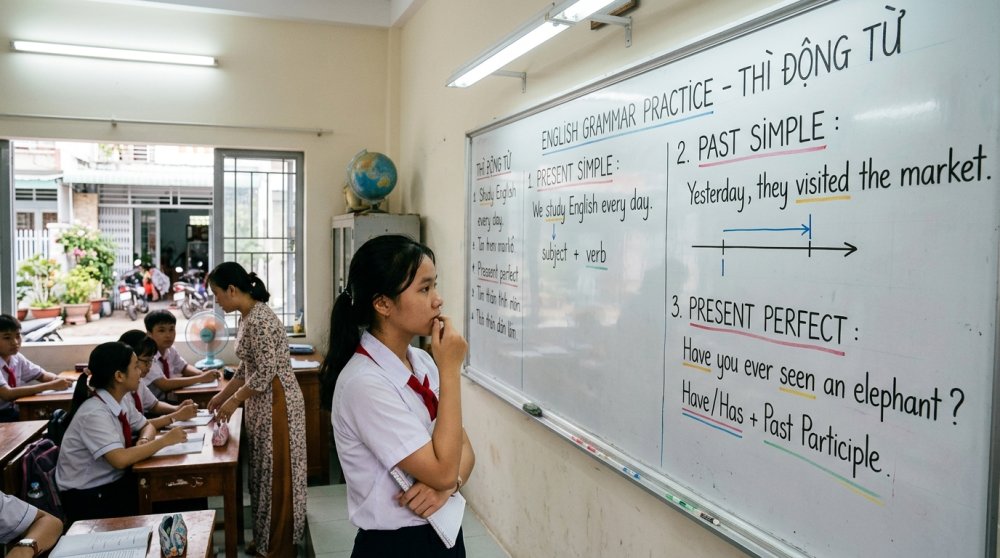
The Baileys helped Ngan launch the Connor English School, named after one of their grandchildren, in Can Tho. Since its founding in 2015, the school has grown to two campuses and serves 610 children, ages 4 to 20.
“I can never repay them. I am very happy that the English school can be a place that welcomes children from difficult circumstances — just like I was.”
‘Now I’m an English teacher’
In a brightly lit, immaculate classroom on a Thursday night, a teacher at the Connor English School projected sentences on a whiteboard. Brave volunteers stepped forward to write a verb in the simple present tense in the blank. The teacher gently corrected them when needed — the museum closes, not close, for example — and explained how the noun dictates the verb’s ending.
It was one of nearly a dozen classes, from intro to advanced levels, taught at the school, a pair of side-by-side structures four stories high. Ngan supervises a staff of 42, including 32 English teachers, all licensed by the government.
Some of the teachers, including Yen Nguyen and Kim Chau, once were Tom’s Kids.
“I couldn’t even speak English when I met Tom. Now I’m an English teacher.”
Nguyen recalled Tune patiently guiding them through the stories of the Israelites and their wanderings in the wilderness before they reached the Promised Land. Supporters of Tom’s Kids helped her and Chau travel to Singapore and earn degrees from Four Seas College of Bible and Missions, a ministry training school overseen by the Jurong Church of Christ.
Nguyen found the Christian Evidences classes particularly meaningful. She wasn’t used to discussions of faith in an academic setting.
Now, she said, “I’m really, really convinced that there’s a God.”
Government rules restrict Bible teaching at the English school. However, Ngan said, “We have had some students who studied with us, grew up and later joined us in studying the Bible.
“I especially want to help children who are facing truly difficult circumstances, to be a bridge that helps change their lives so they can know that God’s love is always somewhere beside us if we seek for him.”
‘This has greatly strengthened our church’
On his first day in Vietnam, Steve Hawley told one of the English teachers, “You can help me learn Vietnamese.”
Tom Tune quickly corrected him: “You are not here to learn Vietnamese. You are here to help them learn English.”
“He was absolutely right,” said Hawley, a teacher and coach at Westbury Christian School in Houston and member of the Westbury Church of Christ.
Hawley had met Tune more than three decades earlier. Tune’s son, Mike, preached for the Maple Hill Church of Christ in Lebanon, Tenn., which Hawley attended when he taught at nearby Friendship Christian School. The church supported Tom Tune’s mission work in the Cook Islands, and Hawley invited the missionary to speak to his classes at Friendship Christian.
Hawley made his first trip to Can Tho in 2011 at Tom’s request.
“Tom was insistent that the best way for the church to become financially independent was for the young people to learn English so they could get better jobs,” Hawley said. Having an administrator with degrees from the U.S. was helpful, Tune told him, but a visiting educator from the U.S. would be a big draw for potential students.
“People are attracted to Westerners in the sense of wanting to speak and practice English,” Hawley said.
Fifty years after the fall of Saigon, Vietnam has become a popular destination for tourists from Europe, Canada and the U.S. The tourism industry is booming, and as Ngan put it, “Parents want to see that foreigners can understand their child when they speak English.”
Hawley spends about a month per year in Vietnam.
“The best thing I do here is have conversations with the older kids, which is what they need. I really work with pronunciations, which are very poor when you have learned English from people who have never been outside of Vietnam.”
The Connor school charges tuition, but Ngan helps children in need, including those who worship with the Church of Christ in Can Tho, to attend. Her mother, Huynh Hong Hue, known as “Miss Eight,” also is a top-notch recruiter and promoter for the school, Hawley said.
“Almost every person in our church has studied at the English center. This has greatly strengthened our church. We have two precious little girls who are coming now because the grandfather, who is Buddhist, told me last summer, ‘We see how the young people from the church who study at the English Center act. That is how we want our granddaughters to act.'”
“There is no better advertisement.”
God’s gentle miracles
For Ngan — now 41, married and the mother of three girls, ages 7, 5 and 4 — meeting Tom Tune in that café in Ho Chi Minh City two decades ago was not a chance encounter.
“I believe in my heart that God is the Almighty One who has done things that humans could never imagine. God turns the impossible into the possible in such a gentle and wonderful way.”
“When I returned to my old village after studying in America, the neighbors came to congratulate me, my grandmother and my mother. My mother told them the story of how I became a child of God and how God’s people … helped me go to school so that I could gain knowledge to use for my future.”
That story has power, Ngan said, and it’s led to interest in the Gospel. After her return, many of Ngan’s family and friends were baptized.
Then, as the Can Tho Church of Christ worshiped on a Sunday morning in 2010, Ket and 13 other people asked to be immersed. Tune baptized Ket in the Hau River, the same waters where her husband died.
Ket passed away two years later at age 87. Tune, age 83, died a year after that. Mike Tune, now retired and living in Lebanon, Tenn., continues the work, making regular visits to Vietnam to encourage the church.
“It’s thrilling to watch Dad’s dream come alive in so many ways,” Mike Tune said.
As for Ket, “My mother often tells me, ‘God has wiped away her tears.’ God has lifted her burdens, and in God we have greater value.”
Let us know what you think, please share your thoughts in the comments below.

Faith Facts
- Christian apologist William Lane Craig questioned the Nicene Creed’s doctrine of eternal generation in a recent video clip
- The Nicene Creed affirms Jesus Christ is “eternally begotten of the Father,” a foundational doctrine established in AD 325
- The controversy has sparked debate among Christian scholars and defenders of historic orthodoxy
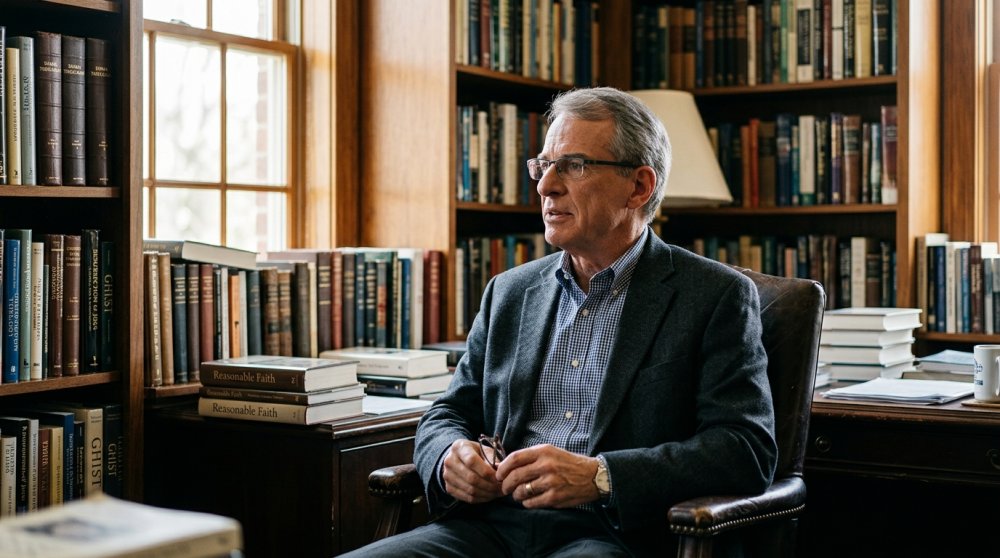
A recent video clip featuring renowned Christian apologist William Lane Craig has ignited controversy within the Christian community after he appeared to question fundamental language in the Nicene Creed. The clip shows Craig raising concerns about the ancient creed’s assertion that Jesus Christ is “eternally begotten of the Father” in His divine nature.
The Nicene Creed, established at the Council of Nicaea in AD 325 and expanded at the Council of Constantinople in AD 381, has served as a cornerstone of Christian orthodoxy for nearly seventeen centuries. Its formulation was crucial in defending the Church against Arianism and other heresies that denied the full divinity of Christ.
William Lane Craig disavows the Nicene Creed:
“I do not believe or confess that the Son is eternally begotten from the Father in his divine nature.” pic.twitter.com/3Yz3UcQ8VE
— Protestia (@Protestia) August 21, 2026
Craig’s comments have drawn sharp criticism from theologians and apologists who view the creed as essential to maintaining biblical Christianity. The doctrine of eternal generation teaches that the Son has always existed in relation to the Father, neither created nor made, but eternally begotten—sharing fully in the divine nature while remaining distinct as the Second Person of the Trinity.
Critics argue that questioning this foundational doctrine undermines the careful theological work of the early Church Fathers who formulated these truths under the guidance of the Holy Spirit. The Nicene Creed has united Christians across denominational lines—Catholic, Orthodox, and Protestant—for generations.
The controversy highlights ongoing tensions in contemporary Christian theology between traditional formulations and modern philosophical frameworks. Many defenders of orthodox Christianity maintain that the ancient creeds provide essential guardrails that protect the faith from theological drift and preserve the gospel message.
Church history demonstrates that departures from creedal orthodoxy have often led to significant doctrinal error. The early councils carefully crafted their language to express biblical truth about Christ’s nature—fully God and fully man—in ways that excluded false teaching while remaining faithful to Scripture.
As this debate unfolds, it serves as a reminder of the importance of holding fast to the faith once delivered to the saints. The Nicene Creed remains a vital confession for Christians seeking to maintain theological fidelity in an age of increasing doctrinal confusion.
Let us know what you think, please share your thoughts in the comments below.
Faith Facts
- A single handful of soil contains billions of living microorganisms, making it one of the most complex ecosystems on Earth
- Gravity keeps our atmosphere, water, and soil anchored to the planet, sustaining all life as designed by the Creator
- The earth beneath our feet is far from lifeless — it teems with biological activity essential for food production and ecological balance
When we touch earth, we are touching something deeply ancient and deeply alive. It may appear solid and unchanging, but the truth is far more remarkable.
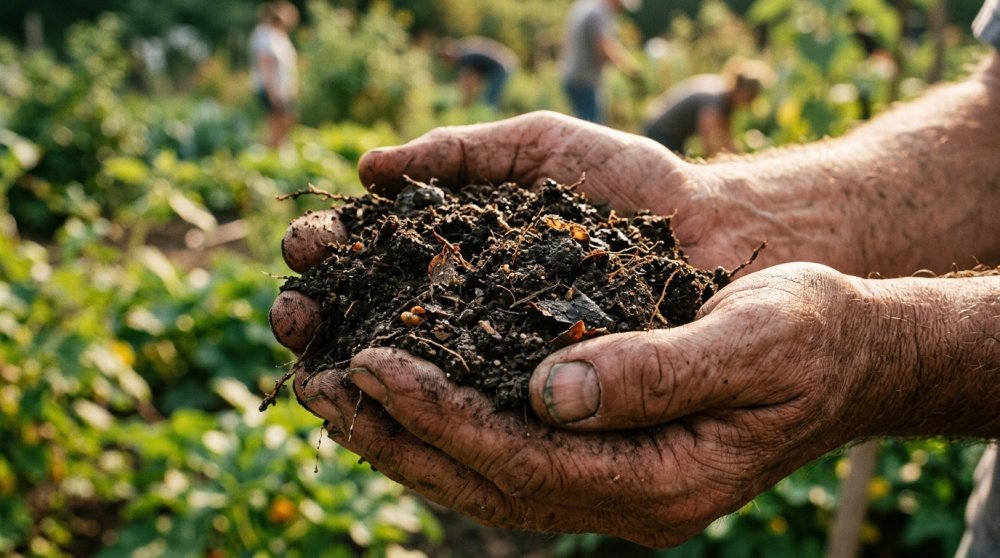
Scoop up a handful of dirt and you hold in your palm a living, breathing substance. That seemingly simple soil contains billions of microorganisms — bacteria, fungi, protozoa, and countless other forms of microscopic life working together in intricate harmony.
Without gravity, this remarkable system could not exist. Nothing would stay in place — not the atmosphere we breathe, not the water we drink, not the fertile ground that produces our food. Everything would drift away into the void of space.
These are not random accidents of nature, but carefully orchestrated systems that point to divine design. The complexity found in even the smallest sample of soil reveals an intelligence and purposefulness that defies evolutionary explanations.
In our modern world of concrete, asphalt, and technology, we have become disconnected from the earth God created. We walk over it daily without considering the miraculous processes happening beneath our feet. We take for granted the invisible force that holds us securely to the ground.
Scripture reminds us that man was formed from the dust of the earth, and to dust we shall return. This connection to the soil is not merely poetic — it is literal and profound. The same elements that make up our bodies are found in the earth, a testament to our Creator’s unified design.
As Christians, we are called to be stewards of God’s creation. That stewardship begins with recognizing the gifts we have been freely given — gifts like fertile soil and the gravitational force that sustains all life on this planet. These are provisions from a loving Father who designed a world perfectly suited for human flourishing.
Let us not lose our sense of wonder at the ordinary miracles surrounding us. The next time you step outside, take a moment to consider what lies beneath your feet. Remember that even the ground itself is evidence of God’s provision and creative power.
Let us know what you think, please share your thoughts in the comments below.
Faith Facts
- A Colorado Church of Christ congregation has developed a women’s yoga program that focuses on Biblical meditation, worship music, and Scripture-based teaching.
- The weekly classes draw up to 20 women ranging from their 20s to 70s, providing spiritual fellowship and physical exercise grounded in Christian principles.
- Participants report the sessions help them release anxiety, deepen their faith, and build meaningful Christian community outside Sunday services.
Many Christians know the routine. Church service ends, and it’s time to visit, but really there’s not much time to visit.
They might have children to round up. They might need to hurry home to prepare lunch, watch a football game or mow the lawn.
Casey Hymore, a member of the Castle Rock Church of Christ on Colorado’s Front Range, understands the challenge. “There’s a lot going on,” she said.
Blessedly for Hymore and other church members, there’s another place to meet during the week. A place to release burdens and talk about disappointments and victories. And a place to deeply consider the Word of God.
“Here,” Hymore said, “you just have time with your Christian friends. It’s a ‘what’s going on in your life’ kind of thing.”
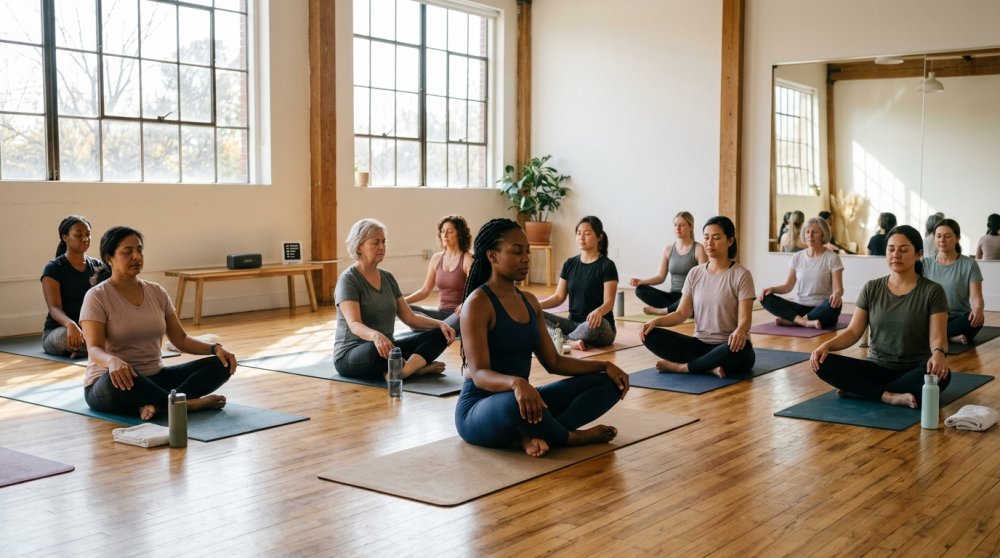
“Here” is weekly Christian yoga classes for women led by Charity Morine. During the school year, Morine leads a group of up to 20 women in weekly sessions at a dance studio in Castle Rock. The ages range from 20s to 70s. The fitness range is just as varied.
The sessions begin with the women listening to soft worship music. Morine asks her students to notice their bodies and the state of their emotions. Are you at peace? Are you feeling fragile?
She tells them to unclench their jaws, relax their shoulders.
“Release what is clouding your mind,” she said, “and come into the presence of God. Breath in his goodness.”
In one recent session, she led her students in consideration of their blind spots. King David failed to comprehend his vicious role in the death of Uriah the Hittite, his friend and, alas, romantic rival.
It required a story from the prophet Nathan to confront the king’s intentional blindness and inexplicable cluelessness. David, with Nathan’s aid, finally saw the truth about himself.
Spend time listening to God as he reveals his wisdom, Morine encouraged participants. Shine light on those blind spots.
Jenn Anderson has been attending the yoga sessions for six years. She always leaves uplifted and inspired, she said.
“You remove yourself from whatever mood you’re in and focus on the biblical message for that day,” Anderson said.
“Whatever burden you brought into the class isn’t as important as you thought when you’re thinking about it from a godly and biblical perspective.”
To end a session, students close their eyes while considering the lesson of the day. Morine rubs their foreheads with a cool lavender-soaked washcloth and offers a brief head massage.
They are weary from the exercise, which can be demanding — but even more energized, said Lynn Lauterbach.
“I always go away feeling filled versus feeling exhausted from exercising,” Lauterbach said.
“Our bodies are the temple, you know, like the verses say, and we need to be using them. The process of doing that, it’s spiritually filling.”
Morine’s path to teaching Christian yoga began nearly seven years ago. She faced, in her words, “a pretty dark spot” in her life. She knew God held the answers, and she prayed each day, inspired by Philippians 4:6-7: “Do not be anxious about anything.”
Still, she felt anxious and unseen and unfavored by God. Then she watched Christian yoga on YouTube. At the end of a video session, she reclined on her back. Her palms were up. She was alone.
“I remember, in that quiet, hearing from God and allowing my body to release my anxiousness and the tightness in my gut and the racing in my heart,” she said.
“I began to find the peace that passes understanding. I was giving God space. I was quieting my mind and giving him room to speak.”
A few months later, during the height of the Covid pandemic, Morine began her yoga sessions, starting in her backyard in northwest Castle Rock.
Daphne Walsh has worked alongside Morine for four years. She first came to the sessions to work on her balance and core strength.
She found more. Much more.
“It has helped us when we carry a lot of stress, when we’re bogged down with worries,” she said.
“We see that we can present these things to Christ and come to him just as we are.”
Christian yoga has critics among followers of Jesus who see the practice — Christian or not — as a retreat from biblical faith and believe yoga never can be fully separated from its roots in Hinduism and Buddhism. Starting yoga sessions at a Church of Christ can lead to controversy.
During a recent visit to Morine’s home, a group of five of her students enjoyed a healthy lunch and talked of their enthusiasm for their weekly time together. Nobody in the group had heard from Christian friends who objected to Christian yoga.
“I have never received a negative reaction from my Church of Christ friends,” Morine said.
“I’ve experienced nothing but support.”
Christians who are critics and skeptics of God-based yoga are welcome at Morine’s sessions. Walsh offers a personal invitation.
“They need to come and experience it for themselves,” she said.
“To find out that it is a spiritual activity. We pray together. We meditate on the Word of God. We listen to Christian music.”
“It has nothing to do with eastern yoga. Nothing at all.”
It is, Walsh said, Christ based.
Let us know what you think, please share your thoughts in the comments below.


-

 Self-Reliance1 year ago
Trump’s Bold Move Uncovers Massive Social Security Fraud
-

 Faith1 year ago
New Clues Emerge in Noah’s Ark Mystery
-

 News1 year ago
Governor Walz’s Rhetoric Sparks National Controversy
-

 News1 year ago
Mel Gibson’s ‘The Passion of the Christ’ Sequel Title Announced
-

 Family1 year ago
Texas Lawmaker Targets Furries in Schools
-

 Freedom1 year ago
Maine Lawmaker Challenges Sports Fairness Controversy
-

 Family1 year ago
Canada’s Controversial Policy Sparks Ethical Debate
-
Faith9 months ago
Congress Hears Pleas for Nigerian Christians