
Faith
Britain’s Church Growth Defies Expectations in Digital Age


Faith Facts
- Church of England attendance has risen for five consecutive years, reversing decades of decline
- Digital ministry through online theology classes, social media Bible studies, and café conversations is reaching believers beyond traditional Sunday services
- Britain’s spiritual renewal is manifesting in unmeasured ways that traditional church statistics cannot capture
A remarkable transformation is unfolding across Britain as the Church of England reports its fifth consecutive year of attendance growth. But the real story of spiritual renewal extends far beyond what can be counted in pews on Sunday mornings.
For decades, declining church attendance in Britain seemed inevitable. Yet something has shifted. Traditional worship services are experiencing renewed interest, while an entirely new landscape of faith engagement is emerging in coffee shops, living rooms, and digital spaces across the nation.
Online theology classes are drawing seekers who might never have walked through church doors. WhatsApp Bible study groups connect believers throughout the week, fostering discipleship that transcends Sunday-only Christianity. Café conversations about faith are becoming commonplace as British Christians grow bolder in sharing their beliefs in everyday settings.
This multifaceted renewal reflects a hunger for spiritual truth that traditional metrics cannot fully measure. While official attendance figures provide encouraging evidence of growth, they capture only a fraction of the Holy Spirit’s work in British hearts and homes.
The digital age has democratized access to theological education and Christian community in unprecedented ways. Believers who once felt isolated in secular environments can now connect with fellow Christians instantly. Parents balancing young children, shift workers, and those with mobility challenges can engage with Scripture and Christian teaching on their own schedules.
This represents a return to early church patterns, where faith was lived out in homes and marketplaces, not just in dedicated worship spaces. The Book of Acts describes believers meeting “from house to house” and engaging their communities wherever they went.
The growth transcends denominational boundaries as well. While the Church of England’s statistics provide measurable evidence, anecdotal reports suggest similar renewal across various Christian traditions. Evangelical churches, charismatic fellowships, and traditional liturgical congregations are all witnessing fresh interest from seekers.
What’s driving this unexpected reversal? Many point to the spiritual bankruptcy of secular materialism becoming increasingly obvious to ordinary Britons. Decades of declining religious influence have not produced the enlightened, fulfilled society that secularists promised. Instead, loneliness, anxiety, and purposelessness have reached epidemic levels.
Young adults, in particular, are rediscovering Christianity as they search for meaning beyond career achievement and consumption. The shallow promises of self-help culture and therapeutic ideology are leaving millennials and Generation Z spiritually malnourished and hungry for transcendent truth.
Social media, often blamed for undermining traditional institutions, has paradoxically become a tool for evangelism and discipleship. Christians are using platforms that once seemed hostile to faith to share testimony, teach Scripture, and build community. The same technology that can spread godlessness can also spread the Gospel.
This renewal also reflects the faithful witness of believers who never stopped gathering, praying, and proclaiming truth even when cultural forces seemed overwhelmingly hostile. Their perseverance through difficult decades is now bearing fruit in ways both visible and invisible.
The challenge for church leaders is resisting the temptation to over-systematize or institutionalize what the Holy Spirit is doing organically. Not every expression of faith renewal needs to be brought under official structures or counted in statistical reports. Some of God’s most significant work happens in small, unmeasured moments of grace.
At the same time, the growth in traditional worship attendance demonstrates that reports of Christianity’s demise in Britain were premature. Many assumed younger generations would abandon faith entirely, but evidence suggests instead that they’re seeking authentic, substantive Christianity rather than watered-down religious formality.
The British church’s renewal offers encouragement for American believers facing their own cultural challenges. It demonstrates that faithfulness matters, that patient witness bears fruit, and that God’s Spirit moves in ways that surpass our ability to measure or predict.
As this spiritual awakening continues, the question is whether established churches will embrace the new forms of faith engagement emerging outside their walls. Will they see digital discipleship, weekday Bible studies, and café conversations as competition or as complementary expressions of the same Spirit-led renewal?
The most significant growth may ultimately be the kind that appears in changed hearts rather than attendance spreadsheets. When believers are studying Scripture daily via smartphone apps, discussing theology over coffee with coworkers, and sharing their faith naturally in everyday conversations, the Kingdom is advancing whether or not Sunday morning numbers reflect it.
Britain’s church growth reminds us that God’s work cannot be confined to institutional categories or statistical measurements. While the encouraging attendance trends provide tangible evidence of renewal, the fullest picture includes countless unmeasured moments where truth is spoken, Scripture is studied, and lives are transformed by the Gospel.
Let us know what you think, please share your thoughts in the comments below.


Faith Facts
- Christian artists like Amy Grant, Michael W. Smith, and Rich Mullins have shaped generations through their music.
- Scripture set to melody can strengthen biblical literacy in children during daily routines like car rides.
- Parents have a biblical responsibility to pass faith to the next generation through everyday moments.
Parents searching for ways to anchor their children in Scripture may find an unexpected classroom in the family vehicle. Familiar Christian songs from decades past continue to plant God’s Word in young hearts through simple repetition and melody.
Producer Brown Bannister, who worked with Amy Grant, Michael W. Smith, and Rich Mullins, notes that the same songs that once ministered to adults can now serve as effective tools for teaching children biblical truth.
“The songs that have Scripture in them, they just stick,” Bannister stated.
Many families already use car time for conversation or entertainment, but incorporating worship music offers a practical way to redeem those minutes for spiritual growth. Parents who remember the lyrics of classic Christian songs often discover their children are learning Scripture without realizing it.
With biblical values under increasing pressure in schools and media, faithful parents are looking for every opportunity to reinforce truth at home and on the go.
“If you grew up on Amy Grant, Michael W. Smith or Rich Mullins, you can probably still sing every word,” Bannister said.
Let us know what you think, please share your thoughts in the comments below.
Faith Facts
- Tony Rucinski urges Christian men to embrace courage, self-control, and sacrificial service as the foundation of biblical masculinity.
- The call emphasizes a return to traditional manhood grounded in Scripture and family responsibility.
- Churches are challenged to raise men willing to speak truth in a culture that often rejects these values.
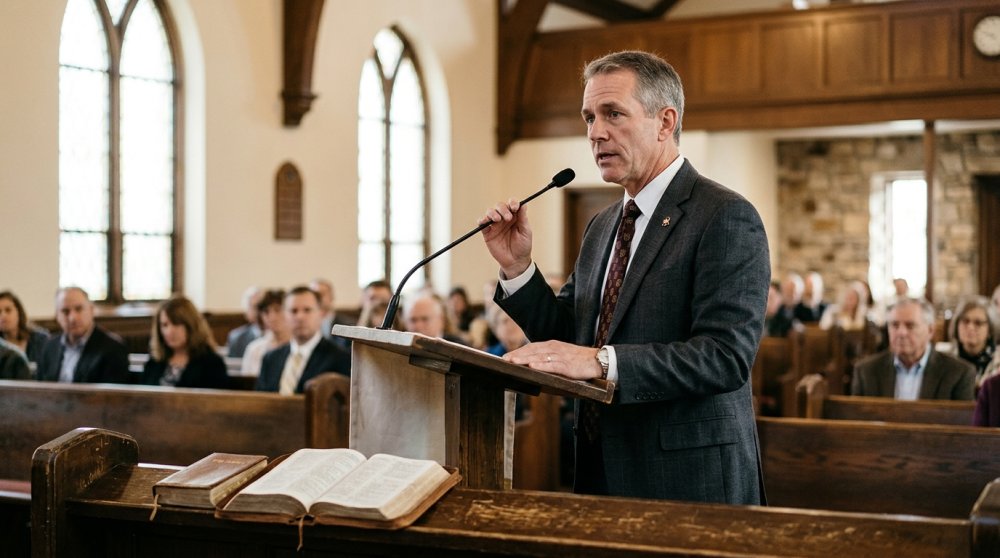
Tony Rucinski is calling on Christian men to recover a biblical vision of masculinity centered on courage, self-control, and sacrificial service. He believes the church needs men who are unafraid to speak up for truth in a time when such convictions are increasingly under attack.
According to Rucinski, modern culture has distorted the role of men, leaving many confused about their God-given responsibilities. He argues that true masculinity is not defined by cultural trends but by the clear teachings of Scripture.
“The church needs men willing to speak up,” Rucinski stated, stressing that silence is no longer an option for faithful believers.
His message challenges husbands and fathers to lead their families with conviction, modeling self-control and sacrificial love as Christ did for the church. Rucinski sees this as essential for restoring strong homes and communities.
The campaigner also warns that when men abandon their biblical roles, society suffers. He points to rising fatherlessness and moral confusion as evidence of what happens when traditional manhood is dismissed.
Rucinski calls on pastors and church leaders to boldly teach these truths rather than soften them to fit cultural preferences. He believes that a renewed commitment to biblical masculinity will strengthen both families and the wider body of Christ.
Let us know what you think, please share your thoughts in the comments below.
Faith Facts
- Pastor Gary Hamrick leads Cornerstone Chapel in Leesburg, Virginia, and affirms unwavering U.S. support for Israel based on biblical principles.
- The pastor directly counters Vice President JD Vance’s suggestion that the U.S.-Israel relationship harmed Republican midterm results.
- Christian conservatives continue to view America’s alliance with Israel as both a strategic and moral imperative rooted in Scripture.
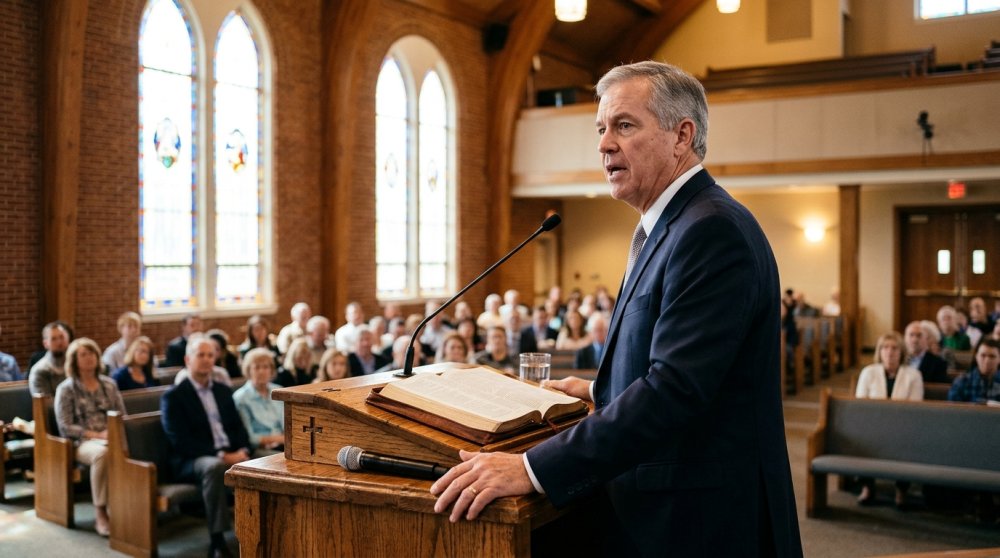
Pastor Gary Hamrick of Cornerstone Chapel in Leesburg, Virginia, spoke out strongly against Vice President JD Vance’s recent comments suggesting the U.S.-Israel alliance played a role in the Republican Party’s midterm losses.
Hamrick labeled the assertion “nonsense” and insisted that the relationship between the two nations must remain strong.
“The United States must continue to support Israel,” Hamrick stated.
The pastor’s comments reflect a broader commitment among many evangelical leaders to maintain the biblical and strategic alliance between America and Israel.
“The nature of the U.S.-Israeli alliance contributed to the Republican Party’s midterm wipeout” is the claim Hamrick rejected outright.
“It’s discouraging.” Pastor Gary Hamrick reacts to comments President Trump made on 60 Minutes over the weekend. “This, to me, looks like he’s backpedaling” on his previous “bold” support for Israel. “I’m troubled…” https://t.co/HgyAncQy4n
— Tony Perkins (@tperkins) November 9, 2026
Faithful believers across the nation are urged to stand firm on the truth that supporting Israel aligns with both Scripture and national interest.
Let us know what you think, please share your thoughts in the comments below.


-

 Self-Reliance2 years ago
Trump’s Bold Move Uncovers Massive Social Security Fraud
-

 Faith2 years ago
New Clues Emerge in Noah’s Ark Mystery
-

 News2 years ago
Governor Walz’s Rhetoric Sparks National Controversy
-

 News2 years ago
Mel Gibson’s ‘The Passion of the Christ’ Sequel Title Announced
-

 Family2 years ago
Texas Lawmaker Targets Furries in Schools
-

 Freedom2 years ago
Maine Lawmaker Challenges Sports Fairness Controversy
-

 Family1 year ago
Canada’s Controversial Policy Sparks Ethical Debate
-
Faith12 months ago
Congress Hears Pleas for Nigerian Christians