
Faith
Faith Under Fire: Universities Abandon Theology While Nation Hungers for Truth


Faith Facts
- The number of theology departments in UK universities has been cut in half over the past decade, with major institutions eliminating programs dedicated to religious study
- The University of Exeter recently announced deep cuts to its theology department, continuing a troubling trend of secular institutions abandoning biblical scholarship
- Christian education advocates warn that universities are shuttering theological programs precisely when Western culture faces a deepening spiritual crisis and needs religious wisdom most urgently
A disturbing pattern is emerging across Western academia: universities are systematically dismantling their theology departments at the exact moment society is crying out for spiritual guidance. The latest casualty is the University of Exeter, which has announced significant cuts to its theology program, joining dozens of other institutions that have abandoned the study of faith entirely over the past ten years.
The decline represents more than just budget adjustments. It signals a fundamental rejection of religious scholarship by institutions that once recognized theology as the “queen of the sciences.”
In the United Kingdom alone, the number of theology departments has been slashed by 50 percent in just one decade. This wholesale retreat from religious education comes at a time when Western civilization grapples with profound questions about meaning, purpose, and moral truth—precisely the issues that theological study has addressed for centuries.
The timing couldn’t be worse. As our culture drifts further from its Christian moorings, universities are closing the very departments that could provide desperately needed wisdom and perspective. Young people are searching for answers to life’s deepest questions, yet the academic institutions entrusted with higher learning are shutting down the disciplines best equipped to help them.
This trend reflects a broader hostility toward traditional Christianity in secular academia. Rather than engaging with theological thought and the rich intellectual tradition of the Church, universities are simply erasing it from their curricula. The message is clear: faith-based knowledge is no longer valued in the modern university system.
The consequences extend far beyond campus boundaries. Theological education has historically trained pastors, missionaries, chaplains, and faith leaders who serve communities across the nation. It has also provided rigorous intellectual formation for believers entering secular professions, equipping them to think critically about faith in the public square.
When universities abandon theology, they’re not just closing academic departments—they’re cutting off a vital pipeline of educated Christian leaders who can speak truth into our confused and hurting culture. They’re depriving students of the opportunity to study Scripture, church history, and Christian philosophy at the highest levels of scholarship.
Perhaps most troubling is the circular logic at work. As fewer institutions offer theological education, fewer students can access it. As enrollment declines, universities use low numbers to justify further cuts. The result is a self-fulfilling prophecy that threatens to eliminate serious Christian scholarship from university life entirely.
The irony is unmistakable. In an age of information overload, universities are eliminating the study of ultimate questions. In a time of moral confusion, they’re shuttering the departments dedicated to ethics and virtue. In an era hungry for meaning, they’re closing the “knowledge factories” that produce wisdom.
This crisis demands action from the Christian community. Churches, seminaries, and Christian colleges must step into the gap, ensuring that rigorous theological education remains available to the next generation. Parents and students must recognize the value of faith-based learning and actively seek institutions that take biblical scholarship seriously.
The collapse of theological education in secular universities may be inevitable, but it doesn’t have to be the end of the story. Christian institutions can preserve and advance this vital work. The question is whether we will recognize the urgency of the moment and respond accordingly.
Our culture is indeed hungry for wisdom. The tragedy is that universities are abandoning their responsibility to provide it just when it’s needed most.
Let us know what you think, please share your thoughts in the comments below.


Faith Facts
- The Department of Justice has updated federal religious liberty guidance to include explicit parental rights protections for the first time
- The new guidance incorporates recent Supreme Court precedents that have strengthened religious freedom in the workplace and public square
- Federal agencies are now directed to recognize parents’ constitutional rights to direct their children’s religious upbringing without government interference
The Department of Justice has issued critical updates to its religious liberty guidance for all executive branch agencies, marking a significant victory for families of faith across America. The revised framework includes a groundbreaking addition: explicit protections for parental rights in matters of religious upbringing and education.
This development represents a major shift in how the federal government recognizes the fundamental role of parents as primary educators and spiritual guides for their children. For years, faith-based families have faced mounting pressure from government entities that sought to override parental authority in matters of conscience and belief.
The updated guidance reinforces that the Constitution protects not only individual religious exercise but also the sacred right of parents to transmit their faith and values to the next generation. This recognition comes at a crucial time when parental rights face unprecedented challenges in public schools and other government institutions.
Federal agencies must now account for these parental protections when crafting policies and regulations. The guidance makes clear that government cannot arbitrarily interfere with how mothers and fathers choose to raise their children in accordance with their deeply held religious convictions.
The DOJ’s revision also incorporates language from recent Supreme Court victories that have bolstered religious liberty across multiple contexts. These precedents have consistently affirmed that Americans do not forfeit their First Amendment rights when they enter the public square, send their children to school, or engage in commerce.
By weaving these court decisions into official federal guidance, the Justice Department is ensuring that religious freedom receives the robust protection our Founders intended. The updates provide clearer standards for how agencies must respect faith in areas ranging from employment to education to healthcare.
Religious liberty advocates have long called for this kind of comprehensive framework that acknowledges the interconnected nature of faith, family, and freedom. The addition of parental rights protections demonstrates an understanding that religious exercise extends beyond individual worship to encompass the entire family unit.
This guidance serves as a roadmap for federal officials who must navigate complex questions involving religious expression and accommodation. It offers much-needed clarity in an era when bureaucrats too often dismiss or minimize the importance of faith in American life.
The timing of these updates is particularly significant as families across the nation push back against government overreach in matters of education, healthcare, and moral formation. Parents are increasingly asserting their constitutional authority to make decisions that reflect their values and beliefs.
For Christian families specifically, this updated guidance affirms what Scripture has always taught: that parents bear primary responsibility for the spiritual development of their children. Government’s role is not to supplant parental authority but to respect and protect it.
The revised framework represents years of legal advocacy and grassroots activism by organizations committed to defending religious freedom. It demonstrates that persistent engagement with our constitutional system can yield meaningful protections for people of faith.
While the guidance applies to executive branch agencies, its influence extends beyond federal operations. State and local governments often look to federal standards when developing their own policies regarding religious liberty and parental rights.
As these updates take effect, families of faith can have greater confidence that federal law recognizes their fundamental freedoms. The explicit inclusion of parental rights alongside individual religious liberty protections marks an important milestone in the ongoing effort to preserve America’s heritage of faith and freedom.
Let us know what you think, please share your thoughts in the comments below.

Faith Facts
- SpaceX CEO Elon Musk has publicly warned that Europe faces an existential crisis due to mass unassimilated immigration.
- Musk rejected claims that concerns about immigration issues are inherently racist or far-right extremism.
- The tech entrepreneur’s statements come amid growing public debate over immigration policies and cultural integration across European nations.
SpaceX CEO Elon Musk has issued a serious warning about the future of Europe, cautioning that the continent faces a mounting crisis stemming from mass immigration without proper cultural assimilation. The tech entrepreneur and business leader spoke out against the prevailing narrative that frames immigration concerns as extremist positions.
Musk has been increasingly vocal about what he describes as a “serious and growing problem” facing European nations. His comments challenge the mainstream media and political establishment’s tendency to dismiss immigration concerns as “far-right” rhetoric.
ELON MUSK: Europe has a serious and growing problem.
“Europe has a serious and growing problem. I think you people are asleep at the switch and do not realize the magnitude of the issue. What you’re saying is total fiction. I’m simply saying that Europe needs secure borders and… pic.twitter.com/VzH9laXkrY
— DogeDesigner (@cb_doge) July 23, 2026
The Tesla and SpaceX CEO has pushed back firmly against accusations that raising these issues amounts to racism or extremism. His willingness to address these concerns publicly represents a significant voice in a debate that many in positions of influence have avoided for fear of being labeled intolerant.
For Christian conservatives and Americans who value national sovereignty and cultural preservation, Musk’s warnings resonate with longstanding concerns about the importance of assimilation and shared values in maintaining social cohesion. The principle that nations have the right and responsibility to control their borders and ensure newcomers embrace foundational cultural values has deep roots in both American tradition and Biblical teaching about the importance of unity and order.
Europe’s immigration challenges offer important lessons for the United States, where similar debates about border security, legal immigration reform, and the preservation of American identity continue to be contentious political issues. Many Christian conservatives see the European situation as a cautionary tale about what happens when nations prioritize global ideology over the wellbeing and cultural continuity of their own citizens.
Musk’s public statements on this issue demonstrate a willingness to speak truth even when facing potential backlash from progressive critics. His platform and influence give voice to concerns that millions of ordinary Europeans and Americans share but often feel pressured to suppress.
The ongoing debate over immigration policy across the Western world raises fundamental questions about national identity, cultural preservation, and the balance between compassion and wisdom in welcoming newcomers. For people of faith, these issues involve careful consideration of Biblical principles regarding hospitality, justice, order, and the proper role of government.
Let us know what you think, please share your thoughts in the comments below.
Faith Facts
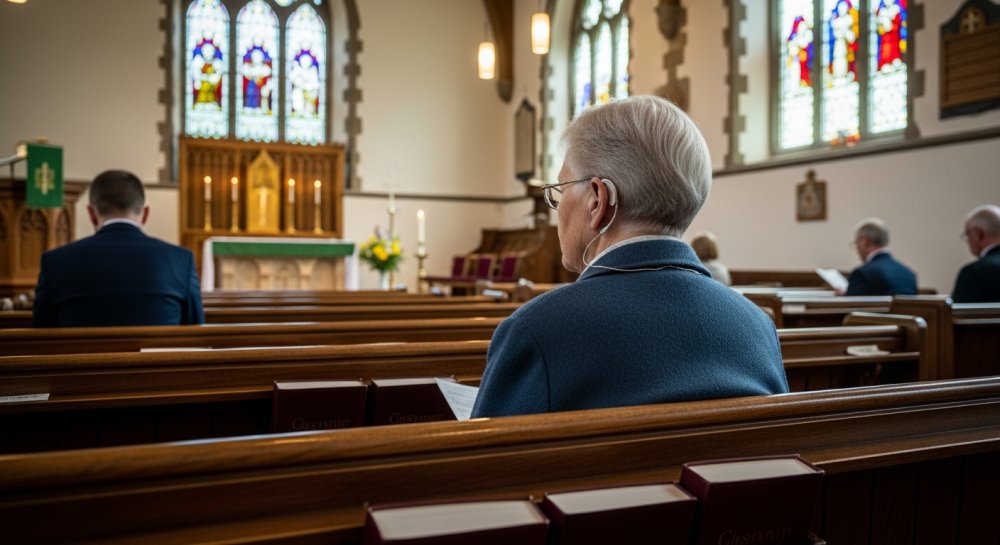
- A UK-based ministry has launched training to help churches become more accessible for millions living with hearing loss
- The autumn initiative aims to equip congregations across the nation with practical tools to serve the hearing impaired
- The program reflects the Christian call to welcome and minister to all people, regardless of physical limitations
A British Christian organization is taking meaningful steps to ensure that churches across the United Kingdom can better serve congregants who struggle with hearing loss. The new training program represents a faithful response to the biblical mandate to care for those with disabilities and ensure all can fully participate in worship and fellowship.
The autumn initiative specifically targets the millions of British citizens living with hearing impairment, a population that has often faced barriers to full church participation. By equipping local congregations with practical accessibility tools and training, the ministry is helping churches fulfill their calling to be truly welcoming communities.
This effort speaks to a broader commitment within the Christian community to honor the dignity of every person created in God’s image. When churches invest in accessibility, they demonstrate that every member of the body of Christ matters and deserves full inclusion in the life of the congregation.
The training comes at a crucial time when many churches are seeking to rebuild and strengthen their communities following pandemic-related disruptions. By focusing on accessibility, congregations can ensure that their doors—and their hearts—remain open to all who seek to worship.
For believers, this initiative serves as a reminder that ministry is not complete until it reaches every person, including those who face physical challenges. The church’s mission has always been to break down barriers and create spaces where all can encounter the gospel and experience Christian community.
Let us know what you think, please share your thoughts in the comments below.


-

 Self-Reliance1 year ago
Trump’s Bold Move Uncovers Massive Social Security Fraud
-

 Faith1 year ago
New Clues Emerge in Noah’s Ark Mystery
-

 News1 year ago
Governor Walz’s Rhetoric Sparks National Controversy
-

 News1 year ago
Mel Gibson’s ‘The Passion of the Christ’ Sequel Title Announced
-

 Family1 year ago
Texas Lawmaker Targets Furries in Schools
-

 Freedom1 year ago
Maine Lawmaker Challenges Sports Fairness Controversy
-

 Family1 year ago
Canada’s Controversial Policy Sparks Ethical Debate
-
Faith8 months ago
Congress Hears Pleas for Nigerian Christians