
News
Conservative Disappointment in Justice Barrett May Be Premature

Faith Facts
- Justice Amy Coney Barrett, appointed by President Trump, has faced criticism from some conservatives for decisions perceived as liberal
- A detailed analysis of Barrett’s Supreme Court record reveals a strongly conservative voting pattern aligned with originalist principles
- Barrett’s judicial philosophy emphasizes textualism and restraint, which sometimes produces outcomes that disappoint political activists seeking specific results
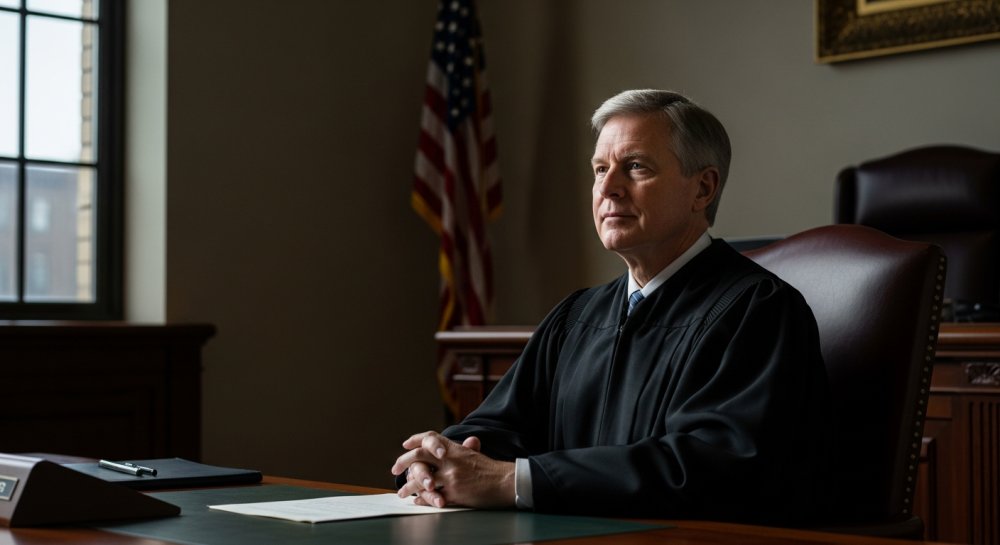
Justice Amy Coney Barrett has drawn fire from some corners of the conservative movement, with critics labeling her a “liberal justice.” But does her actual record on the Supreme Court warrant such harsh judgment? A closer examination suggests the answer is no.
Since joining the nation’s highest court, Justice Barrett has consistently demonstrated a commitment to originalist interpretation and constitutional restraint. Her voting record aligns closely with other conservative justices, and her written opinions reflect a dedication to the text and original meaning of the Constitution—the very approach conservatives have championed for decades.
The frustration some feel toward Justice Barrett often stems from cases where she has applied the law faithfully, even when the outcome doesn’t align with desired political results. This is precisely what judicial independence looks like. A judge committed to the rule of law will sometimes reach conclusions that disappoint allies, not because of ideological drift, but because of fidelity to legal principles over political preferences.
Barrett’s approach reflects the judicial philosophy articulated by Justice Antonin Scalia, whom she clerked for and has cited as a formative influence. Scalia himself occasionally ruled in ways that frustrated conservatives when his originalist methodology led him there. True judicial conservatism means interpreting the Constitution as written, not rewriting it to achieve preferred outcomes—a practice conservatives rightly criticize when liberal justices engage in it.
Those who expected Justice Barrett to be a reliable vote for conservative political victories may have misunderstood the nature of constitutional judging. The role of a Supreme Court justice is not to advance a political agenda, but to faithfully interpret the law. When conservatives built the legal movement that led to Barrett’s appointment, the goal was to restore constitutional governance, not to create a mirror image of liberal judicial activism.
Barrett’s record includes strong conservative decisions on religious liberty, Second Amendment rights, and limits on federal power. She has shown herself to be exactly what President Trump promised when he nominated her: a jurist committed to the original meaning of the Constitution and the proper role of the judiciary.
The criticism Barrett faces may reflect unrealistic expectations rather than genuine cause for concern. Building a judiciary committed to constitutional principles requires patience and trust that judges will follow the law wherever it leads. That’s the difference between judicial conservatism and results-oriented judging.
For Christians and conservatives who value the rule of law, Justice Barrett’s commitment to textualism and originalism should be recognized as a strength, not a weakness. Her approach honors the Constitution as written and respects the proper separation of powers—principles that ultimately protect religious freedom and limit government overreach.
Let us know what you think, please share your thoughts in the comments below.

Faith Facts
- The U.S. House of Representatives passed legislation threatening to suspend all aid to Nigeria over ongoing Christian killings
- The bill demands measurable progress in protecting Christians from religiously motivated violence in the West African nation
- This represents a potential major shift in U.S.-Nigeria relations, with American lawmakers taking a firm stand on Christian persecution
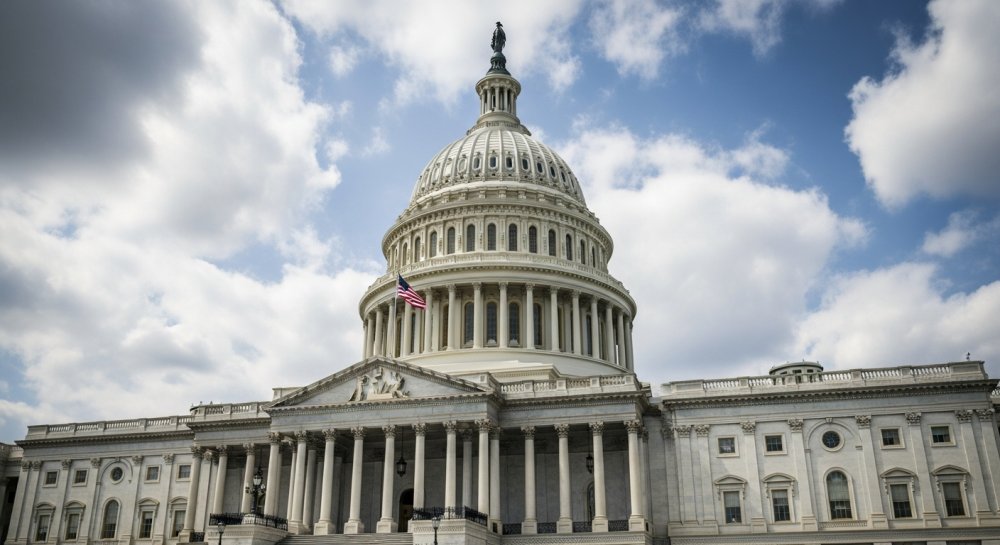
The United States House of Representatives has taken a bold stand for persecuted believers worldwide by approving legislation that puts Nigeria’s foreign aid on the line. The bill sends a clear message: protect Christian communities or lose American support.
This historic vote could suspend all U.S. assistance to Nigeria unless the West African nation demonstrates concrete, measurable progress in protecting Christians from religiously motivated violence. For years, faithful communities in Nigeria have faced brutal attacks, kidnappings, and systematic persecution while the international community largely remained silent.
The legislation represents one of the most consequential shifts in U.S.-Nigeria relations in years, signaling that America will no longer turn a blind eye to the persecution of Christians abroad. Nigerian believers have endured unimaginable suffering, with entire villages destroyed and thousands killed in attacks often tied to Islamic extremist groups and militant herdsmen.
This congressional action reflects a growing determination among American lawmakers to use foreign aid as leverage to protect religious freedom. The bill requires Nigeria to show tangible improvements in safeguarding Christian lives and prosecuting those responsible for faith-based violence.
For Christian conservatives who have long advocated for stronger U.S. action against global Christian persecution, this vote represents a significant victory. It demonstrates that America’s values and commitment to religious liberty can still guide our foreign policy decisions.
The legislation now moves forward in the legislative process, where it will face further scrutiny. However, the House vote sends an unmistakable signal that the safety of Nigerian Christians is a priority for the United States Congress.
Nigeria has become one of the deadliest places in the world to be a Christian, with estimates suggesting thousands have been killed in recent years. The violence has displaced countless families and devastated communities across the nation’s Middle Belt and northern regions.
Let us know what you think, please share your thoughts in the comments below.
Faith Facts
- A Pakistani court sentenced one Muslim man to 10 years in prison for his role in the August 2023 attacks on Christian communities in Jaranwala, marking the first conviction in this case.
- Thirteen other defendants were acquitted due to flawed police investigations, highlighting persistent challenges in protecting religious minorities in Pakistan.
- The Jaranwala attacks saw violent Muslim mobs destroy churches and Christian homes after false blasphemy accusations were made against local Christians.
A Pakistani court delivered its first conviction in connection with the brutal anti-Christian violence that rocked Jaranwala in August 2023, sentencing one Muslim man to 10 years in prison. The court on Monday handed down the sentence while simultaneously acquitting 13 other defendants, a decision that underscores the ongoing difficulties Pakistani Christians face in securing justice.
The acquittals came as a direct result of flawed police investigations that failed to properly document evidence and identify perpetrators. Sources familiar with the case indicate that investigative shortcomings have plagued efforts to hold accountable those responsible for the widespread destruction of Christian property and places of worship.
The August 2023 Jaranwala attacks represented one of the most severe instances of religious persecution against Pakistan’s Christian minority in recent years. Violent mobs, incited by false blasphemy accusations, descended on Christian neighborhoods with devastating force.
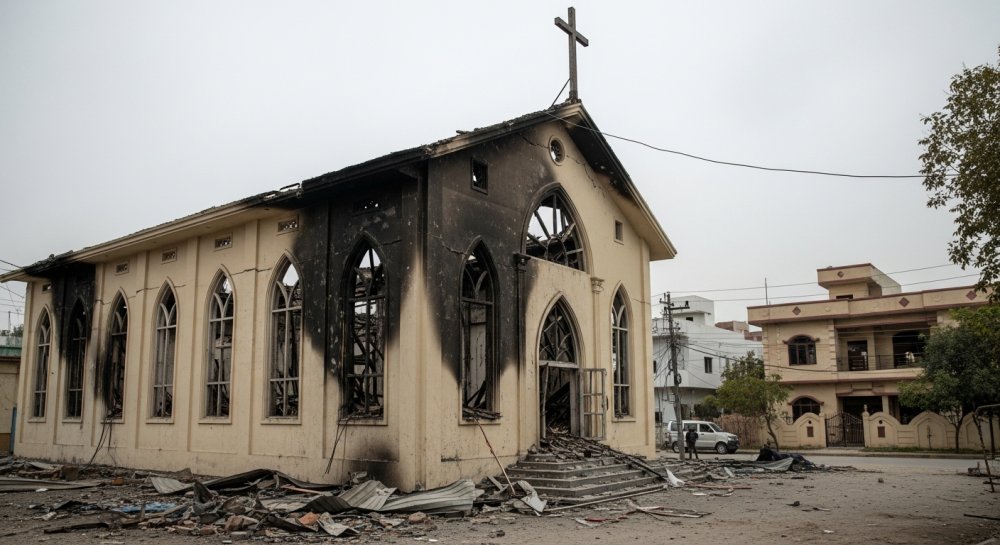
Churches were burned, homes were ransacked, and Christian families were forced to flee for their lives as law enforcement struggled to contain the violence. The attacks sent shockwaves through Pakistan’s already vulnerable Christian community, which comprises less than two percent of the nation’s population.
Pakistan’s blasphemy laws continue to serve as a weapon against religious minorities, with mere accusations often triggering mob violence before any judicial process can unfold. Christians in Pakistan live under constant threat of false accusations that can result in vigilante justice, property destruction, and even death.
While this first conviction represents a small step toward accountability, the acquittal of 13 defendants highlights the systemic challenges facing Christians seeking justice in Pakistan’s legal system. Advocacy groups have long called for reforms to protect religious minorities and ensure proper investigation of crimes committed against them.
The international community has repeatedly expressed concern over Pakistan’s treatment of religious minorities, particularly the use of blasphemy laws to target Christians and other non-Muslim populations. Religious freedom advocates continue to pressure Pakistani authorities to address the climate of impunity that allows such violence to occur.
Let us know what you think, please share your thoughts in the comments below.
Faith Facts
- Flash floods struck Kurung Kumey district in Arunachal Pradesh, India, washing away a Catholic church and devastating multiple Christian congregations.
- The remote border town lost all road connectivity to district headquarters, leaving believers and residents stranded.
- The flooding highlights ongoing challenges Christians face in India’s remote regions where infrastructure remains vulnerable and support limited.
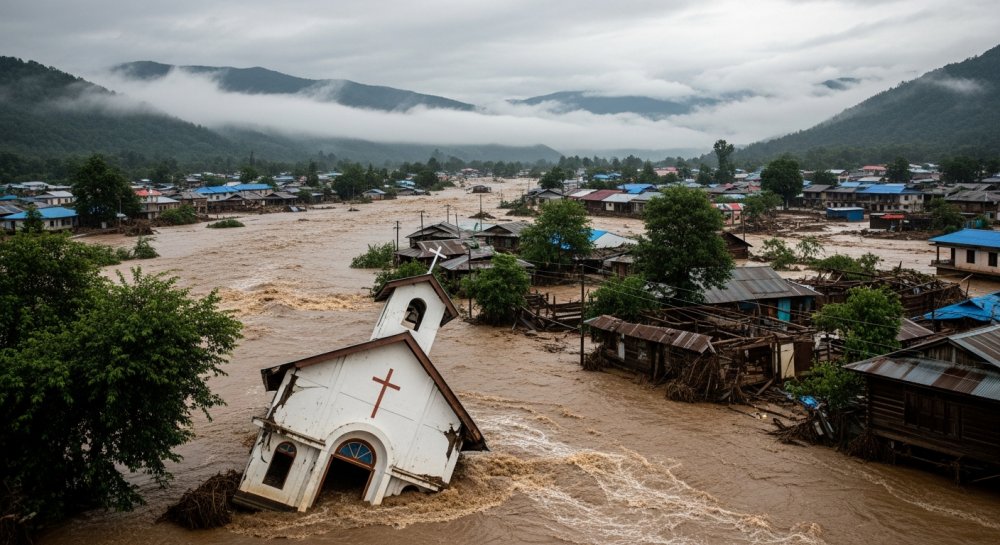
A devastating flood struck the Kurung Kumey district of Arunachal Pradesh, India, on Monday, leaving a trail of destruction in its wake. The flash floods proved particularly catastrophic for the Christian community in this remote border region.
Among the structures lost to the raging waters was an entire Catholic church, swept away by the torrential force of the flood. Multiple other churches throughout the district sustained significant damage, representing a severe blow to the faithful in an area where Christian congregations often serve as vital centers of community life.
The flooding didn’t just claim houses of worship—it severed the lifeline connecting this remote town to the outside world. Road connectivity to the district headquarters was completely cut off, isolating residents and making rescue and relief efforts extraordinarily difficult.
Arunachal Pradesh sits in India’s far northeastern corner, bordering China, Bhutan, and Myanmar. The region’s mountainous terrain and heavy monsoon patterns make it particularly vulnerable to flash flooding, but Monday’s deluge proved exceptionally destructive.
For Christians in this border district, the loss extends beyond physical structures. Churches in remote Indian regions often function as more than places of worship—they serve as educational centers, community gathering points, and anchors of social support in areas where government services remain limited.
The Christian community in India faces growing challenges, from increasing religious persecution in some areas to the practical difficulties of maintaining congregations in geographically isolated regions. Natural disasters like this flood compound those existing struggles, destroying years of ministry investment in moments.
As floodwaters recede, the work of assessment and rebuilding will begin. For believers in Kurung Kumey, that process will require not just reconstruction of physical buildings, but restoration of community infrastructure that serves the spiritual and practical needs of the faithful in one of India’s most remote corners.
The situation calls attention to the vulnerability of Christian communities in India’s border regions, where geographic isolation, limited infrastructure, and environmental hazards create ongoing challenges for those seeking to maintain their faith and way of life.
Let us know what you think, please share your thoughts in the comments below.


-

 Self-Reliance1 year ago
Trump’s Bold Move Uncovers Massive Social Security Fraud
-

 Faith1 year ago
New Clues Emerge in Noah’s Ark Mystery
-

 News1 year ago
Governor Walz’s Rhetoric Sparks National Controversy
-

 News1 year ago
Mel Gibson’s ‘The Passion of the Christ’ Sequel Title Announced
-

 Family1 year ago
Texas Lawmaker Targets Furries in Schools
-

 Freedom1 year ago
Maine Lawmaker Challenges Sports Fairness Controversy
-

 Family1 year ago
Canada’s Controversial Policy Sparks Ethical Debate
-
Faith8 months ago
Congress Hears Pleas for Nigerian Christians