Faith
The Spiritual Cost of Political Anger Few Christians Recognize
Faith Facts
- Christians are called to examine whether their political engagement reflects Christ-like character or worldly anger that can damage Gospel witness
- Scripture warns believers that unchecked rage and divisive speech can harden hearts against the message of salvation
- The question facing American Christians today is whether their words and actions in the political sphere adorn or obscure the Gospel they profess
In an era of unprecedented political division, American Christians face a critical question that goes far deeper than policy debates or party allegiances. The issue at hand is spiritual, not merely political: Are believers allowing righteous conviction to cross the line into sinful rage that undermines their witness for Christ?
The Bible is clear about the destructive power of uncontrolled anger. While righteous indignation has its place—Jesus Himself overturned tables in the temple—Scripture repeatedly warns against the kind of consuming rage that poisons the soul and damages relationships.
James 1:20 reminds us that “human anger does not produce the righteousness that God desires.” Ephesians 4:31 commands believers to “get rid of all bitterness, rage and anger, brawling and slander, along with every form of malice.”
The challenge for Christians engaged in the political arena is distinguishing between standing firm on biblical principles and descending into the kind of hostile rhetoric that characterizes our fallen world. When believers adopt the harsh, contemptuous tone prevalent in contemporary political discourse, they risk becoming indistinguishable from those who don’t claim Christ.
This isn’t a call to silence or political disengagement. Christians have both a right and a responsibility to participate in civic life, to advocate for policies that reflect biblical values, and to defend the vulnerable. The issue is how we engage—whether our methods honor God and draw others to Him, or whether they create barriers to the Gospel.
Consider the impact on the watching world. When unbelievers see Christians consumed by political fury, attacking opponents with the same venom as secular activists, what message does that send about the transforming power of the Gospel? Does it demonstrate the peace that passes understanding, the love that covers a multitude of sins, or the gentleness that can win over even the hostile?
The apostle Peter instructed believers to “always be prepared to give an answer to everyone who asks you to give the reason for the hope that you have. But do this with gentleness and respect” (1 Peter 3:15). This standard doesn’t change when the conversation turns to politics.
American Christians must recognize that our ultimate citizenship is in heaven, not in any political party or earthly nation. While we work to influence our society for good, we must never allow political identity to overshadow our identity in Christ. When political allegiance becomes an idol, it distorts our priorities and corrupts our witness.
The solution begins with honest self-examination. Believers must regularly ask themselves whether their political engagement is characterized by the fruit of the Spirit—love, joy, peace, patience, kindness, goodness, faithfulness, gentleness, and self-control—or by the works of the flesh, which include “hatred, discord, jealousy, fits of rage, selfish ambition, dissensions, factions” (Galatians 5:19-23).
This doesn’t mean abandoning strongly held convictions or failing to call out evil when we see it. It means doing so in a manner that reflects Christ’s character rather than the world’s combativeness. It means checking our motives, moderating our tone, and remembering that our primary mission is making disciples, not winning political arguments.
The stakes couldn’t be higher. Every harsh word spoken in the name of political truth but absent Christian love potentially pushes someone further from the Gospel. Every social media post dripping with contempt for political opponents may confirm an unbeliever’s assumption that Christianity is just another tribal identity rather than a transforming relationship with the living God.
Our nation desperately needs Christians who can engage politically while maintaining spiritual integrity—believers who advocate passionately for truth and justice without sacrificing the gentleness and humility that mark authentic faith. The question each Christian must answer is whether their political engagement adorns the Gospel or obscures it, whether their words and actions draw people to Christ or drive them away.
Political issues matter, and Christians should care deeply about the direction of their country. But nothing—not even the most important political battle—is worth compromising our witness or hardening hearts against the Gospel message. The watching world needs to see Christians whose political engagement flows from spiritual conviction rather than worldly rage, whose hope rests in God rather than in political outcomes, and whose love for enemies is as real as their passion for justice.
Let us know what you think, please share your thoughts in the comments below.
Faith
What Christian Zionism Gets Wrong About Biblical Holy War
Faith Facts
- The Hebrew scriptures must be understood through the lens of Christ’s advent, death, and resurrection
- Christian Zionist theology often misapplies Old Testament passages by removing them from their New Testament context
- Jesus fundamentally transformed the narrative of holy war and God’s covenant people
The Hebrew scriptures carry profound truth for believers, but they can be dangerously weaponized when passages are lifted out of the context of the whole Christian Bible. For Christians, the advent, death, and resurrection of Jesus Christ changes the entire narrative — transforming our understanding of God’s covenant, His people, and His purposes on earth.
This theological concern has become increasingly urgent as Christian Zionism influences American foreign policy and shapes Christian attitudes toward the ongoing conflict in Gaza. Many well-meaning believers cite Old Testament promises to Israel as justification for unconditional support of modern Israeli military actions, but this approach overlooks the radical shift Jesus brought to our understanding of Scripture.
The Christian faith rests on the conviction that Jesus is the fulfillment of Old Testament prophecy and promise. He didn’t abolish the Law and the Prophets, but fulfilled them in His own person. This means we cannot simply transpose ancient promises made to Old Testament Israel onto the modern nation-state established in 1948.
When Jesus came, He established a new covenant written on hearts rather than stone tablets. He redefined God’s people not by ethnicity or geography, but by faith in Him. As the Apostle Paul wrote, there is neither Jew nor Greek in Christ — all believers are Abraham’s seed and heirs according to the promise.
The concept of holy war undergoes dramatic transformation in the New Testament. Jesus explicitly rejected the way of the sword, teaching His followers to love their enemies and pray for those who persecute them. When Peter drew his sword to defend Jesus, Christ rebuked him and healed the wounded servant. Our weapons are not carnal but spiritual.
This doesn’t mean Christians should be indifferent to Israel’s security or the Jewish people’s historical suffering. It does mean we cannot baptize modern military campaigns with Old Testament conquest language while ignoring Christ’s teachings on peace, mercy, and enemy love.
The Gaza conflict presents heartbreaking complexity. Innocent lives have been lost on both sides. Hamas committed horrific acts of terrorism. Palestinian civilians face devastating humanitarian conditions. Israeli families live under constant threat. But labeling any side’s military action as “God’s will” based on selective Old Testament readings distorts the gospel.
Christian Zionism’s central error is reading the Bible as though the cross never happened. It treats Old Testament Israel and modern Israel as identical without accounting for the massive theological shift Jesus inaugurated. It elevates ethnic Israel over the international, multiethnic body of Christ that is now God’s primary covenant people.
True biblical interpretation requires reading the Old Testament through the lens of Christ. Every promise, every prophecy, every covenant finds its ultimate meaning in Him. He is the true Israel, the faithful Son who succeeded where national Israel failed. All who are in Christ share in that inheritance.
This perspective doesn’t diminish God’s ongoing care for Jewish people. Romans 9-11 makes clear that God has not rejected His ancient people, and we should pray for their salvation and flourishing. But it does mean conflating biblical Israel with modern geopolitical Israel is theologically confused.
The myth of Christian holy war has caused immense damage throughout church history — from the Crusades to colonial conquests justified by “Christian civilization.” We must not repeat those errors by baptizing contemporary conflicts with biblical language they don’t warrant.
Christians should be peacemakers, advocates for the vulnerable, voices for justice and mercy on all sides. We should support Israel’s right to exist and defend itself while also grieving Palestinian suffering and opposing actions that violate human dignity. We can hold both concerns simultaneously without contradiction.
Most importantly, we must let Jesus be Lord over our politics. When Scripture seems to endorse violence, conquest, or ethnic favoritism, we must ask how Christ fulfilled, transformed, or superseded those passages. We cannot cherry-pick Old Testament verses that suit our political preferences while ignoring the Prince of Peace who calls us to a different way.
The Bible is not a weapon to be wielded in service of nationalistic agendas. It is the living Word that reveals Jesus Christ, who broke down the dividing wall of hostility and created one new humanity in Himself. That is the gospel truth that should shape Christian engagement with every conflict, including the tragedy unfolding in the Holy Land.
Let us know what you think, please share your thoughts in the comments below.
Faith
Are We the Only Christians Going to Heaven?
Faith Facts
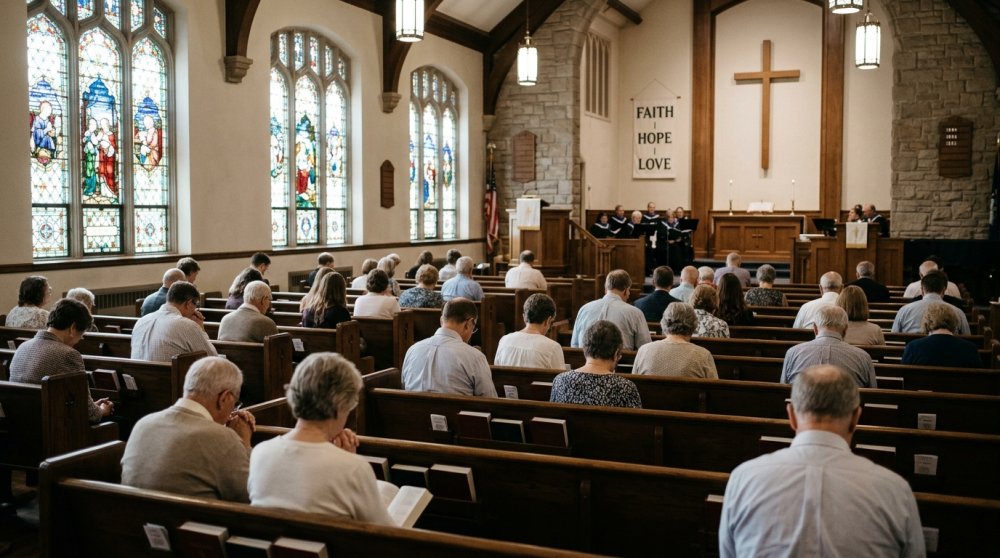
- Early Restoration Movement Churches of Christ embraced the motto “Christians only, but not the only Christians,” seeking to follow Jesus alone while acknowledging sincere believers across denominations
- A survey of 139 church leaders and members reveals a significant divide between those who maintain an exclusivist view and those who recognize Christians in other faith communities
- Black Churches of Christ historically used the slogan to affirm spiritual legitimacy amid racial segregation, focusing on dignity rather than doctrinal boundaries
A familiar accusation echoes through many Churches of Christ today: “You think you’re the only ones going to heaven.”
Yet the early 19th century American Restoration Movement held a radically different vision. “Christians only, but not the only Christians” was their rallying cry—a commitment to follow Jesus alone without man-made creeds, while humbly acknowledging sincere disagreements within the Body of Christ.
An informal survey of 139 church leaders and members from 30 states reveals that while most are familiar with this historic saying, the church community remains deeply divided over its meaning and application today.
“I seek to be simply a Christian, wearing Christ’s name and submitting to His authority,” said Bill Robinson, minister for the Upper West Manhattan Church of Christ in New York.
Steve Cloer, director of the Harding School of Theology’s Center for Church and City Engagement in Memphis, Tenn., said the phrase “encapsulates the heart of the Restoration.” “We seek to be Christians — nothing more, nothing less. And yet, we acknowledge that we do not have everything figured out either.”
“We seek to be Christians — nothing more, nothing less. And yet, we acknowledge that we do not have everything figured out either.”
But not everyone remembers this inclusive vision. Some grew up in a more exclusionary tradition.
“Growing up, being a Church of Christ member was more of a very exclusive faith community — that we were the only ones who ever had a chance of being admitted to heaven,” recalled Bruce Robins, a deacon of the Laurel Church of Christ in Maryland who was raised in a family of Church of Christ preachers in Searcy, Ark.
Heath Cary, a deacon of the Maryland Heights Church of Christ in Missouri, also remembered a more exclusionary mindset growing up in Churches of Christ in Kansas, Oklahoma and Texas. Because of that, Cary said, he wants to distance himself from baggage that includes “a desire (at least stereotypically) to legalistically define … who is in and who is out.”
For Jay Plank, minister for the RiverWalk Church of Christ in Wichita, Kan., experience with other believers has supported the concept of being “not the only Christians.”
“I’ve met too many people not of the Restoration stripe who live and breathe the love of Christ,” Plank said. “If only Restoration folks are saved,” he added, “what about all who lived between A.D. 33 and the early 1800s? Are they all lost? … We have no exclusive claim to eternal life, and dare not be so presumptuous as to believe we can usurp God by saying who is and is not a child of God.”
Meanwhile, Black Churches of Christ have viewed the slogan through an entirely different lens, according to Aaron Sayles, a member of the Newport News Church of Christ in Virginia.
“The slogan was about survival and dignity, not doctrinal boundary drawing,” he said. “White Restoration leaders used the slogan to fight denominational creeds. Black Christians used it to fight exclusion, segregation and racial humiliation. So, for Black Churches of Christ, the slogan meant, ‘We are Christians, even if white Christians refuse to treat us like brothers and sisters.’ It was a declaration of spiritual legitimacy in a world that denied their humanity.”
Criticisms of the Slogan
While the idea of avoiding exclusivist attitudes resonates with many members of Churches of Christ, some also cautioned against endorsing error or denominationalism.
“I do not claim to be the final judge of every soul, because the Lord knows those who are His,” said Robinson, the Manhattan minister. “But I do not identify with any use of the phrase that either has an ecumenical intent to fellowship those who practice error or weakens the necessity of obeying the Gospel, abiding in Christ’s Word, or honoring the one body, one faith and one baptism revealed in Scripture.”
“I also think that ecumenism has crept in,” concurred Connie Stinnett, a member of the Grace Point Church of Christ in Jonesboro, Ark., who grew up in a Methodist church. “And I’m personally not comfortable saying that, basically, anything goes. I do believe that God has made it clear what He expects, particularly regarding salvation.”
Some respondents challenged part or all of the slogan entirely.
“Christians are only in the church of Christ,” argued Samuell Pounds, minister for the Hilltop Church of Christ in Winter Haven, Fla. “The Lord does not have children in another body. They are plants, which the Lord did not plant — unauthorized religious bodies or groups,” he said of denominations.
Mike Stress, a member of the River Road Church of Christ in New Port Richey, Fla., also disagreed with the “not the only Christians” aspect.
“Anytime someone identifies what ‘kind’ of Christian they are (Baptist, Methodist, Catholic, etc.), it indicates to me that they are not a true Christian because they are saying that they place their trust in what a person said over what Christ said,” Stress wrote. “I studied my way out of a denominational church,” he added.
J.D. Williams, a retired preacher in Kannapolis, N.C., was also raised in a denominational Missionary Baptist church. He warned against the phrase: “Basically, it says, ‘Although you are in a denomination, I believe you are a Christian like me!’ How can you teach anyone the truth when you are saying they don’t need it?”
“Basically, it says, ‘Although you are in a denomination, I believe you are a Christian like me!’ How can you teach anyone the truth when you are saying they don’t need it?”
Others had a very different objection to the slogan, concerned that it may inadvertently encourage division.
“I think the ‘Christians only’ part ends up being self-defeating,” said Dominic Venuso, minister for Rochelle Church of Christ in Illinois. “It essentially is a slogan for a group which is saying, ‘We are Christians only.’ But who are ‘we’? As a slogan, it ends up reinforcing a sectarian group identity.”
“I don’t think it’s possible to be a ‘Christian only’ in the strictest sense,” opined Clay McFerrin, a member of the Chisholm Hills Church of Christ in Florence, Ala. “Even without doctrinal differences, an individual’s Christian identity and practice are almost inevitably influenced by their gender, nationality, ethnicity, language, socioeconomic status and/or politics.”
The slogan “has become the very thing it tried to fight against,” added Rich Gould, who preaches for the Riverside Church of Christ in North Augusta, S.C. “It is now used especially by some in the Churches of Christ to say that if you have a denominational name on the sign of your building then you are not a Christian in the first place. … We must understand that if we are asking for everyone to believe everything the exact same way, then we are asking for uniformity, not unity.”
For James Koenig, an elder of the Northside Church of Christ in Temple, Texas, the slogan is effectively a creed itself.
“Our guiding principle is the Gospel, not a man-made cliche or mantra,” the elder said. “If this phrase is the church’s guiding principle, then the bigger message of Christ’s salvation is being missed.”
Cooperation or Condemnation?
Most of the respondents believed the average church member is unfamiliar with the slogan — and with Restoration Movement history generally. When it comes to the idea behind the phrase, Churches of Christ seem to be split.
“We have in place a divide between what I call the Conservative Mainstream Churches of Christ and the Moderate Mainstream Churches of Christ,” said Leonard Allen, dean of the Bible college at Lipscomb University in Nashville, Tenn. “The Conservative stream … tends to hold that there are not ‘Christians in the sects’ (denominations). The Moderate stream tends to hold that there are.”
The more exclusivist view, he added, became dominant among Churches of Christ as they separated from the Disciples of Christ in the late 19th century.
“I have seen tension in two ways,” said Steve Cloer. “One is that the movement at times has crystallized, and we have thought that ‘we have figured things out’ and we ‘are the only ones’ faithful. On the other side, we have become denominational in our thinking, where we are simply ‘Church of Christ,’ and we acknowledge that we are simply another brand among others. I think it is important to navigate both of these cautiously.”
At the same time, several felt the acceptance of Christians among other groups has increased in recent years.
“My generation may be the last one that still remembers the sectarian attitude that church of Christ members were the only ‘true’ Christians,” said Kyle Heffley, an elder of the Southside Church of Christ in Rogers, Ark. “However, I also think that attitude was already dying then and has almost completely died today. As it should.”
The Greenville Oaks Church of Christ in Allen, Texas, teaches that belonging to a Church of Christ “is not a test for faithfulness to God, dependence on Jesus and living with the Holy Spirit,” said member Mike Stoniecki.
Many respondents also expressed an openness to cooperation with groups outside Churches of Christ — particularly for benevolence and community activities.
At the Walled Lake Church of Christ in Michigan, “our benevolence program collaborates with Jewish, Catholic, Lutheran and community organizations to serve the community,” said elder Roger Woods. “Let the Bible speak and do so with love, and bridges will be built that will ultimately plant seeds that will grow,” he added.
Tim Tripp, senior minister for the West Side Church of Christ in Russellville, Ark., offered an especially conciliatory approach.
“If they believe that Jesus is the son of God and have faith in his name, I generally consider them to be brothers/sisters in Christ and on the mission of Christ,” Tripp wrote. “I seek to build relationships with them and partner with them in activities where we both can participate in good conscience.”
But most respondents were equally wary of cooperating with denominations in a way that could be seen as supportive of doctrines they disagree with.
Martin Pyle, who ministers for the Riverwood Church of Christ in Nashville, Tenn., said his congregation will “gladly engage” with denominational churches in activities that don’t involve worship — such as a homeless ministry or an Easter egg hunt.
“We cooperate to the extent possible without compromising our core identity/doctrines,” Pyle said. “Would we join with a Muslim congregation for shared prayer? No. Would we cooperate in picking up trash in our community? Yes. Would we cooperate with a local Baptist church in a prayer service? Yes.”
“I don’t believe we can cooperate in areas in which we would be teaching the Bible,” echoed Kenneth Mills, a member of the College Church of Christ in Searcy, Ark. “I believe we need to be respectful and cautious.”
“There are doctrinal differences within our congregation. … If getting everything right were the basis of our fellowship, there would be none.”
For Rob Sparks, minister for the Fernvale Church of Christ in Tennessee, being “not the only Christians” is more about having the humility to recognize that no one is a perfect follower of Christ.
“I mean, there are doctrinal differences within our congregation, and we cooperate internally. Why would that stop at the doors of our church?” he asked. “When we disagree, we disagree as sisters and brothers in Christ, not as Christians and non-Christians. … If getting everything right were the basis of our fellowship, there would be none. Hence, the importance of the Restoration Movement’s call to move toward Jesus wherever we start from.”
Let us know what you think, please share your thoughts in the comments below.

Faith
When Secular Music Moves Your Soul: Is God Still There?
Faith Facts
- Theologian Michael Tang explores whether God can work through secular music and non-Christian artistic expressions
- The debate centers on common grace versus sacred worship and how Christians should engage with popular culture
- Understanding God’s presence in all creation may reshape how believers experience art, music, and cultural participation
For generations, Christians have grappled with a fundamental question about music and worship: Does a song need explicit Christian content for God to use it in our lives? Theologian Michael Tang tackles this challenging question, offering insights that may reshape how believers think about the music they encounter daily.
The question strikes at the heart of how Christians engage with culture. Many believers have wondered whether the emotional response they feel at a secular concert or while listening to classical music is somehow less spiritual than what they experience during Sunday worship. This distinction has created unnecessary divisions in how Christians understand God’s work in the world.
Tang’s perspective centers on the theological concept of common grace—the idea that God bestows blessings on all humanity, not just believers. This doctrine, rooted in Reformed theology, suggests that truth, beauty, and goodness can be found throughout creation, even in works produced by those who don’t acknowledge Christ. The rain falls on the just and unjust alike, and so too might divine inspiration touch artists across the spectrum of faith.
The implications are significant for Christian families navigating modern culture. If God can work through secular music, it doesn’t mean all music is equally beneficial or that discernment becomes unnecessary. Rather, it calls believers to develop mature wisdom in recognizing truth and beauty wherever they appear, while still maintaining clear boundaries about what edifies the soul and what corrupts it.
This framework helps explain why even non-Christians can create music that moves us toward higher things—love, sacrifice, justice, beauty. These universal themes resonate because they reflect God’s imprint on creation itself. A symphony that evokes wonder at the universe’s complexity, a folk song about sacrificial love, or even a pop anthem about perseverance can all point beyond themselves to transcendent realities.
The distinction between worship and cultural engagement remains important. Music specifically created for corporate worship serves a unique function in the life of the church—it’s designed to direct our hearts explicitly toward God, to teach doctrine, and to unite believers in common praise. This doesn’t diminish other music’s value; it simply recognizes different purposes for different contexts.
For Christian parents, this understanding provides helpful guidance. Rather than creating a completely segregated musical world for their children, they can teach discernment—helping young people recognize beauty and truth while also identifying messages that contradict biblical values. This approach prepares believers to be salt and light in culture rather than completely withdrawn from it.
The challenge lies in maintaining this balance. Some Christians err toward cultural isolation, fearful that any engagement with secular art will compromise their faith. Others embrace culture so completely that they lose the ability to critique it from a biblical perspective. Tang’s framework offers a middle path—engaging thoughtfully while maintaining clear convictions.
Music’s power to move us emotionally isn’t inherently spiritual or unspiritual—it’s part of how God designed humans. We’re created to respond to melody, harmony, rhythm, and lyric. These responses become spiritual when they turn our hearts toward truth, beauty, and ultimately toward God himself, whether that happens in a sanctuary or a concert hall.
This perspective also reminds Christians that God is bigger than our categories. He works through unexpected means, speaking truth through unlikely sources, and pursuing humanity with relentless creativity. Recognizing His common grace in culture doesn’t diminish the special grace found in Christ—it magnifies God’s sovereignty over all creation.
The conversation ultimately calls believers back to Scripture’s teaching about God’s nature. He is the source of all truth and beauty. Every good gift comes from above. When we encounter excellence in art, music, or any human endeavor, we’re witnessing the reflection of our Creator, even when the artist doesn’t acknowledge Him.
Let us know what you think, please share your thoughts in the comments below.

-
Self-Reliance1 year agoTrump’s Bold Move Uncovers Massive Social Security Fraud
-

Faith1 year agoNew Clues Emerge in Noah’s Ark Mystery
-

News1 year agoGovernor Walz’s Rhetoric Sparks National Controversy
-

News1 year agoMel Gibson’s ‘The Passion of the Christ’ Sequel Title Announced
-

Family1 year agoTexas Lawmaker Targets Furries in Schools
-

Freedom1 year agoMaine Lawmaker Challenges Sports Fairness Controversy
-

Family1 year agoCanada’s Controversial Policy Sparks Ethical Debate
-
Faith8 months ago
Congress Hears Pleas for Nigerian Christians