
News
Only Two Nations in Top Ten Practice Automatic Citizenship

Faith Facts
- The United States and Mexico are the only top-10 most populous countries that grant automatic citizenship to anyone born within their borders
- Most developed nations including China, India, Japan, and European countries require at least one parent to be a citizen or legal resident for a child to obtain citizenship
- The debate over birthright citizenship touches core questions of national sovereignty, border security, and what it means to be part of a nation under God
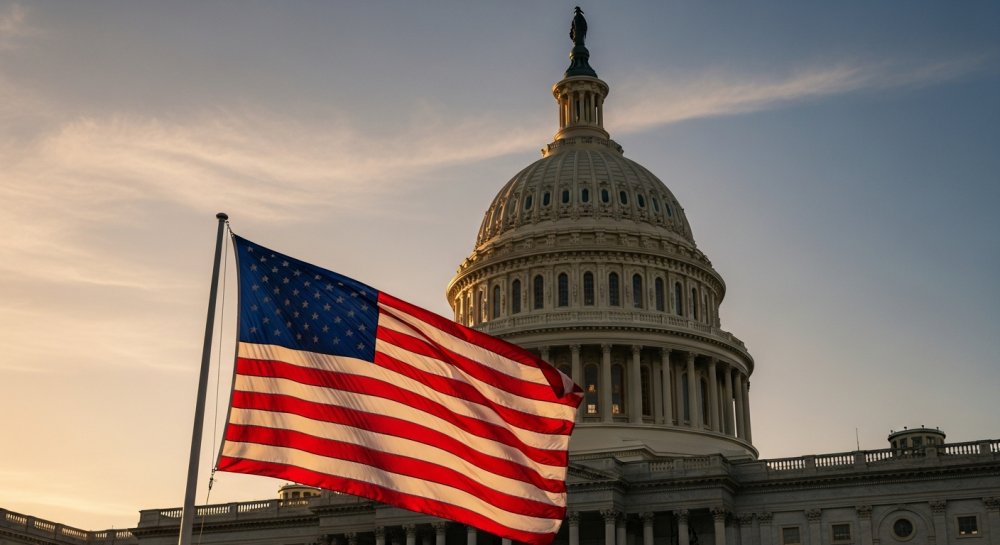
As America continues to grapple with border security and immigration policy, a striking fact has emerged that challenges many assumptions about global citizenship standards. Among the world’s ten most populous nations, only the United States and Mexico automatically grant citizenship to every child born within their borders—a practice known as unrestricted birthright citizenship.
This means that economic powerhouses like China, India, Indonesia, Pakistan, Brazil, Nigeria, Bangladesh, Russia, and Japan all maintain citizenship policies that require more than simply being born on their soil. These countries typically require at least one parent to be a citizen or lawful permanent resident before granting citizenship to a newborn.
The revelation comes at a time when American conservatives are raising important questions about whether our current birthright citizenship interpretation—based on a specific reading of the 14th Amendment—still serves the national interest in an era of mass illegal immigration. The framers of that amendment sought to ensure citizenship for freed slaves and their descendants, not to create an incentive for illegal border crossings.
For Americans who value the rule of law and orderly immigration, the international context is instructive. Nations across the ideological spectrum—from communist China to democratic Japan—have determined that citizenship should involve meaningful connection to the country beyond geographic happenstance.
The practical implications are significant. Current policy allows children born to parents who entered the country illegally to automatically receive American citizenship, with all the rights and benefits that entails. This creates what critics call a “birth tourism” industry and complicates enforcement of immigration law.
From a Christian conservative perspective, the question isn’t about lacking compassion for families seeking better opportunities. Rather, it’s about whether a nation has the right—indeed, the responsibility—to determine its own membership according to law. Even Scripture recognizes the legitimacy of national boundaries and the authority of governments to establish and enforce their laws.
The fact that America stands nearly alone among major nations in this policy suggests that reasonable people of good faith can—and do—reach different conclusions about how to balance compassion with sovereignty. Countries that share our values of human dignity and opportunity have chosen different paths, requiring legal status or citizenship from at least one parent.
This doesn’t mean those countries lack immigration or are closed to newcomers. It means they’ve concluded that citizenship—the full rights and responsibilities of belonging to a nation—should be granted through legitimate legal processes rather than geographical accident.
As the debate continues, Americans who believe in constitutional governance, national sovereignty, and the rule of law are asking whether a policy that made sense in 1868 still serves the nation well in 2025. The international comparison suggests that asking this question isn’t extremism—it’s common sense shared by most of the world’s population.
Let us know what you think, please share your thoughts in the comments below.


Faith Facts
- The Evangelical Press Association has launched a national search for a new executive director to lead the organization forward
- The position will oversee membership services, the annual convention, awards contest, and organizational finances
- The search represents an opportunity to strengthen Christian media’s voice in an increasingly secular media landscape
The Evangelical Press Association has announced the beginning of a national search for its next executive director, marking an important transition for one of America’s premier organizations dedicated to Christian journalism and media excellence.
The position carries significant responsibility for advancing the mission of faith-centered journalism across the nation. The incoming executive director will oversee the association’s membership operations, coordinate its annual convention that brings together Christian media professionals, manage the prestigious awards contest recognizing excellence in Christian journalism, and provide stewardship over the organization’s financial operations.
This leadership opportunity comes at a critical time when Christian voices in media face increasing pressure from secular culture and mainstream outlets that often marginalize or misrepresent people of faith. The Evangelical Press Association has long served as a vital network connecting Christian journalists, publishers, and media professionals committed to reporting news through a biblical worldview.
The organization has played an instrumental role in maintaining high standards for Christian journalism while fostering community among media professionals who share common values rooted in Scripture and traditional American principles. Through its annual convention and awards program, the association celebrates excellence in reporting that honors truth, upholds biblical values, and serves the Christian community.
The search for new leadership reflects the association’s commitment to continued growth and influence in an evolving media landscape. As secular media outlets increasingly dismiss or attack Christian perspectives, organizations like the Evangelical Press Association become even more essential in equipping and supporting journalists who refuse to compromise their faith in their professional work.
Christian media serves a unique and irreplaceable role in American society, providing news coverage that secular outlets often ignore or distort—from religious liberty battles to pro-life advocacy, from traditional family values to the persecution of Christians worldwide. The executive director position offers an opportunity to strengthen this vital ministry and expand its reach to new audiences hungry for trustworthy, faith-based journalism.
Let us know what you think, please share your thoughts in the comments below.
Faith Facts
- A 44-year-old North Carolina man was arrested in a church parking lot with multiple weapons, including flamethrowers and crossbows
- The arrest took place last weekend and prevented a potential threat to the congregation
- Law enforcement responded swiftly to protect the place of worship and its members
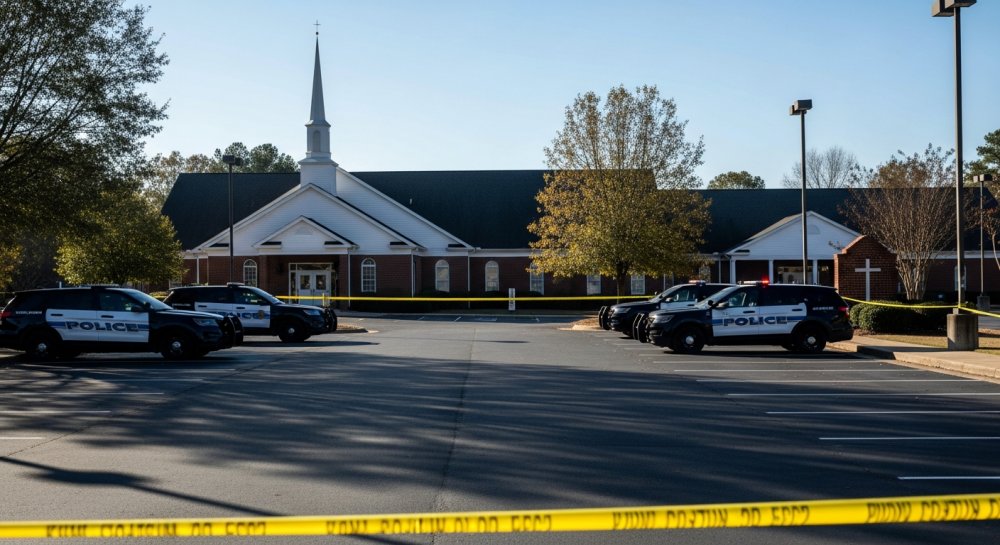
A deeply concerning incident unfolded last weekend when William S. Milliken III, 44, was taken into custody by law enforcement officials. The arrest occurred in the parking lot of a North Carolina church, where authorities discovered the suspect in possession of an alarming arsenal of weapons.
According to police reports, Milliken was found with flamethrowers, crossbows, and additional weapons in his vehicle. The discovery raised immediate concerns about the safety of the congregation and the sanctity of the church property.
Churches across America have become increasingly vigilant about security measures in recent years, as houses of worship have faced various threats. This incident serves as a sobering reminder of the importance of maintaining awareness and preparedness, even in places meant for peaceful worship and community gathering.
The swift response by law enforcement likely prevented what could have been a tragic situation. Authorities have not yet released details about Milliken’s motives or whether he had specific plans involving the church and its members.
This event highlights the ongoing need for church security protocols and the importance of community members reporting suspicious activity. Many congregations have implemented safety teams and training programs to protect their members while maintaining a welcoming environment for worship.
As investigations continue, the incident underscores the reality that our religious freedoms and the safety of our places of worship must be actively protected. The courage of first responders and the vigilance of community members play crucial roles in safeguarding our right to gather and worship freely.
Let us know what you think, please share your thoughts in the comments below.
Faith Facts
- Iran’s Christian population has grown exponentially through underground house churches despite severe persecution, with estimates ranging from 800,000 to over one million believers.
- The Islamic Republic’s brutal enforcement of religious law has paradoxically driven many Iranians away from Islam, with surveys suggesting up to 60% of young Iranians have rejected the faith.
- Iranian Christians face imprisonment, torture, and execution for their faith, yet the church continues to flourish in secret, representing one of the fastest-growing Christian movements worldwide.
As Iran’s Islamic regime shows signs of instability, American policymakers may be unprepared for the religious transformation quietly taking place beneath the surface of one of the world’s most oppressive theocracies. Decades of harsh religious enforcement have produced an unexpected result: a generation turning away from Islam and, in many cases, turning toward Christianity.
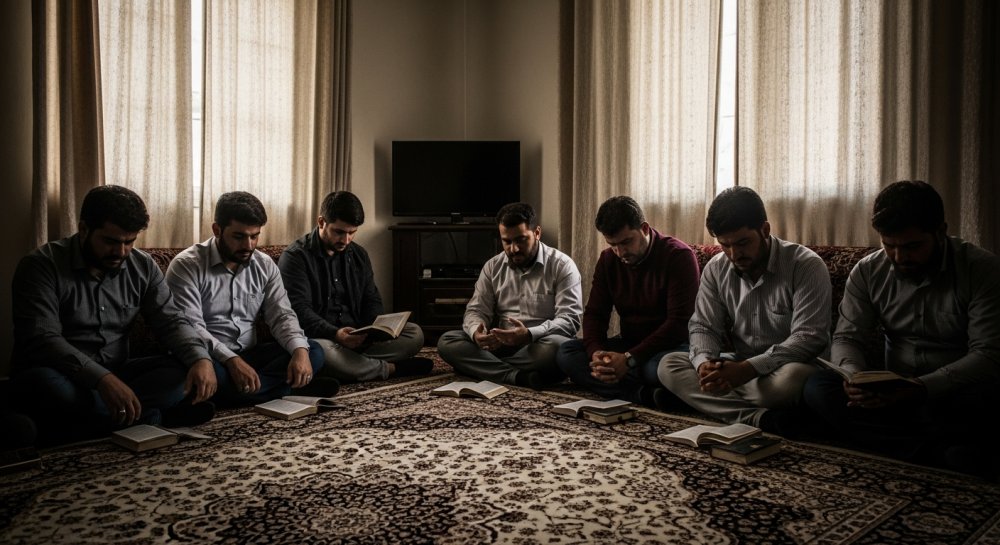
The Islamic Republic has ruled Iran with an iron fist since 1979, imposing strict Sharia law and brutally suppressing religious freedom. Yet this very oppression has sparked a spiritual rebellion that could reshape the Middle East. Underground house churches have multiplied across the nation, operating in secret to avoid the regime’s violent persecution.
“Iran is experiencing one of the fastest-growing Christian movements in the world,” according to multiple religious freedom organizations tracking persecution in the region. These conversions happen despite the very real threat of imprisonment, torture, and death for apostasy from Islam.
Young Iranians in particular have grown disillusioned with the regime’s violent interpretation of Islam. Forced religiosity has backfired spectacularly, with surveys indicating that a majority of Iranians under 40 have privately abandoned the faith that the government attempts to impose through fear and violence.
The Christian population in Iran, though difficult to measure due to security concerns, is estimated to have grown from perhaps 100,000 in the 1970s to between 800,000 and 1.5 million today. Most of these believers worship in secret house churches, risking everything to gather in Christ’s name.
This growth represents a profound irony: the regime’s attempt to create a pure Islamic state has instead pushed many Iranians into the arms of Christianity. Former Muslims describe their conversions as both spiritual awakenings and acts of resistance against an oppressive government that has conflated religious devotion with political submission.
American foreign policy has long operated under the assumption that Iran is a uniformly Muslim nation with little religious diversity. This misconception could prove costly if regime change comes. A post-Islamic Republic Iran might look very different from what Washington expects—more pluralistic, more Christian, and potentially more aligned with Western values of religious freedom.
The persecution of Iranian Christians remains severe. Believers caught gathering for worship face lengthy prison sentences in notorious facilities where torture is routine. Church leaders have been executed. Yet the church grows stronger, demonstrating the timeless truth that the blood of martyrs is the seed of the church.
Religious minorities beyond Christians have also suffered under the regime. Baha’is, Zoroastrians, Jews, and Sunni Muslims all face varying degrees of discrimination and persecution in a nation that claims religious legitimacy while denying basic religious freedom to its own citizens.
The United States has a strategic interest in understanding Iran’s changing religious landscape. When the regime eventually falls—whether through internal collapse, popular uprising, or external pressure—the nation that emerges may be far more receptive to American values and alliances than current policy assumes.
Iranian Christians have demonstrated remarkable courage and faith in the face of unimaginable persecution. Their testimony and their numbers suggest that Iran’s future may not be defined by the radical Islam that has characterized the past four decades, but by a spiritual hunger for truth and freedom that transcends political boundaries.
The transformation of Iran from an Islamic theocracy to a potentially post-Islamic society would represent one of the most significant geopolitical and spiritual shifts of our time. American Christians should be praying for their persecuted brothers and sisters in Iran, and American policymakers should be preparing for an Iran that looks nothing like the one they’ve studied for the past 45 years.
Let us know what you think, please share your thoughts in the comments below.


-

 Self-Reliance1 year ago
Trump’s Bold Move Uncovers Massive Social Security Fraud
-

 Faith1 year ago
New Clues Emerge in Noah’s Ark Mystery
-

 News1 year ago
Governor Walz’s Rhetoric Sparks National Controversy
-

 News1 year ago
Mel Gibson’s ‘The Passion of the Christ’ Sequel Title Announced
-

 Family1 year ago
Texas Lawmaker Targets Furries in Schools
-

 Freedom1 year ago
Maine Lawmaker Challenges Sports Fairness Controversy
-

 Family1 year ago
Canada’s Controversial Policy Sparks Ethical Debate
-
Faith7 months ago
Congress Hears Pleas for Nigerian Christians