
Faith
What a Church Built on Love Can Teach America About Unity

Faith Facts
- Inner-city New Orleans congregations demonstrate authentic Christian fellowship through warm hospitality and soul-stirring worship that transcends denominational backgrounds
- Ministers preach powerful biblical messages about overcoming sin’s separation from God and building strong spiritual foundations in the community
- Long-married couples and multigenerational families testify to God’s transforming power in their lives and neighborhoods
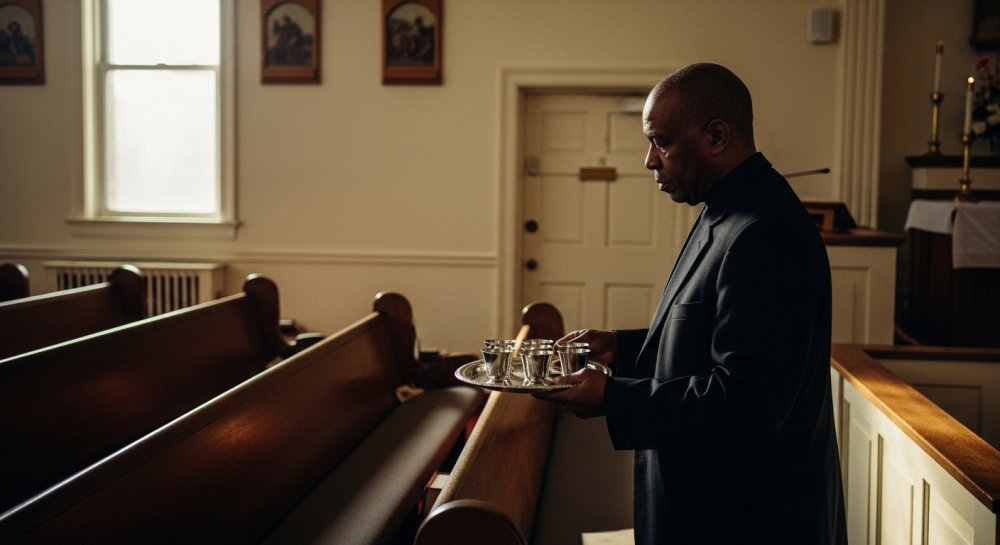
NEW ORLEANS — It wasn’t one of those side hugs, a “Hi, nice to meet you” hug. When I walked into the Hollygrove Church of Christ for Sunday worship, Willie Marsalis gave me a rib-crushing hug as if he were reuniting with a long-lost brother.
And I’d never met the guy. I did, however, feel like I knew the family, especially Willie’s brother and sister-in-law, Charles and Angela Marsalis, and their son, also named Willie.
The family’s incredible journey spans more than two decades — from surviving Hurricane Katrina to planting the Hollygrove church in the inner-city neighborhood where they grew up. So, when my wife, a pediatric endocrinologist, told me that this year’s American Diabetes Association conference was in The Big Easy, I burned a few sky miles to join her.
Hollygrove, I learned, has brought in several souls who don’t hail from our fellowship. One of them, Kim King, told me she was just “driving around” when she found the church, and she hasn’t left since.
Shirley Reeder moved here from Savannah, Georgia, and a friend invited her to church. There were only about 20 of us there for Sunday worship, but it sounded like 200. They sing like the redeemed.
My favorite was a hymn I’d never heard before, “Two Wings,” taken from the description of the seraphim in Isaiah 6:2.
“Two wings to veil my feet. Two wings to veil my face. Two wings to fly away. And the world can’t do me no harm.”
Charles Marsalis preached from later in Isaiah, chapter 59 and verse 2: “But your iniquities have separated you from your God; your sins have hidden his face from you, so that he will not hear.”
“What is blocking you from your blessing?”
Charles asked. “I can’t receive God’s blessing when I’m weighed down with sin.”
He demonstrated this by having Willie stand on stage representing God. The church’s assistant minister, Andrew Thomas, played the devil, and he physically blocked Charles from getting to his brother.
“If we don’t learn the lessons, we won’t get to the blessings.”
But we’re not in this struggle alone, he added.
“If we learn how to hold on to each other in here, we can do it out there.”
Thomas, after relinquishing the role of the devil, echoed Charles’ sentiments in his closing prayer.
“This is the foundation. Let’s learn how to build the foundation in here so we can build homes out there.”
On Sunday night I visited the Louisa Street Church of Christ, a long-established congregation that meets in part of New Orleans known as Desire. Once again, I was welcomed like an old friend by people I met for the first time, including Malachi Hull, a police officer and Bible class teacher.
I also met a gentleman who introduced himself as brother Branch Sr. I noticed that his shirt pocket was stuffed with what looked like old-time gospel tracts.
He said he keeps them at the ready to hand out. It reminded me of 1 Peter 3:15: “Be ready always to give an answer to every man that asketh you a reason of the hope that is in you with meekness and fear.”
Preston Olive, the church’s pulpit minister since 2008, spoke on Psalm 131, a three-verse hymn about putting aside pride and distractions and finding humble contentment in God.
“O Israel, put your hope in the LORD, both now and forevermore.”
The minister said, quoting the psalm’s final verse. That means “hope in God until we die,” he said.
“We don’t have time to make a pit stop. Death might find you if you make a pit stop. The devil is after our hope in God. When others are sinking in doubt and you’re standing tall, it’s because they’re standing on the wrong foundation. Make sure we’re standing on the rock.”
He concluded:
“Leave here tonight continuing to be humble, no matter where you are. Leave here tonight leaning on God. Leave here tonight remembering this hymn: ‘My hope is built on nothing less than Jesus’ love and righteousness.'”
One of the church’s elders, Frank Harden, and his wife Anna were kind enough to give me a ride back to the hotel. They’ve been married for 55 years.
Frank got baptized in 1987. Anna, who grew up Methodist, took a little longer to persuade. She was baptized in 1991.
“God changed us all.”
The next morning I went back to Hollygrove to see some of the first-day activities at Camp Water Tower Academy, a summer program for kids overseen by Willie Marsalis (the younger one). Charles bought me the best shrimp po boy I’ve had in my life from a place called Manos.
That evening, I headed back to Oklahoma — and saw Andrew Thomas yet again. When he’s not ministering at Hollygrove (or pretending to be the devil), he works curbside check-in for United Airlines.
I took a selfie with brother Thomas and sent it to the Marsalises. “Ran into the devil at the airport,” I texted, “and I told him to STOP BLOCKING ME FROM MY BLESSING!”
Let us know what you think, please share your thoughts in the comments below.

Faith Facts
- At least seven Christians were killed in a targeted attack on a Greek Orthodox funeral service in Jordan.
- The assault occurred at a church known for peaceful worship and interfaith coexistence in the region.
- The attack highlights the ongoing threat of Islamic extremism to Christian communities worldwide.
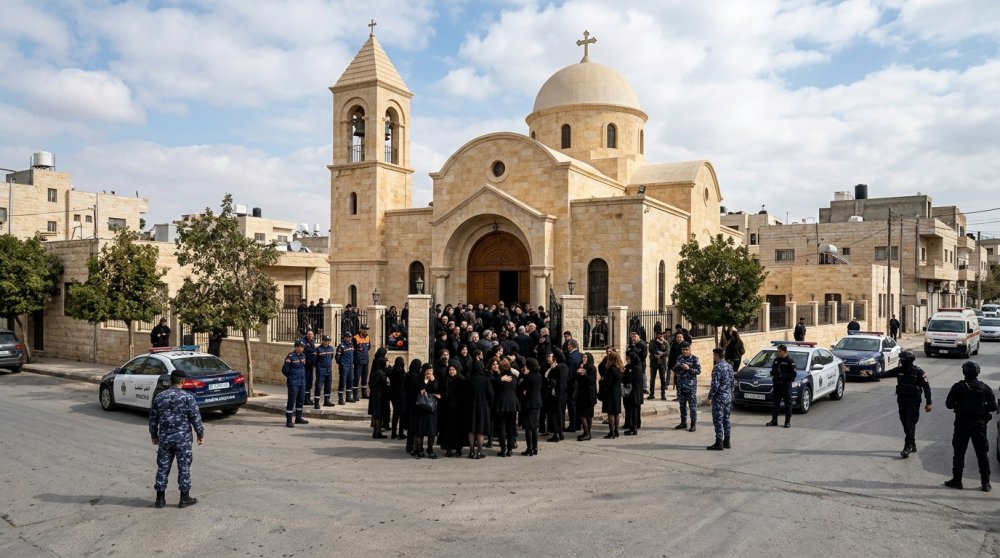
In a rare attack in a country known for peaceful inter-faith coexistence, suspected Islamic extremists attacked a funeral at a Greek Orthodox church in Jordan on Friday (Oct. 23), shooting at least seven people to death and wounding 28 others, according to reports.
The violence interrupted a sacred time of mourning and remembrance, striking at the heart of a Christian community gathered in faith.
Let us know what you think, please share your thoughts in the comments below.
Faith Facts
- God examines the heart rather than outward gestures during worship.
- Scripture teaches that authentic faith is shown through obedience and love, not visible enthusiasm.
- Believers are called to honor every sincere heart that worships in spirit and truth.
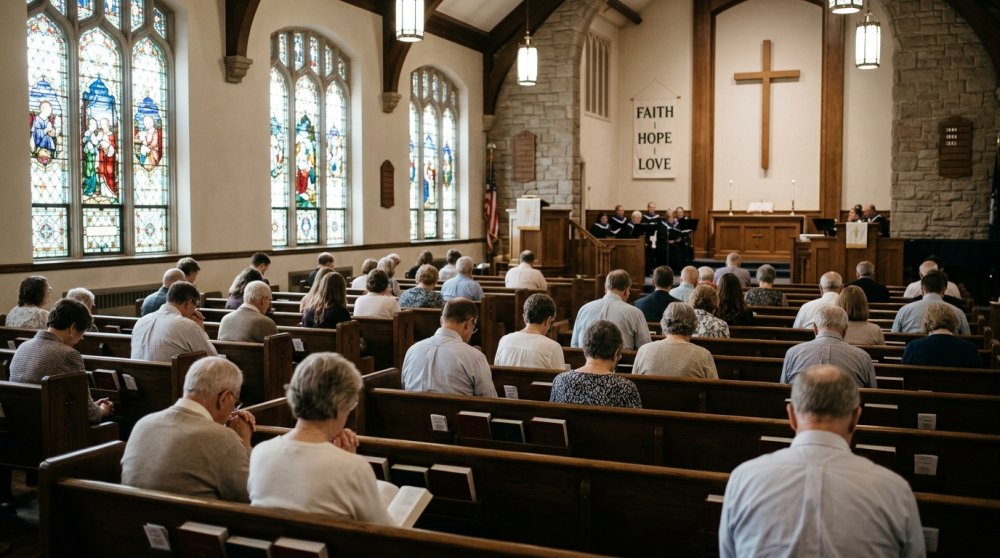
Too often, outward expressions of enthusiasm are mistaken for spiritual maturity. But God looks at the heart, not whether we’re standing, sitting or raising our hands, says Dawn Butler.
“God looks at the heart, not whether we’re standing, sitting or raising our hands,”
Churches across America have seen a growing emphasis on physical expressions during worship. This trend can unintentionally pressure believers who prefer quieter reverence. The result is that some faithful Christians feel judged for their personal style of worship.
“Too often, outward expressions of enthusiasm are mistaken for spiritual maturity.”
True worship flows from a surrendered heart that seeks to honor God in every area of life. Scripture consistently points to inward devotion rather than external performance. When congregations focus on visible actions, they risk overlooking the quiet strength of those who serve faithfully in the background.
Christian liberty allows room for both raised hands and bowed heads. The key is whether each believer approaches the Lord with reverence and sincerity. Families benefit when churches encourage unity over uniformity in worship practices.
“God looks at the heart, not whether we’re standing, sitting or raising our hands.”
Let us know what you think, please share your thoughts in the comments below.
Faith Facts
- The Restoration Movement produced three distinct fellowships by 1906, with Churches of Christ emerging as a conservative, Bible-focused body
- Early 20th-century leaders in Indiana, Tennessee, and Texas held differing convictions on the Holy Spirit, millennial teaching, and church institutions
- The conservative Texas tradition ultimately shaped the doctrinal identity that guided Churches of Christ for much of the twentieth century
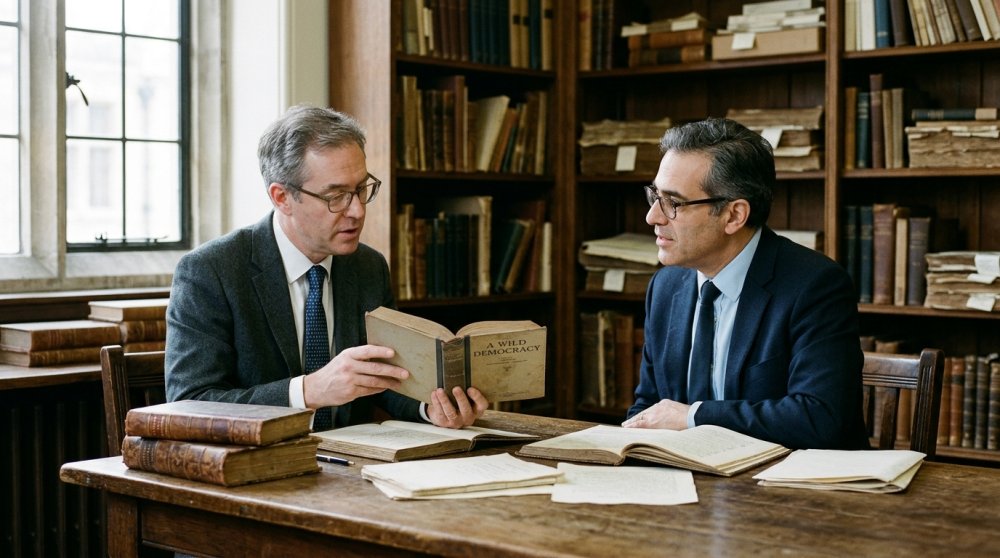
A new book from Abilene Christian University Press offers a detailed look at the doctrinal battles that forged the identity of Churches of Christ in the decades after 1906. The volume, the first of three planned works, draws on essays by eight authors who trace how congregations navigated questions of Scripture, worship, and church order.
By the early twentieth century, the Restoration Movement had separated into three distinct groups. Churches of Christ stood apart for their commitment to congregational autonomy and a plain reading of the New Testament.
The collection opens with Daniel Sommer’s 1889 Address and Declaration, which set the tone for separation from the Disciples of Christ. Subsequent chapters highlight the contributions of David Lipscomb and respected African-American leaders such as Preston Taylor, S.W. Womack, and Marshall Keeble.
“Allen and Hicks are to be commended for editing a splendid and illuminating volume. Readers interested in the history of Churches of Christ will eagerly anticipate the next installment in the series.”
Three regional traditions emerged, each with its own convictions. Leaders in Tennessee upheld belief in miraculous divine action and a future millennial kingdom, while Indiana voices favored noninstitutional simplicity and resisted Bible colleges. The Texas tradition, emphasizing the Word alone and strict obedience to positive commands, gradually gained dominance.
Through influential publications like R.L. Whiteside and C.R. Nichol’s Sound Doctrine series and N.B. Hardeman’s Tabernacle Sermons, the Texas perspective reached congregations across the nation. By the 1930s, the Gospel Advocate had become its leading voice.
The book closes with primary source excerpts that allow readers to hear the founders in their own words. Christian families and church libraries will find this careful history both instructive and encouraging for the challenges of today.
Let us know what you think, please share your thoughts in the comments below.


-

 Self-Reliance2 years ago
Trump’s Bold Move Uncovers Massive Social Security Fraud
-

 Faith2 years ago
New Clues Emerge in Noah’s Ark Mystery
-

 News2 years ago
Governor Walz’s Rhetoric Sparks National Controversy
-

 News2 years ago
Mel Gibson’s ‘The Passion of the Christ’ Sequel Title Announced
-

 Family2 years ago
Texas Lawmaker Targets Furries in Schools
-

 Freedom2 years ago
Maine Lawmaker Challenges Sports Fairness Controversy
-

 Family1 year ago
Canada’s Controversial Policy Sparks Ethical Debate
-
Faith11 months ago
Congress Hears Pleas for Nigerian Christians