
Faith
Texas Lawmaker’s Shocking Confession About Faith Resurfaces

Faith Facts
- Texas Democratic state Rep. James Talarico stated in a 2021 interview that he “hates Christianity” despite identifying as a Christian
- The interview was conducted with a transgender-identifying theologian and has recently resurfaced
- Talarico’s statement raises serious questions about his understanding of Christian faith and values
A troubling interview from 2021 featuring Democratic Texas state Representative James Talarico has resurfaced, revealing statements that have shocked many Christians across the nation. In the interview, Talarico made the startling claim that he “hates Christianity” while simultaneously identifying himself as a Christian.
The interview was conducted with a transgender-identifying theologian, adding another layer of concern for traditional Christian conservatives. Such statements from an elected official raise significant questions about the authenticity of his faith claims and his understanding of core Christian teachings.
???? UNEARTHED
In an interview with a self-described “TransQueer” activist theologian, Texas Democrat James Talarico says he “hates” Christianity:
“I always think of myself as a Christian who hates Christianity.” pic.twitter.com/wFEONx03CW
— RNC Research (@RNCResearch) June 23, 2026
“THIS GUY IS JUST SO WEIRD”
A pair of resurfaced clips show James Talarico calling himself a “Christian who hates Christianity” and praising a “TransQueer Latinx” theologian… you read that right.
WATCH: Senator Josh Hawley responds?? pic.twitter.com/9k7P6GrvBE
— The Will Cain Show (@WillCainShow) June 24, 2026
For many believers, Christianity is not merely a cultural identity or political label, but a deeply held faith rooted in Scripture, tradition, and a personal relationship with Jesus Christ. The idea of simultaneously claiming to be Christian while professing hatred for Christianity appears contradictory to fundamental Christian principles of love for the Church, the body of Christ.
This resurfaced interview comes at a time when religious freedom and traditional values face increasing challenges in public life. Christians are called to speak truth in love and stand firm in their convictions, making such statements from public officials particularly concerning to voters who prioritize faith-based leadership.
The emergence of this video serves as a reminder for Christian voters to carefully examine the stated beliefs and past statements of elected officials who claim to share their values. Authentic Christian faith should be reflected in both word and deed, upholding the teachings of Scripture rather than opposing them.
Let us know what you think, please share your thoughts in the comments below.

Faith Facts
- A group of pastors gathered to pray over Texas Attorney General Ken Paxton at a campaign rally, calling on God for supernatural favor in the final weeks before the Senate election.
- The clergy specifically invoked Romans 13, urging divine support for Paxton as he seeks to represent Texas in the United States Senate.
- The public prayer event reflects a growing trend of faith leaders openly supporting conservative candidates who align with traditional Christian values.
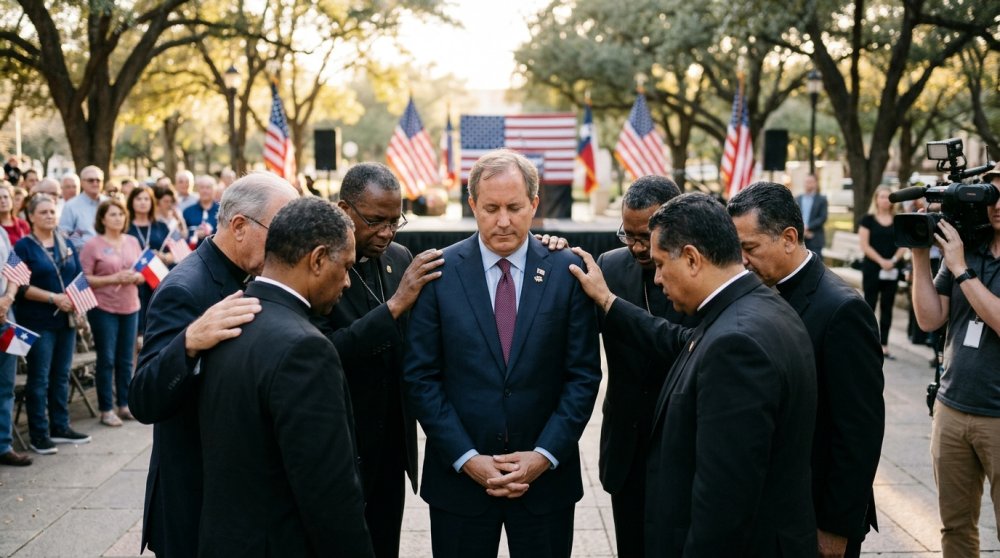
A group of Texas pastors publicly prayed over Republican Attorney General Ken Paxton at a campaign rally this week, asking God to grant him favor with voters in the final stretch of his Senate bid.
The clergy cited Romans 13 during the prayer, reminding supporters that governing authorities are called to serve as ministers of God for justice and order.
Pastors for Paxton gathered to pray over @KenPaxtonTX at his rally today in Conroe. Pastors @Steve_Riggle and @BuntrockJames led us in asking God to grant him wisdom, strength, and protection as he serves Texas. ???? https://t.co/8GQVrU5zxO
— Pastors For Paxton (@pastors4paxton) October 20, 2026
“Give him favor with voters.”
Paxton, who has long positioned himself as a defender of biblical values on issues like life, marriage, and religious liberty, welcomed the spiritual covering from the pastors in attendance.
The event underscores the deep connection many conservative voters in Texas feel between their faith and their political choices.
Let us know what you think, please share your thoughts in the comments below.
Faith Facts
- Frank Turek wakes each morning and ends each evening thinking of Charlie Kirk.
- One year after witnessing the assassination of the conservative activist, Turek continues his commitment to share the Gospel on college campuses.
- The loss of Charlie Kirk has strengthened Turek’s resolve to defend biblical truth among young people.
Christian apologist Frank Turek has carried the memory of Charlie Kirk with him every single day since witnessing the conservative activist’s assassination at Utah Valley University. The grief remains real, yet so does his steadfast determination to keep proclaiming the Gospel.
Each morning when he wakes and each night before he sleeps, Turek’s first and last thoughts return to Kirk. The loss of a friend and fellow defender of truth has left a deep mark, but it has not silenced his mission.
“The first person I think of when I wake up is Charlie.”
Turek’s ongoing work on college campuses reflects a commitment to the same values Kirk championed. He continues reaching students with biblical truth, refusing to let tragedy silence the message of Christ.
Let us know what you think, please share your thoughts in the comments below.

Faith Facts
- Scripture shows God pairing leaders such as Moses with Joshua, David with Jonathan, and Paul with Barnabas and Timothy.
- Jesus sent the seventy-two disciples out in pairs, modeling shared leadership rather than isolation.
- Healthy Christian leaders are called to build friendships that strengthen their walk with Christ and service to others.
Leadership brings heavy responsibility whether you run a business, shepherd a congregation or coach a youth team. Decisions rest on your shoulders and burdens often feel uniquely yours.
Many leaders quietly admit that the role can feel lonely. Yet loneliness does not have to become isolation that harms both the leader and the people served.
“Leadership will always have moments of loneliness. That comes with the territory. But that doesn’t have to mean isolation.”
Throughout the Bible, God provides companions for those He calls to lead. These relationships offer wisdom, encouragement and accountability that solitary leadership cannot supply.
“Build deep friendships with fellow leaders. No leader feels like they have time for this. Yet few leaders make it to the finish line healthy without it.”
Leaders are encouraged to take two practical steps. First, seek a coach or mentor who is a few steps ahead and willing to share honest insight and guidance.
Regular meetings with such a mentor can help a leader recognize blind spots, set growth goals and stay faithful when the fire of service begins to fade.
Second, build deep friendships with other leaders who share the same values and challenges. These relationships offer laughter, correction, prayer and perspective that refresh the soul.
For more than twenty years, one minister has walked alongside six fellow leaders from Texas, Oklahoma and California. They meet weekly by video, attend conferences together and retreat each year for three days of honest conversation and prayer.
The investment of time and travel has strengthened each man’s ministry and personal walk with the Lord. Distance and busy schedules require intentionality, yet the spiritual return far outweighs the cost.
Christian leaders are urged to pray for the right companions, take the initiative to reach out and keep showing up even when the effort feels awkward at first. The people entrusted to their care deserve leaders who remain spiritually and emotionally healthy.
Let us know what you think, please share your thoughts in the comments below.


-

 Self-Reliance2 years ago
Trump’s Bold Move Uncovers Massive Social Security Fraud
-

 Faith2 years ago
New Clues Emerge in Noah’s Ark Mystery
-

 News2 years ago
Governor Walz’s Rhetoric Sparks National Controversy
-

 News2 years ago
Mel Gibson’s ‘The Passion of the Christ’ Sequel Title Announced
-

 Family2 years ago
Texas Lawmaker Targets Furries in Schools
-

 Freedom2 years ago
Maine Lawmaker Challenges Sports Fairness Controversy
-

 Family1 year ago
Canada’s Controversial Policy Sparks Ethical Debate
-
Faith11 months ago
Congress Hears Pleas for Nigerian Christians