
Freedom
Proposals for Women’s Sports Spark Heated Debate


In a recent turn of events, two proposals aimed at preserving the integrity of girls’ and women’s sports in Washington state were narrowly defeated. These proposals sought to ensure that only biological females could participate in female sports categories, a move that resonates deeply with those who value fairness and the traditional understanding of gender roles.
The proposals required a 60% majority to pass, yet the proposal limiting girls’ sports to biological females received 58.5% of the votes, falling just shy of the threshold. The second proposal, which suggested an open division for athletes outside the traditional male and female categories, garnered only 24.5% support.
Despite the setback, the discussion around this issue underscores a critical concern shared by many parents, athletes, and community leaders. As Lynden superintendent David VanderYacht articulated, “It is clear to our girl athletes that competing against other athletes who have gone through male puberty is unfair.”
This sentiment echoes the broader call for fairness and the protection of opportunities for biological females in sports—a principle that many believe is under threat in today’s society.
The failure of these proposals comes amidst a backdrop of legal and political challenges. Washington’s existing laws, under the Washington Law Against Discrimination (WLAD), currently protect transgender individuals from discrimination, presenting a significant hurdle for those advocating for these changes.
Meanwhile, on the national stage, previous federal stances on this issue had included measures affecting states that did not comply with directives mandating that transgender athletes compete according to their birth gender. However, legal interventions have highlighted the complex legal landscape surrounding this issue.
The debate continues, with some advocating for resolving these tensions by emphasizing the need to protect women’s sports while ensuring that states receive necessary support. This reflects a commitment to both fairness in sports and the welfare of communities.
As the conversation progresses, it is crucial for those who cherish traditional values to remain vigilant. The preservation of fairness in sports is not merely about competition; it is about upholding the principles of justice and equality that are foundational to our society.
In these challenging times, it is essential to remember the importance of faith, family, and freedom. These values guide us in ensuring that every individual is treated with dignity while maintaining the integrity of our cherished institutions.
Let us know what you think, please share your thoughts in the comments below.


Faith Facts
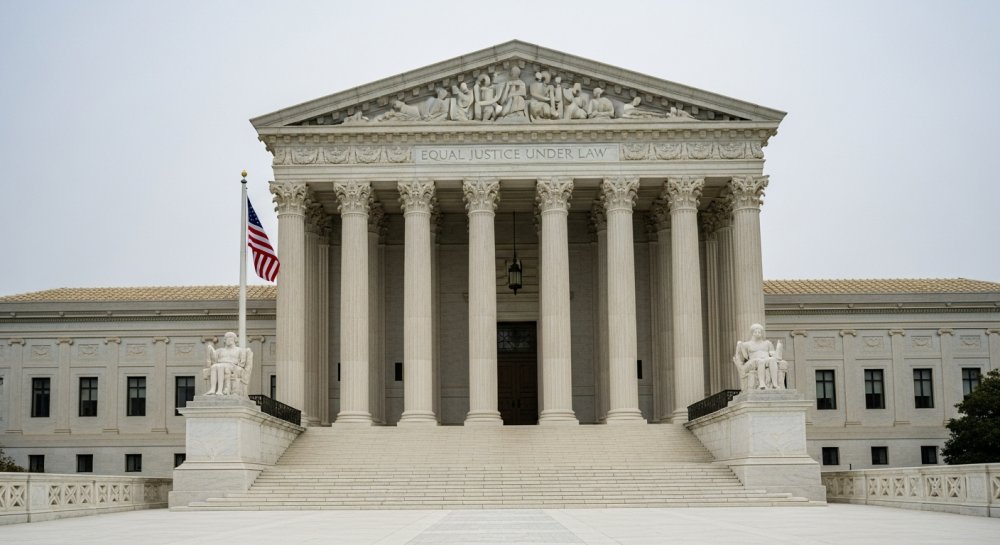
- Prominent conservative legal scholars and commentators strongly criticized the Supreme Court’s ruling in Trump v. Barbara regarding birthright citizenship
- Critics warn the decision could have far-reaching constitutional consequences for American sovereignty and immigration policy
- The ruling has intensified debate among conservatives about the proper interpretation of the Fourteenth Amendment’s citizenship clause
A chorus of conservative voices has risen in opposition to the Supreme Court’s recent decision in Trump v. Barbara, with legal experts and commentators expressing deep concern about the ruling’s implications for America’s constitutional framework and national sovereignty.
The decision has sparked intense debate within conservative circles about the proper understanding of birthright citizenship and the Fourteenth Amendment. Many conservative legal scholars argue the ruling represents a departure from the original intent of the Constitution’s framers.
Critics of the decision warn that the potential consequences extend far beyond immigration policy, touching fundamental questions about American citizenship, national identity, and constitutional interpretation. The ruling has energized discussions about the balance between compassion and the rule of law.
Conservative commentators emphasize that their concerns stem not from antipathy toward immigrants, but from a commitment to constitutional principles and the preservation of national sovereignty. They argue that clarity in citizenship law is essential for maintaining the integrity of American democracy.
The debate reflects broader tensions within American society about immigration, identity, and the meaning of citizenship in the 21st century. For many conservatives, the issue represents a test case for whether the nation will adhere to constitutional limits or embrace an expansive reinterpretation of founding principles.
Legal experts across the conservative movement continue to analyze the decision’s full implications, with many calling for legislative action to address what they view as judicial overreach. The discussion underscores the ongoing importance of Supreme Court appointments and constitutional interpretation in American political life.
Let us know what you think, please share your thoughts in the comments below.

Faith Facts
- San Francisco State Senator Scott Wiener, a leading progressive LGBT activist, was confronted and harassed by radical protesters during a public appearance
- The incident demonstrates how the LGBT movement has shifted from civil rights advocacy to radical activism that demands absolute ideological conformity
- The confrontation serves as a warning about movements that abandon traditional moral boundaries and consume even their most devoted supporters
In the heart of San Francisco this weekend, a viral video captured a scene that should awaken every American who still believes the LGBT movement is about civil rights. State Senator Scott Wiener, long celebrated as a progressive LGBT icon, found himself surrounded by an angry mob of activists screaming accusations and hurling insults.
The reason? Wiener, despite his extensive track record advancing LGBT legislation, failed to meet the ever-changing purity tests of radical activists. The mob accused him of insufficient support for their latest demands, demonstrating a troubling truth about movements unmoored from traditional moral foundations.
The video shows protesters shouting at Wiener, blocking his path, and refusing to engage in civil dialogue. Their aggression wasn’t directed at an opponent of their movement, but at one of its most prominent champions. This reveals the insatiable nature of radical activism divorced from Judeo-Christian values of grace, forgiveness, and human dignity.
For years, conservative Christians have warned that movements rejecting biblical truth eventually turn on themselves. When there is no fixed moral standard, the goalposts constantly shift. Yesterday’s hero becomes today’s villain for failing to embrace tomorrow’s demands.
Wiener has authored some of California’s most controversial progressive legislation, including bills affecting children and parental rights that many faith communities strongly oppose. Yet even his zealous advocacy proved insufficient for the radical fringe now dominating the movement he helped empower.
This incident illustrates a pattern repeated throughout history: revolutionary movements that reject traditional values inevitably devour their own. The French Revolution, communist purges, and various social upheavals have all demonstrated this principle. Without the guardrails of biblical morality and respect for human dignity, movements become increasingly extreme and intolerant.
Christian conservatives have long advocated for treating all people with dignity and respect while maintaining biblical truth about human sexuality, marriage, and family. This balanced approach—loving the person while upholding God’s design—offers the only sustainable path forward. Movements based solely on identity politics and ever-shifting cultural demands will always require new enemies, even creating them from former allies.
The confrontation in San Francisco should serve as a wake-up call. When a movement becomes so radical that it attacks its own champions, it has lost its moral compass. This is what happens when society abandons the timeless wisdom of Scripture for the fleeting passions of the moment.
Americans of faith must continue advocating for a better way—one grounded in unchanging truth, genuine love, and respect for all people created in God’s image. The alternative, as Scott Wiener discovered, is a world where no one is ever pure enough, and today’s orthodoxy becomes tomorrow’s heresy.
Let us know what you think, please share your thoughts in the comments below.

Faith Facts
- Colorado’s regulatory board is targeting Christian counseling practices through financial intimidation after being unable to legally ban them
- Licensed therapist Kaley Chiles faces potential loss of her counseling license for offering biblically-based therapy grounded in traditional Christian teachings
- The state’s actions represent a concerning pattern of regulatory overreach against faith-based professionals across America
The First Amendment stands as a cornerstone of American liberty, protecting the free expression of religious beliefs and speech. Yet in Colorado, state regulators have found a troubling workaround to these constitutional protections.
When outright legal bans on Christian counseling proved impossible, the state turned to a different weapon: financial and professional intimidation. Licensed therapist Kaley Chiles now faces the potential destruction of her career, not because she broke any law, but because she offers counseling rooted in biblical truth and traditional Christian values.
The regulatory board’s tactics reveal a disturbing trend emerging across our nation. Unable to directly prohibit faith-based practices through legislation, government agencies are increasingly using licensing threats and professional sanctions to accomplish the same goal.
Chiles provides counseling that reflects centuries of Christian teaching on human sexuality, marriage, and identity. Her approach aligns with the beliefs held by millions of American Christians and represents the free exercise of religion guaranteed by our Constitution.
Yet Colorado’s regulatory apparatus has determined that such counseling—offered voluntarily to willing clients who share these values—somehow warrants professional discipline. The message is clear: conform to the state’s preferred ideology or lose your livelihood.
This strategy of financial terror proves particularly effective because it requires no legislative action, no public debate, and no democratic accountability. Unelected bureaucrats in regulatory agencies can simply threaten professional licenses, impose crushing fines, or initiate costly legal proceedings.
For many Christian professionals, the choice becomes stark: abandon their deeply held religious convictions or face financial ruin. It’s a form of coercion that circumvents the First Amendment’s protections while achieving the same censorious result.
The implications extend far beyond Colorado and far beyond the counseling profession. If state agencies can use licensing power to suppress religious expression in therapy, they can apply the same tactics to physicians, nurses, teachers, social workers, and countless other licensed professionals.
Religious Americans who seek counseling consistent with their faith deserve access to therapists who share and respect their values. Parents raising children in the Christian tradition have every right to seek professional support that reinforces rather than undermines their family’s beliefs.
The founders understood that genuine religious liberty meant more than freedom of worship within church walls. It meant the freedom to live according to one’s faith in every sphere of life, including one’s profession and livelihood.
Colorado’s approach threatens this fundamental understanding. By weaponizing the regulatory state against Christian professionals, officials are establishing a precedent that could silence faithful voices across countless fields and industries.
What makes this strategy particularly insidious is its quiet efficiency. Unlike high-profile legislative battles that generate headlines and public engagement, regulatory intimidation operates largely in the shadows, targeting individuals who often lack the resources to mount effective legal challenges.
The defense of religious liberty has always required vigilance, but the battlefield has shifted. Today’s threats come not only from explicit legal prohibitions but from the administrative state’s subtle yet powerful machinery of professional control.
Christian Americans must recognize this tactic for what it is: an end-run around constitutional protections that our founders established to prevent exactly this kind of government overreach. When regulators can effectively ban what legislatures cannot, the rule of law itself is undermined.
Kaley Chiles’s case should serve as a wake-up call. Her willingness to stand firm in her faith despite professional threats deserves support from all who value religious freedom and constitutional government.
The question facing our nation is whether we will permit unelected bureaucrats to accomplish through intimidation what our constitutional system forbids through legislation. The answer will determine whether the First Amendment remains a genuine protection or becomes merely a historical artifact.
Let us know what you think, please share your thoughts in the comments below.


-

 Self-Reliance1 year ago
Trump’s Bold Move Uncovers Massive Social Security Fraud
-

 Faith1 year ago
New Clues Emerge in Noah’s Ark Mystery
-

 News1 year ago
Governor Walz’s Rhetoric Sparks National Controversy
-

 News1 year ago
Mel Gibson’s ‘The Passion of the Christ’ Sequel Title Announced
-

 Family1 year ago
Texas Lawmaker Targets Furries in Schools
-

 Freedom1 year ago
Maine Lawmaker Challenges Sports Fairness Controversy
-

 Family1 year ago
Canada’s Controversial Policy Sparks Ethical Debate
-
Faith7 months ago
Congress Hears Pleas for Nigerian Christians