
Faith
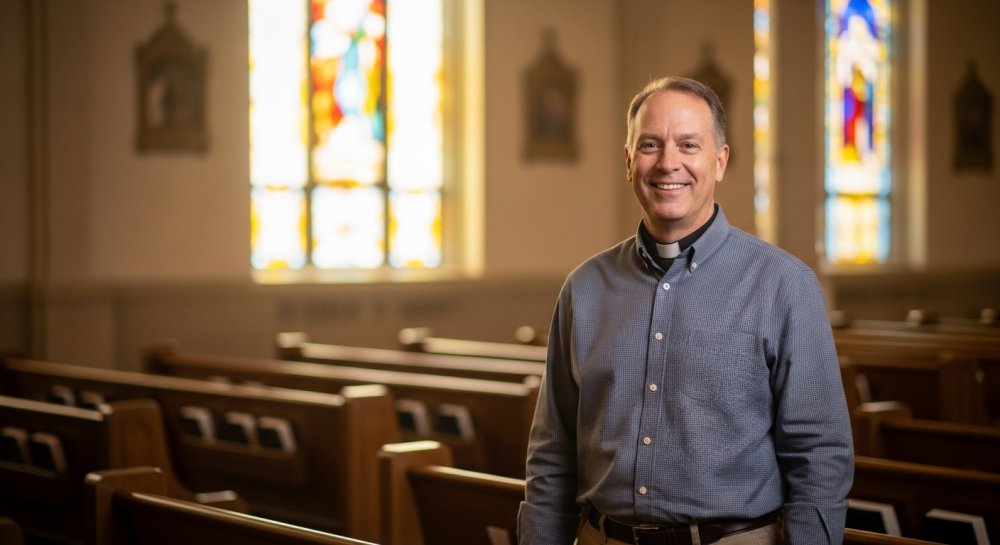
Tennessee Minister Turns Stage 4 Cancer Battle Into Daily Testimony of Faith

Faith Facts
- Chris McCurley, minister at Walnut Street Church of Christ in Dickson, Tennessee, completed eight weeks of radiation treatment for stage four metastatic prostate cancer while continuing his ministry duties
- Despite his diagnosis, McCurley maintains that “cancer can be a ministry,” using his journey to minister to fellow patients at Vanderbilt-Ingram Cancer Center and document his faith journey on social media
- The husband and father of three continues preaching and serving his congregation while undergoing ongoing hormone therapy and medication, declaring “God wins” as his guiding principle
The sound of victory echoed throughout the halls of Nashville’s Vanderbilt-Ingram Cancer Center on May 7 as Chris McCurley pulled the rope and rang the gold bell, ending eight weeks of radiation treatment.
For many cancer patients, ringing the bell signals the end of their journey. But it marked another milestone in an ongoing battle for McCurley, minister for the Walnut Street Church of Christ in Dickson, 40 miles west of Nashville.
The preacher has spent the past two years navigating prostate cancer, a journey that led to a diagnosis of stage four metastatic disease. In its most advanced stage, the cancer spread outside of its original location earlier this year.
While radiation successfully targeted tumors, his treatment continues through hormone therapy and medication.
Yet throughout daily chemotherapy treatments and hour-long commutes to Nashville, McCurley has embraced a phrase that has shaped his outlook: “Cancer can be a ministry.”
“I don’t believe God gave me cancer, but I certainly believe he’s used it,” the husband and father of three said.
‘Why am I scared?’
McCurley’s cancer journey began in February 2024, when rising prostate-specific antigen levels signaled to doctors that a malignant growth could be developing. An MRI and biopsy confirmed a small cancerous tumor, measuring about 1 millimeter in diameter, or about the tip of a needle.
Doctors offered the 49-year-old preacher several treatment options, including radiation and proton therapy. He ultimately chose radical prostate surgery to remove the tumor.
“To me, I had cancer and I wanted it out,” McCurley said. “And it wasn’t hard to convince me.”
Although the surgery appeared successful, post-operation pathology revealed that the growth extended beyond the prostate capsule. Still, for nearly a year and a half, McCurley’s prostate-specific antigen levels remained undetectable.
In early 2026, as he prepared for the birth of his second grandchild, doctors found that the cancer had returned and progressed to stage four metastatic prostate cancer.
“I was scared. And I feel bad about that,” McCurley said. “I’m a man of faith. I’m a preacher. Why am I scared?”
As the cancer spread to the bones, including the spine, femur and iliac bone, McCurley said he found peace in his relationship with God, leaning on a saying: “It’s you and me, no matter what, and it’s going to be OK.”
From that point forward, the diagnosis — and the faith that came along with it — became a daily reality, defined by chemotherapy treatments, long drives to Nashville and what he describes as unseen opportunities to share his faith.
‘This is life now — you’re a cancer patient’
After the stage four diagnosis, McCurley said the challenge shifted from treatment decisions to daily endurance. Working out at a higher intensity and taking naps on the couch in his church office became part of a new daily rhythm.
“This is life now,” he said. “You’re a cancer patient.”
For eight weeks, McCurley’s routine began early in the morning, with coffee and Bible reading before departing his Dickson home for the Vanderbilt-Ingram Cancer Center. There, he underwent a series of 10- to 15-minute radiation treatments.
Waiting for him at many of those appointments was Trace Pierce, a radiation therapist at Vanderbilt and a fellow member of the Walnut Street church. Pierce first reached out after watching McCurley announce his diagnosis on Facebook, offering support and connections with medical resources at the hospital.
As treatment progressed, the two developed a strong bond.
“The hardest part sometimes is just waking up every day and driving in for 39 treatments,” Pierce said. “That takes a toll in itself.”
As the weeks passed, McCurley began to feel the side effects of radiation on his body. But even on days when the preacher wasn’t feeling his best, Pierce said, few people in the waiting room and during his treatments would have known.
“He’d still come in, talk to everybody, ask how they were doing and offer to pray with them,” Pierce said. “That’s just who he is as a person.”
Those interactions became an unexpected blessing in a new season of life. McCurley said he does not miss the radiation, but he does miss the fellowship shared in waiting rooms and hospital hallways.
“There is a sense where I’m going to miss these because you develop these friendships,” he said. “You sit in the lobby and meet these people who are there every day that had a brain tumor removed, and you get to sit there and counsel with them and do ministry, and they do ministry with you.”
The same openness that led McCurley in forming relationships at Vanderbilt reinforced a belief that had guided him throughout his walk: Even cancer can be a ministry.
“Cancer has been such a big blessing to me in so many ways,” he said. “There are things I would never have experienced if not for this diagnosis.”
‘This is a God story’
For the Walnut Street minister, that ministry did not end when he left Vanderbilt’s waiting room. Even with stage four metastatic cancer and ongoing hormone therapy through medication, McCurley continues preaching the glory of God.
The cancer and an uncertain future remain, but so does his trust in faith, family and his belief that “God wins.”
Between treatments and sermon preparations, McCurley avoided turning his cancer journey into the focus of his mission. Instead, he documented every step through a series of Facebook posts, providing updates and showing appreciation for prayers.
What started as simple updates became a lifeline for many members of his congregation looking for ways to support their preaching minister.
“The videos keep us informed so we know how to pray for him,” said Joanne Brown, who has attended Walnut Street since 1976. “He’s definitely seeing that love and support full-fledged because of what he’s going through.”
The updates also reflect a philosophy that, church leaders say, has defined McCurley’s ministry since he joined the congregation in 2022, long before his diagnosis.
“Ministry is not a thing you do on Sundays. It’s your life,” Walnut Street shepherd Brian Reagan said of McCurley, who’s authored multiple books and hosted over 200 episodes of the “Dear Church” podcast. “Chris has extended that into speaking in very real, transparent terms about what’s going on in his life.”
Even as the possibility of recurrence remains, McCurley said he does not view his story as one defined by illness but by faith. The bell at Vanderbilt marked the end of his radiation treatment but not of his ministry.
“This is not a Chris McCurley cancer story. This is a God story,” he said. “It’s a story about how God has navigated Chris McCurley through cancer, and how Chris McCurley is going to win because God wins.”
Let us know what you think, please share your thoughts in the comments below.

Faith Facts
- Scripture teaches that the Holy Spirit intercedes for believers with groanings too deep for words when human language fails.
- Christian tradition holds that God hears the heart’s cry even when spoken prayer seems impossible.
- Believers are encouraged to draw near to God in faith trusting His promises of presence and comfort.
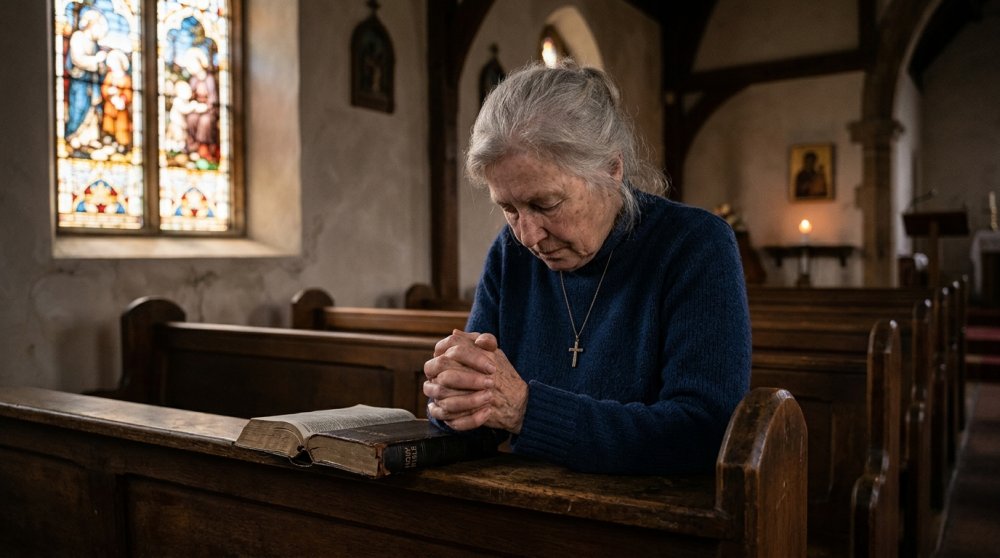
What do you do when you need God and cannot find the words to pray? The question strikes at the core of every believer’s walk with Christ.
Scripture offers both comfort and direction in such moments. Romans 8 reminds us that the Spirit Himself intercedes for us.
“Likewise the Spirit helps us in our weakness. For we do not know what to pray for as we ought, but the Spirit himself intercedes for us with groanings too deep for words.”
This divine intercession assures Christians that their prayers need not be eloquent to reach heaven. God values sincerity over polished phrases.
Many saints throughout history have testified to seasons of wordless communion with the Lord. Their experience echoes the truth that presence often matters more than perfect speech.
“Be still, and know that I am God.”
Psalm 46:10 continues to guide believers who struggle to articulate their needs. Silence before the throne can become its own powerful prayer.
Practical steps include opening the Bible and allowing God’s Word to speak when personal words fail. Reading Scripture slowly can stir the heart toward renewed trust.
Some Christians also find strength by simply repeating the name of Jesus or by offering a single honest sentence such as “Lord have mercy.”
“The Lord is near to all who call on him, to all who call on him in truth.”
Psalm 145:18 reinforces the promise that God draws close to those who seek Him even without polished prayers. His faithfulness does not depend on our eloquence.
Ultimately the answer to wordless seasons lies in resting on God’s character rather than on our own ability to perform. The Father knows what His children need before they ask.
Let us know what you think, please share your thoughts in the comments below.

Faith Facts
- Christian believers are facing declining reading habits and rising biblical illiteracy.
- Crossmap Book Club is a new digital lending library designed to make faith-based books widely accessible.
- The platform encourages community building and deeper spiritual growth among believers.
Amid declining reading habits and biblical illiteracy, a new Christian digital lending library is seeking to make faith-based literature more accessible while helping believers build community and deepen their spiritual lives.
Let us know what you think, please share your thoughts in the comments below.
Faith Facts
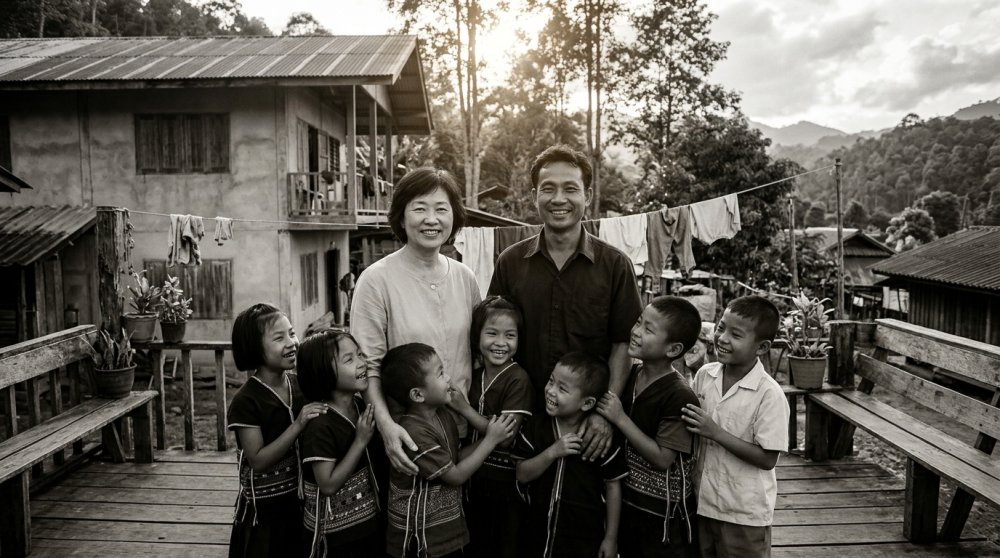
- Wendy Wong and her husband Anawin Rungrotpanthawee have provided housing, meals, and daily Bible study for up to thirty abandoned children in northern Thailand for the past decade.
- The couple began their work among the Akha hill tribe in Chiang Rai, offering education and discipleship to children who would otherwise have no path beyond elementary school.
- Despite having little money, Wong and her husband continue to welcome children recommended by local churches, trusting God to supply every need.
Wendy Wong was born in Hong Kong and married Anawin Rungrotpanthawee from Thailand. Seventeen years ago the newly married couple planted churches among the Akha people in the mountains near Chiang Rai.
Ten years ago they opened their home to children who had no one else. The work began with one or two children and grew as older teens moved on and new children arrived. Today as many as thirty youngsters live with them at the Eternal Life Student Centre, a ministry supported by Agape Asia and Churches of Christ.
Recently Wong spoke about the heartbreaking situations that bring children to the centre and the ways God is restoring hope and raising a new generation whose futures are no longer defined by their past.
“Much of our work takes place outside the city in small villages such as Blossom Village, where many residents belong to the Akha hill tribe. Many visitors have never heard of the Akha people until they come here and see their communities firsthand.
“We realized that many of the children in the village had no opportunity to continue their education. The village had only two elementary schools, and once students finished primary school, there was nowhere for them to continue their studies. We provide after-school care to about 110 students. It’s a program in Blossom Village that helps students with the languages, reading, mathematics and Bible. These children are sent to us by their parents in hopes that we can further develop them for future success.
“We want these children to have opportunities that their village can’t provide, so we began bringing them into the city where they could attend middle school and beyond. We provide everything they need — housing, meals, school tuition, books, clothing and daily Bible study.
“Ten years ago, we welcomed our first group of 17 students.”
“The other way we take care of children is through the Eternal Life Student Centre. We have 30 kids with us, and the youngest one is 8. The oldest one is almost 18. Ten come from Blossom Village. The remaining 20 come from other communities. Some have lost both parents. Others live with grandparents or relatives who cannot provide for them. Some are children of undocumented immigrants. Others have been orphaned because of conflict and war.
“Many of the ministers, churches and church members throughout the region know about our ministry. They regularly recommend children who need help.
“When we can, we make home visits to evaluate each family’s situation. When we see genuine need, we welcome the child into our home.
“Most of the children, when they first come to see us, are very nervous. They don’t know how to handle a relationship with strangers, and most of them just don’t know how to take care of themselves. They just don’t know how to live with a schedule, a timetable.
“Most of the children, when they first come to see us, are very nervous. They don’t know how to handle a relationship with strangers, and most of them just don’t know how to take care of themselves.”
“After several months, most of them are more cheerful. They love our center, they like their home and they start to know that having a schedule is very good in their lives. And then they enjoy playing together, eating together. Now they just love to be living in a group that has become their family.
“Some of the young people who have grown up with us are still faithfully involved in church. Others have stepped away because of the pressures of society and the difficult work environments they now face. In Thailand, many aspects of culture conflict with biblical teaching, so discipleship requires continual encouragement, teaching and honest conversations about how to live faithfully in today’s world.”
“Although they were not Christians, my parents eventually accepted my calling. They later visited us in Thailand and saw the ministry firsthand. They watched the children we were raising and recognized that God was using our lives to make a real difference. Today, they fully support what we do.
“Financially, we have very little. We have never accumulated much wealth or many possessions. I cannot give my parents expensive gifts or provide them with financial security. But I can tell them that I am doing exactly what God has called me to do.
“They now understand that while we may appear poor by the world’s standards, we are rich in purpose, rich in faith and rich in the joy of serving Christ.”
Let us know what you think, please share your thoughts in the comments below.


-

 Self-Reliance2 years ago
Trump’s Bold Move Uncovers Massive Social Security Fraud
-
 Faith2 years ago
New Clues Emerge in Noah’s Ark Mystery
-
 News2 years ago
Governor Walz’s Rhetoric Sparks National Controversy
-
 News2 years ago
Mel Gibson’s ‘The Passion of the Christ’ Sequel Title Announced
-

 Family2 years ago
Texas Lawmaker Targets Furries in Schools
-

 Freedom2 years ago
Maine Lawmaker Challenges Sports Fairness Controversy
-

 Family2 years ago
Canada’s Controversial Policy Sparks Ethical Debate
-
Faith12 months ago
Congress Hears Pleas for Nigerian Christians