
Faith
The English Bible’s Secret Birth — A Translator Marked for Death


Faith Facts
- William Tyndale completed the first English New Testament translation 500 years ago, laying the foundation for all modern English Bibles and risking his life to make Scripture accessible to common people.
- Tyndale was martyred in 1536 for his work translating the Bible, executed by strangling and burning at the stake while his final prayer was for England’s spiritual awakening.
- Over 80% of the King James Bible’s New Testament comes directly from Tyndale’s original translation, making his linguistic choices foundational to English-speaking Christianity.
Five centuries ago, a scholar worked in secret exile, translating ancient Greek texts by candlelight — knowing every page could cost him his life. William Tyndale’s mission was simple yet revolutionary: give ordinary English-speaking people direct access to God’s Word.
At a time when the institutional church guarded Scripture jealously, keeping it locked in Latin that few could read, Tyndale believed every plowboy should know the Bible as well as any priest. This conviction would drive him into exile, hunted across Europe, and ultimately to a martyr’s death.
Born in England around 1494, Tyndale was educated at Oxford and Cambridge, mastering Hebrew, Greek, Latin, and several modern languages. His scholarly gifts were matched only by his burning passion for Scripture.
The Catholic Church of his era forbade vernacular translations, viewing them as threats to ecclesiastical authority. Bible ownership by laypeople was illegal, and previous English translators had been burned at the stake for their efforts.
Undeterred, Tyndale famously declared to a learned clergyman:
“If God spare my life, ere many years I will cause a boy that driveth the plough shall know more of the Scripture than thou doest.”
When English authorities refused to support his translation work, Tyndale fled to continental Europe in 1524. Working in hiding in Germany and later the Low Countries, he completed his English New Testament in 1526.
The translation was smuggled into England in bales of cloth and grain shipments. Church authorities burned copies publicly and hunted distributors relentlessly, but the hunger for readable Scripture proved unstoppable.
Tyndale’s genius wasn’t merely linguistic — though his command of ancient languages was exceptional. He created phrases and rhythms that became inseparable from English itself: “Let there be light,” “the powers that be,” “my brother’s keeper,” “the salt of the earth.”
Scholars estimate over 80 percent of the King James Bible’s New Testament derives directly from Tyndale’s translation. His Old Testament work, though incomplete at his death, similarly shaped all future English Bibles.
Beyond translation, Tyndale penned theological works defending salvation by faith alone and challenging corrupt church practices. These writings further enraged both religious and political authorities determined to silence him.
In 1535, Tyndale was betrayed by a man he thought was a friend. Arrested in Antwerp, he was imprisoned in the castle of Vilvoorde near Brussels for over a year in cold, dark conditions.
Despite harsh treatment, Tyndale continued ministering to fellow prisoners and guards. In August 1536, he was formally condemned as a heretic.
On October 6, 1536, William Tyndale was led to the stake. Before being strangled and burned, his final prayer rang out:
“Lord, open the King of England’s eyes.”
That prayer was answered remarkably quickly. Within a year of Tyndale’s martyrdom, King Henry VIII authorized the Great Bible — heavily based on Tyndale’s translation — for placement in every English church.
The man executed for translating Scripture became the unacknowledged architect of England’s spiritual transformation. Every English Bible since — from the Geneva Bible to the King James Version to modern translations — stands on Tyndale’s pioneering foundation.
His legacy extends beyond translation brilliance to a principle central to the Protestant Reformation and American religious liberty: direct access to God’s Word for every believer. Tyndale insisted Scripture belonged to all people, not just religious elites — a radically democratic idea that challenged both church and state hierarchies.
Five hundred years later, as Christians worldwide read the Bible in hundreds of languages, Tyndale’s sacrifice reminds us that religious freedom was bought at tremendous cost. His willingness to die so others could read Scripture in their own tongue exemplifies the highest devotion to truth and liberty of conscience.
In an era when many take Bible access for granted, Tyndale’s story calls believers to treasure Scripture and remember those who paid the ultimate price to make it available. The plowboy can indeed know Scripture today — because William Tyndale refused to let threats, exile, or death stop him from translating God’s Word.
Let us know what you think, please share your thoughts in the comments below.


Faith Facts
- Tennessee Pastor Greg Locke reveals his congregation has shrunk from 3,000 attendees to just a few hundred amid ongoing federal investigation
- The pastor is under federal investigation for allegedly misappropriating church funds
- Locke’s tent church experienced dramatic decline following the emergence of his legal and financial challenges
A Tennessee pastor known for his outspoken ministry has acknowledged a significant decline in his congregation as he faces mounting legal troubles. Greg Locke, whose tent church once attracted thousands of worshipers, now ministers to just a few hundred faithful followers.
The dramatic downturn comes as federal investigators examine allegations of financial impropriety within the church. Locke is currently under investigation for allegedly misappropriating church funds, charges that have cast a shadow over his ministry.
At its peak, Locke’s tent church drew up to 3,000 people, becoming a significant presence in Tennessee’s religious landscape. The congregation’s size reflected the pastor’s ability to connect with believers seeking a dynamic, unconventional worship experience.
However, the emergence of the federal investigation has taken a toll on attendance. The church has experienced an exodus of members, with current attendance representing a fraction of its former strength.
The situation serves as a sobering reminder of the importance of financial integrity and accountability in church leadership. Christian stewardship demands transparency and faithful management of resources entrusted to ministry leaders.
For churches across America, this case underscores the critical need for proper financial oversight and governance structures. Congregations place their trust—and their tithes—in the hands of spiritual leaders, expecting biblical standards of honesty and accountability.
The investigation remains ongoing, and no formal charges have been announced. As the legal process unfolds, the remaining members of Locke’s congregation face difficult questions about the future of their church community.
This situation highlights the broader challenge facing American churches: maintaining credibility and trust in an era when financial scandals can quickly erode years of ministry work. The body of Christ must hold its leaders to the highest standards of integrity.
Let us know what you think, please share your thoughts in the comments below.
Faith Facts
- Rep. Tim Burchett cited Romans 1 in response to revelations from Dr. Anthony Fauci’s pandemic diary entries
- The diary entries revealed Fauci’s fixation on his own fame during the COVID-19 pandemic
- The Tennessee congressman applied biblical warnings about pride and idolatry to the former health official’s documented behavior
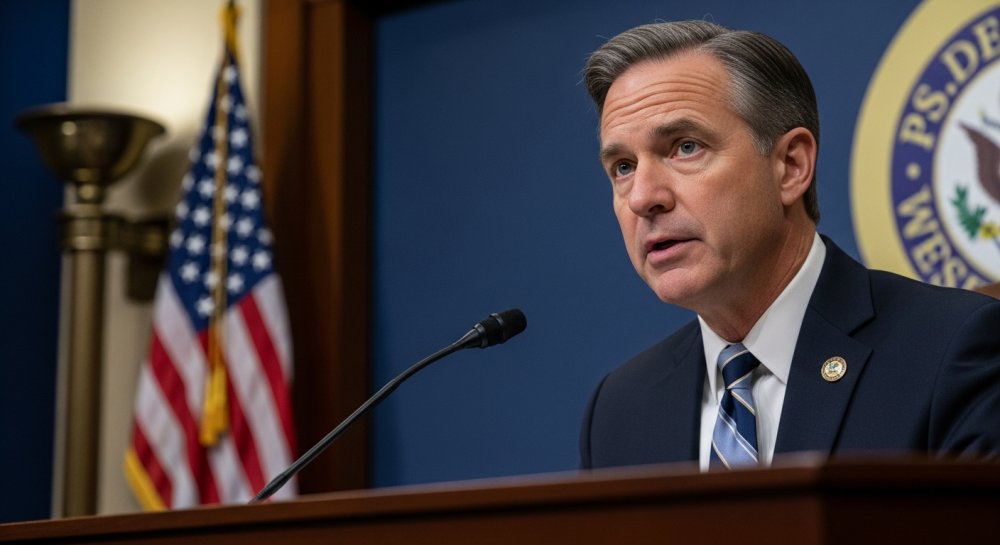
A Tennessee congressman turned to Scripture this week when addressing newly surfaced diary entries from Dr. Anthony Fauci’s time as the nation’s leading COVID-19 official. Rep. Tim Burchett referenced the biblical warnings found in Romans 1, which describe divine judgment against those who exchange truth for their own glory.
The diary revelations paint a troubling picture of a public health official more concerned with celebrity status than service. During a time when millions of Americans were losing loved ones, jobs, and freedoms, Fauci appeared preoccupied with tracking his media appearances and cultural impact.
Excellent takes as always from @kilmeade on @WillCainShow and @RepTimBurchett. pic.twitter.com/r3zbmkIoqd
— Senator Rand Paul (@SenRandPaul) July 27, 2026
Anthony Fauci explains that although he identifies as Catholic, his “personal ethics on life” are so strong that he has no need to practice the religion. “It seems like a pro forma thing that I don’t really need to do.” pic.twitter.com/r5YbCs2gbM
— Laura Powell (@LauraPowellEsq) December 9, 2023
Romans 1 speaks directly to the consequences of rejecting wisdom in favor of self-exaltation. “Professing themselves to be wise, they became fools,” the passage warns, describing how people trade the truth of God for lies and worship the creature rather than the Creator.
Burchett’s biblical reference highlights a concern many faith-driven Americans have expressed throughout the pandemic response: that unelected officials wielded unprecedented power while appearing to prioritize their own prominence over genuine public service. The diary entries seem to confirm what many suspected—that ego, not just science, was driving decisions that affected every American household.
The convergence of government power and personal ambition during the pandemic raised serious questions about accountability and humility in public service. When leaders become more focused on their own fame than the people they serve, the results can be devastating for families, churches, and communities.
For Christian conservatives who value servant leadership modeled after Christ, these revelations serve as a reminder of why character matters in positions of authority. Biblical principles emphasize that leaders should serve rather than seek glory, putting others before themselves.
The Tennessee lawmaker’s scriptural response resonates with believers who see the pandemic era as a time when American institutions—including public health agencies—lost their way by abandoning timeless principles in favor of human pride and institutional self-preservation.
Let us know what you think, please share your thoughts in the comments below.

Faith Facts
- Former world champion boxer Manny Pacquiao challenged thousands of Christian leaders to set annual soul-winning goals at the Arise Asia 2026 Congress in Manila
- Pacquiao emphasized the urgency of Gospel-sharing, reminding believers that life is brief and the mission cannot be delayed
- The Philippine boxing legend has transitioned from sports icon to evangelist, using his platform to advance the Great Commission
Former world champion boxer Manny Pacquiao delivered a powerful call to action for Christians at a major gathering in the Philippines, challenging believers to make evangelism a measurable priority in their lives. Speaking to thousands of Christian leaders assembled in Manila for the Arise Asia 2026 Congress, the sports legend turned evangelist emphasized the fleeting nature of life and the pressing need to share the Gospel without delay.
Pacquiao’s message carried the weight of someone who understands both earthly success and eternal significance. The boxing icon, who rose from poverty to become one of the greatest fighters in history, has increasingly dedicated his post-boxing career to advancing the cause of Christ.
The Philippine leader urged delegates to move beyond passive faith to active evangelism, calling on them to establish concrete, yearly targets for bringing souls into God’s kingdom. His challenge reflects a biblical understanding of Christian responsibility—that believers are called not just to receive salvation, but to become ambassadors of reconciliation to a lost world.
This approach to faith aligns with traditional Christian teaching about the Great Commission, where Jesus commanded His followers to go and make disciples of all nations. Pacquiao’s emphasis on specific goals represents a practical application of this mandate, transforming abstract spiritual duty into concrete action steps.
The Arise Asia 2026 Congress serves as a gathering point for Christian leaders across the region to strategize and mobilize for Gospel advancement. Pacquiao’s participation underscores the growing movement of high-profile converts who are leveraging their influence to advance Christian values and evangelistic efforts in an increasingly secular world.
For American Christians watching from afar, Pacquiao’s message offers both encouragement and challenge. In a cultural moment where many believers feel pressured to privatize their faith, his boldness in publicly proclaiming Christ and calling others to do the same stands as a counter-cultural witness.
The boxing champion’s transformation from ring warrior to spiritual warrior demonstrates that no platform is too secular to be redeemed for Kingdom purposes. His journey reminds believers that fame, success, and influence gain their deepest meaning when surrendered to the service of the Gospel.
Let us know what you think, please share your thoughts in the comments below.


-

 Self-Reliance1 year ago
Trump’s Bold Move Uncovers Massive Social Security Fraud
-

 Faith1 year ago
New Clues Emerge in Noah’s Ark Mystery
-

 News1 year ago
Governor Walz’s Rhetoric Sparks National Controversy
-

 News1 year ago
Mel Gibson’s ‘The Passion of the Christ’ Sequel Title Announced
-

 Family1 year ago
Texas Lawmaker Targets Furries in Schools
-

 Freedom1 year ago
Maine Lawmaker Challenges Sports Fairness Controversy
-

 Family1 year ago
Canada’s Controversial Policy Sparks Ethical Debate
-
Faith8 months ago
Congress Hears Pleas for Nigerian Christians