
Faith
Why Britain’s Leadership Crisis Should Concern American Christians


Faith Facts
- Political instability in Britain has seen multiple prime ministers in rapid succession, creating widespread anxiety among citizens
- Scripture calls Christians to pray for stable government that provides order and justice for all people
- The constant turnover of leadership reflects a deeper cultural crisis affecting Western democracies, including threats to traditional values
The revolving door at 10 Downing Street has become a symbol of something deeply troubling in Western democracies. As Britain faces yet another potential leadership challenge within the Labour Party, with figures like Wes Streeting and Andy Burnham reportedly considering moves against Prime Minister Keir Starmer, American Christians should take notice. The instability plaguing our closest ally offers important lessons about the dangers of abandoning proven leadership principles rooted in faith and tradition.
The British political system has adopted what some describe as a “stick or twist” approach to leadership—treating elected officials like disposable commodities rather than stewards called to serve. This constant churn creates anxiety among ordinary citizens who yearn for stability, consistency, and leaders who will stand firm on principles rather than bend to every political wind.
Tim Farron, a Member of Parliament and outspoken Christian, has highlighted how this approach undermines the very purpose of government. Scripture teaches us that God institutes government to provide order and justice. When leadership becomes a game of musical chairs, those foundational purposes suffer, and society pays the price.
The implications extend far beyond Britain’s shores. Western democracies on both sides of the Atlantic face similar pressures—media cycles that reward sensationalism over substance, political parties that prioritize power over principle, and electorates increasingly disconnected from the stabilizing influence of faith and community.
For American Christians watching this unfold, the situation should prompt both concern and prayer. We must recognize that political stability isn’t merely about partisan advantage. It’s about creating an environment where families can flourish, where justice can be administered fairly, and where leaders can govern according to conscience rather than constantly calculating their political survival.
The alternative to this chaos is a return to leadership grounded in timeless principles. Leaders who understand that their authority comes with responsibility. Leaders who recognize that governing is a sacred trust, not a stepping stone to personal ambition. Leaders who will stand firm on convictions even when the political winds shift.
Britain’s struggle reminds us that democracy requires more than just elections and institutions. It requires a moral foundation—the kind that faith communities have historically provided. When that foundation erodes, when leaders are judged solely by polling numbers rather than character and conviction, instability inevitably follows.
American Christians can learn from Britain’s challenges by strengthening our own commitment to principled leadership at every level. We must demand more from our elected officials than political expediency. We must cultivate a political culture that rewards integrity, consistency, and courage—qualities that seem increasingly rare in modern politics.
This also calls us to a posture of prayer. Scripture commands us to pray for those in authority, recognizing that stable, just government is a gift that enables human flourishing. As Britain navigates yet another potential leadership crisis, Christians across the Atlantic should join in praying for wisdom, stability, and leaders who will govern according to principles larger than themselves.
The revolving door at Downing Street need not become the norm for Western democracies. But preventing that outcome requires citizens—especially people of faith—to demand better and to support leaders who demonstrate the courage to lead with conviction rather than simply chase the next news cycle.
Let us know what you think, please share your thoughts in the comments below.

Faith Facts
- Nicky Gumbel, Alpha course pioneer and former Holy Trinity Brompton leader, faces criticism after urging Spirit-filled Christians to address inequality
- Critics have accused Gumbel of promoting communist ideals and unbiblical teachings for his stance on social justice
- Defenders argue that confronting injustice and fighting inequality are core biblical mandates rooted in Scripture
The founder of the internationally recognized Alpha course is at the center of a controversy that highlights deep divisions within the Christian community over how believers should engage with issues of social justice and inequality. Nicky Gumbel, who pioneered the Alpha evangelism program and formerly led Holy Trinity Brompton (HTB), has drawn sharp criticism from some quarters after calling on Spirit-filled Christians to actively fight against inequality.
The backlash against Gumbel has included accusations that he is promoting communist ideologies and straying from biblical teaching. These charges have sparked a heated debate about the proper role of Christians in addressing systemic injustice and whether such activism aligns with scriptural principles.
Tommy Sharpe, writing in defense of Gumbel’s position, expressed shock at the nature of the criticism. He argues that far from being unbiblical or politically motivated, the call to confront inequality is deeply rooted in the teachings of Scripture and the example of Christ.
The controversy touches on a fundamental question facing American Christians today: What does faithful Christian witness look like in a society marked by disparities and injustice? While some believers view social justice language as importing secular ideologies into the church, others contend that pursuing justice for the poor and oppressed is a non-negotiable aspect of biblical faith.
Throughout Scripture, God’s concern for the vulnerable and marginalized is abundantly clear. From the Law of Moses, which included specific provisions to protect widows, orphans, and foreigners, to the prophets who thundered against exploitation and oppression, the biblical witness consistently calls God’s people to pursue justice.
The prophet Micah famously summarized what the Lord requires: “To act justly and to love mercy and to walk humbly with your God.” Isaiah condemned those who “deprive the poor of their rights” and declared that true worship involves loosening “the chains of injustice” and setting “the oppressed free.”
Jesus Himself launched His public ministry by reading from Isaiah 61, declaring that He had come “to proclaim good news to the poor” and “to set the oppressed free.” Throughout His earthly ministry, Christ demonstrated particular concern for those on society’s margins—the sick, the poor, the ritually unclean, and the socially ostracized.
The early church continued this pattern, with the apostles teaching that “pure and faultless” religion includes caring for “orphans and widows in their distress.” The epistles repeatedly call believers to show practical love to those in need and to avoid favoritism toward the wealthy.
However, defenders of biblical justice are careful to distinguish their position from secular ideologies or political movements that may use similar language. The Christian pursuit of justice is rooted in the character of God Himself, who is described in Scripture as loving justice and hating oppression. This divine mandate differs fundamentally from materialist philosophies that deny God’s existence or elevate the state above all other authorities.
Biblical justice recognizes the inherent dignity of every person as made in God’s image. It calls for personal transformation through the gospel while also working to address systemic barriers that prevent human flourishing. It emphasizes personal responsibility alongside corporate accountability, and it seeks lasting change through changed hearts rather than through coercion alone.
For Christian conservatives, the challenge is to faithfully apply biblical principles in contemporary contexts without compromising core doctrinal convictions or adopting worldly ideologies wholesale. This requires discernment to distinguish between timeless scriptural commands and temporary political programs.
The Alpha course, which Gumbel developed, has introduced millions worldwide to the Christian faith through its accessible presentation of the gospel. The program’s emphasis on the Holy Spirit’s power and the need for personal conversion has made it particularly popular among evangelical and charismatic Christians. Gumbel’s credentials as a Bible-believing, Spirit-filled leader make the accusations against him all the more surprising to many observers.
Supporters of Gumbel’s position note that conservative Christians have historically been at the forefront of many social reform movements, from the abolition of slavery to the civil rights movement. They argue that retreating from questions of justice and equality cedes important ground to secular voices and fails to represent the full counsel of Scripture.
At the same time, concerns about the infiltration of Marxist or progressive ideologies into the church are not without foundation. Church leaders must exercise wisdom in addressing social issues without importing unbiblical frameworks that contradict Christian anthropology or soteriology.
The path forward requires Christians to anchor their social engagement firmly in Scripture, approaching issues of justice with both prophetic boldness and theological precision. Believers must demonstrate through both word and deed that the gospel has implications for all of life, including how we treat our neighbors and structure our communities.
As this controversy continues, it serves as a reminder that faithful Christians can disagree about application while affirming shared biblical principles. The unity of the body of Christ must be preserved even amid robust debate about how best to live out our calling in a broken world.
Let us know what you think, please share your thoughts in the comments below.
Faith Facts
- The World Health Organization declared the Eastern DR Congo Ebola outbreak a public health emergency of international concern on May 17, 2025
- Christian health organizations are among the few entities providing frontline care in the affected region
- The outbreak has resulted in 246 suspected cases and 80 deaths from a rare and deadly Ebola strain
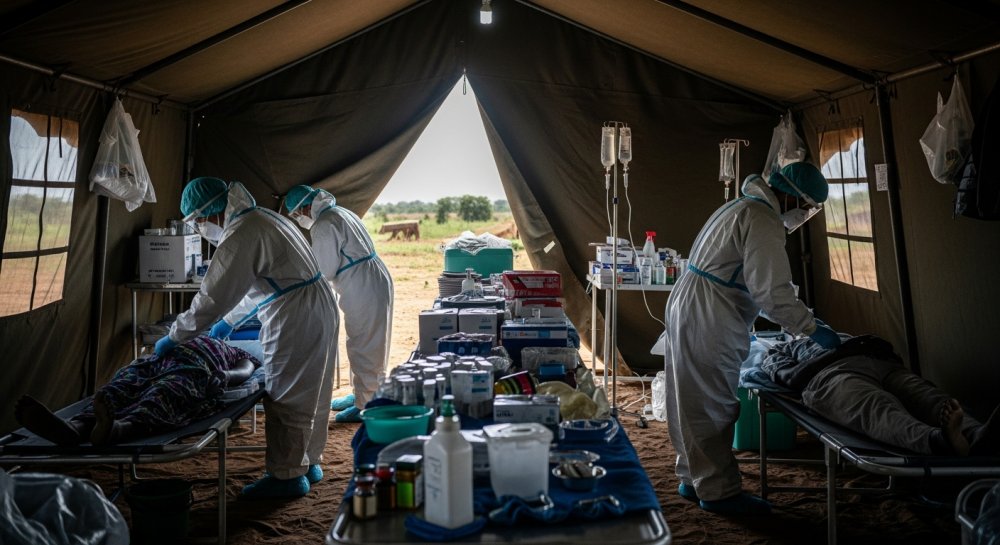
In the remote and conflict-ridden region of Eastern DR Congo, Christian health organizations are serving as a critical last line of defense against a devastating Ebola outbreak that has captured global attention. These faith-based medical teams are operating in dangerous conditions where few others dare to venture.
The World Health Organization officially declared the outbreak “a public health emergency of international concern” on May 17, 2025. This highest level of alert comes as health officials confirm 246 suspected cases and 80 deaths from a rare and particularly deadly strain of the Ebola virus.
Christian medical missions and faith-based health organizations have long maintained a presence in areas of the world where government infrastructure is weak or nonexistent. In Eastern DR Congo, these groups are now shouldering the burden of containing an outbreak that poses a threat not only to the local population but potentially to global health security.
The region’s instability, marked by ongoing conflict and limited access to basic services, makes the work of these Christian health workers even more challenging and dangerous. Yet they continue to serve, driven by a calling to care for the sick and vulnerable regardless of personal risk.
The dedication of these faith-based organizations reflects a long tradition of Christian medical missions bringing hope and healing to the world’s most desperate places. Their presence in Eastern DR Congo demonstrates how Christian values of service and sacrifice continue to make a tangible difference in global health crises.
As the international community responds to this public health emergency, the foundational work of Christian health organizations on the ground remains essential to preventing further spread of this deadly disease.
Let us know what you think, please share your thoughts in the comments below.

Faith Facts
- Brian Houston’s X account was allegedly compromised, leading to explicit content being posted without his authorization
- The Hillsong Church founder publicly denied watching pornography and pledged continued accountability following the incident
- Houston stated someone with access to one of his devices was responsible for the security breach
Days after an explicit pornographic video appeared on his X account, Hillsong Church founder Brian Houston assured supporters that he doesn’t watch pornography. The former megachurch pastor alleged that someone with access to one of his devices compromised the account.
Houston addressed the incident directly with his followers, making clear his stance on pornography consumption. The breach raised immediate questions about account security and access to personal devices.
“I do not watch pornography,” Houston stated in his response to supporters.
The incident has drawn attention to the vulnerability of high-profile Christian leaders’ social media accounts. Houston emphasized that the posting was unauthorized and did not reflect his personal behavior or values.
According to Houston’s explanation, the security breach occurred through someone who had gained access to one of his personal devices. This revelation raises concerns about digital security practices among ministry leaders and the importance of protecting online accounts.
Houston stepped down from Hillsong Church leadership in 2022 amid various controversies. The church he founded grew into a global megachurch movement known for contemporary worship music and celebrity attendees before facing organizational challenges in recent years.
The former pastor pledged to maintain accountability measures following this incident. He assured his audience that steps are being taken to prevent future unauthorized access to his social media accounts.
Digital security experts often warn that even prominent religious figures face cybersecurity threats. The incident serves as a reminder of the importance of strong password protection, two-factor authentication, and limiting device access.
Let us know what you think, please share your thoughts in the comments below.


-

 Self-Reliance1 year ago
Trump’s Bold Move Uncovers Massive Social Security Fraud
-

 Faith1 year ago
New Clues Emerge in Noah’s Ark Mystery
-

 News1 year ago
Governor Walz’s Rhetoric Sparks National Controversy
-

 News1 year ago
Mel Gibson’s ‘The Passion of the Christ’ Sequel Title Announced
-

 Family1 year ago
Texas Lawmaker Targets Furries in Schools
-

 Freedom1 year ago
Maine Lawmaker Challenges Sports Fairness Controversy
-

 Family12 months ago
Canada’s Controversial Policy Sparks Ethical Debate
-
Faith6 months ago
Congress Hears Pleas for Nigerian Christians