
Faith
New Survey Reveals Surprising Contradiction in Americans’ View of Faith and Politics

Faith Facts
- More Americans now believe religion is gaining influence in public life, according to Pew Research Center
- Majority of Americans still oppose churches endorsing political candidates
- Survey reveals tensions between religious influence and political engagement preferences
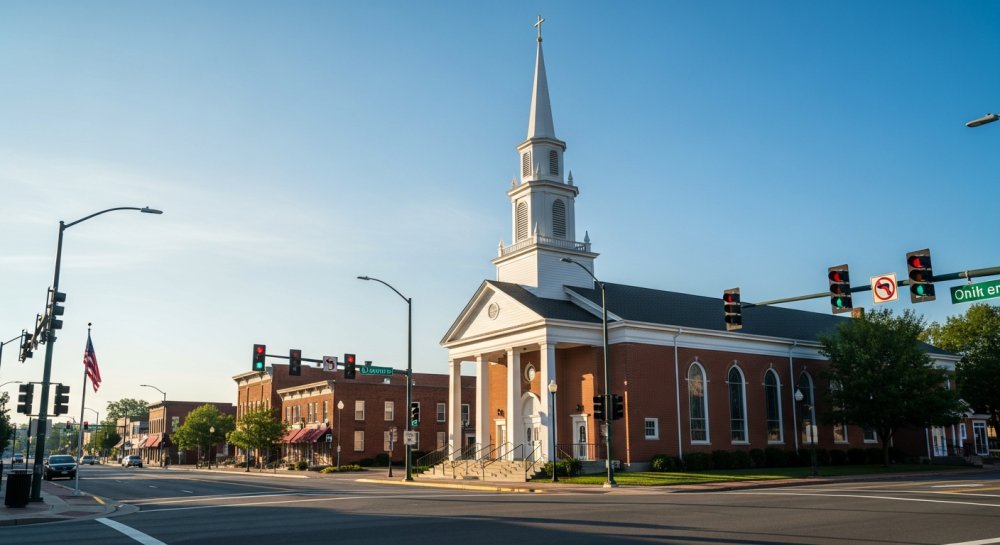
A new survey from the Pew Research Center has uncovered a fascinating paradox in how Americans view the role of faith in public life. While a growing number of citizens believe religion is gaining influence in society, most still prefer that churches stay out of direct political endorsements and day-to-day political debates.
The findings highlight a complex relationship between faith and politics that many Christian conservatives have long recognized. Americans appear to value the moral and cultural influence of religion while maintaining concerns about institutional church involvement in partisan politics.
This tension reflects broader questions about how people of faith should engage with the public square. Many Christian leaders have wrestled with the balance between speaking biblical truth to cultural and political issues while avoiding the appearance of partisan favoritism that could compromise the church’s spiritual mission.
The survey results suggest Americans may distinguish between religion’s broader cultural influence—including its impact on values, morality, and social issues—and direct political endorsements from church pulpits. This distinction has important implications for how churches navigate their role in addressing the moral dimensions of public policy.
For faith communities, the data underscores the importance of maintaining prophetic witness on issues of justice, life, family, and freedom without becoming merely another political interest group. The challenge remains how to honor both the command to be salt and light in society and the need to preserve the church’s unique spiritual authority.
As cultural battles intensify around religious freedom, life, marriage, and parental rights, Christian Americans continue to seek wisdom on how their faith should shape civic engagement. The survey reveals that this remains an evolving conversation with no simple answers.
Let us know what you think, please share your thoughts in the comments below.

Faith Facts
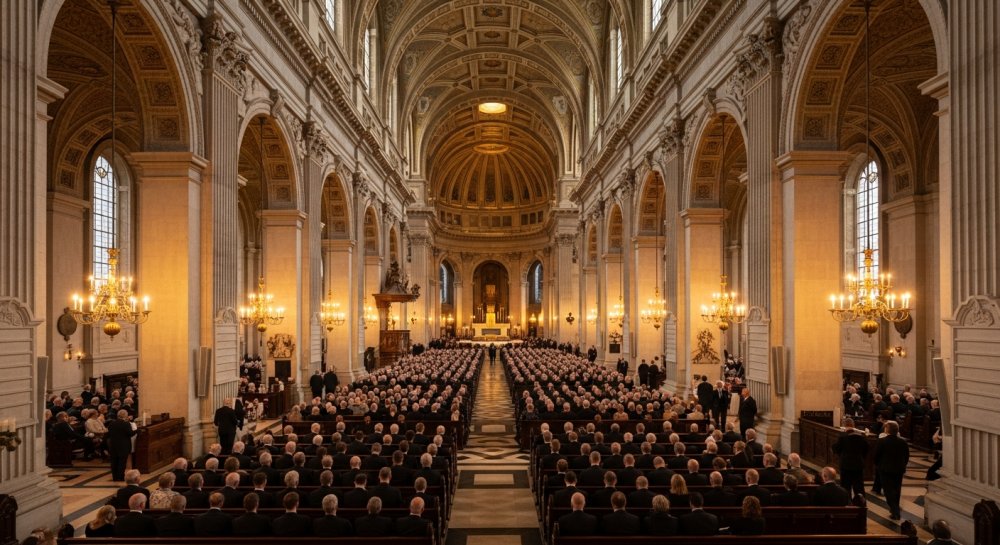
- More than 1,500 members gathered at St Paul’s Cathedral on June 10 to celebrate 150 years of ministry
- Mothers’ Union stands as one of the largest lay movements within the Anglican Communion worldwide
- The organization has dedicated a century and a half to supporting families and strengthening Christian values globally
A powerful display of faith and commitment filled one of London’s most iconic landmarks as members of a global Christian ministry celebrated an extraordinary achievement. The gathering at St Paul’s Cathedral represented decades of dedication to traditional family values and Christian service.
The anniversary celebration brought together believers from across the world to honor an organization that has stood firm in its mission for 150 years. The evening service at the historic cathedral demonstrated the enduring strength of faith-based community organizations.
Since its founding, Mothers’ Union has championed the importance of marriage, family life, and Christian parenting. The organization’s unwavering commitment to these foundational values has made it a pillar of support for families navigating the challenges of modern life while maintaining their faith.
As one of the Anglican Communion’s largest lay movements, Mothers’ Union continues to provide vital support to communities worldwide. The organization’s work spans continents, bringing hope, practical assistance, and spiritual guidance to those seeking to build strong, faith-centered families.
The milestone anniversary serves as a reminder of what faithful dedication can accomplish. Through changing times and cultural shifts, this ministry has remained steadfast in its core mission of supporting Christian families and promoting traditional values.
The celebration at St Paul’s Cathedral highlighted not just past achievements but also the ongoing relevance of faith-based family support in today’s world. Members and supporters gathered to recommit themselves to the organization’s founding principles and vision for the future.
Let us know what you think, please share your thoughts in the comments below.
Faith Facts
- Pope Leo XIV invoked Matthew 25 while addressing migrants during his tour of Spain this week
- The pontiff told migrants he wants to ‘bow before your dignity’ in remarks applying biblical passages to Europe’s immigration crisis
- The statements reflect the Vatican’s continued engagement with migration policy through a religious framework
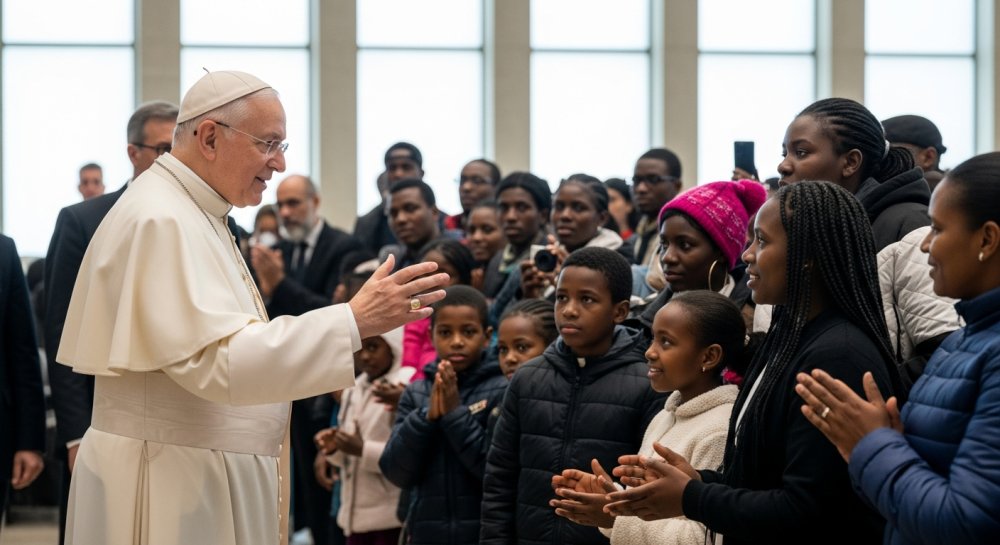
During his apostolic visit to Spain this week, Pope Leo XIV addressed the ongoing immigration crisis in Europe by turning to Scripture, specifically citing Matthew 25:41-45 in his remarks to migrants.
The passage from Matthew records Jesus saying: “Then he will say to those on his left, ‘Depart from me, you who are cursed, into the eternal fire prepared for the devil and his angels. For I was hungry and you gave me nothing to eat, I was thirsty and you gave me nothing to drink, I was a stranger and you did not invite me in, I needed clothes and you did not clothe me, I was sick and in prison and you did not look after me.'”
“Dear migrants, before saying anything else to you, I want to bow before your dignity. You are not just numbers or files,” Pope Leo XIV said in a meeting with organizations working with migrants at the Port of Arguineguína in Las Palmas de Gran Canaria, Spain.
In his address the… pic.twitter.com/HQcw12quvl
— Vatican News (@VaticanNews) June 11, 2026
Q: Pope Leo cited Matthew 25:35 to critique Donald Trump’s mass deportation agenda. How would you respond to Pope Leo in scripture?
MIKE JOHNSON: Sovereign borders are biblical and right and just. It’s not because we hate the people on the outside. It’s because we love the… pic.twitter.com/eS4A5dtXRt
— Aaron Rupar (@atrupar) February 3, 2026
In his address, the pope emphasized the dignity inherent in every human person, a central tenet of Catholic social teaching rooted in the belief that all people are created in the image of God.
“I want to bow before your dignity,” Pope Leo XIV told the migrants gathered before him.
The pontiff’s application of this biblical passage to the migration crisis represents the Vatican’s theological approach to a complex policy issue that has sparked significant debate across Europe and the United States. Conservative Christians have long wrestled with how to balance biblical commands to welcome the stranger with legitimate concerns about border security, rule of law, and national sovereignty.
Many faithful believers recognize the genuine compassion called for in Scripture while also acknowledging that governments have a God-given responsibility to protect their citizens and maintain ordered borders. The tension between mercy and justice, between individual dignity and collective security, remains a challenging question for Christians seeking to apply biblical principles to modern policy dilemmas.
The Spain visit continues Pope Leo XIV’s early papal ministry, which has included engagement on social issues facing the global Church. As Europe continues to grapple with waves of migration from Africa, the Middle East, and other regions, religious leaders across denominations are seeking to articulate responses grounded in their faith traditions.
The Matthew 25 passage cited by the pope has long been central to Christian discussions of social responsibility, though believers of different theological persuasions have debated its application to government policy versus individual Christian charity.
Let us know what you think, please share your thoughts in the comments below.
Faith Facts
- Small church pastors worldwide are being shaped through lived experience, prayer, and suffering rather than formal theological degrees
- Character formation through faithful discipleship and biblical mentoring often proves more valuable than academic credentials
- Responsibility, failure, and even persecution are proving to be powerful teachers in global Christian leadership development
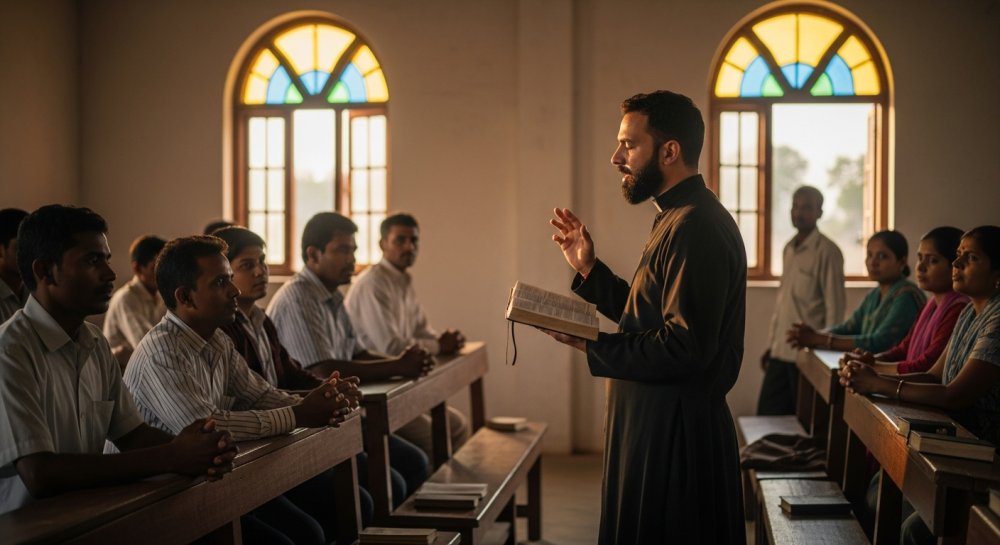
Across India and throughout the developing world, a quiet revolution in Christian leadership is taking place—one that challenges Western assumptions about what truly prepares a pastor to shepherd God’s people.
Thousands of faithful pastors leading small congregations lack the formal theological education that many in the West consider essential. Yet these men and women are being profoundly shaped by forces that no classroom can replicate.
Responsibility molds them as they care for their flocks with limited resources. Failure refines them as they learn to depend on God’s grace rather than their own competence. Suffering deepens them in ways that academic study alone never could.
Prayer becomes their seminary, persecution their crucible of faith. Character formation occurs not through curriculum but through walking faithfully with Jesus, guided by the Bible and trustworthy mentors who have traveled the same difficult road.
This form of education doesn’t result in a diploma suitable for framing. It produces no measurable outcomes that satisfy institutional assessment requirements. Yet its value in preparing shepherds for Christ’s church may exceed what many formal programs deliver.
The distinction matters profoundly as Western mission organizations and denominations consider how to support the global church. Programs designed to replicate Western seminary models may miss what’s already happening—the Holy Spirit forming leaders through the ancient pattern of discipleship, testing, and faithful endurance.
This doesn’t diminish the value of theological education. Sound doctrine matters immensely, and formal training provides irreplaceable benefits when done well. But it does challenge the assumption that credentialed education must precede or validate ministry effectiveness.
The early church operated without seminaries for centuries, relying instead on mentorship, apprenticeship, and the school of hard experience. Today’s global church is rediscovering that model by necessity—and often finding it produces leaders of deep faith, biblical wisdom, and proven character.
As the center of Christianity continues shifting to the Global South, Western believers might learn from brothers and sisters who understand that formation cannot be measured by the metrics we’ve grown comfortable with. Sometimes the best education comes not from what can be programmed, but from what can only be lived.
Let us know what you think, please share your thoughts in the comments below.


-

 Self-Reliance1 year ago
Trump’s Bold Move Uncovers Massive Social Security Fraud
-

 Faith1 year ago
New Clues Emerge in Noah’s Ark Mystery
-

 News1 year ago
Governor Walz’s Rhetoric Sparks National Controversy
-

 News1 year ago
Mel Gibson’s ‘The Passion of the Christ’ Sequel Title Announced
-

 Family1 year ago
Texas Lawmaker Targets Furries in Schools
-

 Freedom1 year ago
Maine Lawmaker Challenges Sports Fairness Controversy
-

 Family1 year ago
Canada’s Controversial Policy Sparks Ethical Debate
-
Faith7 months ago
Congress Hears Pleas for Nigerian Christians