
Faith
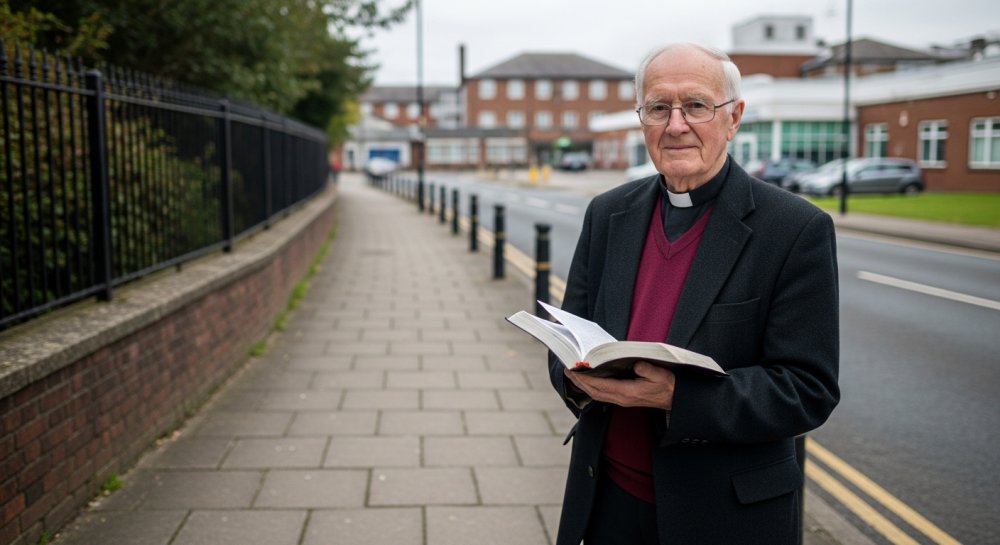
Retired Pastor Convicted for Reading Bible Verse Near Hospital

Faith Facts
- A retired pastor in Northern Ireland was convicted of a criminal offense for reading John 3:16 from the Bible near a hospital buffer zone
- The prosecution marks a troubling escalation in the enforcement of so-called ‘safe access zones’ that effectively create Christianity-free areas in public spaces
- This case raises urgent questions about religious freedom and free speech rights for Christians throughout the United Kingdom
The conviction of a retired pastor for the simple act of reading Scripture in public represents a disturbing milestone in the erosion of Christian liberty in the United Kingdom. When quoting the most famous verse in the Bible becomes grounds for criminal prosecution, we must ask ourselves: how did we arrive at this place?
The case involves an elderly pastor who was standing on the fringes of a buffer zone near a hospital in Northern Ireland. His offense? Reading aloud John 3:16, the beloved verse that proclaims God’s love for the world. For this act of faith, he now carries a criminal conviction.
Buffer zones, or “safe access zones” as they’re euphemistically called, were ostensibly created to prevent harassment near healthcare facilities. But when the mere reading of Scripture—without confrontation, without blocking access, without any aggressive behavior—becomes criminalized, these zones have clearly overstepped their stated purpose. They have become, in effect, Christianity-free zones where the expression of faith is treated as inherently threatening.
This is not about preventing genuine harassment or obstruction. Those behaviors were already illegal under existing laws. This is about silencing a particular viewpoint in the public square. It’s about creating spaces where Christian witness is presumed guilty before any action is taken.
The implications extend far beyond this single case. If reading the Bible aloud in a public space can trigger criminal prosecution, what other expressions of faith will soon be deemed unacceptable? Will wearing a cross be considered intimidating? Will carrying a Bible be seen as a provocation? Will praying silently be construed as a public disturbance?
We are witnessing the steady construction of an invisible infrastructure of censorship—one that disproportionately targets people of faith, particularly Christians. While other forms of public demonstration and expression are tolerated and even celebrated, Christian speech is increasingly treated as uniquely dangerous and subject to special restrictions.
The pastor in question wasn’t blocking anyone’s path. He wasn’t shouting or causing a scene. He was simply reading Scripture—an act that has been part of Christian practice for two millennia. Yet in modern Britain, this ancient tradition has been redefined as criminal behavior.
This case should alarm every person who values freedom of conscience and expression. Today it’s a retired pastor reading John 3:16. Tomorrow it could be any Christian who dares to live out their faith publicly. The precedent being set is chilling: your religious convictions are acceptable only if you keep them entirely private and never allow them to influence your public presence.
Britain has a long and proud history of religious tolerance and free expression. These freedoms were hard-won and have been jealously guarded for generations. But they are being surrendered piece by piece, not through dramatic announcements, but through incremental restrictions that seem reasonable in isolation but collectively constitute a profound assault on liberty.
Buffer zones that criminalize peaceful religious expression are incompatible with a free society. They represent government overreach of the most troubling kind—the state dictating where and when citizens may practice their faith. This is not the hallmark of a liberal democracy; it’s the behavior of an authoritarian regime.
Christians throughout the United Kingdom must recognize this for what it is: a test case. If this conviction stands unchallenged, it will embolden further restrictions. The boundaries of acceptable Christian expression will continue to shrink until faith becomes something practiced only behind closed doors, never to be seen or heard in the public realm.
We need not accept this trajectory. Laws can be challenged. Precedents can be overturned. Public opinion can be shaped. But it requires Christians to speak up, to refuse to be intimidated into silence, and to insist that their constitutional rights to freedom of religion and speech be respected.
The criminalization of Bible reading is not a minor administrative matter. It is a fundamental assault on the character of British society. Christianity-free zones have no place in the United Kingdom—or in any nation that claims to value freedom. This retired pastor’s conviction should be a wake-up call to all who cherish liberty. The question is: will we heed it?
Let us know what you think, please share your thoughts in the comments below.

Faith Facts
- Pastor Israel Ford of LifeWorks Church in Cleveland, Ohio, publicly admitted he has maintained two wives for the past three years.
- The pastor claims the practice of polygyny is endorsed by Scripture, contradicting both American law and historic Christian teaching.
- LifeWorks Church was co-founded in 2009 by Pastor Ford and his first wife, Lydia Ford.
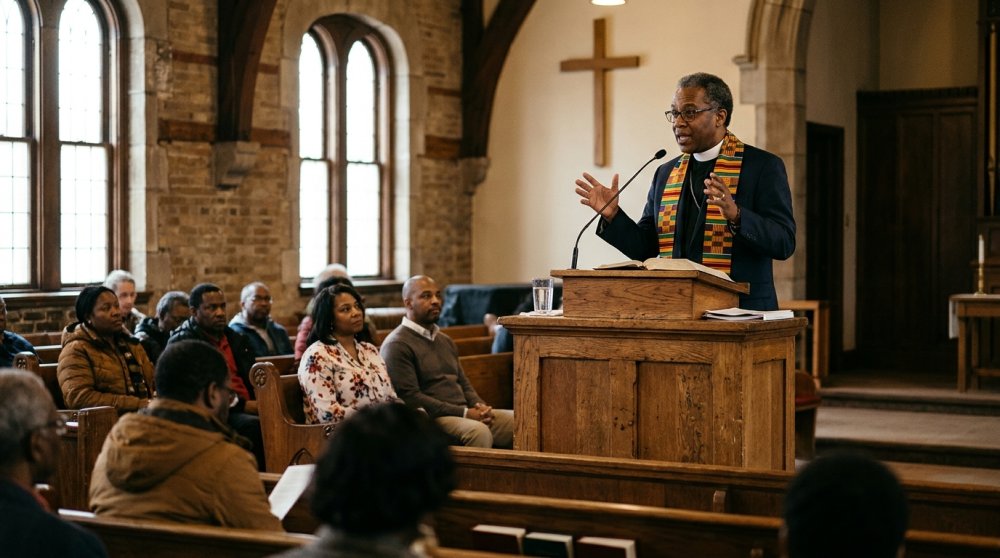
Polygyny is illegal throughout the United States, yet Pastor Israel Ford of LifeWorks Church in Cleveland, Ohio, announced from the pulpit that he has been living with two wives for three years.
Ford told his congregation that having only one wife is unbiblical and that God permits the practice.
“Having only 1 wife is ‘unbiblical'”
The church was founded in 2009 by Pastor Ford and his first wife, Lydia Ford.
Let us know what you think, please share your thoughts in the comments below.
Faith Facts
- Australian megachurch Pastor Russell Evans addressed Hispanic Christians on the need for believers to transform rather than conform to culture.
- Evans stressed that churches must remain contemporary and powerful in the ongoing battle for hearts and minds.
- The message highlights the call for Christians to actively engage and influence their generation through faith and values.
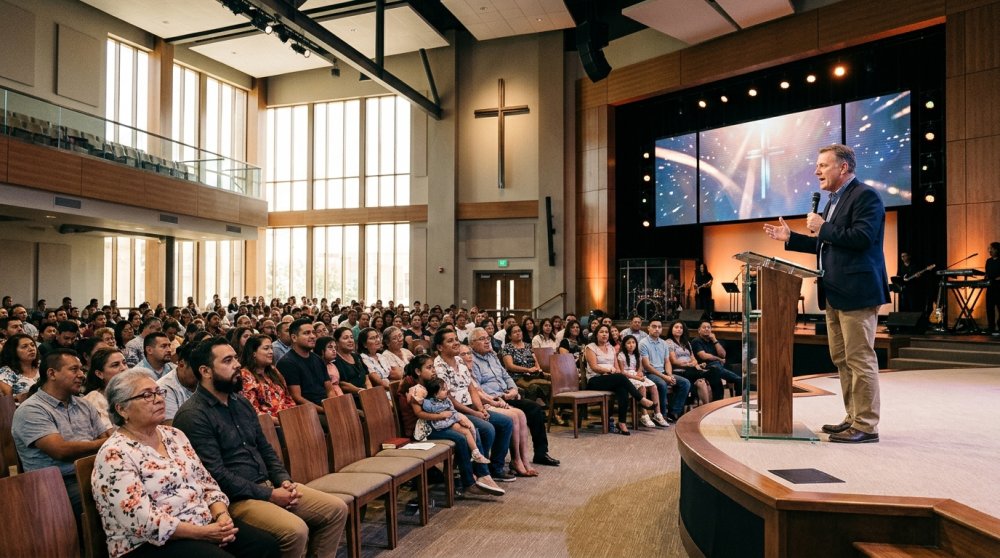
Australian megachurch Pastor Russell Evans delivered a bold challenge to Hispanic Christians, urging them to stand apart from the world while remaining engaged in it.
“Be transformers, not conformers,” Evans declared, calling believers to reject cultural compromise and instead shape society through the power of the Gospel.
Churches, he said, must be both contemporary and powerful to reach this generation amid what he described as a battle for hearts and minds.
Let us know what you think, please share your thoughts in the comments below.
Faith Facts
- Disciple-making movements emphasize serious commitment to following Christ and making other disciples
- Traditional churches and new movements both have valid concerns about how the other approaches ministry
- Church planting movement principles have shown limited growth in Western contexts compared to other parts of the world
Disciple-making movements have raised important questions about how churches in the West are making followers of Jesus. These movements point to a genuine desire for deeper commitment to the Great Commission. Their critique of traditional structures comes from a concern that many established churches have lost focus on personal discipleship.
At the same time, traditional churches have raised concerns about the sustainability and doctrinal depth of newer movements. Both perspectives reflect a shared burden for reaching people with the gospel. The tension between these approaches reveals a broader question facing American Christianity.
Church planting movement principles that have seen dramatic growth in other parts of the world have struggled to produce similar results in Western nations. Cultural differences, established religious traditions, and societal attitudes toward faith all play a role in this disparity. The challenges are complex and require thoughtful examination rather than quick solutions.
This reality challenges established churches to consider whether new approaches might be needed. The call is not to abandon biblical truth but to examine whether current methods are effectively making disciples. Many traditional congregations are beginning to ask hard questions about their own fruitfulness in fulfilling Christ’s command.
Let us know what you think, please share your thoughts in the comments below.


-

 Self-Reliance2 years ago
Trump’s Bold Move Uncovers Massive Social Security Fraud
-

 Faith2 years ago
New Clues Emerge in Noah’s Ark Mystery
-

 News2 years ago
Governor Walz’s Rhetoric Sparks National Controversy
-

 News2 years ago
Mel Gibson’s ‘The Passion of the Christ’ Sequel Title Announced
-

 Family2 years ago
Texas Lawmaker Targets Furries in Schools
-

 Freedom2 years ago
Maine Lawmaker Challenges Sports Fairness Controversy
-

 Family1 year ago
Canada’s Controversial Policy Sparks Ethical Debate
-
Faith11 months ago
Congress Hears Pleas for Nigerian Christians