
Faith
Britain Rejects Death Over Life in Historic Vote


Faith Facts
- The UK’s Terminally Ill Adults Bill has been defeated, blocking government-assisted suicide from entering the healthcare system
- While suicide was decriminalized in Britain in 1961, this bill would have transformed doctors into facilitators of death
- Christian leaders are calling this a crucial moment to reaffirm the sanctity of life and the true purpose of medical care
In a significant victory for the sanctity of life, Britain’s controversial assisted suicide legislation has fallen. The Terminally Ill Adults Bill, which would have enlisted the National Health Service in facilitating death, has been rejected—a decision that offers hope to defenders of life across the Western world.
The defeat of this bill represents more than a legislative setback for euthanasia advocates. It signals a potential turning point in how society views the fundamental purpose of medicine and the value of every human life, particularly those facing terminal illness.
While suicide itself has not been a criminal act in the United Kingdom since 1961, this proposed legislation represented something far more troubling: the systematic involvement of healthcare professionals in ending lives rather than preserving them. The bill would have fundamentally altered the doctor-patient relationship, transforming healers into executioners.
Christian leaders have been vocal in their opposition to assisted suicide, recognizing it as a dangerous erosion of the principle that all life is sacred and worthy of protection. The hospice movement, which has its roots in Christian compassion, offers a compelling alternative: dignified, pain-managed care that honors life until its natural conclusion.
The fallen bill would have placed vulnerable individuals—the elderly, the disabled, and the terminally ill—at increased risk. History shows that once society accepts medical killing as an option, the criteria inevitably expand. What begins as assistance for the terminally ill often extends to the chronically ill, the mentally ill, and even minors, as has occurred in other nations.
Britain’s National Health Service has faced significant challenges in recent years, with long waiting times and resource constraints. The concern among faith communities was that assisted suicide could become not just an option, but an expectation—a “solution” for patients who feel they are burdens on an overstretched system.
The Christian perspective on suffering recognizes it as a profound human experience, but one that can be met with compassion, medical care, and spiritual support. Palliative care advances have made tremendous strides in managing pain and providing comfort to the dying, making assisted suicide medically unnecessary.
Prayer and advocacy from Christian communities played a role in this legislative defeat. Believers understand that every life has intrinsic value, created in the image of God, and that our duty is to accompany the suffering with love—not to hasten their departure from this world.
The fight to protect life is far from over. Advocates for assisted suicide have made clear their intention to reintroduce similar legislation. This requires continued vigilance from people of faith and all who recognize the dangerous precedent such laws establish.
True compassion involves walking alongside those who are suffering, providing excellent medical care, emotional support, and spiritual comfort. It means investing in hospice services and ensuring that no one feels their only option is death.
The rejection of this bill offers an opportunity for society to recommit to the life-saving and life-affirming purposes of healthcare. It allows Britain to choose a path that values every person, regardless of age, ability, or prognosis.
As Christians, we are called to be defenders of the vulnerable and voices for those who cannot speak for themselves. The defeat of the Terminally Ill Adults Bill is a victory worth celebrating, but it must be followed by renewed commitment to ensuring excellent end-of-life care for all.
The culture of life must prevail over the culture of death. Our prayers must continue, both for those facing terminal illness and for lawmakers who will face pressure to revive these dangerous proposals. We must remain steadfast in our conviction that life is precious from conception to natural death.
Let us know what you think, please share your thoughts in the comments below.


Faith Facts
- U.S. Congress members have called on the Pakistani government to protect an 18-year-old Christian woman allegedly abducted and forcibly converted to Islam
- The case highlights ongoing persecution of religious minorities in Pakistan, where forced conversions and abductions of Christian women remain a serious concern
- American lawmakers are using diplomatic pressure to defend religious freedom abroad and protect vulnerable believers
Members of the United States Congress are taking a stand for religious liberty overseas, pressing Pakistan’s government to safeguard a young Christian woman whose family reports she was kidnapped and coerced into converting to Islam. The intervention underscores America’s commitment to defending persecuted Christians worldwide.
The 18-year-old woman’s case has drawn international attention as her family maintains she was forcibly taken and pressured to abandon her Christian faith. Such incidents reveal the dangerous reality faced by religious minorities in Pakistan, where Christians comprise less than two percent of the population.
Congressional action demonstrates that American leaders recognize the duty to speak for those who cannot speak for themselves. The pressure from U.S. lawmakers sends a clear message that the persecution of Christians will not be ignored by the international community.
Pakistan has long struggled with protecting religious minorities, particularly Christian and Hindu women who face kidnapping, forced marriage, and coerced conversions. These crimes frequently go unpunished, leaving families devastated and communities living in fear.
The congressional appeal for protection reflects traditional American values of religious freedom and human dignity. When government officials use their platform to defend the vulnerable and oppressed, they honor both biblical principles and the founding ideals of our nation.
This case serves as a reminder that persecution of Christians remains a global crisis demanding attention and action. Believers in America have a responsibility to pray for and advocate on behalf of brothers and sisters in Christ facing persecution around the world.
Let us know what you think, please share your thoughts in the comments below.
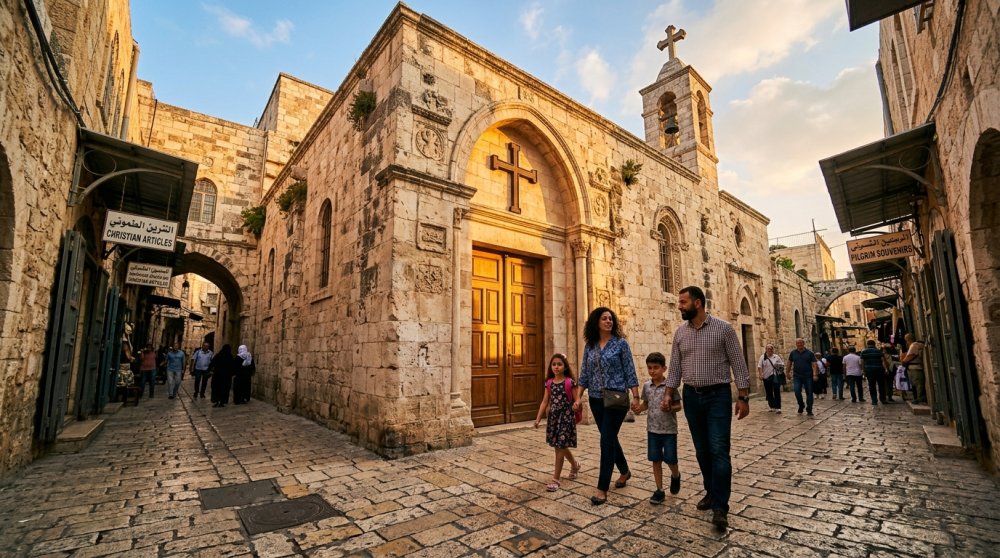
Faith Facts
- The Holy Land is a living homeland shared by peoples with distinct histories, identities, and hopes—not just a collection of ancient sacred sites
- Christians worldwide can learn directly from believers whose families have lived in the Holy Land for millennia
- Understanding the modern reality of the Holy Land requires listening to indigenous Christian voices who continue living out their faith there today
The Holy Land is not merely a collection of sacred sites or ancient stories. It is not an abstract concept but a living homeland shared by peoples carrying different histories, identities, wounds, and hopes.
Christians around the world don’t need to imagine what the Holy Land is like—we can learn from those who live there today. For believers who grow up reading Scripture and studying the history of our faith, it’s easy to think of the Holy Land as something frozen in time, a place preserved in the pages of the Bible.
But the truth is far richer and more complex. The Holy Land continues to be home to vibrant Christian communities whose families have maintained their witness for generations, even through tremendous hardship.
These indigenous Christians carry forward a living testimony that bridges the ancient world of Scripture and the modern challenges of faith in a contested region. Their perspective offers Western Christians a corrective lens—one that sees beyond tourism and prophecy charts to the flesh-and-blood reality of discipleship in the land where Jesus walked.
Understanding the Holy Land today means recognizing it as more than a backdrop for biblical events. It means honoring the Christians who have never left, who pray in the same languages spoken in the early church, and who navigate daily the tensions between preserving heritage and surviving in a rapidly changing Middle East.
For American Christians especially, many of whom support policies affecting the region, this understanding carries real-world implications. The decisions made in Washington and Jerusalem directly impact our brothers and sisters in Christ who call the Holy Land home.
These believers don’t have the luxury of viewing the Holy Land through a purely theological or prophetic framework. For them, it’s where they raise their children, run businesses, worship in centuries-old churches, and try to be faithful witnesses in a land sacred to multiple faiths.
Their stories challenge us to expand our understanding beyond pilgrimage sites and eschatological timelines. They invite us into a deeper solidarity—one that listens before it speaks, learns before it teaches, and recognizes that God’s work in the Holy Land didn’t end with the book of Acts.
The ancient stones still stand, but living stones—believers filled with the Holy Spirit—continue to build the Church in the very place where it was born. Their perseverance, their witness, and their wisdom offer Western Christians an invaluable gift: the chance to see the Holy Land not just as it was, but as it is.
For those seeking to truly understand this sacred region, the starting point is clear: listen to the voices of those whose families have lived there for millennia, whose faith has endured empires and upheavals, and whose testimony connects us directly to the unbroken chain of Christian witness in the land of our Savior.
Let us know what you think, please share your thoughts in the comments below.

Faith Facts
- Eleven members of Congress have called on Pakistan’s government to protect an 18-year-old Christian woman allegedly abducted and forcibly converted to Islam
- The case highlights the ongoing persecution of religious minorities in Pakistan, where forced conversions and abductions of Christian and Hindu women remain widespread
- Congressional leaders are demanding immediate action to secure the young woman’s freedom and hold perpetrators accountable
Eleven members of the United States Congress have taken a bold stand for religious freedom, urging the Pakistani government to intervene in the case of an 18-year-old Christian woman who her family says was abducted and forcibly converted to Islam. The bipartisan group of lawmakers is calling for immediate action to protect this vulnerable young woman and ensure justice is served.
The case underscores a disturbing pattern of religious persecution that continues to plague Pakistan, where Christians and other religious minorities face systematic violence and discrimination. For years, reports have surfaced of young Christian and Hindu women being kidnapped, forcibly converted to Islam, and married off to their abductors—often with little to no intervention from local authorities.
The congressional delegation’s letter represents a critical moment in holding Pakistan accountable for its treatment of religious minorities. These eleven lawmakers are using their positions to shine a light on injustices that too often go unnoticed by the international community. Their intervention sends a clear message that America stands with persecuted Christians around the world.
Pakistan has long been identified as one of the most dangerous countries for Christians. Despite constitutional protections for religious freedom, the reality on the ground tells a far different story. Blasphemy laws are routinely weaponized against Christians, and forced conversions of young women have become alarmingly common with estimates suggesting hundreds of cases occur annually.
The family of the young woman at the center of this case has been fighting tirelessly for her return, facing both legal obstacles and threats to their own safety. Their courage in speaking out despite enormous risk demonstrates the desperation of Christian families in Pakistan who see their daughters stolen and their faith trampled upon.
American Christians must understand that religious persecution is not merely a historical phenomenon—it is a present-day reality affecting our brothers and sisters in Christ across the globe. When one member of the body of Christ suffers, we all suffer. The congressional action in this case is a reminder that we have both a moral obligation and the political means to advocate for the persecuted.
The involvement of U.S. lawmakers also raises important questions about America’s relationship with Pakistan and whether foreign aid should be conditioned on improvements in human rights and religious freedom. Taxpayer dollars should not support governments that turn a blind eye to—or actively enable—the persecution of religious minorities.
This case is not isolated. It represents a systemic problem that requires sustained international pressure and accountability. The courage of these eleven members of Congress in speaking out should inspire more American leaders to prioritize religious freedom in their foreign policy decisions.
As Americans who value both our Christian heritage and our constitutional freedoms, we cannot remain silent when fellow believers face such grave injustices. Prayer is essential, but it must be accompanied by action—whether through contacting our representatives, supporting organizations that aid persecuted Christians, or simply raising awareness about their plight.
The outcome of this particular case will send a powerful signal about whether Pakistan is willing to protect all of its citizens regardless of faith, or whether it will continue to allow religious minorities to be victimized with impunity. The world is watching, and the pressure from American lawmakers may prove decisive in securing this young woman’s freedom.
Let us know what you think, please share your thoughts in the comments below.


-

 Self-Reliance1 year ago
Trump’s Bold Move Uncovers Massive Social Security Fraud
-

 Faith1 year ago
New Clues Emerge in Noah’s Ark Mystery
-

 News1 year ago
Governor Walz’s Rhetoric Sparks National Controversy
-

 News1 year ago
Mel Gibson’s ‘The Passion of the Christ’ Sequel Title Announced
-

 Family1 year ago
Texas Lawmaker Targets Furries in Schools
-

 Freedom1 year ago
Maine Lawmaker Challenges Sports Fairness Controversy
-

 Family1 year ago
Canada’s Controversial Policy Sparks Ethical Debate
-
Faith9 months ago
Congress Hears Pleas for Nigerian Christians