
Faith
A Growing Concern About Modern Prophecy Culture in the Church


Faith Facts
- Christian leaders are questioning whether the modern emphasis on constant supernatural experiences aligns with biblical teaching
- The pursuit of prophetic words and signs may distract believers from foundational spiritual disciplines like Scripture reading and prayer
- True biblical prophecy serves to edify the church and point believers to Christ, not to create dependency on mystical experiences
A troubling trend has emerged in segments of American Christianity: the belief that a constant stream of supernatural experiences is essential to maintaining a vibrant faith. This emphasis on “the prophetic” has left some longtime believers feeling uneasy about where the church is heading.
The heart of the concern centers on whether this focus on prophecy and supernatural manifestations actually strengthens faith or creates an unhealthy dependency. Scripture calls believers to walk by faith, not by sight, yet modern prophetic culture often demands visible signs and wonders as proof of God’s presence and favor.
Traditional Christian teaching has always affirmed that God can and does speak to His people. However, the biblical model emphasizes the sufficiency of Scripture as God’s primary means of revelation. The written Word provides everything necessary for life and godliness, according to 2 Peter 1:3.
When believers become conditioned to expect constant prophetic words, dreams, and supernatural experiences, they risk missing the steady faithfulness that characterizes genuine Christian discipleship. The Christian life is built on trust in God’s promises, obedience to His commands, and the quiet work of the Holy Spirit transforming hearts over time.
The apostle Paul warned against being “tossed to and fro by every wind of doctrine.” This caution seems particularly relevant in an age when prophetic declarations flood social media, and Christians chase after the latest word from self-proclaimed prophets rather than deepening their understanding of God’s already-revealed truth.
None of this denies the reality of spiritual gifts or God’s ability to speak in extraordinary ways. The concern is about proportion and priority. When supernatural experiences become the expected norm rather than grace-filled exceptions, something has shifted from the biblical pattern.
Mature faith doesn’t require constant mystical validation. It rests on the finished work of Christ, the trustworthiness of God’s Word, and the indwelling presence of the Holy Spirit who guides believers into all truth. These foundations remain constant whether or not dramatic supernatural experiences accompany them.
The church needs discernment in this hour. Believers must ask whether the current prophetic culture is producing deeper devotion to Christ or creating consumers of spiritual experiences. Are Christians being equipped to stand firm in trials through God’s Word, or are they being trained to seek the next prophetic fix?
True biblical prophecy always points people to Jesus and aligns perfectly with Scripture. It builds up the body of Christ in love, not in dependency on human mediators of God’s voice. When prophetic ministry creates more fascination with the prophetic than with Christ Himself, something has gone wrong.
The answer isn’t to reject the supernatural or deny that God speaks today. Rather, it’s to return to biblical priorities: knowing Christ, obeying His Word, walking in love, and serving others faithfully. These are the marks of authentic Christianity, with or without extraordinary experiences.
American Christians would do well to examine whether their spiritual diet consists primarily of God’s Word or primarily of prophetic words from others. The faith that has sustained believers through centuries of persecution and hardship has been anchored in Scripture, not in constant supernatural encounters.
Let us know what you think, please share your thoughts in the comments below.

Faith Facts
- Modern worship leaders are increasingly partnering with songwriters who do not profess Christian faith
- The personal beliefs and character of those writing congregational prayers matter deeply, as these songs shape the spiritual formation of millions
- Church leaders must carefully discern whether songs written by non-believers align with biblical truth and honor God’s holiness
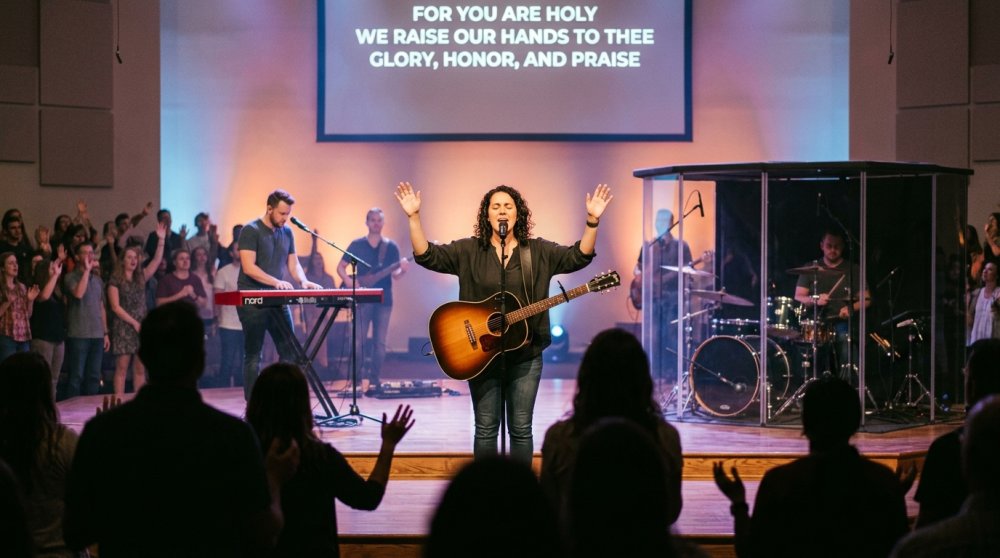
A crucial conversation is emerging in Christian worship communities across America: Should it matter who writes the songs we sing in our churches? As collaboration between worship leaders and secular artists becomes more common, believers are asking whether the spiritual condition of a songwriter affects the integrity of congregational worship.
Kenny Klinglesmith raises an essential question that strikes at the heart of authentic Christian worship. When we lift our voices together on Sunday mornings, we are doing far more than singing—we are praying, declaring truth, and forming our spiritual understanding of who God is.
The character and beliefs of those crafting these corporate prayers cannot be dismissed as irrelevant. Scripture is clear that truth matters, and the source of that truth matters deeply.
Throughout Church history, hymn writers and worship leaders have been theologians and devoted followers of Christ. Their personal walk with the Lord informed every word they penned. Charles Wesley, Fanny Crosby, and countless others wrote from lives saturated in Scripture and personal communion with God.
Today’s landscape looks markedly different. The commercial worship music industry has expanded dramatically, bringing with it writers and producers whose primary expertise may be musical rather than theological or spiritual.
The concern isn’t about musical quality or creative excellence. Non-Christian artists can certainly craft beautiful melodies and compelling lyrics. The question is whether songs intended to lead God’s people in worship should come from hearts that know and love Him personally.
When we sing, we teach. Children absorb theology through the songs they hear week after week. New believers form their understanding of God’s character through worship lyrics. Mature Christians reinforce their faith or, potentially, absorb subtle distortions.
A songwriter’s worldview inevitably shapes their work. Their understanding of sin, grace, redemption, and the nature of God flows from their relationship—or lack thereof—with Christ. Even well-intentioned lyrics from unbelieving writers may lack the depth of revelation that comes only through the Holy Spirit.
This doesn’t mean every worship song must come with a spiritual resume of its writer. But church leaders bear responsibility to carefully evaluate not just what is being sung, but the theological foundation from which it springs.
Scripture calls us to test everything and hold fast to what is good. This discernment applies to worship music just as it does to preaching and teaching. The songs we choose shape our congregations’ faith more profoundly than we often recognize.
Some argue that God can use anyone to communicate truth, pointing to biblical examples like Balaam or even Pharaoh. This is certainly true—God’s sovereignty knows no bounds. But the question isn’t whether God can use non-Christians; it’s whether we should actively seek out and elevate their words as the prayers of God’s people.
The commercial pressures facing modern worship are real. Record labels, streaming metrics, and concert tours have transformed worship music into big business. These market forces can prioritize what sells over what sanctifies.
Church leaders must resist the temptation to simply adopt whatever is popular or trending. Our worship should be formed by Scripture and led by the Spirit, not driven by industry charts or social media buzz.
This conversation requires wisdom and grace. Many worship leaders genuinely desire to serve their congregations well while also engaging with the broader creative community. The path forward isn’t rigid legalism but thoughtful discernment.
Perhaps the answer lies in returning to some fundamental questions: Does this song exalt Christ? Is it biblically sound? Does it lead people into genuine worship of the one true God? And yes—does the writer demonstrate a life and faith that honors the message they’ve penned?
Our worship matters to God. He desires worshipers who worship in spirit and truth. As we consider who writes our songs, we’re ultimately asking what kind of worship we want to offer our Holy God.
The stakes are high. We’re not just choosing entertainment for Sunday mornings; we’re selecting the words that will echo in hearts and minds throughout the week, shaping how believers understand and relate to their Creator.
American churches have the freedom to worship openly and choose their own expressions of praise. With that freedom comes responsibility—to ensure that what we sing honors God fully and forms His people faithfully.
Let us know what you think, please share your thoughts in the comments below.
Faith Facts
- Mitchell Boles, a 17-year-old member of Beech Bethany Church of Christ in Celina, Tennessee, passed away on Tuesday, August 25, 2026, after battling a rare and aggressive bone cancer.
- Known for his simple yet profound description of his faith—”Shine your light, do what’s right”—Mitchell’s testimony touched his church family and community throughout his illness.
- Despite being autistic and facing a terminal diagnosis, Mitchell’s humor, friendliness, and unwavering Christian witness made him beloved by all who knew him.
Mitchell Boles, a 17-year-old church member whose faith outshone his cancer, went home to be with the Lord on Tuesday, August 25, 2026. He was a faithful member of the Beech Bethany Church of Christ in Celina, Tennessee, where his testimony became a beacon of hope to many.
Boles was profiled in a July 2026 feature that chronicled his remarkable faith journey. His story captured the hearts of believers across the region as he faced his diagnosis with courage rooted in Christ.
“We love Mitchell.”
That phrase echoed through the pews of Beech Bethany Church of Christ, across group texts and hospital rooms, since 17-year-old Mitchell Boles was diagnosed last summer with a rare, aggressive bone cancer. Boles, who grew up in the Middle Tennessee church, was known for his humor, friendliness and diehard college football fandom.
“People keep telling me how much they love him,” said Mitchell’s mother, Hanna. “He’s always made people smile.”
Whether it was the teenager’s love for fishing or long debates about the rivalry between his Auburn Tigers and the Alabama Crimson Tide, those close to him said his personality always set him apart. Boles, who was autistic, often described his faith in simple yet profound terms: “Shine your light, do what’s right.”
That simple statement became Mitchell’s life motto and testimony. In an age where many young people struggle to articulate their faith, Mitchell’s clarity and conviction stood as a powerful witness to the transforming power of Christ in a believer’s life.
His courage in the face of a terminal diagnosis encouraged countless believers in their own faith walks. Members of his church family and the wider Christian community followed Mitchell’s journey, drawing strength from his unwavering trust in God’s goodness even amid suffering.
Mitchell’s legacy reminds us that faith isn’t measured by eloquence or theological complexity, but by a heart fully surrendered to Christ. His life demonstrated that even in our weakest moments, God’s light can shine brightest through us.
The young man’s funeral service was held later that week, where family, friends, and church members gathered to celebrate a life well-lived for the glory of God. Though Mitchell’s time on earth was far too short by earthly standards, his eternal impact on those who knew him will endure.
Mitchell Boles is survived by his parents, Ray and Hanna Boles, and his church family at Beech Bethany Church of Christ. His testimony continues to inspire believers to “shine their light” and “do what’s right” in honor of a young man who lived those words every day.
Let us know what you think, please share your thoughts in the comments below.
Faith Facts
- Christian organizational structures often reflect deeper theological beliefs about authority, community, and partnership than official statements suggest
- True mutuality in church relationships requires more than rhetoric—it demands structural accountability and reciprocal commitment
- The global Church faces critical questions about whether its institutional frameworks genuinely embody biblical principles of unity and equality
The way we organize our churches and ministries speaks volumes about what we actually believe—often more than our carefully crafted mission statements or theological declarations. Our structures are our theologies embodied, revealing what our communities truly believe about God, the Church, authority, and one another.
If our structures do not embrace true mutuality, they proclaim a theology that no amount of rhetoric about unity and partnership can conceal. This disconnect between what we say and what we do represents one of the most pressing challenges facing Christian institutions today.
For the well-being of the Church globally, believers must honestly examine the nature of their commitments. Are we building relationships based on genuine partnership, or are we perpetuating hierarchies that contradict the servant leadership Christ modeled?
The call to Christian unity runs throughout Scripture, from Jesus’s prayer in John 17 that His followers “may be one” to Paul’s exhortations for believers to bear with one another in love. Yet unity without mutuality becomes a hollow imitation—words without the substance of sacrificial, reciprocal relationship.
When church structures concentrate power and decision-making in the hands of a few, when international partnerships flow in only one direction, when voices from certain communities are consistently marginized, the organizational framework itself preaches a message contrary to the Gospel. True Christian unity requires structures that reflect mutual submission, shared authority, and reciprocal blessing.
The question facing American Christians—particularly those in positions of leadership and influence—is whether we are willing to examine our institutional arrangements through this lens. Do our denominational structures, mission partnerships, and organizational hierarchies genuinely reflect biblical mutuality? Or do they preserve inequities we would never openly defend?
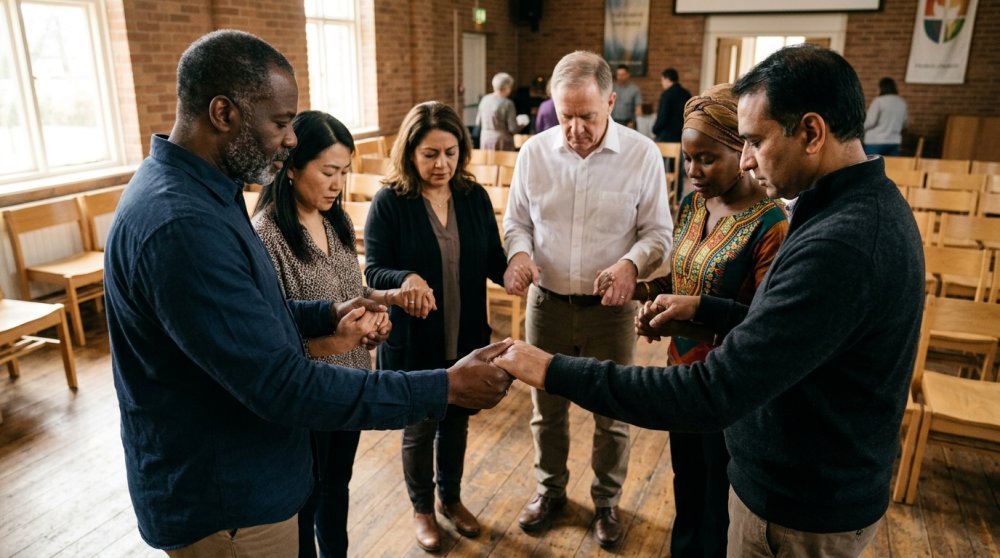
Building authentically mutual relationships requires humility, sacrifice, and the willingness to relinquish control. It means creating space at decision-making tables for voices historically excluded. It demands listening before speaking, learning before teaching, and recognizing that the Body of Christ is enriched by its diversity.
As the global Church continues to grow—with the majority of Christians now living outside the West—the imperative for structural mutuality becomes even more urgent. American Christians must ask whether their institutions are prepared to embrace genuine partnership or whether they will cling to outdated models that centralize authority and resources.
The integrity of our witness depends on alignment between our words and our structures. When what we build reflects what we believe about the inherent worth and dignity of every believer, we demonstrate the transformative power of the Gospel in practical, observable ways.
Let us know what you think, please share your thoughts in the comments below.


-

 Self-Reliance1 year ago
Trump’s Bold Move Uncovers Massive Social Security Fraud
-

 Faith1 year ago
New Clues Emerge in Noah’s Ark Mystery
-

 News1 year ago
Governor Walz’s Rhetoric Sparks National Controversy
-

 News1 year ago
Mel Gibson’s ‘The Passion of the Christ’ Sequel Title Announced
-

 Family1 year ago
Texas Lawmaker Targets Furries in Schools
-

 Freedom1 year ago
Maine Lawmaker Challenges Sports Fairness Controversy
-

 Family1 year ago
Canada’s Controversial Policy Sparks Ethical Debate
-
Faith9 months ago
Congress Hears Pleas for Nigerian Christians