
Faith
What Really Grew Beside Zacchaeus in Jericho


Faith Facts
- Zacchaeus is the Greek version of the Jewish name Zaccai, appearing in Ezra and Nehemiah.
- The tree he likely climbed was the wild fig, or Ficus sycomorus, not a European sycamore.
- This detail supports the Gospel of Luke’s eyewitness accuracy and historical reliability.
The account of Zacchaeus in Jericho is a powerful testimony of repentance and the grace of Jesus Christ.
While traditional translations often identify the tree he climbed as a sycamore, historical and botanical evidence reveals a deeper biblical reality.
Instead of the maple-like sycamore found in modern Europe or America, Zacchaeus likely climbed a Ficus sycomorus, known as the wild fig.
This sturdy tree with low-spreading branches provided the perfect vantage point for a man seeking to glimpse the Savior.
By correcting these traditional misunderstandings, we better appreciate the eyewitness accuracy of the Gospel of Luke.
This small detail affirms the historical reliability of Scripture and the transformative power of a personal encounter with Christ.
Standing on the truth of God’s Word allows us to see past human tradition and focus on the message of salvation.
Like Zacchaeus, we must be willing to position ourselves to see Jesus and welcome His presence into our hearts and homes.


Faith Facts
- New Pew Research Center data shows majority of Americans view President Trump as not particularly religious
- Public perception of a president’s faith often shapes voter trust and cultural debates
- Trump has maintained consistent support from evangelical voters despite questions about personal religious practice
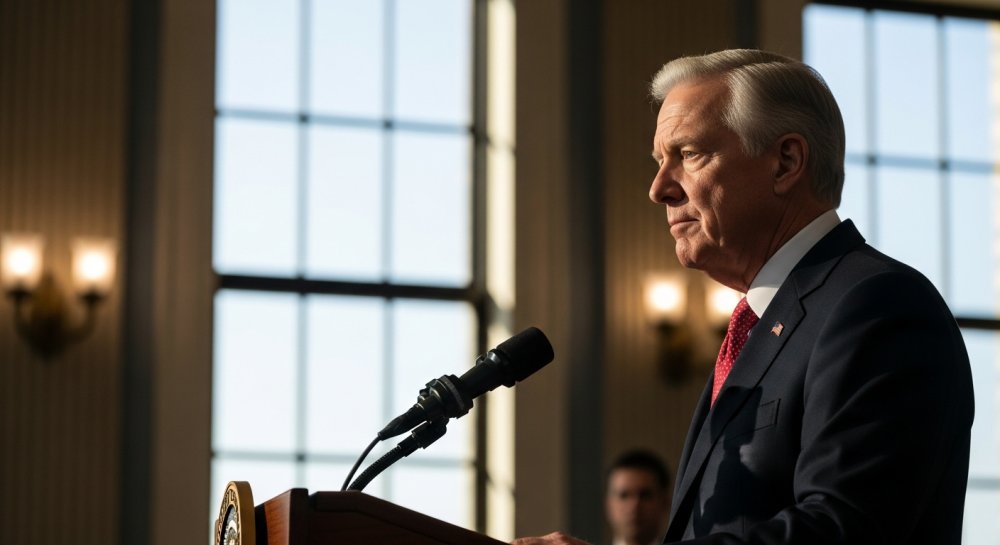
A recent survey from the Pew Research Center has sparked renewed conversation about President Donald Trump’s religious convictions, revealing that most Americans do not view him as a particularly devout individual.
The findings highlight a notable disconnect between public perception and the strong evangelical support Trump has consistently received throughout his political career. Despite questions about his personal faith practices, the former president has maintained a loyal base among Christian conservative voters who point to his policy achievements rather than personal piety.
Trump’s relationship with the faith community has been characterized by his defense of religious liberty, appointment of conservative judges, and advocacy for pro-life policies. Many Christian leaders have emphasized that they support him for his actions in office rather than as a spiritual role model.
The Pew Research data reflects ongoing cultural debates about the role of personal faith in political leadership. While Americans across the political spectrum value authenticity, voters differ significantly on whether a leader’s private religious devotion should influence their assessment of fitness for office.
For evangelical voters who backed Trump in overwhelming numbers, the focus has remained on tangible policy outcomes: Supreme Court appointments, the relocation of the U.S. embassy to Jerusalem, and protection of conscience rights for Christian business owners and healthcare workers.
The survey results underscore the complex relationship between faith, politics, and public perception in modern America. As the nation continues to grapple with questions of leadership and values, the conversation about what constitutes genuine religious commitment remains as relevant as ever.
Let us know what you think, please share your thoughts in the comments below.
Faith Facts
- Christian leaders in Jerusalem warn that anti-Christian sentiment from certain segments of the Jewish community has moved from fringe to mainstream concern.
- Religious persecution includes physical attacks on clergy and desecration of sacred sites, threatening the historic Christian presence in the Holy Land.
- The Christian population in Jerusalem and surrounding areas continues to decline amid growing hostility and restrictions on religious practice.
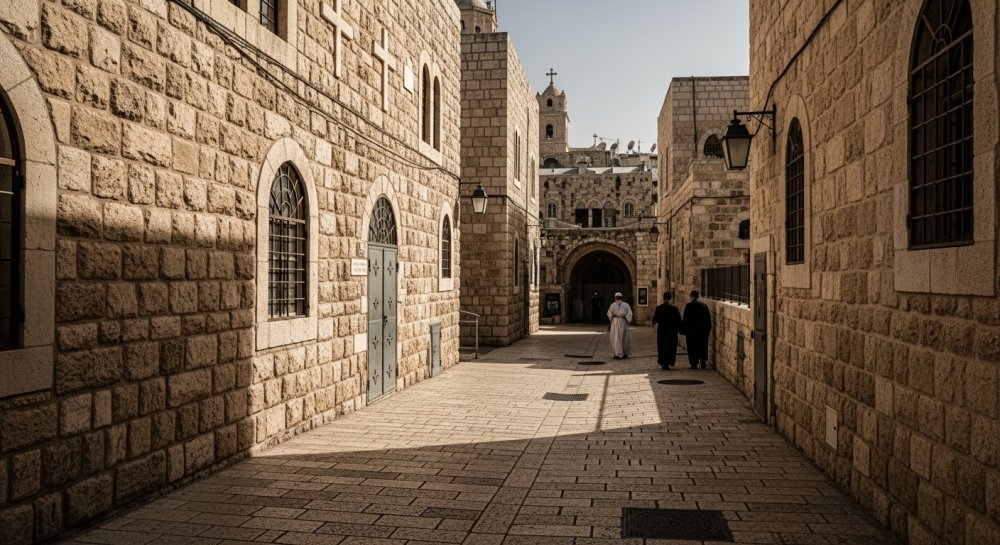
Christian leaders in the Holy Land are sounding the alarm about escalating hostility that threatens to reduce Christianity’s birthplace to little more than a tourist attraction devoid of its living faith community.
The situation has deteriorated to the point where anti-Christian sentiment can no longer be dismissed as isolated or marginal.
Church leaders report a pattern of harassment, intimidation, and violence directed at Christian clergy and communities. Physical attacks on priests and monks have become increasingly common, along with the desecration of churches and holy sites.
The concerning trend extends beyond individual incidents to broader societal pressures that make it increasingly difficult for Christians to maintain their ancient presence in the land where Christianity was born. Restrictions on religious freedom and property rights have compounded the challenges facing these communities.
As the Christian population dwindles under these pressures, there are fears that the Holy Land will be stripped of its authentic Christian witness. Rather than a living testament to faith, the sacred sites risk becoming mere museum pieces or what some have described as a “Christian Disneyland” – a sanitized, commercialized version of Christianity’s heritage without the vibrant community of believers who have maintained an unbroken presence since apostolic times.
This crisis represents not just a local concern but a matter of global significance for Christians worldwide. The preservation of Christianity’s historic heartland requires sustained attention and advocacy from the international faith community.
American Christians, who have long supported the Holy Land through pilgrimage and prayer, have a particular stake in ensuring that these ancient communities can continue to worship freely and maintain their sacred trust as guardians of Christianity’s most holy sites.
Let us know what you think, please share your thoughts in the comments below.

Faith Facts
- The Salvation Army’s ‘War Cry’ newspaper has been published continuously since 1879, surviving nearly 150 years of cultural and technological change
- The publication began during Queen Victoria’s reign as a bold evangelical tool to reach the streets with the Gospel message
- Despite declining print media, ‘War Cry’ continues its mission on Britain’s high streets, demonstrating enduring faith and commitment to public witness
In an age when legacy newspapers are folding and digital media dominates, one Christian publication has refused to surrender. The ‘War Cry,’ launched by The Salvation Army in 1879, still appears on Britain’s streets nearly a century and a half after its founding.
The newspaper began during the reign of Queen Victoria, when Benjamin Disraeli served as her prime minister. At that time, Britain was at the height of its global influence, and The Salvation Army was just beginning its mission to bring the Gospel to the nation’s poorest and most forgotten.
The ‘War Cry’ became the movement’s bold voice—a weekly declaration of Christian truth carried into pubs, factories, and street corners. Its mission was simple: share the good news of Jesus Christ with those who might never darken a church door.
What makes this publication remarkable is not just its age, but its persistence. In a media landscape where even major secular outlets struggle to survive, ‘War Cry’ endures as a witness to the power of mission-driven journalism grounded in unchanging truth.
The newspaper represents more than nostalgia. It embodies a commitment to public Christian witness that refuses to retreat into comfortable church buildings. It stands as a reminder that the Gospel is meant for the marketplace, not just the sanctuary.
For Christian conservatives in America, the story of ‘War Cry’ offers encouragement. It demonstrates that faithful witness, sustained over generations, can outlast cultural trends and technological disruption. The mission remains: bring Christ to the people where they are.
The Salvation Army’s decision to maintain this street-level evangelistic tool reflects a theology of presence—being among the people, not separate from them. This approach resonates with the biblical model of incarnational ministry, where Christ himself walked among tax collectors and sinners.
As American Christians face increasing cultural pressure to privatize faith, ‘War Cry’ stands as evidence that public Christian witness can endure. The publication’s survival through two world wars, economic depressions, and dramatic social change proves that gospel-centered mission transcends temporary challenges.
The high street presence of ‘War Cry’ also challenges modern assumptions about effective evangelism. While digital strategies dominate contemporary church growth discussions, this newspaper demonstrates the continuing value of personal, face-to-face gospel proclamation.
Britain’s spiritual landscape has changed dramatically since 1879, with church attendance declining and secularism rising. Yet ‘War Cry’ continues its work, a tangible reminder that God’s truth doesn’t change with the times. The message proclaimed in Victorian England remains as urgent and relevant today.
For those who value traditional evangelism and public Christian witness, ‘War Cry’ represents hope. It proves that faithfulness matters more than popularity, and that mission sustained by conviction can outlast cultural opposition.
Let us know what you think, please share your thoughts in the comments below.


-

 Self-Reliance1 year ago
Trump’s Bold Move Uncovers Massive Social Security Fraud
-

 Faith1 year ago
New Clues Emerge in Noah’s Ark Mystery
-

 News1 year ago
Governor Walz’s Rhetoric Sparks National Controversy
-

 News1 year ago
Mel Gibson’s ‘The Passion of the Christ’ Sequel Title Announced
-

 Family1 year ago
Texas Lawmaker Targets Furries in Schools
-

 Freedom1 year ago
Maine Lawmaker Challenges Sports Fairness Controversy
-

 Family11 months ago
Canada’s Controversial Policy Sparks Ethical Debate
-
Faith5 months ago
Congress Hears Pleas for Nigerian Christians