
Faith
BBC’s Portrait of Christianity Reveals Deeper Problem in Modern Media

Faith Facts
- BBC’s portrayal of Christian clergy has shifted from comedic caricatures to dramatic stereotypes, yet still fails to capture authentic faith
- Recent controversy over The Archers highlights ongoing tension between mainstream media and religious programming
- Entertainment industry’s representation of Christians reflects broader cultural disconnect with traditional religious values
The British Broadcasting Corporation’s relationship with Christianity has long been complicated, marked by a persistent inability to authentically represent people of faith. A recent controversy surrounding the long-running radio drama The Archers has brought this troubled dynamic back into focus, revealing how little progress has been made despite decades of supposed evolution.
The claim that an archbishop complained about The Archers’ portrayal of religious characters is dubious at best. But the controversy itself speaks to a larger truth: the BBC, like much of modern media, fundamentally misunderstands what drives Christians and how they live their faith in daily life.
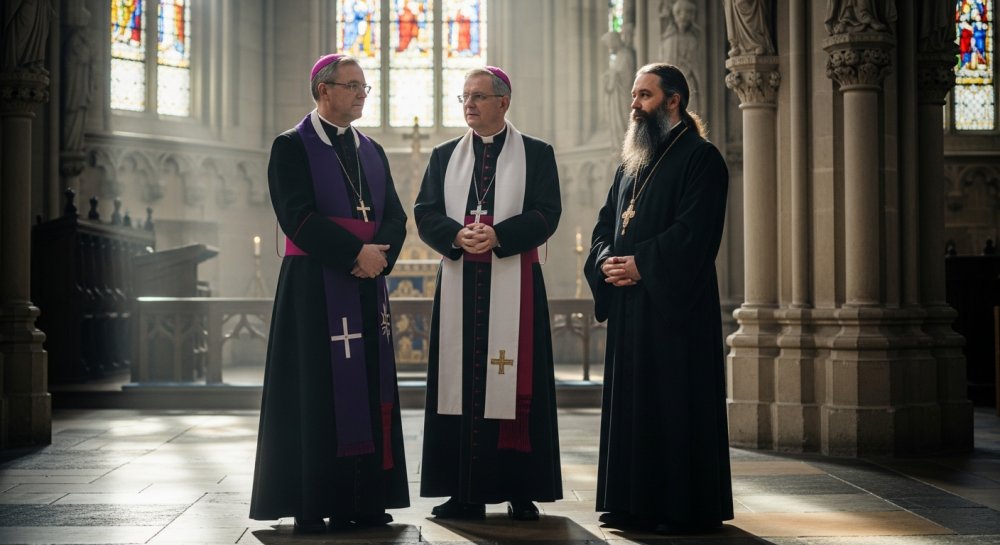
For years, Christian clergy on BBC programming were relegated to the role of bumbling fools—harmless, ineffectual figures of gentle mockery. The stereotype of the confused, socially awkward vicar became a staple of British comedy, perpetuating the notion that serious religious faith was incompatible with intelligence or competence. This characterization served to diminish Christianity’s intellectual and moral authority in the public square.
In recent years, the pendulum has swung in a different direction. Now the BBC opts for what might be called the “sexy priest” trope—clergy members portrayed as tortured, morally conflicted figures wrestling with desires that stand in tension with their vows. While this approach may generate dramatic tension, it still fails to capture the authentic experience of Christian ministry.
The entertainment industry’s struggle to portray Christianity accurately reflects a broader cultural divide. Writers and producers who lack personal understanding of faith often resort to stereotypes—either making clergy figures of fun or turning them into vessels for exploring doubt and moral compromise. Missing from these portrayals is the lived reality of millions: people whose faith provides meaning, purpose, and moral clarity in their daily lives.
This disconnect matters because media representation shapes public perception. When the primary images of Christianity available in popular culture are either ridicule or dysfunction, it becomes harder for genuine faith to be taken seriously in civic discourse. The mockery or sexualization of religious figures sends a message that traditional Christian values are either quaint relics or hypocritical facades.
American Christians can relate to similar struggles with media representation. Hollywood and mainstream networks often portray believers as judgmental villains or simpletons, rarely depicting the depth, compassion, and intellectual rigor that characterize authentic Christian communities. The problem isn’t that media should serve as propaganda for Christianity—it’s that honest, fair representation seems perpetually out of reach.
The solution isn’t to demand that broadcasters create sanitized, unrealistic versions of religious life. Christians, like all people, struggle with sin and doubt. Clergy members are human beings with flaws and failings. Honest storytelling can and should reflect these realities.
What’s missing is respect—a willingness to understand Christianity on its own terms rather than filtering it through secular assumptions about what religious people must really be like. The best religious programming doesn’t shy away from complexity or conflict, but it approaches faith with the seriousness and depth it deserves.
The BBC’s evolution from bumbling vicars to conflicted priests represents change without understanding. Until media institutions make genuine efforts to comprehend what animates people of faith—what they believe, why they believe it, and how it shapes their lives—their portrayals will continue to miss the mark. For Christians committed to sharing their faith in an increasingly secular culture, this ongoing misrepresentation presents both a challenge and an opportunity to tell their own stories more effectively.
Let us know what you think, please share your thoughts in the comments below.

Faith Facts
- New York Times columnist David French refuses to question Texas state Rep. James Talarico’s Christianity despite controversial theological statements
- Talarico previously claimed biblical prohibitions against homosexuality are ‘mistranslations’ and called abortion ‘a difficult moral decision’
- Conservative commentator Allie Beth Stuckey challenged French’s stance, arguing that denying core biblical truths warrants questioning one’s Christian profession
New York Times columnist David French is defending his refusal to question the faith of a Texas lawmaker whose theological views have sparked widespread controversy among Christian conservatives.
During a recent discussion, French stated he will not claim that Texas state Rep. James Talarico is not a Christian, despite Talarico’s public statements that contradict traditional biblical teaching.
The debate centers on Talarico’s previous assertions that biblical prohibitions against homosexuality are merely “mistranslations” and his characterization of abortion as “a difficult moral decision” rather than a moral wrong. These positions have alarmed many Christians who view them as direct contradictions of Scripture’s clear teachings on sexual morality and the sanctity of life.
Conservative commentator Allie Beth Stuckey challenged French’s unwillingness to scrutinize Talarico’s profession of faith. Stuckey argued that when someone publicly denies fundamental biblical truths, it is appropriate to question whether their beliefs align with historic Christianity.
“Not writing these people out of Christianity,” French responded, signaling his reluctance to draw theological boundaries even when faced with positions that diverge significantly from orthodox Christian teaching.
The exchange highlights a growing divide within American Christianity over how to respond to professing believers who advocate for positions contrary to Scripture. While some argue for a broad, inclusive approach that avoids questioning anyone’s profession of faith, others contend that truth and doctrinal clarity must take precedence.
Traditional Christian teaching, grounded in both Old and New Testament texts, has consistently affirmed God’s design for human sexuality within marriage between one man and one woman. Similarly, the Bible’s emphasis on God’s creative role in forming life in the womb has historically led Christians to oppose abortion except in the most extreme circumstances.
Critics of French’s position argue that refusing to address theological error—particularly from public figures who influence others—represents a failure of Christian leadership. They point to numerous New Testament passages where apostles clearly identified false teaching and warned believers to hold fast to sound doctrine.
The controversy also reflects broader tensions within conservative Christianity about engagement with secular institutions and progressive theology. French, who has become increasingly critical of certain elements within the conservative movement, represents one approach that emphasizes dialogue and inclusivity. His critics advocate for clearer doctrinal boundaries and willingness to identify teaching that contradicts biblical authority.
As political and cultural divisions continue to reshape American religious life, the question of who defines authentic Christianity—and on what basis—remains a crucial and contentious issue for believers across the theological spectrum.
Let us know what you think, please share your thoughts in the comments below.
Faith Facts
- Prominent Christian author Eric Metaxas calls for grace toward President Trump regarding a controversial AI-generated image
- Metaxas accuses media personality Tucker Carlson of blasphemy in separate remarks
- The discussion highlights ongoing tensions between faith leaders and public figures over religious imagery and speech
Conservative Christian author and radio host Eric Metaxas is drawing a sharp distinction between what he views as acceptable religious expression and outright blasphemy in recent statements to The Christian Post.
Metaxas addressed the controversy surrounding an AI-generated image shared by President Donald Trump that depicted religious imagery. Rather than condemning the president, Metaxas urged fellow Christians to extend grace and understanding.
The author and broadcaster, known for his biographies of Christian figures including Dietrich Bonhoeffer and Martin Luther, took a markedly different tone when discussing comments made by former Fox News host Tucker Carlson.
Metaxas characterized Carlson’s remarks as crossing a line into blasphemy, though the specific nature of those comments was not detailed in the original report. The contrast in his responses highlights what he sees as a fundamental difference between the two situations.
The debate over religious imagery in political and media contexts continues to divide Christian conservatives. Some believers argue for strict adherence to traditional reverence in all depictions of faith, while others emphasize the importance of grace and context when evaluating public figures’ actions.
Metaxas’ position reflects a broader conversation within evangelical and conservative Christian circles about how to engage with political leaders who support their values while maintaining theological integrity. His call for grace toward President Trump aligns with many Christian conservatives who prioritize the president’s policy positions on religious freedom, life issues, and traditional family values.
The discussion also underscores the complex relationship between faith leaders and media personalities who share conservative political viewpoints but may differ on matters of religious propriety and expression.
As Christians navigate an increasingly secular culture, questions about appropriate religious imagery, speech, and the application of grace versus accountability remain pressing concerns for believers seeking to uphold both truth and mercy.
Let us know what you think, please share your thoughts in the comments below.
Faith Facts
- Evangelist killed by suspected Muslim extremists posing as moto-taxi drivers in central Uganda on April 9
- The attack occurred shortly after the victim preached at a gospel event
- Christians face increasing persecution in Uganda and across East Africa
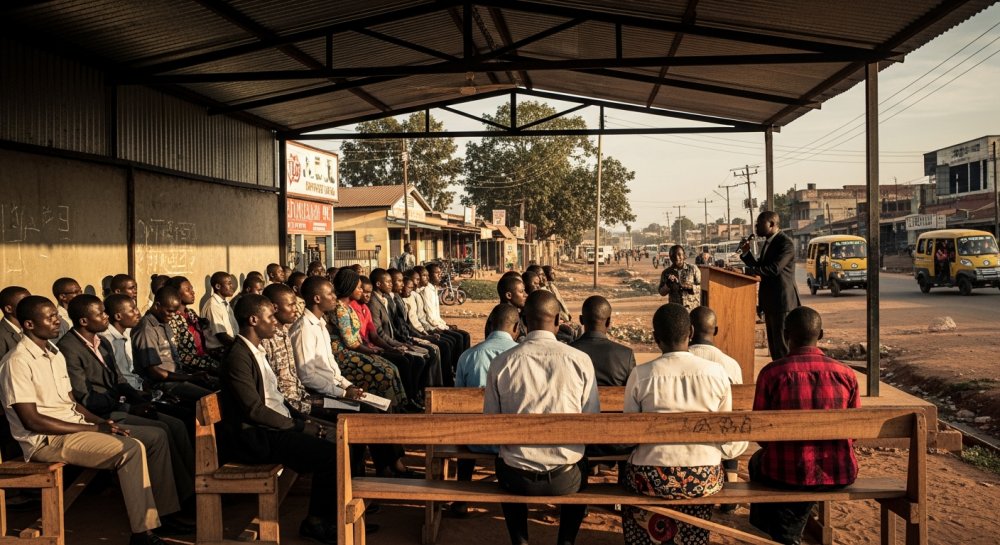
A Christian evangelist has been murdered in central Uganda after preaching at a gospel event, according to sources on the ground. The attack occurred on April 9 when suspected Muslim extremists, disguised as moto-taxi drivers, targeted the evangelist shortly after he finished sharing the Gospel.
The killing highlights the growing dangers faced by Christians in Uganda and throughout East Africa. Believers who openly share their faith are increasingly vulnerable to violent attacks by Islamic extremists who oppose the spread of Christianity in the region.
This tragic incident serves as a sobering reminder of the cost of discipleship in many parts of the world. While American Christians often take their religious freedom for granted, brothers and sisters in Christ around the globe risk their lives simply for proclaiming the Gospel.
The murder also underscores the need for continued prayer and support for persecuted Christians worldwide. Uganda, despite having a significant Christian population, has seen a rise in violent incidents targeting evangelists and church leaders in recent years.
The perpetrators’ decision to pose as moto-taxi drivers demonstrates the calculated nature of the attack. This deception allowed them to approach their target without raising suspicion, then strike when the evangelist was most vulnerable.
American Christians must remain vigilant in praying for our persecuted brothers and sisters. We must also support organizations that provide aid, security, and advocacy for believers facing violence for their faith. The global church is one body, and when one member suffers, we all suffer together.
This attack serves as a call to action for the international community to address the growing persecution of Christians in Uganda and neighboring countries. Religious freedom must be defended vigorously, both at home and abroad.
Let us know what you think, please share your thoughts in the comments below.

NY Times Columnist Defends Lawmaker’s Controversial Theology Against Conservative Criticism

Christian Leader Defends Trump’s Viral Post While Condemning Media Figure’s Remarks

Jordan Peterson Battles Severe Illness as Family Endures Year of Hardship
-

 Self-Reliance1 year ago
Trump’s Bold Move Uncovers Massive Social Security Fraud
-

 Faith1 year ago
New Clues Emerge in Noah’s Ark Mystery
-

 News1 year ago
Governor Walz’s Rhetoric Sparks National Controversy
-

 News1 year ago
Mel Gibson’s ‘The Passion of the Christ’ Sequel Title Announced
-

 Family1 year ago
Texas Lawmaker Targets Furries in Schools
-

 Freedom1 year ago
Maine Lawmaker Challenges Sports Fairness Controversy
-

 Family11 months ago
Canada’s Controversial Policy Sparks Ethical Debate
-
Faith5 months ago
Congress Hears Pleas for Nigerian Christians