
Faith
Trump’s Jesus Image Sparks Faithful Debate on Leadership and Reverence

Faith Facts
- President Trump shared an AI-generated image depicting himself in Christ-like imagery, prompting widespread criticism from Christian leaders and conservatives
- The controversial post follows Trump’s public criticism of Pope Leo XIV and inflammatory rhetoric toward Iran
- Christian supporters are navigating the tension between backing pro-faith policies and addressing concerns over reverence and blasphemy
An AI-generated image shared by President Donald Trump depicting himself in the likeness of Jesus Christ has ignited a firestorm of debate among Christian conservatives who supported his election. The image, which portrays the president in Christ-like imagery, has drawn sharp criticism from believers who see it as crossing a sacred line.
The controversy comes on the heels of other provocative actions by the president, including a public rebuke of Pope Leo XIV and the publication of an expletive-laden threat directed at Iran. These incidents have prompted soul-searching among Christian leaders and voters about the boundaries of political support and the defense of sacred symbols.
Many Christians who voted for Trump cite his strong record on religious liberty, pro-life policies, and defense of traditional values as reasons for their continued support. His administration has delivered tangible victories for people of faith, from Supreme Court appointments to policy protections for religious institutions.
However, the Jesus image has created a moment of reckoning. Conservative Christians are asking whether there is a line between supporting a political leader and condoning actions that appear to trivialize or misuse sacred Christian imagery.
Several prominent evangelical leaders have spoken out, emphasizing that while they appreciate Trump’s policy achievements, reverence for Christ must never be compromised. They argue that Christian voters can hold two truths simultaneously: gratitude for pro-faith governance and the obligation to call out blasphemy when they see it.
The tension reflects a broader challenge facing Christian conservatives in the public square. How do believers engage with imperfect leaders while maintaining their witness and upholding the holiness of their faith?
Some argue that Trump’s use of Christian imagery, even if misguided, reflects his awareness of the importance of the Christian voter base. Others insist that awareness is not enough—respect and reverence are required when invoking the name and image of Jesus Christ.
The incident underscores the ongoing need for Christian discernment in political engagement. Believers are called to be wise as serpents and innocent as doves, supporting leaders who advance righteous policies while never remaining silent when sacred truths are at stake.
As the debate continues, Christian conservatives are united on one front: their faith in Jesus Christ is non-negotiable. Political allegiances may shift, but the call to honor God above all remains constant.
Let us know what you think, please share your thoughts in the comments below.


Faith Facts
- A researcher tested five major world religions using AI analysis to evaluate their internal consistency and rational coherence
- Christianity emerged as the most logically consistent faith system when examined through artificial intelligence reasoning
- The experiment demonstrates how AI technology can be used to defend and validate Christian truth claims rather than threaten them
Artificial intelligence doesn’t have to be viewed as an enemy of faith. In fact, when applied properly, it can serve as a powerful tool to validate what Christians have known all along — that our faith stands on solid ground.
A fascinating experiment recently put five major world religions through an AI analysis engine to test their internal consistency, logical coherence, and rational foundations. The results may surprise skeptics but will likely affirm what believers already understand in their hearts.
Rather than approaching AI with fear or suspicion, Christians should recognize it as another instrument that can be used for Kingdom purposes. Just as the printing press revolutionized the spread of Scripture, modern technology offers new ways to demonstrate the truth of the Gospel.
The experiment evaluated Christianity, Islam, Hinduism, Buddhism, and Judaism by examining their core doctrines, historical claims, and philosophical frameworks. The AI assessed each religion’s ability to maintain logical consistency across its teachings and to provide coherent answers to life’s fundamental questions.
Christianity stood out for its unified narrative from Genesis to Revelation, its historical verifiability through archaeological evidence, and its rational explanation for humanity’s moral consciousness and spiritual longing. The resurrection of Jesus Christ, in particular, emerged as a historically defensible event that anchors the entire Christian worldview.
This doesn’t mean we place our faith in machines or algorithms. Our confidence remains in the living God who reveals Himself through Scripture, creation, and the person of Jesus Christ. But it does demonstrate that Christianity welcomes scrutiny and rational examination.
The other religions showed various inconsistencies when analyzed through logical frameworks. Islam’s internal contradictions regarding free will and divine sovereignty presented challenges. Eastern religions struggled with their circular reasoning about reality and illusion. These aren’t attacks on sincere believers of other faiths, but honest observations about theological coherence.
For too long, secular culture has portrayed faith as the enemy of reason. This experiment flips that narrative on its head. Christianity doesn’t fear the light of logical analysis because truth has nothing to hide.
The Apostle Paul used the philosophical frameworks of his day to present the Gospel in Athens. He engaged with the intellectual currents of Greek thought while remaining firmly rooted in revealed truth. Today’s Christians can do the same with artificial intelligence and other modern tools.
This should encourage believers who sometimes feel outmatched in debates with skeptics. The evidence supports our faith. The logic aligns with Scripture. The historical record validates the Biblical account. AI analysis simply confirms what the Holy Spirit has already testified to our hearts.
Of course, salvation doesn’t come through intellectual assent alone. We are saved by grace through faith in Jesus Christ. But that faith is not blind or irrational — it’s grounded in the solid rock of God’s revealed truth and confirmed by both historical evidence and personal experience.
As we navigate an increasingly technological age, Christians should embrace these tools with wisdom and discernment. AI can help us study Scripture more deeply, reach people with the Gospel more effectively, and defend our faith more persuasively.
The experiment’s results remind us that Christianity isn’t just emotionally satisfying or culturally meaningful — it’s also intellectually robust and logically sound. Our faith engages both the heart and the mind because the God we serve created both.
Rather than retreating from technological advancement, the Church should lead the way in using these tools for God’s glory. We have nothing to fear from honest inquiry because we serve the God of truth who invites us to “come now, let us reason together.”
Let us know what you think, please share your thoughts in the comments below.

Faith Facts
- Pakistan’s Federal Constitutional Court has ordered a temporary halt to the planned eviction of more than 25,000 Christians from informal settlements in Islamabad
- The court has given authorities four weeks to finalize regulations that could legalize these Christian communities
- This intervention represents a critical moment for religious minorities facing displacement in Pakistan’s Islamic republic
More than 25,000 Christians living in Pakistan’s capital city are breathing a cautious sigh of relief this week. The Federal Constitutional Court has stepped in to temporarily block their eviction from informal settlements where many have lived for years, serving as a vulnerable religious minority in an Islamic nation.
The court’s intervention comes as welcome news for these families who faced imminent displacement. Authorities have been ordered to halt eviction proceedings and develop proper regulations within four weeks that could provide a legal pathway for these communities to remain in their homes.
For these Pakistani Christians, the threat of eviction represents more than just a housing crisis — it’s a matter of survival for a religious minority that has long faced discrimination and persecution. The informal settlements, while lacking official recognition, have provided these believers with community, stability, and a place to worship freely alongside fellow Christians.
The four-week deadline now puts pressure on Pakistani officials to address a problem they have long ignored. These Christian families have existed in legal limbo, building lives and raising children in communities that authorities have refused to formally acknowledge until now.
Religious freedom advocates recognize this court decision as a temporary victory, but understand the battle is far from over. The next month will prove critical as regulations are drafted that could either provide lasting security for these Christian communities or leave them vulnerable to future displacement.
Pakistan’s treatment of religious minorities remains a concern for Christians worldwide. This case highlights the precarious position of believers living under governments that do not share or protect their faith values. The outcome will send a message about whether Pakistan’s legal system can provide equal protection for all its citizens, regardless of religious belief.
As these 25,000 Christians await their fate, they deserve the prayers and support of believers around the world. Their struggle for the simple right to have a home reminds us of the persecution and challenges faced by our brothers and sisters in Christ across the globe.
Let us know what you think, please share your thoughts in the comments below.

Faith Facts
- The forthcoming report reportedly examines how the FACE Act was used against pro-life advocates.
- Activists say the findings point to federal coordination that targeted peaceful believers and protesters.
- The article frames the issue as a clash over religious liberty, life, and government overreach.
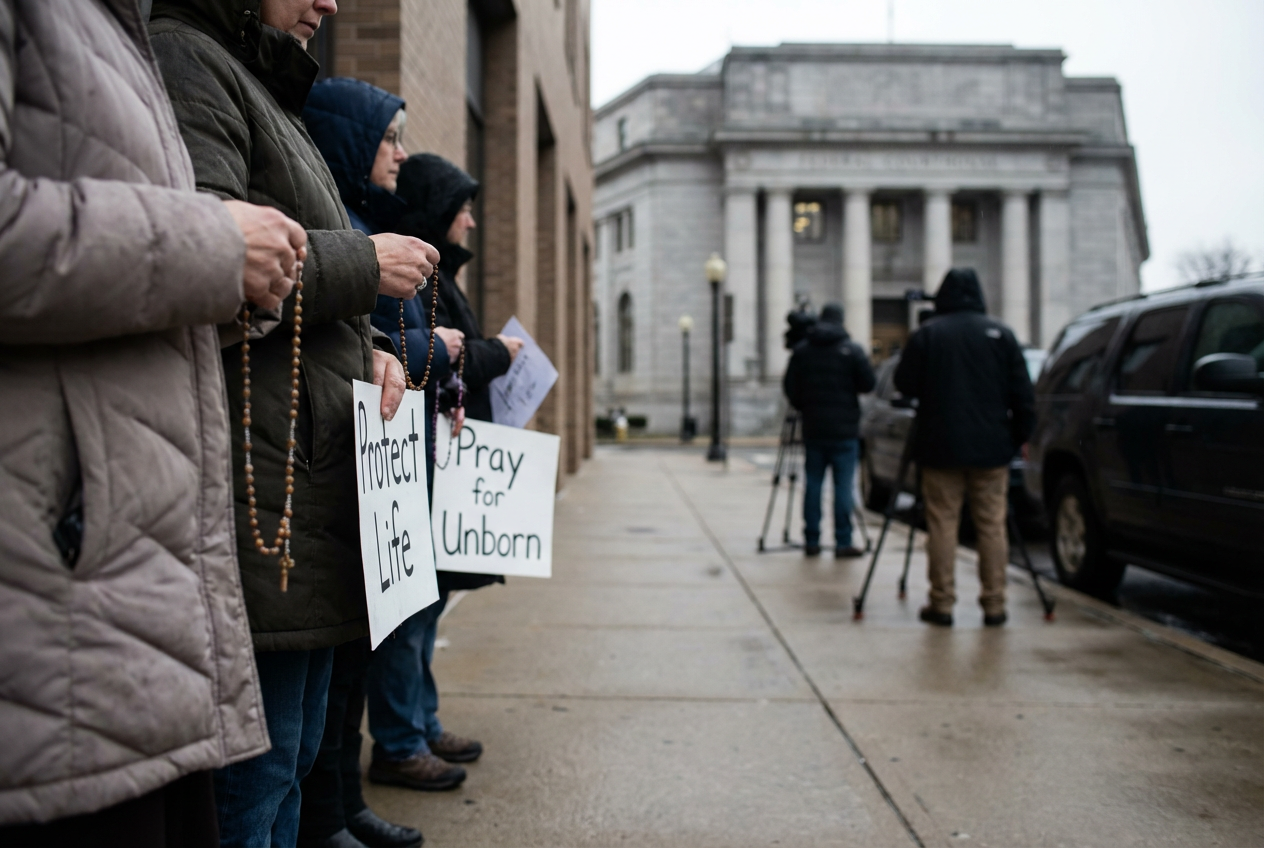
A forthcoming Department of Justice report reportedly reveals how the federal government weaponized the FACE Act to target pro-life advocates.
This document suggests the current administration shattered public trust by prioritizing a pro-abortion agenda over the constitutional rights of Christian citizens.
Activists who previewed the findings describe a disturbing pattern of surveillance and coordination between federal prosecutors and the abortion industry.
These actions represent a direct assault on the values of faith and family that form the bedrock of our nation.
“We must pray for the protection of those standing for the sanctity of life against government overreach.”
“May our leaders return to a path of justice that honors the unborn and respects the religious liberty of all Americans.”


-

 Self-Reliance1 year ago
Trump’s Bold Move Uncovers Massive Social Security Fraud
-

 Faith1 year ago
New Clues Emerge in Noah’s Ark Mystery
-

 News1 year ago
Governor Walz’s Rhetoric Sparks National Controversy
-

 News1 year ago
Mel Gibson’s ‘The Passion of the Christ’ Sequel Title Announced
-

 Family1 year ago
Texas Lawmaker Targets Furries in Schools
-

 Freedom1 year ago
Maine Lawmaker Challenges Sports Fairness Controversy
-

 Family11 months ago
Canada’s Controversial Policy Sparks Ethical Debate
-
Faith5 months ago
Congress Hears Pleas for Nigerian Christians