
Faith
When Mockery Goes Viral: How Christians Can Stand Firm in a Culture of Digital Ridicule


Faith Facts
- Digital mockery through memes and satire has become a subtle tactic to undermine Christian confidence and values in modern culture
- Believers are called to respond with grace and truth rather than retreating from public discourse when faced with online ridicule
- Standing firm in faith requires understanding cultural tactics while maintaining compassion for those who oppose Christian principles
In an era where a single meme can spread to millions within hours, Christians find themselves navigating unprecedented territory. The digital age has transformed how society engages with faith, often reducing deeply held beliefs to punchlines shared across social media platforms.
What began as harmless internet humor has evolved into a sophisticated cultural weapon. Mockery, packaged in clever graphics and viral videos, has become one of the most effective tools for marginalizing Christian perspectives in the public square.
This phenomenon isn’t merely about hurt feelings or wounded pride. The strategic use of ridicule serves a deeper purpose—to make believers second-guess their convictions and retreat from cultural engagement. When faith is consistently portrayed as foolish or outdated, even committed Christians can begin to internalize doubt.
The tactic works because it bypasses rational argument entirely. Rather than engaging with the substance of Christian truth claims, mockery attacks the messenger. It weaponizes shame, suggesting that holding traditional biblical values makes someone socially backward or intellectually inferior.
Yet Scripture provides clear guidance for such moments. Throughout history, followers of Christ have faced far worse than digital derision. The apostles rejoiced when counted worthy to suffer dishonor for the Name, and believers today can draw courage from that same heritage.
The appropriate response isn’t withdrawal or angry retaliation. Christians are called to engage the culture with both conviction and compassion, speaking truth while extending grace to those who oppose them. This requires wisdom—knowing when to offer a reasoned defense and when to simply live out faith authentically.
Understanding the mechanics of mockery helps believers respond effectively. Those who ridicule often do so from their own insecurity or spiritual emptiness. Behind the sarcasm frequently lies genuine searching, masked by defensive humor.
Social media amplifies both the reach and impact of mockery, but it also provides unprecedented opportunities for witness. When Christians respond to ridicule with patience, kindness, and unwavering truth, they demonstrate the transformative power of the gospel to a watching world.
The challenge for modern believers isn’t to avoid the digital public square but to occupy it with confidence. This means developing discernment about which battles merit engagement and which deserve only prayers for those involved.
Parents and church leaders bear special responsibility in this cultural moment. Young believers especially need equipping to navigate an environment where their faith will be regularly challenged through humor and derision. Building theological foundations strong enough to withstand mockery requires intentional discipleship.
Ultimately, the prevalence of anti-Christian mockery reveals the continuing relevance of biblical truth. People rarely bother ridiculing ideas they consider truly irrelevant. The intensity of opposition often indicates the threat posed by authentic Christian witness to worldly systems.
Rather than being deterred by digital mockery, believers can view it as confirmation that their faith still matters in the cultural conversation. The gospel has always been foolishness to those perishing, yet it remains the power of God for salvation to all who believe.
Standing firm doesn’t mean standing alone. The global community of believers provides encouragement and support for those facing ridicule. When one member suffers dishonor, the whole body shares in that experience and provides strength.
The digital age presents unique challenges, but the fundamental call remains unchanged. Christians are commissioned to be salt and light regardless of the response they receive. Mockery may sting temporarily, but truth endures eternally.
Let us know what you think, please share your thoughts in the comments below.


Faith Facts
- Rev. Khoda Tana was a founding figure of Christianity among the Nyishi, the largest indigenous tribal community in India’s northeastern state of Arunachal Pradesh
- Mourners gathered on July 13 at Nirjuli Village-I for the funeral of the pioneering Baptist minister who dedicated his life to sharing the Gospel
- His legacy represents decades of faithful Christian witness in one of India’s most remote border regions
A pioneering voice of Christian faith in one of India’s most remote regions has gone home to be with the Lord. Rev. Khoda Tana, who brought the Gospel to the Nyishi people of Arunachal Pradesh, passed away after a lifetime of faithful ministry that transformed an entire community.
Under a canopy at Nirjuli Village-I, district Papum Pare, mourners gathered on the morning of July 13 at the residence of Mrs. Jumshi Tana. They came to honor a man whose dedication to sharing Christ’s message reached the largest indigenous tribal community in India’s northeastern border state of Arunachal Pradesh.
Rev. Tana’s ministry represented more than just religious work—it was a testament to the power of one faithful servant answering God’s call in challenging circumstances. As a founding figure of Christianity among the Nyishi people, he laid a spiritual foundation that continues to bear fruit today.
The Nyishi community, living in one of India’s most geographically isolated regions near the border with China, had limited exposure to the Christian faith before pioneers like Rev. Tana committed their lives to missionary work. His efforts demonstrated the enduring truth that the Great Commission knows no boundaries—even in the most remote corners of the world.
Arunachal Pradesh, a state where Christianity has grown significantly despite challenges, now stands as evidence of the faithful work of ministers like Rev. Tana. His legacy serves as an inspiration to believers who understand that sharing the Gospel requires sacrifice, perseverance, and unwavering commitment to the truth.
The funeral gathering reflected the deep respect and love the community held for a man who devoted his life to serving others and spreading the message of salvation. His passing marks the end of an era for Baptist ministry in the region, but his spiritual impact will endure for generations.
Let us know what you think, please share your thoughts in the comments below.

Faith Facts
- Josef and Rebecca Schneider left secure careers seven years ago to renovate a former Catholic seminary into a hotel in Austria
- The couple initially saw the hotel as a means to fund church planting, but discovered hospitality itself could be a powerful form of ministry
- Their business model demonstrates how Christians can integrate faith and work, turning everyday commerce into opportunities for Gospel witness
When Josef and Rebecca Schneider walked away from stable careers seven years ago, they had a vision that seemed clear: renovate an old Catholic seminary in Austria, operate it as a hotel, and use the income to support their true calling of planting a church. But God had different plans. What they discovered would challenge their understanding of ministry itself.
The hotel didn’t just fund their mission. It became the mission.
For many Christians, there’s a dividing line between “secular” work and “sacred” ministry. We clock in at our jobs to pay the bills, then pursue our real Kingdom work on nights and weekends. But the Schneiders’ experience reveals a biblical truth that the early church understood well: every sphere of life can be an arena for Gospel proclamation when we approach it with Kingdom intentionality.
The concept isn’t new, but it’s often forgotten. In a culture that increasingly sees faith as something private, reserved for Sundays and church buildings, the Schneiders demonstrate how business can become a platform for witness. Their guests don’t just receive quality hospitality—they encounter Christians living out their faith authentically in the marketplace.
This approach reflects the model of the Apostle Paul, who supported his missionary work through tentmaking. He didn’t see his trade as a distraction from ministry but as an integral part of his witness. His workplace gave him access to people and conversations that might never have happened otherwise.
The implications are profound for American Christians. We spend the majority of our waking hours at work. What if those hours weren’t just about earning a paycheck, but about advancing God’s Kingdom? What if our businesses, our customer interactions, our professional relationships were all part of our mission field?
This doesn’t mean turning every business transaction into a high-pressure evangelism opportunity. Rather, it means operating with excellence, integrity, and genuine care for people—letting our faith inform how we conduct business rather than compartmentalizing it. It means seeing our work as a calling, not just a career.
The Schneiders’ story challenges the false dichotomy between sacred and secular work. In God’s economy, there’s no such division. A hotel operated with Christian principles and genuine love for guests can be just as much a ministry as a church service. A business run with integrity can be a powerful testimony in a world hungry for authenticity.
For believers feeling stuck in “ordinary” jobs, wondering when their real ministry will begin, this is liberating news. Your mission field may be right where you are. Your workplace, your customers, your colleagues—these are the people God has strategically placed in your path.
The challenge is intentionality. Will we approach our work as merely a means to an end, or will we see it as a God-given platform for influence? Will we compartmentalize our faith, or will we let it permeate every aspect of our professional lives?
As America faces increasing hostility toward public expressions of faith, Christians in the marketplace have a unique opportunity. We can demonstrate through our business practices, our treatment of employees and customers, and our ethical standards what Kingdom values look like in action. We can be salt and light not just on Sundays, but Monday through Saturday as well.
The Schneiders discovered what many are learning: you don’t have to leave your career to enter ministry. Sometimes, your career is the ministry. The hotel isn’t funding the mission—it is the mission. And that changes everything.
Let us know what you think, please share your thoughts in the comments below.
Faith Facts
- Pastor Nihad Hassan, head of the Evangelical Kurdish Church in Beirut, was released from Syrian detention on Monday, August 3rd
- The pastor’s release coincidentally occurred on his birthday, marking a double celebration for his family and congregation
- Christian leaders and congregants in the region continue to face persecution and detention under authoritarian regimes
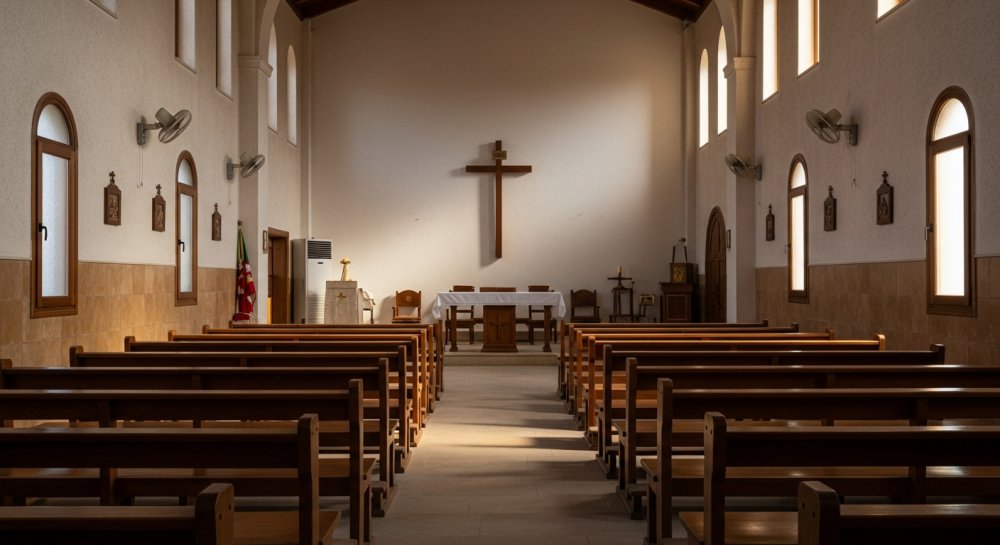
In a moment of answered prayer for believers across the Middle East, Pastor Nihad Hassan walked free from Syrian detention this week. The head of the Evangelical Kurdish Church in Beirut regained his freedom on Monday, a release made even more meaningful by the fact that it fell on his birthday.
The pastor’s detention highlights the ongoing challenges faced by Christian communities in Syria and throughout the Middle East. Believers in these regions often face harassment, imprisonment, and persecution simply for proclaiming the Gospel and leading their congregations in worship.
Pastor Hassan’s Evangelical Kurdish Church serves a unique community at the intersection of ethnic and religious identity. Kurdish Christians represent a minority within a minority, maintaining their faith in Christ while preserving their cultural heritage in a region where both face pressure and persecution.
The circumstances surrounding Pastor Hassan’s initial detention and the length of his imprisonment were not immediately disclosed. However, his release brings relief to a congregation that has undoubtedly been praying for his safe return.
This case serves as a reminder of the importance of religious freedom—a value deeply cherished in America’s Christian conservative community. While Americans enjoy constitutional protections for worship and religious expression, our brothers and sisters in Christ around the world often risk their lives and liberty to gather in His name.
The timing of Pastor Hassan’s release on his birthday adds a providential element to this story of deliverance. For believers who trust in God’s sovereignty, such timing reflects His care for His servants even in the darkest circumstances.
As Christians in America, we must continue to stand with persecuted believers worldwide through prayer, advocacy, and support. The courage demonstrated by pastors like Nihad Hassan, who continue to lead their flocks despite threats and detention, challenges us to remain bold in our own faith commitments.
Let us know what you think, please share your thoughts in the comments below.


-

 Self-Reliance1 year ago
Trump’s Bold Move Uncovers Massive Social Security Fraud
-

 Faith1 year ago
New Clues Emerge in Noah’s Ark Mystery
-

 News1 year ago
Governor Walz’s Rhetoric Sparks National Controversy
-

 News1 year ago
Mel Gibson’s ‘The Passion of the Christ’ Sequel Title Announced
-

 Family1 year ago
Texas Lawmaker Targets Furries in Schools
-

 Freedom1 year ago
Maine Lawmaker Challenges Sports Fairness Controversy
-

 Family1 year ago
Canada’s Controversial Policy Sparks Ethical Debate
-
Faith8 months ago
Congress Hears Pleas for Nigerian Christians