Connect with us

Faith

Devotion Over Discipline: Faith That Endures

Published

on

Devotion Over Discipline: Faith That Endures

Faith Facts

  • Many members of Gen Z are drawn to spiritual disciplines but often grow spiritually weary.
  • Christian tradition emphasizes devotion, not rigid discipline, as the key to a lasting relationship with God.
  • Medieval saints like Bernard of Clairvaux and Margery Kempe prioritized love and longing over performance.

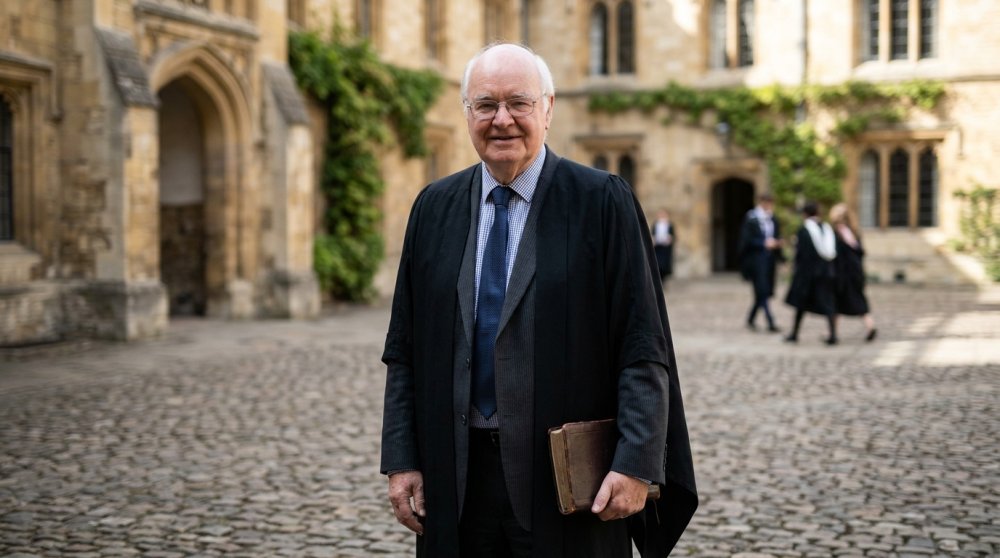
Throughout today’s culture, young Christians feel pressure to live up to ideas of perfection, pursuing productivity and checklists in their faith lives. Many become spiritually exhausted, confusing the quest for discipline with God’s call for loving devotion.

Faithful living isn’t about monitoring habits, but about deepening our relationship with Christ.

“Where have You hidden Yourself, and abandoned me in my groaning, O my Beloved?” says the soul in a poem by St John of the Cross.

Devotion goes beyond rituals, inviting us to embrace grace on our journey and rest in God’s enduring love. It is in heartfelt longing for the Lord, not self-driven striving, that we find true spiritual renewal.

“Love suffices in itself; it pleases in itself and for its own sake. It is its own merit and reward. Love does not need any cause beyond itself, nor any fruit – its fruit is its use. I love because I love, I love so that I may love.”

Faith isn’t about endless performance, but about a loving relationship with our Savior. Return to devotion, and experience the freedom Christ offers.

Read the original article

Continue Reading
Click to comment

Leave a Reply

Your email address will not be published. Required fields are marked *

Faith

Surrogate Mother Faces Six-Figure Lawsuit After Refusing to Abort Child With Heart Condition

Published

on

Faith Facts

  • A California couple is suing their surrogate for over $100,000 after she refused to abort a baby diagnosed with a rare heart condition
  • The surrogate, a single mother, chose life for the child despite alleged pressure from the couple who hired her
  • The case highlights the moral complexities of surrogacy contracts and the sanctity of life in modern reproductive arrangements

A California couple has filed a lawsuit seeking more than $100,000 from the single mother they hired as a pregnancy surrogate. The legal action stems from the surrogate’s refusal to terminate the pregnancy after the baby received a diagnosis of a rare heart condition.

The case has brought attention to the ethical boundaries of surrogacy contracts and the fundamental question of who holds authority over an unborn child’s life. According to the surrogate’s account, the couple allegedly demanded she undergo an abortion following the medical diagnosis.

The surrogate mother stood firm in her conviction to carry the baby to term, despite facing pressure and now legal consequences. Her decision reflects a commitment to protecting life, even when confronted with difficult medical circumstances and potential financial hardship.

This lawsuit raises serious questions about the commercialization of pregnancy and childbirth. When contracts attempt to dictate life-and-death decisions for unborn children, it challenges the most basic principles of human dignity and the sanctity of life that many Americans hold dear.

The case also underscores concerns many faith leaders have expressed about surrogacy arrangements. These contracts can create situations where financial considerations and parental preferences conflict with the inherent value of every human life, regardless of health status or medical prognosis.

For the surrogate, a single mother already facing her own financial challenges, the six-figure lawsuit represents an enormous burden. Yet she chose to protect the vulnerable life entrusted to her care, demonstrating the kind of selfless courage that often goes unrecognized in our culture.

The rare heart condition diagnosis created a crossroads moment. While the hiring couple allegedly viewed termination as a solution, the surrogate recognized a human being worthy of protection and a chance at life.

As this case proceeds through the courts, it will likely set precedents regarding the limits of surrogacy contracts. Can financial agreements override a woman’s conscience and a child’s right to life? These are questions that deserve thoughtful consideration from lawmakers and citizens alike.

The litigation highlights how modern reproductive technologies can create complex moral situations that our laws have not fully addressed. Traditional family structures, rooted in marriage and natural procreation, avoid many of these ethical dilemmas entirely.

This mother’s stand for life, despite tremendous pressure and financial threat, serves as a powerful testimony. In a society that often prioritizes convenience over conviction, her decision reflects values that honor the Creator and recognize every child as a precious gift.

Let us know what you think, please share your thoughts in the comments below.
Continue Reading

Faith

Afghanistan’s Hidden Believers Face Existential Threat Under Taliban

Published

on

Faith Facts

  • Christian persecution expert warns Afghan believers face potential genocide under Taliban rule five years after regime takeover
  • Underground church operates in complete secrecy as conversion from Islam carries automatic death penalty
  • Former aid worker reports Christians are hunted, tortured, and executed while international community remains largely silent

Five years after the Taliban’s return to power in Afghanistan, the nation’s Christian population faces what religious freedom experts are calling an existential threat. Martin Parsons, a leading authority on religious persecution and Islamic extremism who previously served as an aid worker in Afghanistan, is sounding the alarm about what he characterizes as a looming genocide against Afghan Christians.

The warning comes as the underground church in Afghanistan continues to operate under the most dangerous conditions imaginable. Conversion from Islam to Christianity is considered apostasy under Taliban-enforced Sharia law, carrying an automatic death sentence.

“Christians in Afghanistan are at risk of a genocide,” Parsons stated, drawing attention to a crisis that has received minimal coverage in Western media.

The situation for Afghan believers has deteriorated dramatically since the chaotic U.S. withdrawal in August 2021. What was already a dangerous environment for Christians under the previous government has become exponentially worse under Taliban rule. Believers must practice their faith in absolute secrecy, with even family members often unaware of conversions to Christianity.

The Taliban has systematically sought out Christians through house-to-house searches, digital surveillance, and informant networks. Those discovered face torture, forced renunciation of their faith, or execution. Entire families have been targeted when one member’s Christian faith is discovered.

Parsons’ assessment is based on years of research and direct contact with Afghan Christians and aid workers still operating in the region. His expertise in both religious freedom issues and the specific dynamics of Islamic extremism in Afghanistan provides critical insight into the severity of the threat facing this vulnerable population.

The international community’s response to the plight of Afghan Christians has been largely inadequate, according to religious freedom advocates. While attention has been paid to the Taliban’s restrictions on women and girls, the systematic persecution of religious minorities has received comparatively little focus from policymakers and human rights organizations.

For American Christians, the situation in Afghanistan serves as a stark reminder of the reality of religious persecution worldwide. It challenges believers in free nations to advocate for their brothers and sisters facing unimaginable oppression and to support organizations working to aid persecuted Christians.

The use of the term “genocide” is significant and deliberate. It reflects the systematic nature of the Taliban’s campaign against Christians and the existential threat facing the entire community. This isn’t sporadic persecution but a coordinated effort to eliminate Christianity from Afghan soil entirely.

Despite the danger, reports indicate that Afghan Christians continue to gather in small, secret house churches, risking everything to worship and encourage one another in their faith. Their courage stands as a testimony to the power of the Gospel even in the darkest circumstances.

Let us know what you think, please share your thoughts in the comments below.
Continue Reading

Faith

From War Widow to Believer: How One Vietnamese Family Changed Hundreds of Lives

Published

on

Faith Facts

  • A Vietnamese widow whose husband was murdered by soldiers during the Vietnam War was baptized in the same river where he died, after her granddaughter’s life was transformed by American missionaries
  • The Connor English School in Can Tho, Vietnam now serves 610 children and has become a bridge for Gospel outreach, with many students and their families coming to faith
  • American Christians sponsored Vietnamese students through education programs, creating a ripple effect that has strengthened the Church of Christ in Vietnam for two decades

A chance encounter resulted in her husband’s death. Four decades later, another chance meeting led to her granddaughter’s rebirth — and a chain reaction that would impact hundreds of lives for the better.

Tran Thi Ket lived a simple life along the banks of the Hau River, which flows across the Mekong Delta from Cambodia to the South China Sea. It was 1962, and Can Tho was part of South Vietnam, a fledgling republic locked in a brutal, 19-year war with the communist North.

One day, soldiers forced Ket’s husband to row them up the river. Then they shot him.

He was 44 and left behind seven children, from 6 months to 19 years old. Ket, 37, was devastated, said her granddaughter, Ngan Huynh.

“She put his body in a little boat, and she paddled it for hours to a station where the soldiers were located. She just asked them, ‘Why? Why?'”

The soldiers gave no answer. So Ket went home and buried her husband. Later, soldiers shot and killed one of her sons on suspicion that he had collaborated with the enemy. Ket protested the war and, as a result, endured jail and torture.

In 1975, the war ended, and South Vietnam was no more. Ket’s surviving children and their children, including Ngan, did as they had before the communist takeover, eking out a living on the banks of the river.

“I thought my life was just like the lives of many other people there,” Ngan said. Then her mother and stepfather moved about 100 miles northeast — to the former Saigon, renamed Ho Chi Minh City in honor of the North’s leader — so Ngan could attend high school. To help her family, she took various jobs, including waitressing at a small café.

One day she served a customer named Tom Tune. He’d spent much of his life sailing the waters of the South Pacific as a missionary. He’d come to Vietnam to supervise construction of a medical mission boat bound for the Mekong River in Cambodia. He and a small group of Vietnamese Christians worshiped together, and he was helping some local kids improve their English. Did she want to join them?

Tune met Ngan’s family, including Ket, who had come to despise and distrust Americans. They were reminders of the conflict that took her husband and son.

“But with Tom, it was completely different,” Ngan said. The missionary exuded love and sincerity. He got permission to teach Ngan English using stories from the Bible. She started attending church services.

In 2006, she told Tune that she wanted to be baptized.

“He rented a big bus, and we went straight to the beach,” Ngan said.

Members of Churches of Christ in the U.S. sponsored Ngan through a program called Tom’s Kids. The support allowed her to do something she “could never have dreamed of because my family was so poor,” she said. She moved to Searcy, Ark., and enrolled at Harding University. She graduated in 2011 with a degree in accounting. Then she earned a Master of Business Administration from Oklahoma Christian University.

Rather than search for a job in the U.S., “I felt that I had to do something to give back for the kindness of Tom and all the wonderful people in America,” Ngan said.

“Although I am not their biological family, (they) loved me as they loved God’s children.”

During her time in the U.S., Ngan met Dr. John Bailey and his wife, Rose. Bailey, a longtime Texas dentist, preacher and medical missionary, founded a nonprofit, Body & Soul Ministries, to provide medical services and education for impoverished children around the globe.

The Baileys helped Ngan launch the Connor English School, named after one of their grandchildren, in Can Tho. Since its founding in 2015, the school has grown to two campuses and serves 610 children, ages 4 to 20.

“I can never repay them. I am very happy that the English school can be a place that welcomes children from difficult circumstances — just like I was.”

‘Now I’m an English teacher’

In a brightly lit, immaculate classroom on a Thursday night, a teacher at the Connor English School projected sentences on a whiteboard. Brave volunteers stepped forward to write a verb in the simple present tense in the blank. The teacher gently corrected them when needed — the museum closes, not close, for example — and explained how the noun dictates the verb’s ending.

It was one of nearly a dozen classes, from intro to advanced levels, taught at the school, a pair of side-by-side structures four stories high. Ngan supervises a staff of 42, including 32 English teachers, all licensed by the government.

Some of the teachers, including Yen Nguyen and Kim Chau, once were Tom’s Kids.

“I couldn’t even speak English when I met Tom. Now I’m an English teacher.”

Nguyen recalled Tune patiently guiding them through the stories of the Israelites and their wanderings in the wilderness before they reached the Promised Land. Supporters of Tom’s Kids helped her and Chau travel to Singapore and earn degrees from Four Seas College of Bible and Missions, a ministry training school overseen by the Jurong Church of Christ.

Nguyen found the Christian Evidences classes particularly meaningful. She wasn’t used to discussions of faith in an academic setting.

Now, she said, “I’m really, really convinced that there’s a God.”

Government rules restrict Bible teaching at the English school. However, Ngan said, “We have had some students who studied with us, grew up and later joined us in studying the Bible.

“I especially want to help children who are facing truly difficult circumstances, to be a bridge that helps change their lives so they can know that God’s love is always somewhere beside us if we seek for him.”

‘This has greatly strengthened our church’

On his first day in Vietnam, Steve Hawley told one of the English teachers, “You can help me learn Vietnamese.”

Tom Tune quickly corrected him: “You are not here to learn Vietnamese. You are here to help them learn English.”

“He was absolutely right,” said Hawley, a teacher and coach at Westbury Christian School in Houston and member of the Westbury Church of Christ.

Hawley had met Tune more than three decades earlier. Tune’s son, Mike, preached for the Maple Hill Church of Christ in Lebanon, Tenn., which Hawley attended when he taught at nearby Friendship Christian School. The church supported Tom Tune’s mission work in the Cook Islands, and Hawley invited the missionary to speak to his classes at Friendship Christian.

Hawley made his first trip to Can Tho in 2011 at Tom’s request.

“Tom was insistent that the best way for the church to become financially independent was for the young people to learn English so they could get better jobs,” Hawley said. Having an administrator with degrees from the U.S. was helpful, Tune told him, but a visiting educator from the U.S. would be a big draw for potential students.

“People are attracted to Westerners in the sense of wanting to speak and practice English,” Hawley said.

Fifty years after the fall of Saigon, Vietnam has become a popular destination for tourists from Europe, Canada and the U.S. The tourism industry is booming, and as Ngan put it, “Parents want to see that foreigners can understand their child when they speak English.”

Hawley spends about a month per year in Vietnam.

“The best thing I do here is have conversations with the older kids, which is what they need. I really work with pronunciations, which are very poor when you have learned English from people who have never been outside of Vietnam.”

The Connor school charges tuition, but Ngan helps children in need, including those who worship with the Church of Christ in Can Tho, to attend. Her mother, Huynh Hong Hue, known as “Miss Eight,” also is a top-notch recruiter and promoter for the school, Hawley said.

“Almost every person in our church has studied at the English center. This has greatly strengthened our church. We have two precious little girls who are coming now because the grandfather, who is Buddhist, told me last summer, ‘We see how the young people from the church who study at the English Center act. That is how we want our granddaughters to act.'”

“There is no better advertisement.”

God’s gentle miracles

For Ngan — now 41, married and the mother of three girls, ages 7, 5 and 4 — meeting Tom Tune in that café in Ho Chi Minh City two decades ago was not a chance encounter.

“I believe in my heart that God is the Almighty One who has done things that humans could never imagine. God turns the impossible into the possible in such a gentle and wonderful way.”

“When I returned to my old village after studying in America, the neighbors came to congratulate me, my grandmother and my mother. My mother told them the story of how I became a child of God and how God’s people … helped me go to school so that I could gain knowledge to use for my future.”

That story has power, Ngan said, and it’s led to interest in the Gospel. After her return, many of Ngan’s family and friends were baptized.

Then, as the Can Tho Church of Christ worshiped on a Sunday morning in 2010, Ket and 13 other people asked to be immersed. Tune baptized Ket in the Hau River, the same waters where her husband died.

Ket passed away two years later at age 87. Tune, age 83, died a year after that. Mike Tune, now retired and living in Lebanon, Tenn., continues the work, making regular visits to Vietnam to encourage the church.

“It’s thrilling to watch Dad’s dream come alive in so many ways,” Mike Tune said.

As for Ket, “My mother often tells me, ‘God has wiped away her tears.’ God has lifted her burdens, and in God we have greater value.”

Let us know what you think, please share your thoughts in the comments below.

Continue Reading

Trending