
Faith
Faith Triumphs Over Sorrow In Difficult Times

Faith Facts
- Tisha B’Av marks the tragic destruction of Jerusalem, yet only in faith can ultimate hope and redemption be found.
- True repentance and intentional righteousness are needed over hollow religious practice to avoid repeating the failures of the past.
- Throughout history, even in exile and suffering, God’s promises of hope and restoration endure, culminating in the hope of redemption.
The Fast of Av, or Tisha B’Av, reminds the faithful of the profound loss when Jerusalem was destroyed not once, but twice. For believers, it stands as a somber occasion—yet within it, glimmers the promise that faith and hope persist, even in mourning.
Rabbi Shear Yashuv Cohen, deeply committed to Jerusalem, reflected on the city’s unique nature:
“I profoundly love this city. I love her because she is a city of contradictions and conflicts. I love her for her twists and turns, her hopes and despairs… For, in the midst of the squabbling, the in-fighting and the dissent, one thing unites all Jerusalemites; their unique love of Jerusalem, a love like no others: ‘Seek the peace of Jerusalem; may they prosper that love thee’ (Psalms 122:6).”
Even within turmoil, the enduring love for Jerusalem unites people, ultimately bringing peace not through ease but through resilience—lessons echoed throughout Scripture and in the Christian walk.
Scripture reveals that the First Temple’s fall was due to the grave sins of idolatry, immorality, and bloodshed, while the Second Temple’s destruction stemmed from “sinat chinam”—baseless hatred. Despite apparently keeping outward commandments, inward division can undo even the most pious community, a timeless warning to value true unity, humility, and God-honoring intention over complacency and routine.
The prophet Micah provides guidance: “to do justice, love kind deeds and walk unobtrusively with God” (Micah 6:8). Righteousness, compassion, and humble faith are always needed. Without right intention and genuine love, even good deeds fall short. Historical failures can be traced to hearts grown cold by habits and pride.
During the Second Temple period, God’s prophetic voice grew silent, and the Shekhina—the Divine Presence—departed. Sacrifices continued, but unity and divine blessing faded, finally giving way to exile and suffering under pagan rule. Even so, the darkness was never total.
In the bleakest moment, rabbinic tradition reminds us, hope was born: “From the moment the Temple was destroyed, the Messiah was born.” This profound truth assures that even as oppression deepens, God’s deliverance is being prepared. Prophets like Amos spoke hope in dark times: “She has fallen. No more. Rise, virgin of Israel.” That hope, often overlooked, is vital to the faith-driven life.
Turning to Lamentations (Eicha), the prophet Jeremiah’s record of tragedy for Jerusalem also finds a turning point amid pain:
“My soul remembers well and makes me despondent. Yet this is how I respond to my heart. Therefore I still hope. I have hope in Him [God].”
In Hebrew, “hope” carries the sense of waiting in expectation—sometimes through struggle and sometimes in patient quietness. Both forms matter for a life of faith, as Jeremiah wrote: “The Lord is good to those who hope/wait patiently… Let one sit in solitude and silence… there may yet be hope [tikvah].”
This passage echoes Isaiah’s call to humility and readiness to “turn the other cheek,” and resonates deeply with believers enduring hardship and waiting for God.
Crucially, the faithful are not called to rote acts or external habits, but to take responsibility, to “search and examine our ways and then return right up to the Lord.” Real repentance—teshuvah—reaches God’s throne and brings transformation. As the Talmud teaches, “Great is teshuvah [return/repentance], for it reaches right up to the Throne of Glory.” Genuine worship combines hands and hearts, justice and mercy, in all things striving to walk humbly as Micah urged.
God’s voice is often found not in the spectacle, but in the “still small voice” of quiet conviction, as Elijah discovered. Endurance, faith, and continual return to the Lord build the foundation for lasting hope and national renewal.
One week after Jerusalem’s reunification in 1967, hundreds of Jews marched in unity to the Western Wall, fulfilling ancient hope and prophecy. Rabbi Shear Yashuv Cohen walked with the revered Reb Aryeh Levin, who whispered:
“My whole life I have not been able to understand what is meant by those words of Scripture: ‘When the Lord accompanied the captivity of Zion on their return— we were like dreamers’… But now I understand. It is characteristic of a dream that in a single instant a person can see events that have actually taken place over a long period… Through a dream moment you comprehend a whole era, a whole history, a whole story. In that very instant you experience the entire existence of generations past… This is exactly what is happening to us now… How fortunate we are to merit this moment, the moment of the rebirth of Israel the moment when Am Yisrael are once more in control of the City of Jerusalem. How fortunate we are to be worthy of reaching these times: the times of the beginning of the redemption. And if we all do Teshuva right now and repent, there is no doubt that redemption will soon be complete.”
This account powerfully testifies to God’s faithfulness amidst affliction. For Christians and Jews alike, such moments confirm that even in exile or persecution, the Lord’s promises endure and can bring joy from mourning.
As we remember destruction, let us live out hope—striving for righteousness, walking humbly, and trusting that redemption is always near for those who remain faithful. May God grant that our times of sorrow become seasons of joy, and that faith always triumphs over despair.


Faith Facts
- The Pew Research Center released its Future of World Religions report on 18 November 2026, projecting changes in religious populations over the next fifty years.
- Islam is projected to surpass Christianity as the world’s largest religious group.
- Scripture calls believers to respond with faith rather than fear to shifting global demographics.
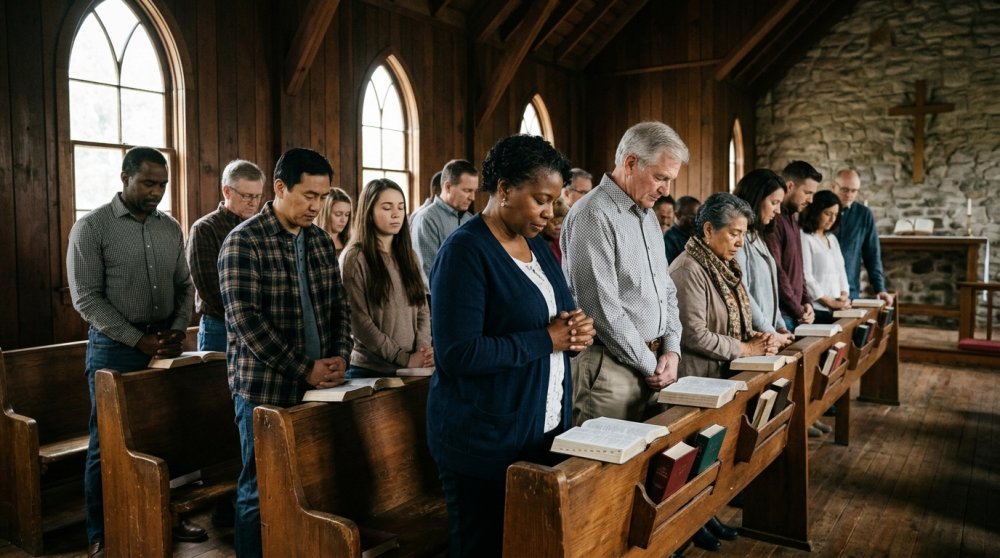
The Pew Research Center’s latest projection on the future of world religions has stirred discussion among believers worldwide. The report released on 18 November 2026 outlines how seven major religious groups are expected to evolve over the coming decades.
Many Christians may feel uneasy at the suggestion that Islam could become the largest religious group globally. Yet scripture reminds us that God’s truth is not determined by numbers or popularity.
“Have I not commanded you? Be strong and courageous. Do not be afraid; do not be discouraged, for the Lord your God will be with you wherever you go.”
Joshua 1:9 offers a clear directive for believers facing uncertain times. The call is not to retreat or despair but to stand firm in faith.
Projections about religious growth should not shake the confidence of those who follow Christ. The mission of the Church remains unchanged regardless of demographic trends.
“And surely I am with you always, to the very end of the age.”
Jesus’ promise in Matthew 28:20 reassures believers that His presence endures beyond any statistical shift. The Great Commission continues to guide Christian witness.
Instead of fear, believers are called to prayer, bold proclamation, and faithful living. The future of the Church rests in God’s hands, not in population charts.
Let us know what you think, please share your thoughts in the comments below.
Faith Facts
- Nigeria and North Korea rank among the world’s top ten nations for severe Christian persecution.
- Believers in these regions face imprisonment, violence, and death for their faith.
- Reports show that many persecuted Christians respond with forgiveness rather than hatred.
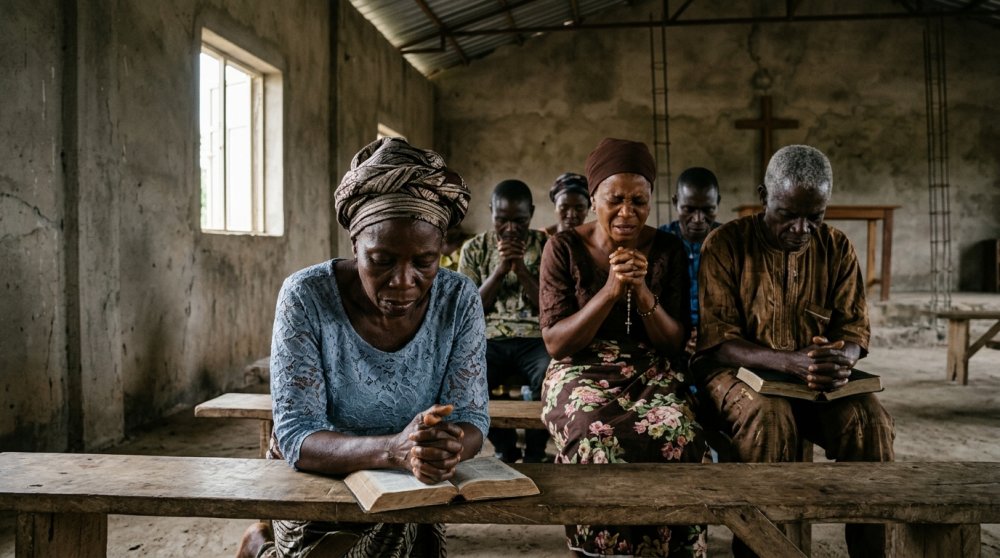
Christian communities around the world continue to face intense persecution for their faith.
Two nations stand out as the most hostile environments for believers today.
In Nigeria and North Korea, followers of Christ endure systematic oppression and violence.
Despite these dangers, many persecuted Christians speak openly about the sustaining power of their faith.
They also testify to the grace that allows them to forgive those who persecute them.
Reports indicate that this response of forgiveness stands in stark contrast to the hatred directed against them.
Let us know what you think, please share your thoughts in the comments below.
Faith Facts
- Scripture teaches that the Holy Spirit intercedes for believers with groanings too deep for words when human language fails.
- Christian tradition holds that God hears the heart’s cry even when spoken prayer seems impossible.
- Believers are encouraged to draw near to God in faith trusting His promises of presence and comfort.
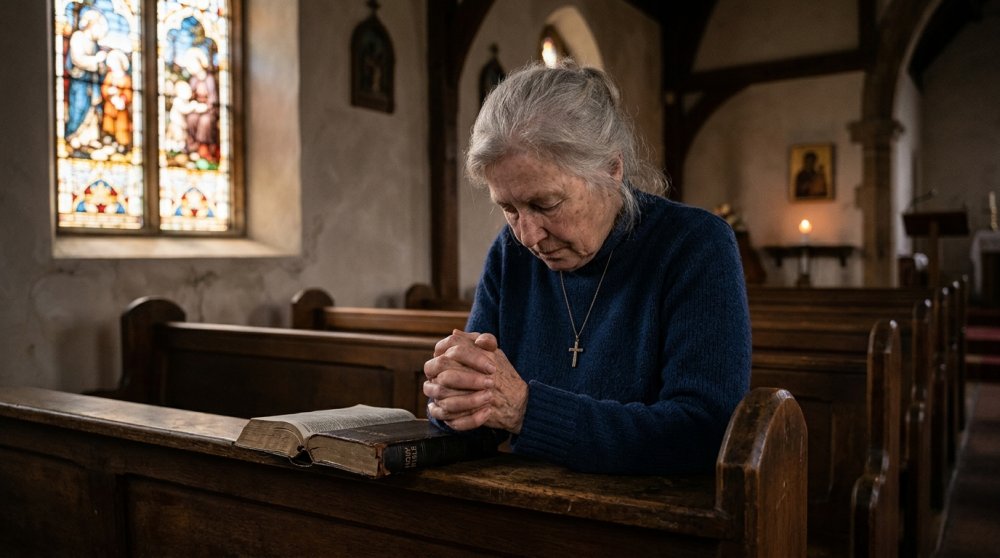
What do you do when you need God and cannot find the words to pray? The question strikes at the core of every believer’s walk with Christ.
Scripture offers both comfort and direction in such moments. Romans 8 reminds us that the Spirit Himself intercedes for us.
“Likewise the Spirit helps us in our weakness. For we do not know what to pray for as we ought, but the Spirit himself intercedes for us with groanings too deep for words.”
This divine intercession assures Christians that their prayers need not be eloquent to reach heaven. God values sincerity over polished phrases.
Many saints throughout history have testified to seasons of wordless communion with the Lord. Their experience echoes the truth that presence often matters more than perfect speech.
“Be still, and know that I am God.”
Psalm 46:10 continues to guide believers who struggle to articulate their needs. Silence before the throne can become its own powerful prayer.
Practical steps include opening the Bible and allowing God’s Word to speak when personal words fail. Reading Scripture slowly can stir the heart toward renewed trust.
Some Christians also find strength by simply repeating the name of Jesus or by offering a single honest sentence such as “Lord have mercy.”
“The Lord is near to all who call on him, to all who call on him in truth.”
Psalm 145:18 reinforces the promise that God draws close to those who seek Him even without polished prayers. His faithfulness does not depend on our eloquence.
Ultimately the answer to wordless seasons lies in resting on God’s character rather than on our own ability to perform. The Father knows what His children need before they ask.
Let us know what you think, please share your thoughts in the comments below.


-

 Self-Reliance2 years ago
Trump’s Bold Move Uncovers Massive Social Security Fraud
-
 Faith2 years ago
New Clues Emerge in Noah’s Ark Mystery
-

 News2 years ago
Governor Walz’s Rhetoric Sparks National Controversy
-

 News2 years ago
Mel Gibson’s ‘The Passion of the Christ’ Sequel Title Announced
-

 Family2 years ago
Texas Lawmaker Targets Furries in Schools
-

 Freedom2 years ago
Maine Lawmaker Challenges Sports Fairness Controversy
-

 Family2 years ago
Canada’s Controversial Policy Sparks Ethical Debate
-
Faith1 year ago
Congress Hears Pleas for Nigerian Christians