
Faith
The Urgent Truth of Hell as Taught by Jesus Himself


Many Christians today derive their understanding of Hell more from classic literature and popular culture than from the Holy Scriptures. While the chilling realms depicted in Dante’s Inferno or the charismatic devil of Disney’s Hercules might capture the imagination, they do not offer a biblically accurate portrayal of Hell.
The term “Hell” itself originates not from Scripture but from an old Germanic word describing “the underworld.” In the Bible, the concept varies: the Old Testament refers to Sheol, a term whose meaning spans from punishment to simply being distant from God’s presence. This indicates that while the afterlife was recognized, it was not deeply elaborated upon by the ancient Israelites.
In the New Testament, the narrative becomes clearer, particularly in the Book of Revelation which vividly describes eternal torment for those who stray from God’s path. Verses like Revelation 14 and Revelation 20 speak of a “lake of fire” and “fire and sulfur,” emphasizing an eternity of suffering for the wicked.
Surprisingly, it is Jesus Christ who speaks most frequently and explicitly about Hell. His teachings are direct and severe, highlighting Hell as a real and dreadful place. For instance, Matthew 5:22 warns of the “hell of fire” for those who harbor anger against their brethren, and Matthew 10:28 advises to fear God, who can “destroy both soul and body in hell.”
These scriptures are clear: Hell is a definitive reality, and its existence was of significant importance to Jesus. He did not shy away from discussing its harsh truths, teaching that actions have eternal consequences. This contradicts the often sanitized image of Jesus prevalent in modern American culture, which prefers to view Him solely as a figure of love and peace.
This misconception overlooks the essential truth of the Gospel as articulated nearly a century ago by theologian H. Richard Niebuhr, who criticized the diluted Christian message that omits the necessity of God’s judgment and the reality of sin and its consequences. Hell, therefore, is not a mere tool of fear or a myth created by the Church; it is a cornerstone of divine justice. It promises that no wrong, no matter how obscured or protected, will go unpunished—be it in this life through the sacrifice of Christ on the Cross or in the eternal life to come.
For victims of injustice and oppression, the doctrine of Hell serves not as a cause for fear but as a beacon of hope. It affirms God’s unwavering commitment to justice—that every act of sin against His creation will ultimately be addressed. In a world rife with sin and evil, the truth of Hell underscores the profound seriousness with which God approaches sin and the redemption He offers to those who choose His path. Through this understanding, we grasp the full measure of God’s love and justice, reassuring us that ultimately, “everything sad will come untrue.”

Faith
Alarming Safety Concerts in Chemical Abortions Challenge Pro-Life Vigilance Under God’s Guidance

Faith Facts
A new Ethics & Public Policy Center report reveals women face significantly higher health complications from mifepristone after the Biden FDA allowed mail-order dispensing and eliminated in-person doctor requirements.
Serious adverse events climbed from 10.15% before the change to 11.50% afterward, marking a 13% increase that endangers mothers and unborn children God entrusts to us.
- Ectopic pregnancy prescriptions rose from 0.27% to 0.41%, heightening life-threatening risks without medical oversight, violating biblical calls to protect the vulnerable.
- Remote dispensing scenarios project up to 23.65% adverse events, far exceeding clinical trial claims and underscoring the deception in chemical abortion promotion.
- Prior EPPC analysis found 10.93% suffer sepsis or hemorrhage post-pill, 22 times higher than FDA figures, demanding faithful action for family sanctity.
Stand with Faith and Freedom Report to defend preborn life, support mothers, and uphold God’s design for family—pray, advocate, and share this truth today.

Faith Facts
- Acacia Family Support, founded by Christian mothers, helps hundreds facing perinatal mental health crises yearly.
- £150,000 funding gap from NHS cuts and donations threatens early intervention for vulnerable Birmingham families.
- One in four mothers endures anxiety or depression during pregnancy or postpartum, with suicide as leading death cause post-birth.
A Birmingham Christian charity launched a Mother’s Day campaign titled ‘Motherhood – Not What You Expected?’ to spotlight hidden struggles of new mothers.
God blesses motherhood as in Psalm 127, yet idealised images amplify guilt for those battling perinatal depression.
Becky Douglas-Jones, acting director, noted: “Mother’s Day is framed as a joyful celebration of motherhood, but the reality is different for many women.”
Five videos feature Acacia-supported moms sharing isolation, anxiety, and suicidal thoughts ahead of Mother’s Day 2026.
Vicki Hook emphasized: “Birmingham has the second-highest number of instances of perinatal mental health conditions in the country.”
She added that the first 1,001 days shape child development, urging prompt Christian compassion to prevent escalation.
Emma Elmas shared: “Without Acacia, I wouldn’t be here today and my children wouldn’t have a mother. I owe them everything.”
Acacia offers one-to-one sessions, groups, and crèche alongside NHS referrals in a judgment-free, faith-rooted space.
As patriots upholding family values, support this local Christian effort to safeguard mothers and nurture godly homes through donations.
Faith
Beloved Voice for Racial Harmony Silent – Heaven Gains a Steward, Earth Mourns Briefly Market społecze。
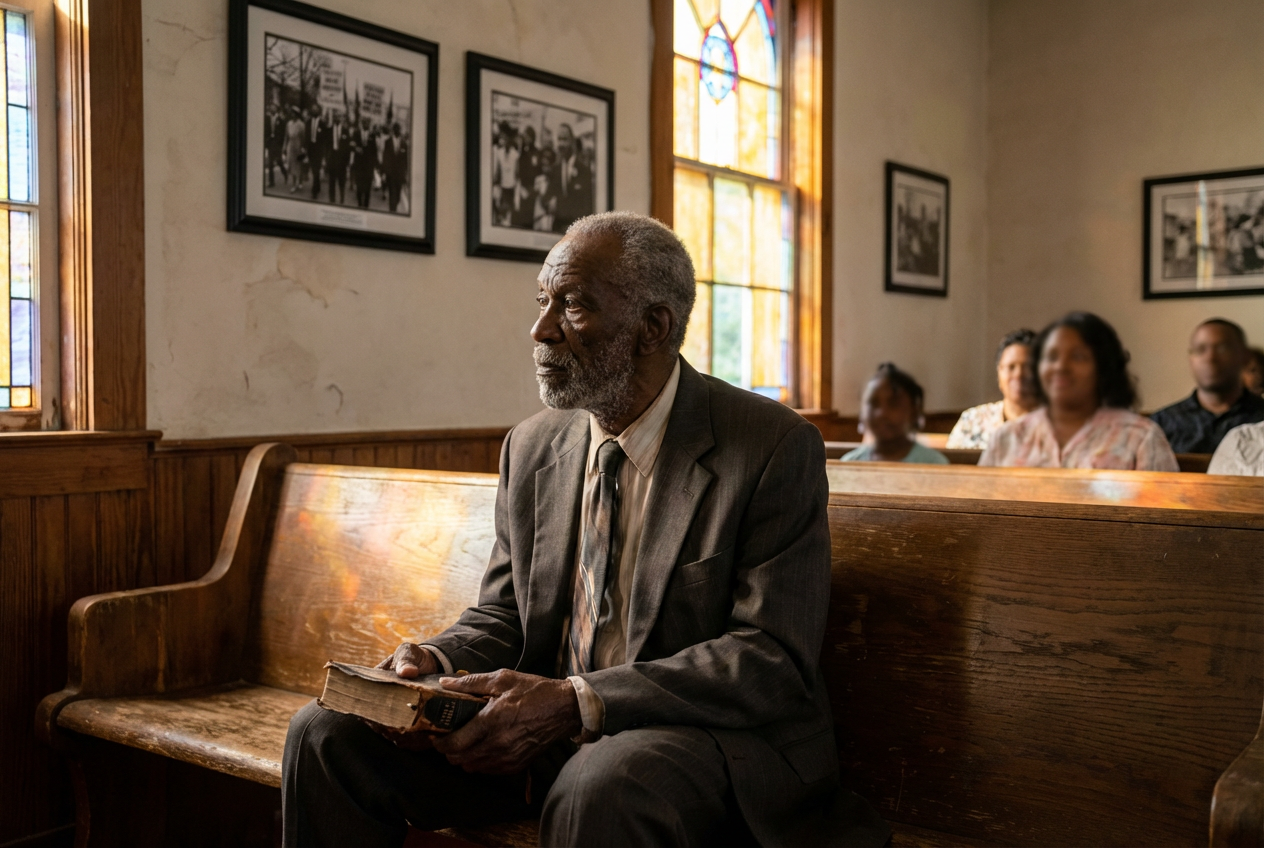
Faith Facts
- Converted to Christ in 1957, returned to Mississippi to preach Gospel amid civil rights struggles.
- Co-founded Christian Community Development Association in 1989 for urban ministry.
- Authored books stressing Gospel centrality, declaring sin—not skin—the true human problem.
Renowned civil rights activist, Bible teacher, and racial reconciliation pioneer John Perkins passed into eternity at age 95, surrounded by family.
His daughter V. Elizabeth Perkins announced his homegoing on the John & Vera Mae Perkins Foundation page.
“To the world, he was Dr. John M. Perkins, a voice for justice, reconciliation, and the gospel of Jesus Christ,” she wrote.
“He received 19 honorary doctorate degrees, but most importantly, he was the devoted husband of his bride, Vera Mae Perkins, for 74 years, and together they were blessed with 8 children.”
“But to me, he was Daddy. My heart is broken, yet full of gratitude for the gift of being his daughter. His life was marked by courage, humility, faith, and love.”
Born in 1930 to a sharecropper in Jim Crow Mississippi, Perkins fled after his brother’s murder but returned after salvation to boldly proclaim Christ despite beatings and imprisonment.
Southern Baptist leader Trevin Wax honored him as a hero of resilience and faith, urging deeper love and justice.
“Rest well, John Perkins,” Wax tweeted. “A hero with an incredible story of resilience and faith, who leaves behind a legacy of calling us all to deeper love and justice.”
Author Jemar Tisby praised Perkins as a luminary and forerunner in evangelical racial reconciliation.
His faithful legacy on boards like World Vision, Prison Fellowship, and National Association of Evangelicals endures, modeling biblical family, courage, and gospel truth.
Honor John Perkins by embracing Christ-centered reconciliation, standing firm in faith, family, and freedom—subscribe to Faith and Freedom Report for more.

Alarming Safety Concerts in Chemical Abortions Challenge Pro-Life Vigilance Under God’s Guidance

Beloved Voice for Racial Harmony Silent – Heaven Gains a Steward, Earth Mourns Briefly Market społecze。

Motherhood Crisis Deepens as Biblical Values Face Erosion – God’s Hope Offers Renewal Ahead
-

 Self-Reliance11 months ago
Trump’s Bold Move Uncovers Massive Social Security Fraud
-

 Faith11 months ago
New Clues Emerge in Noah’s Ark Mystery
-

 News1 year ago
Governor Walz’s Rhetoric Sparks National Controversy
-

 Family12 months ago
Texas Lawmaker Targets Furries in Schools
-

 News12 months ago
Mel Gibson’s ‘The Passion of the Christ’ Sequel Title Announced
-

 Freedom12 months ago
Maine Lawmaker Challenges Sports Fairness Controversy
-

 Family10 months ago
Canada’s Controversial Policy Sparks Ethical Debate
-
Faith4 months ago
Congress Hears Pleas for Nigerian Christians