
News
Government Spending Cuts Spark Debate on Fiscal Priorities


In a recent revelation that underscores the importance of returning to traditional values and fiscal responsibility, the Department of Agriculture, in collaboration with the Department of Government Efficiency, has taken decisive steps to eliminate millions in what many would consider frivolous spending. This move aligns with the core principles of faith, family, and freedom that are cherished by many Americans.
Agriculture Secretary Brooke Rollins has been at the forefront of this initiative, highlighting some of the more egregious examples of wasteful spending.
“Probably the most stunning for me was the $500,000 grant to study transgenderism in mice,” Rollins shared. This expenditure, part of a broader $8 million allocation under the current administration, raises questions about the priorities of those in power and the use of taxpayer dollars.
Another example that Rollins pointed out was the allocation of funds for queer and transgender farmers in San Francisco.
“And then there was another couple hundred thousand to queer and transgender farmers in San Francisco to talk about food security,” she noted. The Department of Agriculture took action on March 24 to cancel a $300,000 contract related to this initiative, signaling a shift towards more responsible governance.
The spending spree didn’t stop there. Rollins also highlighted a program funded by the Inflation Reduction Act that allocated an astonishing $11,053 per tree at Barack Obama High School.
“And then there was another one for trees at the Barack Obama School somewhere in the country that when you did the calculation, came out to $11,000 a tree,” she explained.
“I don’t even think any of them survived!” This kind of spending is a stark reminder of the need for oversight and accountability in government.
Americans have expressed their desire for a government that prioritizes their needs and values. As Rollins, the founder and former president of the America First Policy Institute, put it, “Americans voted for a realignment of government away from woke spending projects and toward putting America first.”
The uncovering of these layers of government waste is a testament to the vigilance and dedication of those committed to restoring sanity to federal spending.
“The layers and layers and layers of government waste that were uncovered is stunning,” Rollins remarked. This revelation is not only a call to action but also a source of encouragement for those who believe in the power of conservative principles to guide our nation forward.
As Rollins concluded, “It’s crazy that our taxpayers have been funding this, but I also hope it’s encouraging to Americans that this is what they voted for in November.” Indeed, this is a moment of hope and renewal, a chance to reaffirm our commitment to the values that make America great.
Let us know what you think, please share your thoughts in the comments below.


Faith Facts
- Senator Lindsey Graham’s passing has prompted an outpouring of tributes from evangelical leaders, American politicians, and world leaders who worked alongside him throughout his decades of public service.
- Graham was known for his commitment to conservative values, national security, and support for Israel, earning respect across political and religious communities.
- Leaders from across the nation emphasized his irreplaceable role in defending religious liberty and championing causes aligned with Christian conservative principles.
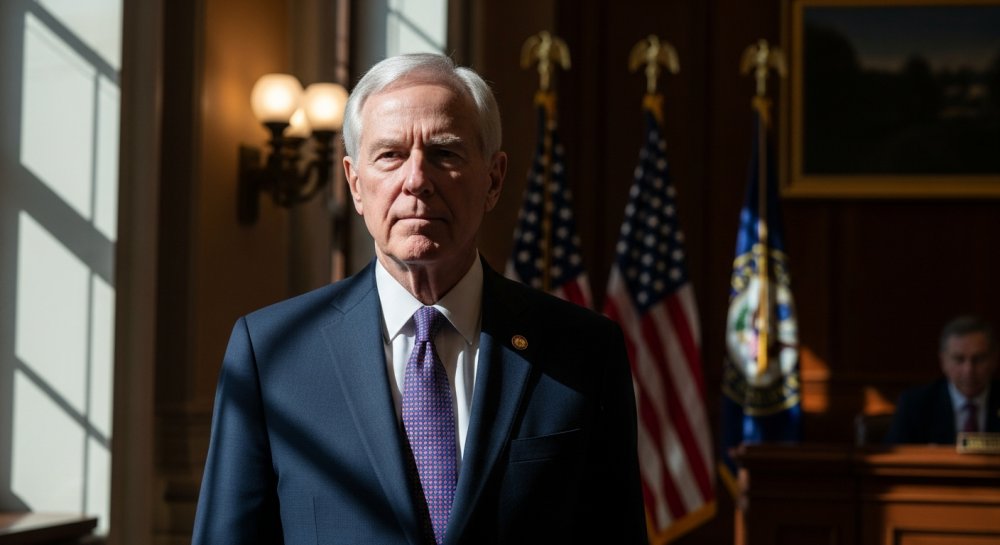
The passing of U.S. Senator Lindsey Graham of South Carolina has sent shockwaves through the nation’s political and faith communities. Evangelical leaders, American statesmen, and international figures who knew and worked with the longtime senator are reflecting on a legacy marked by principled conservatism and steadfast dedication to the values that built America.
Graham’s career in public service spanned decades, during which he became known as a fierce advocate for national security, religious freedom, and the defense of Israel. His voice in the Senate was one that resonated deeply with Christian conservatives who saw in him a champion willing to stand for traditional values in an increasingly secular political landscape.
Tributes poured in from across the political spectrum, with many emphasizing the void his absence will create. Leaders noted his unique ability to bridge divides while never compromising on core principles that matter most to Americans of faith.
Evangelical figures who worked closely with Graham remembered him as a senator who understood the vital role of religious liberty in preserving American freedoms. His commitment to protecting the rights of Christians and supporting policies that align with biblical values earned him deep respect within the faith community.
World leaders also paid their respects, acknowledging Graham’s significant role in shaping American foreign policy and his unwavering support for allies who share our values. His dedication to strengthening America’s position on the global stage while defending freedom was a hallmark of his service.
Politicians from both parties recognized Graham’s legislative accomplishments and his willingness to engage in difficult conversations while maintaining his conservative convictions. His approach to governance reflected a commitment to the Constitution and the principles that have guided our nation since its founding.
The senator’s influence extended beyond policy debates to personal relationships built on mutual respect and shared commitment to serving the American people. Those who worked alongside him described a man of integrity who prioritized the interests of his constituents and the security of the nation.
As the nation processes this significant loss, many are reflecting on the qualities that made Graham’s service so impactful. His dedication to faith, family, and freedom resonated with millions of Americans who saw in him a representative truly committed to preserving the values that make our country exceptional.
The coming days will bring continued remembrances as the nation honors a public servant whose legacy will endure in the policies he championed and the principles he defended. His absence will be felt deeply by those who shared his vision for an America that remains true to its founding ideals and its faith heritage.
Let us know what you think, please share your thoughts in the comments below.
Faith Facts
- Former Iranian President Mahmoud Ahmadinejad claimed he experienced a supernatural encounter during a UN speech, revealing the eschatological beliefs driving Iran’s leadership
- Iranian leaders follow a radical interpretation of Islamic prophecy centered on the return of the 12th Imam, the Mahdi
- Understanding Iran’s apocalyptic worldview is critical for American Christians as tensions escalate in the Middle East
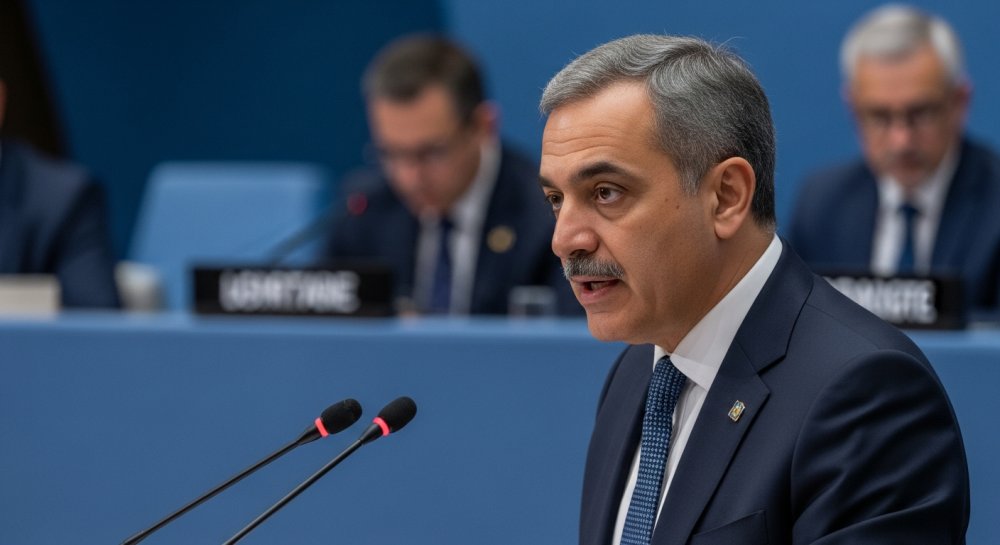
About 20 years ago, then-president of Iran, Mahmoud Ahmadinejad, stated in an interview that he experienced a supernatural experience during a speech he gave at the United Nations. This revelation offered a rare glimpse into the spiritual beliefs that animate Iran’s most powerful leaders—beliefs that have profound implications for global security and America’s national interests.
The former Iranian president described what he believed was a divine encounter, claiming he felt surrounded by an aura of light during his address to world leaders. This wasn’t merely the boastful claim of a political figure seeking attention; it reflected a deeply held theological conviction that shapes Iranian policy at the highest levels.
Iran’s leadership adheres to a radical interpretation of Shia Islamic eschatology centered on the imminent return of the 12th Imam, known as the Mahdi or the “Hidden Imam.” According to this belief system, the Mahdi disappeared in the 9th century and will return during a time of chaos and upheaval to establish global Islamic rule.
What makes this belief system particularly dangerous is the conviction held by some Iranian leaders that they can—and should—hasten the Mahdi’s return by creating the very chaos and conflict prophesied to precede his appearance. This apocalyptic worldview provides a theological justification for destabilizing actions throughout the Middle East and beyond.
For American Christians, understanding this theological framework is essential. While we await the true return of Jesus Christ, Iran’s leaders pursue a false messianic vision that fuels aggression against Israel, support for terrorist organizations, and the pursuit of nuclear weapons capabilities.
The contrast between Christian hope and Iran’s apocalyptic ambitions couldn’t be starker. Christians are called to be peacemakers, to pray for our enemies, and to trust in God’s sovereignty over human history. Iran’s radical leadership, by contrast, embraces a theology that glorifies martyrdom, celebrates conflict, and seeks to impose religious rule through violence and intimidation.
This isn’t merely an academic theological discussion—it has real-world consequences. Iran’s proxy forces operate throughout Lebanon, Syria, Iraq, Yemen, and Gaza, destabilizing the region and threatening both Israel and American interests. The regime’s pursuit of nuclear weapons takes on an even more ominous dimension when viewed through the lens of their eschatological beliefs.
American policymakers have often struggled to comprehend the religious motivations driving Iranian actions, preferring to interpret Tehran’s behavior through purely rational or geopolitical frameworks. But Iran’s leaders have repeatedly demonstrated that their apocalyptic theology is not mere rhetoric—it shapes their strategic calculations and long-term objectives.
The Islamic Republic’s continued support for terrorism, its threats against Israel, and its defiance of international norms regarding nuclear development all flow from this toxic combination of radical theology and political power. When leaders believe they are divinely appointed to usher in a new messianic age, traditional diplomatic incentives and deterrents may prove insufficient.
For Christians, this reality underscores the importance of standing with Israel, supporting a strong American defense posture, and recognizing the spiritual dimensions of conflicts that secular analysts often overlook. The battle against Iran’s revolutionary regime isn’t simply about competing national interests—it involves fundamentally incompatible visions of truth, justice, and human destiny.
Prayer remains our most powerful weapon. We must pray for the protection of Israel, for wisdom for American leaders, for the safety of Christians throughout the Middle East, and even for the Iranian people themselves, who suffer under a repressive theocratic regime that has squandered their nation’s potential in pursuit of a false messiah.
The Iranian leadership’s belief in hastening the return of their hidden imam stands in stark contrast to the Christian understanding of Christ’s return, which will happen according to God’s perfect timing, not through human manipulation or violence. Christians are called to be ready, to live righteously, and to spread the Gospel—not to create chaos in a misguided attempt to force God’s hand.
As tensions continue to simmer in the Middle East, understanding the theological convictions that drive Iran’s behavior becomes increasingly critical. The false messiah driving Iran’s revolutionary regime poses a genuine threat not only to regional stability but to the values of freedom, faith, and human dignity that Americans hold dear.
Let us know what you think, please share your thoughts in the comments below.
Faith Facts
- U.S. Senator Lindsey Graham, R-S.C., passed away unexpectedly at age 71 on Saturday following a sudden illness at his Washington home.
- Throughout his career, Graham was a steadfast advocate for the pro-life cause and stood as a defender of persecuted Christians worldwide.
- Emergency personnel responded to a call at his residence, but the senator could not be revived.
The nation mourns the loss of a devoted public servant who consistently championed the values of faith, family, and freedom. Senator Lindsey Graham of South Carolina died suddenly on Saturday at his Washington, D.C. residence after emergency responders were called to his home. He was 71 years old.
Graham’s unexpected passing has sent shockwaves through the Christian conservative community, where he was recognized as a tireless defender of traditional values. His commitment to protecting the unborn and advocating for religious liberty earned him respect among believers and faith-based organizations nationwide.
Throughout his decades of service in the United States Senate, Graham stood firm on issues that matter most to Christian Americans. His record on pro-life legislation demonstrated an unwavering commitment to the sanctity of human life from conception to natural death. He understood that every life has inherent dignity bestowed by our Creator.
Beyond domestic policy, Senator Graham was a powerful voice for persecuted Christians around the world. He recognized that religious freedom is a God-given right, not a government privilege, and he worked tirelessly to ensure that believers facing oppression received the support and advocacy they deserved from the United States government.
The circumstances surrounding his death remain under investigation, but authorities have confirmed that emergency personnel responded to a call regarding a sudden medical emergency. Despite their best efforts, the senator could not be saved.
Graham’s legacy extends far beyond legislative achievements. He served as a moral voice in the Senate, reminding his colleagues and constituents alike that America’s strength lies in its commitment to biblical principles and traditional values. His willingness to stand against the tide of cultural decay made him a beacon of hope for conservatives who believe in the foundational truths upon which this nation was built.
As a champion for life, Graham understood that protecting the most vulnerable among us—the unborn—was not merely a political position but a moral imperative. His advocacy helped shape policies that defended innocent life and provided alternatives to the tragedy of abortion.
His work on behalf of persecuted Christians demonstrated a profound understanding that faith transcends national boundaries. Graham recognized that when Christians suffer for their beliefs anywhere in the world, the American Church has a responsibility to stand with them in solidarity and action.
The senator’s sudden passing serves as a sobering reminder of life’s fragility and the importance of living each day with purpose and conviction. Graham did not waver in his commitment to the principles he held dear, even when those positions proved unpopular with the cultural elite and mainstream media.
Funeral arrangements are pending, and tributes continue to pour in from across the nation. Faith leaders, conservative colleagues, and pro-life advocates have expressed their gratitude for Graham’s faithful service and steadfast defense of Christian values in the public square.
Let us know what you think, please share your thoughts in the comments below.


-

 Self-Reliance1 year ago
Trump’s Bold Move Uncovers Massive Social Security Fraud
-

 Faith1 year ago
New Clues Emerge in Noah’s Ark Mystery
-

 News1 year ago
Governor Walz’s Rhetoric Sparks National Controversy
-

 News1 year ago
Mel Gibson’s ‘The Passion of the Christ’ Sequel Title Announced
-

 Family1 year ago
Texas Lawmaker Targets Furries in Schools
-

 Freedom1 year ago
Maine Lawmaker Challenges Sports Fairness Controversy
-

 Family1 year ago
Canada’s Controversial Policy Sparks Ethical Debate
-
Faith8 months ago
Congress Hears Pleas for Nigerian Christians